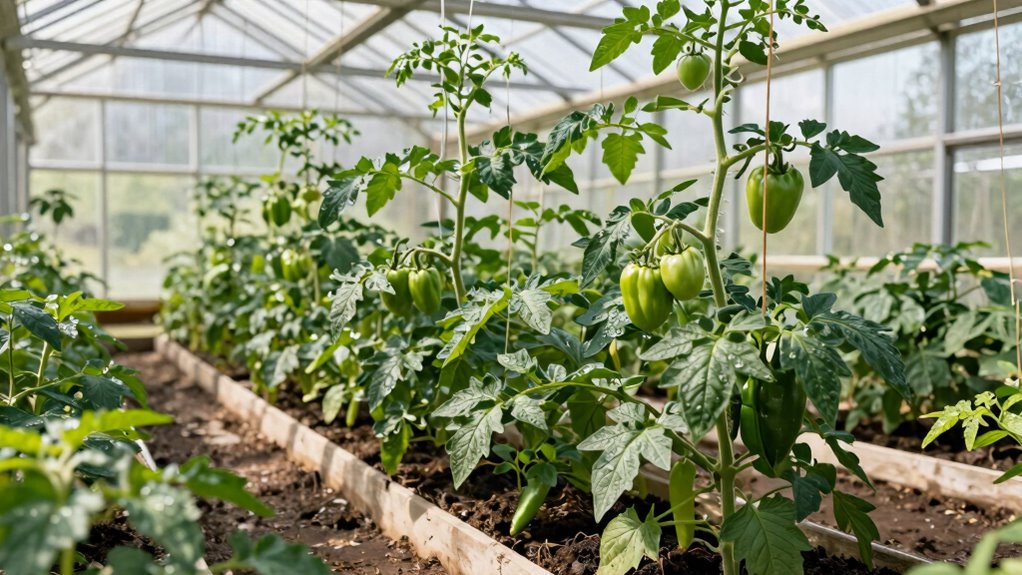

In late April, start with quick-growing vegetables like radishes and lettuce to prevent overcrowding. Stagger plantings with succession planting and avoid planting all seedlings at once. Use vertical space with shelves or hanging baskets, and maintain proper spacing based on each crop’s growth habit. Regularly monitor and adjust plants to keep air circulation good. If you want detailed tips on maximizing space and healthy growth, there’s more to explore below.

Get garden gear delivered free with Prime
- Fast, free delivery on millions of items
- Prime Video, Amazon Music and more included
- Member-only deals all year
Key Takeaways
- Begin with quick-growing vegetables like radishes and lettuce to fill space efficiently.
- Stagger planting times using succession planting to prevent overcrowding.
- Use vertical gardening methods, such as shelves and hanging baskets, to maximize space.
- Plan plant spacing carefully based on mature size and growth habits.
- Rotate crops seasonally and remove overcrowded or unhealthy plants promptly.
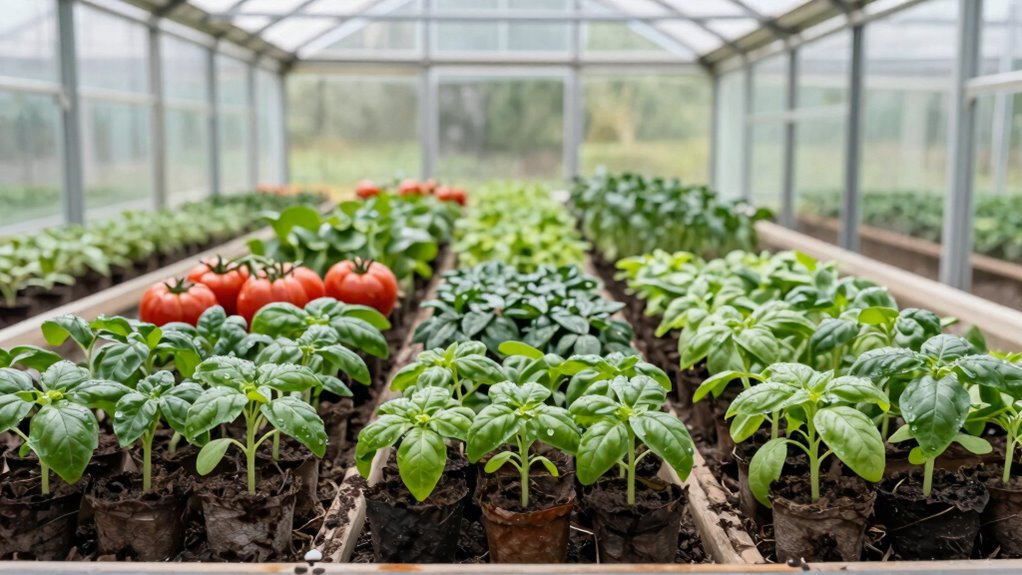
Late April is the perfect time to begin planting in your greenhouse, but it’s vital to avoid overcrowding to guarantee healthy growth. Overcrowding can lead to stunted plants, increased disease risk, and poor air circulation. To maximize your space and ensure excellent plant health, you should plan your planting schedule carefully, considering techniques like succession planting and companion planting.
Plant early in your greenhouse but avoid overcrowding for healthy, thriving plants.
Succession planting involves staggering your planting times, so you continually have crops maturing at different intervals. Instead of planting all your seedlings at once, start with a batch of quick-growing vegetables like radishes or lettuce, then follow with crops that take longer to mature, such as tomatoes or peppers. This approach prevents overcrowding, as you’re not trying to fit everything in at once. It also allows you to make the most of the greenhouse space throughout the season, providing fresh produce over an extended period. Being mindful of plant spacing and growth habits is essential to maintaining a healthy environment. Additionally, understanding the growth habits of your plants can help you better anticipate their space requirements and prevent overcrowding.
Meanwhile, companion planting enhances plant health and productivity by pairing compatible species together. For example, planting basil near tomatoes can boost flavor and ward off pests, while marigolds can deter nematodes from your root crops. When planning your greenhouse, consider which plants naturally support each other, reducing the need for chemical pest controls and promoting a balanced ecosystem. This technique also helps you utilize space efficiently, as complementary plants can be grown in close proximity without crowding.
To put these strategies into practice, start with a clear layout that accounts for mature plant sizes and growth habits. Use vertical space with shelves or hanging baskets for smaller or vining plants, freeing up ground space for larger crops. Spread out your seedlings based on their growth rates to avoid congestion, and rotate crops seasonally to maintain soil health and reduce disease buildup.
Remember to monitor your greenhouse regularly. As plants grow, adjust spacing if needed, and remove any overcrowded or unhealthy specimens. Proper airflow is essential for disease prevention, so avoid planting too densely. Incorporate companion planting by grouping plants with compatible needs and benefits, which naturally reduces pests and enhances growth.
As an affiliate, we earn on qualifying purchases.
Frequently Asked Questions
How Do I Prevent Disease Spread in a Crowded Greenhouse?
To prevent disease spread in a crowded greenhouse, you should practice good pest control and disease management. Keep the environment clean by removing dead leaves and debris regularly. Use proper ventilation to reduce humidity, and isolate any infected plants immediately. Make certain tools are sanitized between uses, and avoid overcrowding to promote airflow. Regularly inspect plants for signs of pests or disease, addressing issues promptly to maintain a healthy greenhouse.
What Ventilation Methods Are Best for Late April Greenhouse Planting?
To guarantee proper ventilation in your late April greenhouse, prioritize good air circulation and use ventilation fans. These fans help move air efficiently, preventing humidity buildup and reducing disease risk. Open vents regularly to promote fresh airflow and avoid overcrowding plants, which can hinder air movement. Combining natural ventilation with powered fans creates a healthy environment, supports plant growth, and minimizes issues caused by stagnant, moist air.
How Often Should I Water Greenhouse Seedlings in Late April?
Think of your seedlings as delicate guests who need just the right touch. Water them when the topsoil feels slightly dry—usually once a day or every couple of days, depending on humidity and temperature. Consistent watering supports healthy growth while avoiding overwatering, which can hinder plant development. Proper compost management and pest control are essential to keep your seedlings thriving, ensuring they stay strong and resilient as they grow.
Can I Grow Tropical Plants Successfully in Late April?
Yes, you can grow tropical plants successfully in late April, but you need to prioritize tropical plant care. Maintain high humidity levels and guarantee consistent warmth to mimic their natural environment. Use humidity control methods like misting or humidifiers, and keep the temperature stable. Proper airflow and watering are essential. With attentive care, your tropical plants will thrive indoors, even during early spring.
What Are the Best Soil Preparations for Greenhouse Planting at This Time?
To prepare your greenhouse soil in late April, start by testing the soil pH to make certain it’s suitable for your plants, ideally between 6.0 and 7.0. Add compost amendments to enrich nutrients and improve soil structure. Mix these amendments thoroughly, adjusting the pH if needed with lime or sulfur. This creates a healthy, balanced environment, encouraging strong growth without overcrowding, setting a solid foundation for your greenhouse planting.
Conclusion
By late April, you can confidently start a variety of plants in your greenhouse without overcrowding, allowing healthy growth and better yields. Remember, overcrowding can reduce airflow and increase disease risk—so plan your space wisely. Did you know that properly spaced plants can grow 20% faster and produce 30% higher yields? Keep this in mind to optimize your greenhouse’s potential, ensuring a thriving, productive environment that’s both manageable and rewarding.
Columbus Day / Indigenous Peoples' Day Picks
long weekend sales
As an affiliate, we earn on qualifying purchases.