
Before hot weather hits, you might forget to prepare your compost piles by turning them regularly and balancing moisture to prevent pests and odors. Keep greenhouse seals and vents in check to stop pest entry and guarantee good airflow. Adjust watering routines using moisture meters, mulch to retain moisture, and test soil health. Don’t overlook inspecting your greenhouse structure for damage and maintaining equipment. Staying on top of these tasks now helps prevent bigger issues later—discover more strategies to protect your plants.

Get garden gear delivered free with Prime
- Fast, free delivery on millions of items
- Prime Video, Amazon Music and more included
- Member-only deals all year
Key Takeaways
- Ensure compost bins are well-maintained, turned regularly, and moisture levels are balanced to prevent odors and pests.
- Inspect and seal greenhouse entry points to prevent pest entry during hot weather.
- Increase ventilation and clean vents and doors to improve airflow and reduce mold risk.
- Adjust watering routines, use moisture meters, and mulch to maintain proper soil moisture levels.
- Check and repair greenhouse structures promptly to withstand higher temperatures and prevent damage.

Greenhouse gardening can be incredibly rewarding, but it requires careful planning and maintenance to succeed. As the hot weather approaches, it’s easy to focus on planting and watering, but there are critical tasks you shouldn’t overlook, especially around compost management and pest control. Proper compost management is crucial because it influences plant health and soil fertility. Before the heat hits, make sure your compost bins or piles are well-maintained. Turn the compost regularly to aerate it, which helps prevent unpleasant odors and reduces the risk of pests taking up residence. If your compost is too wet or too dry, it can become a breeding ground for unwanted insects and fungi that might threaten your plants. Balancing moisture levels and ensuring good airflow during hot weather keeps the compost healthy and usable.
Pest control is another essential aspect that often gets neglected in the rush to prepare for summer. Hot weather can lead to a surge in pest populations, making your greenhouse more vulnerable. Before the temperatures soar, inspect your plants thoroughly for signs of pests or disease. Remove any infested or weakened plants to prevent pests from spreading, and consider introducing natural predators or organic pest control methods. This proactive approach saves you headaches later and helps keep your plants healthy without resorting to harsh chemicals. Also, check your greenhouse’s ventilation and sealing. Good airflow not only prevents mold and fungal issues but also discourages pests from settling in. Keep your doors and vents clean and secure, so pests can’t sneak inside when you’re not looking. Maintaining proper greenhouse ventilation is essential for pest prevention and overall plant health. Additionally, ensuring your greenhouse is properly sealed can minimize entry points for pests and reduce the need for chemical interventions. Regularly inspecting and maintaining greenhouse sealing can further enhance pest control efforts.
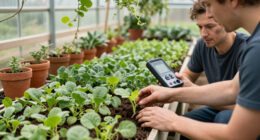
Another often-overlooked task is adjusting watering routines for the warmer weather. As temperatures increase, plants require more frequent watering, but overwatering can lead to root rot and other problems. Establish a watering schedule that suits the specific needs of your crops, and use moisture meters if necessary to avoid guesswork. Additionally, consider mulching your soil to retain moisture and regulate temperature. Mulch also helps suppress weeds, which can harbor pests or compete with your plants for nutrients. Incorporating compost nutrients into your soil can further enhance plant resilience during the hot months. Regularly assessing soil health and nutrient levels ensures your plants remain vigorous in the heat. Using soil testing can help you make informed decisions about fertilization and amendments, leading to healthier plants overall. Moreover, staying vigilant about soil health can prevent many issues related to heat stress and nutrient deficiencies.
Finally, don’t forget to plan for ongoing maintenance. Regularly check your greenhouse’s structural integrity, repair any damages, and ensure all equipment is functioning properly. Keeping pest control measures in place and managing compost effectively set a strong foundation for a healthy, productive summer. By tackling these tasks before the heat arrives, you’ll create a more resilient greenhouse environment, allowing your plants to flourish when the weather turns hot.
As an affiliate, we earn on qualifying purchases.
Frequently Asked Questions
How Can I Prevent Pests From Increasing During Hot Weather?
To prevent pests from increasing during hot weather, you should plant pest-resistant plants and use natural pest deterrents like neem oil or garlic spray. Regularly inspect your greenhouse for signs of pests and remove any infested plants early. Keep the environment clean, guarantee good airflow, and avoid overwatering, which attracts pests. These steps help maintain a healthy, pest-free greenhouse, even during the hottest days.
What Are the Best Shade Options for My Greenhouse?
You should consider using shade cloths or shade sails to protect your greenhouse during hot weather. Shade cloths, typically made of breathable fabric, can be easily draped over your structure to block excessive sunlight. Shade sails are also effective; they can be installed overhead to provide even coverage and reduce heat buildup. Both options help regulate temperature, prevent plant stress, and keep your greenhouse cooler on hot days.
How Often Should I Water Plants During Heatwaves?
During heatwaves, you should water your plants early in the morning or late in the afternoon, aiming for a consistent watering schedule. This helps maintain moisture retention and prevents dehydration. Check your plants daily, and if the top inch of soil feels dry, it’s time to water again. Deep, thorough watering encourages healthy roots and keeps plants resilient against the intense heat.
When Should I Adjust My Greenhouse Ventilation System?
Think of your greenhouse as a living creature needing just the right breath. You should adjust your ventilation system when temperature monitoring shows it’s rising above your set threshold, typically in the early afternoon. Keep an eye on outdoor and indoor temps, and tweak ventilation timing accordingly. This proactive approach helps prevent overheating, ensuring your plants stay healthy and happy even when the heatwave hits.
Are There Specific Plants That Thrive in Hot Greenhouse Conditions?
In hot greenhouse conditions, you should focus on plant selection by choosing heat-tolerant varieties. Crops like peppers, eggplants, sweet potatoes, and certain herbs thrive in higher temperatures. These plants have adapted to withstand heat and continue producing even during hot spells. By selecting the right heat-tolerant varieties, you’ll improve your chances of a successful, productive greenhouse season despite the rising temperatures.
Conclusion
Before the heat hits, remember to prepare your greenhouse by checking vents, shading, and watering systems. Did you know that plants can suffer from heat stress at temperatures over 85°F? By taking these quick steps, you’ll help your plants stay healthy and productive through the hottest days. Don’t wait until it’s too late—your garden’s success depends on proactive care. Get ready now, and enjoy a thriving, lush greenhouse all summer long.
Fall Picks
fall essentials
As an affiliate, we earn on qualifying purchases.