To handle warm days and cool nights in your spring greenhouse, use ventilation strategies like open vents or exhaust fans during the day to prevent overheating. Install shading devices that can be automatically adjusted to block excess sunlight, and use reflective materials to bounce sunlight away. For cooler nights, insulate with thermal curtains or covers to retain heat. Monitoring temperatures and adjusting vents or shading accordingly will keep your plants healthy. Keep exploring for more helpful tips to master environmental control.

Get garden gear delivered free with Prime
- Fast, free delivery on millions of items
- Prime Video, Amazon Music and more included
- Member-only deals all year
Key Takeaways
- Use automated vents and cross-ventilation to cool the greenhouse during warm days effectively.
- Implement shading devices like shade cloths to reduce sunlight and heat gain.
- Employ insulation or thermal curtains at night to retain heat during cool evenings.
- Monitor environmental conditions continuously and adjust ventilation and shading accordingly.
- Combine cooling and heating strategies proactively to maintain stable temperatures year-round.
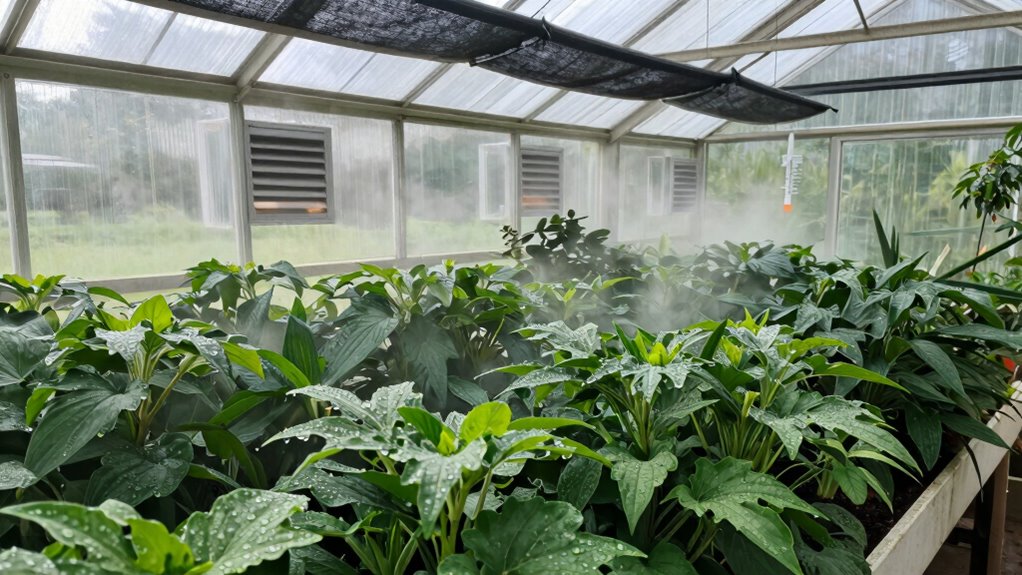
Spring greenhouses often face a tricky balance: warm days can cause temperatures to rise quickly, while cool nights might lead to temperature drops that stress your plants. Managing these fluctuations requires a combination of effective ventilation strategies and shading techniques. As the outdoor temperature climbs, you need to guarantee proper airflow to prevent overheating. Ventilation strategies involve opening vents, sidewalls, or installing exhaust fans to promote air circulation. If you have automated vents, set them to open at specific temperature thresholds to maintain a stable environment. Manual vents work well too; just stay attentive to weather changes and open them early in the day to let excess heat escape. On particularly warm days, cross-ventilation can be highly effective—opening both vents on opposite sides creates a natural airflow that cools your plants efficiently.
When the sun is intense, shading techniques become essential. Using shade cloths or shade screens helps reduce direct sunlight, preventing overheating and sun scorch. These coverings can be manually placed or automated to adjust based on sunlight intensity. Light-colored or reflective materials are preferable because they bounce sunlight away, keeping temperatures down. Positioning shading devices carefully ensures they don’t block too much light, which your plants need for photosynthesis, but enough to keep the environment comfortable. Combining shading with ventilation creates a complete cooling system that adapts to fluctuating weather conditions. Additionally, automated shading systems can optimize light reduction while maintaining plant health. Incorporating climate control technologies can further enhance your ability to respond quickly to changing temperatures and humidity levels. Properly managing airflow and shading together can significantly improve the overall climate stability within your greenhouse.
As night falls and temperatures drop, you might need to take steps to retain heat. Insulation or thermal curtains can be used to trap warmth inside your greenhouse. These are especially useful if a sudden cold snap occurs. You should also monitor local weather forecasts closely—if a cool night is predicted, preemptively closing vents or adding lightweight covers can prevent your plants from experiencing stress. Properly managing heat loss during cool nights ensures your plants don’t slow their growth or suffer damage from rapid temperature swings. Regularly checking and adjusting your environment based on real-time data can make a significant difference in maintaining ideal conditions. Implementing temperature regulation techniques can help you maintain a consistent environment despite fluctuating weather patterns. Furthermore, utilizing environmental sensors can provide real-time data to inform these adjustments more accurately.
Ultimately, the key to handling warm days and cool nights lies in your responsiveness. Regularly check temperature and humidity levels, and adjust ventilation and shading accordingly. An integrated approach—using ventilation strategies to cool during the day and shading or insulation to conserve heat at night—keeps your greenhouse environment stable. This proactive management helps your plants thrive through the unpredictable swings of spring weather, ensuring healthy growth and a successful growing season.
automatic greenhouse vent openers
As an affiliate, we earn on qualifying purchases.
As an affiliate, we earn on qualifying purchases.
Frequently Asked Questions
How Do I Prevent Pests During Temperature Fluctuations?
To prevent pests during temperature fluctuations, you should choose pest-resistant plants and maintain a clean greenhouse environment. Regularly inspect your plants for early signs of pests, and use biological pest control methods like beneficial insects to keep populations in check. Keep humidity levels stable and avoid overwatering, as pests thrive in damp conditions. These steps help protect your plants without relying heavily on chemical treatments.
What Are the Best Ventilation Strategies for Spring Greenhouses?
Think of your greenhouse as a living breath, where ventilation acts as its lungs. You should use passive cooling methods, like opening windows and vents, to allow natural airflow. Automated vents are your greenhouse’s heartbeat, opening and closing based on temperature, ensuring ideal conditions. Combining passive cooling with automated vents creates a seamless dance of air exchange, maintaining steady temperatures during spring’s fluctuating days and nights.
How Often Should I Monitor Humidity Levels?
You should monitor humidity levels at least two to three times daily to maintain proper humidity control and moisture management. During warm days, humidity can rise quickly, so check more often to prevent mold or mildew. Cool nights might lower humidity, so keep an eye on it to make sure plants don’t dry out or suffer from excess moisture. Regularly tracking helps you adjust ventilation and watering effectively.
Can I Use Shading Materials to Control Temperature?
Yes, you can use shading materials like shade cloths and reflective mulches to control temperature in your greenhouse. Shade cloths reduce sunlight, keeping temperatures down during warm days, while reflective mulches bounce sunlight away, preventing overheating and maintaining cooler conditions. These tools help create a more stable environment, protecting your plants from temperature fluctuations. Properly using shading materials guarantees your greenhouse stays comfortable for your crops, no matter the weather outside.
What Plants Tolerate the Greatest Temperature Swings?
You should focus on plants with high temperature resilience and good plant acclimation, like succulents, certain herbs, and hardy perennials. These plants tolerate significant temperature swings, thanks to their natural adaptation. To help your plants thrive, gradually expose them to temperature changes, allowing them to develop resilience. This approach guarantees they can handle the fluctuating conditions in your greenhouse, maintaining health despite warm days and cool nights.
Conclusion
By managing your greenhouse environment carefully, you can enjoy a successful spring season despite fluctuating temperatures. Remember, on average, greenhouses can heat up to 20°F warmer than outside temperatures during the day, but nights can drop sharply. Installing proper ventilation and insulation helps maintain a stable climate, ensuring healthy plants. With these strategies, you’ll boost your crop yields and extend your growing season—making every day in your greenhouse productive and rewarding.
Halloween Picks
halloween
As an affiliate, we earn on qualifying purchases.