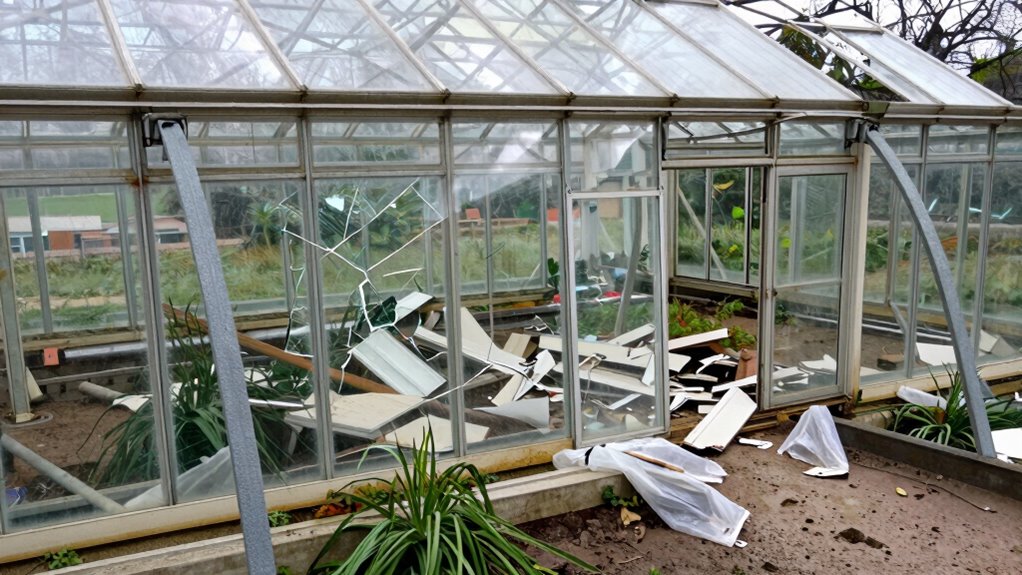

After high winds, start by carefully inspecting the overall structure for damage like bent supports, cracks, or loose joints. Check vents, windows, and exhaust fans for proper function and clear airflow. Look for tears, holes, or cracks in your covering material, and verify gutters and drainage are clear to prevent water pooling. Listen for unusual noises and tighten or replace any worn or damaged parts. Keep these steps in mind and discover more tips to protect your greenhouse effectively.

Get garden gear delivered free with Prime
- Fast, free delivery on millions of items
- Prime Video, Amazon Music and more included
- Member-only deals all year
Key Takeaways
- Conduct a visual inspection of the entire structure for bent supports, cracked joints, or visible damage.
- Check ventilation systems, vents, and exhaust fans for dislodgement or obstructions.
- Examine covering materials for tears, holes, or warping that could compromise climate control.
- Inspect support structures and mechanical components for corrosion, loosened bolts, or unusual noises.
- Perform a gentle shake test and verify drainage systems to ensure stability and proper water runoff.
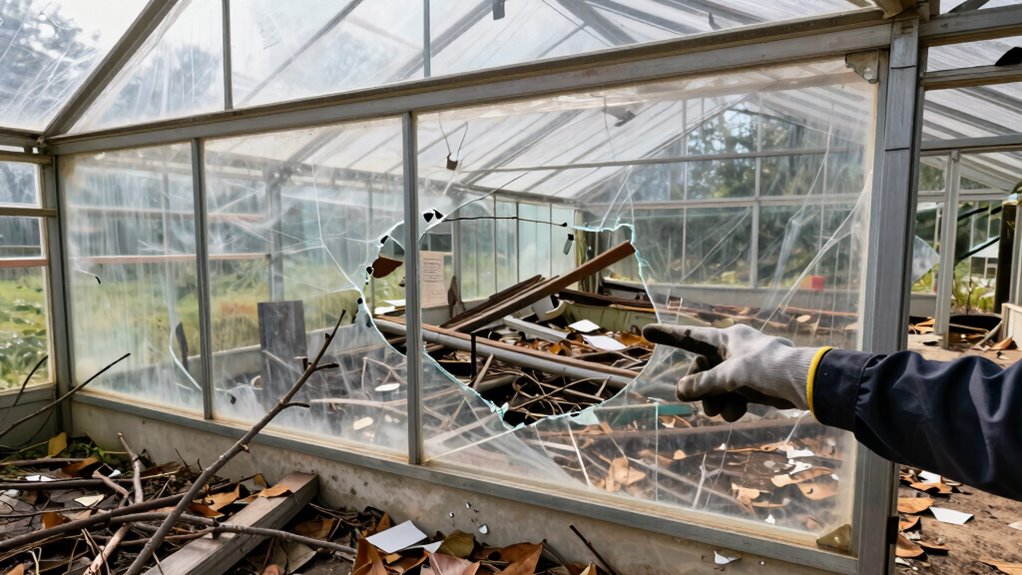
After a storm with high winds, it’s crucial to inspect your greenhouse promptly to guarantee its integrity and safeguard your plants. High winds can cause unseen damage that, if left unchecked, might lead to more severe issues later. Your first step should be to examine the overall structure closely. Look for any signs of damage to the frame, such as bent or broken supports, loose joints, or cracks in the material. Even minor dents or warping could compromise the greenhouse’s structural integrity, making it more vulnerable to future storms. Pay special attention to corner joints and roof supports, as these areas often bear the brunt of strong gusts.
Inspect your greenhouse after storms for damage to supports, joints, and cracks to ensure structural safety and resilience.
Next, evaluate the ventilation system. A functioning ventilation system is essential for maintaining proper airflow and temperature control inside your greenhouse. After a storm, check that vents, windows, and exhaust fans haven’t been dislodged or damaged. Make sure all moving parts operate smoothly and that no debris is blocking airflow. Damaged vents or broken latches can lead to poor ventilation, which stresses your plants and increases the risk of disease. Clearing debris and securing loose parts promptly helps restore ideal airflow, preventing further harm to your plants. Regular maintenance of greenhouse coverings can significantly extend their lifespan and resilience. Additionally, inspecting environmental control systems ensures your greenhouse remains a stable environment, even after extreme weather events.
While inspecting, don’t forget to examine the covering material—whether polycarbonate panels, glass, or plastic film. Look for tears, holes, or cracks that could let in cold drafts or pests. Even small punctures can compromise environmental control inside the greenhouse. If you find damage, plan to repair or replace the affected sections swiftly to maintain the internal climate. It’s also wise to check the gutters and drainage system to ensure they aren’t clogged or bent, as poor drainage can lead to water pooling and structural stress. Proper inspection techniques are essential for identifying potential issues early before they worsen. Regular maintenance of greenhouse coverings, along with a thorough check of all components, can significantly extend their lifespan and resilience. In addition, inspecting support structures for signs of wear or corrosion can prevent unexpected collapses or failures.
As you complete your inspection, listen for any unusual sounds when gently shaking the greenhouse or moving parts. These noises may indicate loose fittings or weakened supports. Tighten bolts, screws, or brackets where needed, and replace any damaged parts immediately. Remember, your goal is to restore the greenhouse’s full structural integrity and ensure that all systems are functioning properly. This proactive approach not only protects your current plants but also prolongs the lifespan of your greenhouse, making it more resilient against future storms. Regular inspections after high winds are essential for maintaining a healthy, stable environment that keeps your plants thriving no matter what the weather brings. Recognizing signs of damage early can help prevent costly repairs and ensure your greenhouse remains a safe haven for your plants.
As an affiliate, we earn on qualifying purchases.
Frequently Asked Questions
How Soon Should I Inspect My Greenhouse After a Windstorm?
You should inspect your greenhouse immediately after wind speeds subside, ideally within a few hours. Check for damage to its structural integrity, such as bent framing or cracked panels, as high winds can weaken or harm the structure. Confirm that any loose or broken parts are secured or replaced promptly. Regular inspections help prevent further damage and keep your greenhouse safe and functional after a windstorm.
What Safety Precautions Should I Take During Inspection?
During your inspection, wear appropriate safety gear like gloves, sturdy shoes, and eye protection to prevent injuries. Check the greenhouse’s structural stability carefully—look for loose or damaged frames, broken panels, or leaning supports. Avoid working on unstable areas, and if anything appears compromised, consider consulting a professional before proceeding. Prioritizing safety gear and structural stability guarantees your inspection is safe and thorough.
Can Minor Damages Be Repaired Without Professional Help?
Minor damages are like tiny cracks in a windshield—you might handle them yourself. You can often do DIY repairs if you’re comfortable with basic tools and follow clear instructions, but always start with a thorough structural assessment. Look for loose panels or small tears, and use appropriate repair kits. If unsure, consulting a professional guarantees your greenhouse remains safe and sturdy, preventing bigger problems down the line.
How Can I Prevent Wind Damage in the Future?
To prevent wind damage, you should use wind-resistant materials for your greenhouse, like sturdy polycarbonate panels or reinforced glass, which can withstand strong gusts. Additionally, guarantee secure anchoring by firmly staking or anchoring your greenhouse to the ground, especially in windy areas. Regularly inspect and tighten all fasteners and supports to keep everything stable. These steps will help protect your greenhouse from high wind events effectively.
Is It Safe to Open the Greenhouse Immediately After High Winds?
It’s not safe to open your greenhouse immediately after high winds because of potential wind damage and compromised greenhouse safety. High winds can loosen or damage panels, leading to further issues when opened. Wait until winds subside and inspect the structure for damage from a safe distance first. Only open the greenhouse once you’re confident there’s no risk of injury or additional damage, ensuring safe entry and continued protection for your plants.
Conclusion
After high winds have swept through, think of your greenhouse as a fragile sailboat battered by storms. Take your time to carefully inspect every pane and frame, like a sailor checking for leaks after rough seas. With gentle hands and keen eyes, you’ll patch up the damage and restore its strength. Soon, your greenhouse will stand resilient once more, ready to embrace the sun’s warm hug, a steadfast guardian of your lush, thriving sanctuary.
Evergreen bestsellers Picks
bestsellers
As an affiliate, we earn on qualifying purchases.