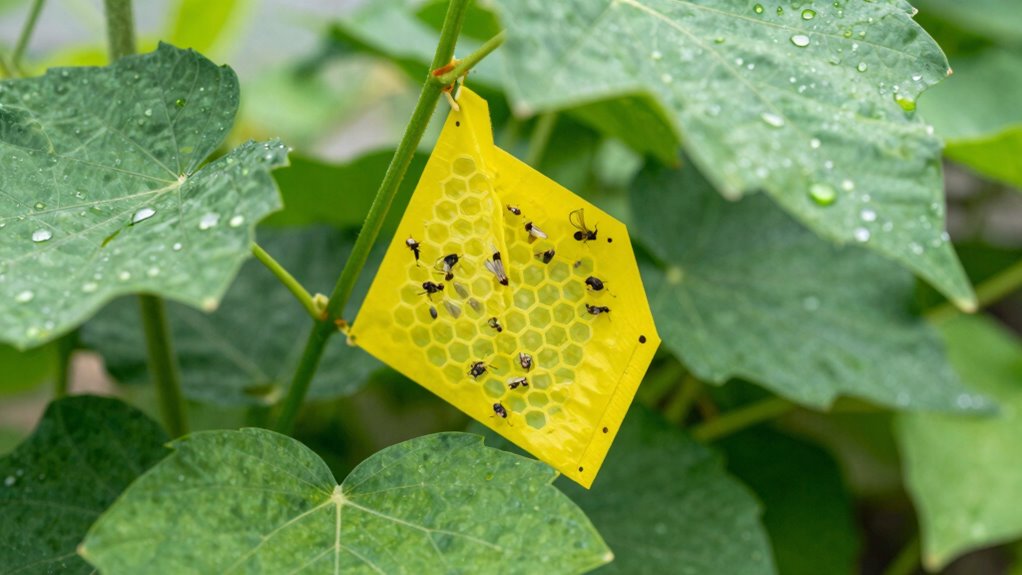
Sticky traps in a greenhouse are your main tools for pest monitoring and early detection. They help you spot pests before populations get out of control and identify key activity zones. By strategically placing traps and regularly checking them, you can evaluate the effectiveness of your pest management efforts and make informed decisions. Staying attentive to trap data will improve your control strategies and protect plant health—more insights await if you keep going.

Get garden gear delivered free with Prime
- Fast, free delivery on millions of items
- Prime Video, Amazon Music and more included
- Member-only deals all year
Key Takeaways
- Sticky traps serve as early warning systems to detect pest presence before infestations escalate.
- They provide real-time data on pest activity and movement patterns within the greenhouse.
- Proper placement and monitoring help identify infestation hotspots and pest hiding spots.
- Trap data evaluates the effectiveness of pest management strategies and biological controls.
- Using sticky traps reduces reliance on chemicals by enabling targeted, timely interventions.
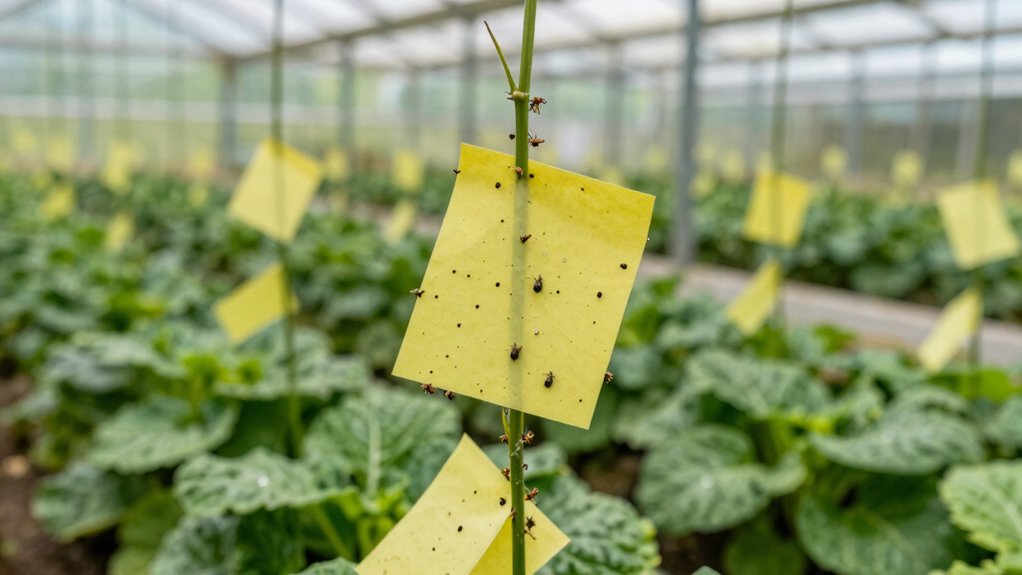
Sticky traps are commonly seen hanging in greenhouses, but their true purpose goes beyond simply catching pests. They play an essential role in pest monitoring, giving you a clear picture of what’s happening inside your greenhouse. When you understand what pests are present and where they’re most active, you can tailor your pest management strategies more effectively. Instead of relying solely on chemical controls, these traps help you detect early signs of invasion, allowing you to act before pest populations explode. Pest monitoring through sticky traps offers a real-time snapshot of pest activity, helping you identify which pests are hiding in specific areas and how their numbers fluctuate over time.
Sticky traps provide real-time pest insights, helping you target infestations early and reduce chemical reliance.
Trap placement is critical if you want the traps to do their job well. You need to position them strategically in areas where pests are most likely to travel or congregate. Usually, this means hanging traps near plant canopies, entry points, or along the edges of your greenhouse. Placement should be consistent and systematic—placing traps at the same height and in similar locations helps you track pest movement accurately. If you notice a sudden increase in pest catches in a particular trap, it signals an infestation hotspot, prompting you to focus your control efforts there. Conversely, if certain traps remain empty over time, you might reconsider their placement or the overall pest pressure in that zone.
Using sticky traps for pest monitoring also helps you evaluate the effectiveness of your integrated pest management (IPM) plan. For example, if you’ve introduced beneficial insects or used biological controls, trap data can confirm whether these measures are working or if pests are still thriving. Regularly checking and recording trap catches enables you to spot trends and make informed decisions about when to escalate or ease control measures. Additionally, understanding the types of pests prevalent in your greenhouse can influence your trap choices and bait setups, making your monitoring more targeted. Regular monitoring can also reveal patterns in pest activity, which is essential for timely interventions. This proactive approach minimizes unnecessary pesticide use, reducing costs and environmental impact.
Ultimately, sticky traps serve as your early warning system. They’re simple tools, but when used correctly with careful trap placement and diligent monitoring, they become powerful allies in maintaining healthy, pest-free plants. By paying attention to what these traps reveal, you can stay one step ahead of pests, ensuring your greenhouse remains productive and sustainable. Proper trap placement is crucial for maximizing their effectiveness and gathering accurate data. So, remember that their true value isn’t just in catching pests but in providing you with the critical data needed to manage your greenhouse effectively. Regularly reviewing trap data also helps you develop a better understanding of seasonal pest trends and pest movement patterns, which can improve your overall pest management strategies.
sticky pest traps for greenhouse
As an affiliate, we earn on qualifying purchases.
As an affiliate, we earn on qualifying purchases.
Frequently Asked Questions
How Often Should Sticky Traps Be Replaced in a Greenhouse?
You should replace sticky traps in your greenhouse every 4 to 6 weeks, depending on pest activity. Regularly check trap placement to make sure they’re effectively catching pests, and replace them when they become full or lose stickiness. This helps you with pest identification, so you can monitor pest populations accurately. Frequent replacement maintains their effectiveness, giving you a clearer picture of pest issues and allowing you to take timely control measures.
Are Sticky Traps Effective Against All Greenhouse Pests?
You can’t catch everything with just one trap, as they aren’t effective against all greenhouse pests. Pest attraction varies, and some pests may not be drawn to sticky traps at all. To maximize their effectiveness, you need proper trap placement targeting specific pests. Remember, a chain is only as strong as its weakest link, so use sticky traps alongside other integrated pest management strategies for best results.
Can Sticky Traps Harm Beneficial Insects?
Sticky traps can impact beneficial insects and non-target species, but the extent varies. When you place traps carefully, away from flowering plants and areas with helpful insects, you minimize harm. Regularly check and replace them to reduce accidental captures. While they are effective against pests, being mindful of their placement helps protect beneficial insect populations, ensuring your greenhouse remains balanced and healthy.
What Types of Sticky Traps Are Best for Different Pests?
For different pests, choose specific sticky traps based on pest identification and trap placement. Yellow traps attract flying insects like whiteflies and aphids, while blue traps work well for thrips. Place traps near plant canopies or suspected infestation points for effective monitoring. Regularly check and replace traps to guarantee continuous pest detection. Correct trap placement and accurate pest identification are key to managing pests efficiently without harming beneficial insects.
How Do Environmental Conditions Affect Sticky Trap Effectiveness?
As temperature fluctuations and humidity levels dance unpredictably, they directly impact sticky trap effectiveness. Warmer temperatures might make pests more active, increasing trap catches, while excessive humidity can cause traps to become sticky or moldy, reducing their stickiness. You notice how a sudden cool spell or damp air weakens the traps’ grip, reminding you to monitor environmental conditions closely and adjust your strategies to keep pests trapped efficiently.
Conclusion
Sticky traps are like silent sentinels in your greenhouse, silently catching pests before they cause chaos. They’re not just about trapping insects—they’re about giving you peace of mind and a clearer picture of what’s happening in your plants. When used wisely, they become your trusted allies in pest management. Think of them as the first line of defense, turning your greenhouse into a fortress where healthy plants thrive, free from pest invasions.
Fall Picks
fall essentials
As an affiliate, we earn on qualifying purchases.