Integrated Pest Management (IPM) in greenhouses combines biological controls like beneficial insects with pest monitoring to keep pest populations in check. By regularly inspecting plants and using tools like sticky traps, you can detect issues early and act strategically. This approach reduces chemical use, promotes healthier plants, and creates a sustainable environment. To discover effective techniques and how to implement them, you’ll find valuable insights as you continue exploring IPM strategies.
Key Takeaways
- IPM in greenhouses combines biological control, monitoring, and cultural practices to sustainably manage pests.
- Regular pest monitoring guides timely biological control interventions, reducing reliance on chemical pesticides.
- Biological control uses natural enemies like predatory insects to suppress pest populations proactively.
- Monitoring tools such as sticky traps and visual inspections provide essential data for decision-making.
- Implementing IPM promotes healthier plants, environmental sustainability, and minimizes chemical residues.
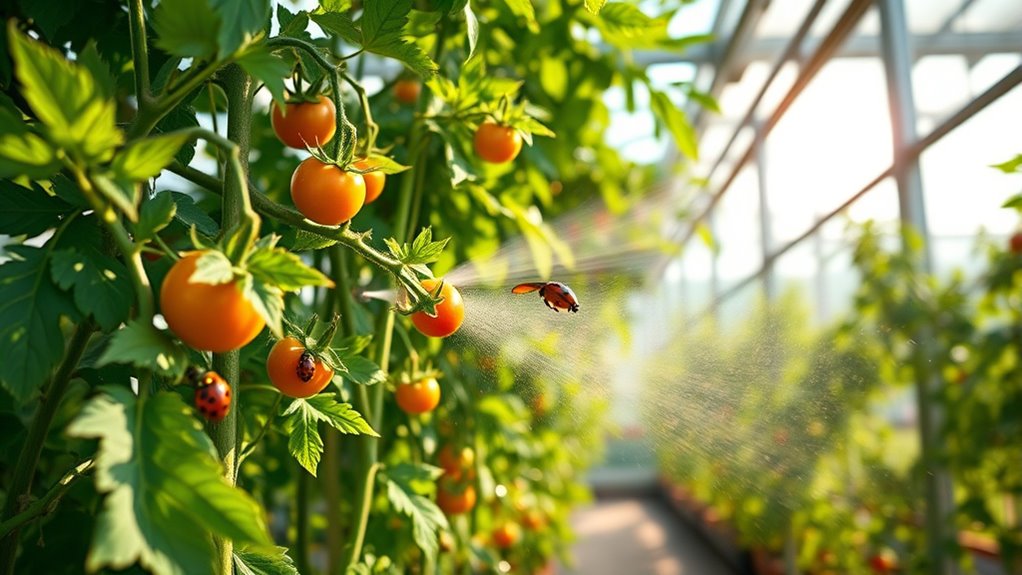
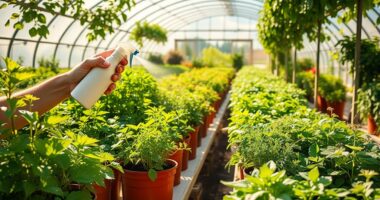
Have you ever wondered how greenhouse growers keep pests under control without relying solely on chemicals? The answer lies in integrated pest management, or IPM, a holistic approach that combines various strategies to manage pests sustainably. One of the key components of IPM is biological control, which involves using natural enemies like predatory insects or pathogens to keep pest populations in check. But biological control isn’t a set-it-and-forget-it solution. It depends heavily on pest monitoring, a vital step where you regularly inspect plants for signs of pests or damage. Pest monitoring helps you understand the pest situation, determine thresholds for action, and decide when and which biological agents to introduce.
When you implement pest monitoring, you’re fundamentally gathering data that guides your entire IPM strategy. You might set up sticky traps or use visual inspections to detect pest presence early. This proactive approach allows you to target pests precisely when they’re most vulnerable, reducing the need for chemical interventions. Once pests are detected, biological control agents can be introduced or augmented. For example, releasing lady beetles to control aphids or applying beneficial nematodes for soil-dwelling pests becomes more effective when timed correctly, based on monitoring data. This synergy between pest monitoring and biological control minimizes pesticide use, lowers chemical residues, and promotes a healthier greenhouse environment.
Implement pest monitoring to time biological controls effectively and reduce chemical use.
Furthermore, biological control agents often work best when pest populations are kept at manageable levels, which pest monitoring helps you achieve. If you wait until pest numbers explode, biological control might struggle to keep up, and chemical options might seem tempting. But with consistent monitoring, you can intervene early, releasing natural enemies at the right moment to prevent outbreaks altogether. This approach also helps you avoid unnecessary pesticide applications, reducing resistance development and protecting beneficial insects that contribute to long-term pest suppression.
In fundamental terms, pest monitoring acts as the eyes of your IPM program, providing real-time insights to inform your biological control efforts. It transforms pest management from reactive to proactive, making your greenhouse more resilient and sustainable. By understanding pest dynamics through monitoring, you can make smarter decisions, deploying biological control agents effectively and reducing reliance on chemicals. This integrated approach not only controls pests efficiently but also fosters a healthier, more productive greenhouse environment. So, if you’re aiming for sustainable pest management, remember that pest monitoring is your foundation, enabling biological control to work its best and helping you maintain healthy, thriving plants.
Additionally, staying informed about potential pitfalls in adopting new payment technologies can help you better manage your pest control system investments and ensure compliance with industry standards.
Frequently Asked Questions
How Does IPM Impact Greenhouse Crop Yield and Quality?
IPM boosts your greenhouse crop yield and quality by reducing pest damage through targeted strategies. By promoting crop diversity, you create a less favorable environment for pests, while pest monitoring helps catch issues early. This proactive approach minimizes chemical use, leading to healthier plants and higher-quality produce. As a result, your crops grow more robustly, ensuring better yields and improved quality for your greenhouse operation.
Are There Specific Pests More Challenging to Control With IPM?
Yes, some pests are more challenging to control with IPM, especially those with pest resistance or hidden pests. Pest resistance develops when pests adapt to common control methods, making them harder to eliminate. Hidden pests, like eggs or larvae tucked away in crevices, evade detection and treatment. You need to regularly monitor, rotate control tactics, and stay vigilant to effectively manage these tougher pests within your greenhouse.
What Are the Costs Associated With Implementing IPM in Greenhouses?
Implementing IPM in your greenhouse involves costs related to a thorough cost analysis and expense management. You’ll invest in monitoring tools, biological controls, and staff training, which can initially seem high. However, these expenses often lead to long-term savings by reducing chemical use, preventing crop loss, and increasing productivity. While upfront investments are necessary, careful planning helps you balance costs and benefits, making IPM a cost-effective pest control strategy.
How Does IPM Integrate With Organic Greenhouse Practices?
You can seamlessly integrate IPM with organic greenhouse practices by focusing on biological control methods that are compatible with organic standards. This means introducing natural predators or beneficial insects to control pests, avoiding synthetic chemicals, and maintaining organic certification. By combining biological control with organic practices, you create a sustainable system that minimizes chemical use and promotes healthy plant growth, ensuring your greenhouse remains both eco-friendly and compliant with organic guidelines.
What Training Is Necessary for Staff to Effectively Implement IPM?
You need to provide your staff with thorough training in pest identification and pest management techniques. This includes educating them on how to recognize early signs of pests, understanding IPM principles, and applying control methods safely. Staff education is vital for effective IPM implementation, ensuring everyone knows how to monitor, assess, and respond to pest issues proactively. Regular training updates help keep your team sharp and confident in managing greenhouse pests.
Conclusion
By adopting integrated pest management in your greenhouse, you can reduce chemical use by up to 50%, making your operation safer and more sustainable. This approach not only minimizes environmental impact but also promotes healthier crops and yields. Remember, proactive monitoring and combining biological, cultural, and mechanical methods lead to better pest control. Embrace IPM, and you’ll see improved plant health and increased profitability—proving that smarter pest management truly pays off.