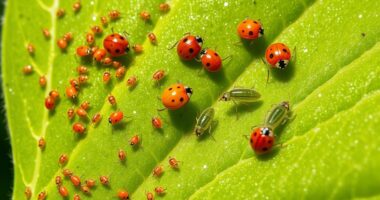
To make greenhouse pest monitoring less random, you should integrate automated sensors to track environmental conditions and pest activity in real time. Use this data to develop a routine for analyzing trends and identifying hotspots early. Combine technology with biological control methods, like releasing beneficial insects, for targeted pest suppression. Continuously review your strategies based on data insights to stay ahead of outbreaks. Keep exploring, and you’ll discover effective ways to create a more precise and proactive pest management system.

Get garden gear delivered free with Prime
- Fast, free delivery on millions of items
- Prime Video, Amazon Music and more included
- Member-only deals all year
Key Takeaways
- Deploy automated sensors to continuously monitor environmental conditions and pest activity, reducing reliance on manual checks.
- Integrate real-time data analysis to identify pest trends and predict outbreaks proactively.
- Use targeted biological controls based on sensor insights to improve precision and effectiveness.
- Establish a routine for interpreting data to adjust pest management strategies dynamically.
- Develop a science-based pest monitoring plan that combines technology, environmental factors, and biological methods.
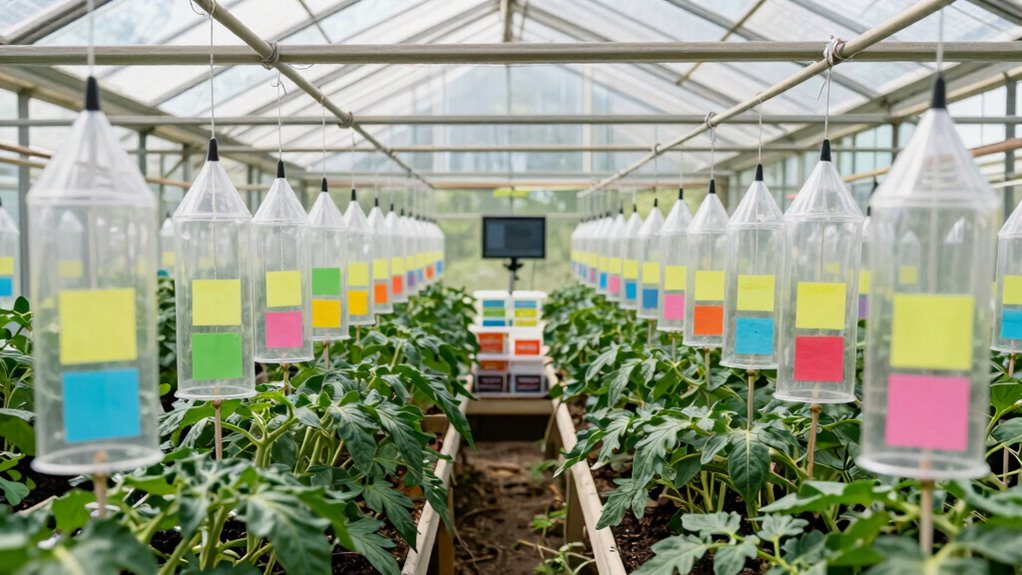
Effective pest monitoring in a greenhouse doesn’t have to be a shot in the dark. Instead, you can implement strategies that make the process more precise, predictable, and effective. One of the most reliable ways to do this is by integrating biological control methods with modern technology like automated sensors. Biological control involves releasing natural predators or beneficial insects to keep pest populations in check, but it’s only effective if you know when and where pests are present. Automated sensors can provide real-time data about environmental conditions and pest activity, allowing you to respond swiftly and accurately.
Optimize pest control with real-time sensor data and biological methods for healthier greenhouse crops.
Using automated sensors, you can track factors like temperature, humidity, and even pest movement patterns without constant manual inspections. These sensors can be strategically placed throughout your greenhouse to monitor hotspots where pests are most likely to thrive. By analyzing this data, you can identify emerging pest problems early, reducing the chance of infestations escalating unnoticed. This targeted approach helps you make informed decisions about when to release biological control agents, maximizing their effectiveness.
To make pest monitoring less random, you should develop a routine of interpreting sensor data regularly. Instead of reacting only after noticing visible damage, you’ll catch signs of pest activity as soon as they occur. For example, some sensors can detect pest movement or specific environmental cues that favor pest reproduction, giving you an early warning system. When integrated with biological control, these insights allow you to release natural predators at the optimal time, ensuring they’re most effective in suppressing pest populations. This combination minimizes the need for chemical interventions, which can disrupt your biological balance.
Another key to reducing randomness is maintaining a detailed pest monitoring plan. Use data from automated sensors to map pest activity over time and identify patterns. This will help you predict when pests are likely to become problematic, so you can implement biological control measures preemptively. Regularly reviewing sensor data and adjusting your biological control strategies accordingly creates a dynamic, responsive pest management system rather than a reactive one. Incorporating sensor data analysis into your routine further enhances your ability to make scientifically informed decisions. Additionally, understanding the environmental conditions that influence pest behavior can help you optimize your overall pest control strategy. Recognizing the importance of integrated pest management can further improve your success rate by combining multiple control methods for a holistic approach. Utilizing environmental sensing technology can also assist in creating a more precise and tailored pest management plan.
In short, by leveraging automated sensors to gather real-time data and combining this with biological control, you transform pest monitoring from guesswork to a science-based process. This approach minimizes the randomness, enhances your ability to prevent infestations, and promotes healthier, more resilient plants. When you continuously refine your monitoring with technological insights, you establish a proactive system that safeguards your greenhouse with precision and confidence.
automated greenhouse pest sensors
As an affiliate, we earn on qualifying purchases.
As an affiliate, we earn on qualifying purchases.
Frequently Asked Questions
What Are the Most Common Pests in Greenhouses?
You’ll find that common greenhouse pests include aphids, whiteflies, spider mites, and fungus gnats. To effectively manage them, focus on pest identification and understanding their pest lifecycle. Recognizing early signs helps you target pests before they reproduce rapidly. Regular monitoring and inspecting plants allow you to spot pests at different lifecycle stages, making your pest control efforts more precise and less random, ultimately protecting your greenhouse’s health.
How Often Should Pest Monitoring Be Conducted?
You should conduct pest monitoring weekly to catch issues early. During each check, look for signs of pests and damage, and consider integrating biological control methods to manage outbreaks naturally. Planting pest-resistant crops can also reduce the frequency of monitoring needed. Regular monitoring helps you identify pests promptly, enabling targeted interventions and minimizing the reliance on chemical controls, ultimately maintaining a healthier greenhouse environment.
What Tools Are Best for Accurate Pest Detection?
You should use a combination of sensor technology and manual inspection for accurate pest detection. Sensor technology, like pheromone traps and electronic monitors, provides real-time data and early warnings. Manual inspections allow you to visually identify pests and damage that sensors might miss. Together, these tools create an all-encompassing monitoring system, reducing randomness and helping you catch infestations early, so you can take targeted action and protect your greenhouse crops effectively.
How Can Weather Affect Pest Monitoring Accuracy?
Weather acts like a puppet master, pulling the strings of climate patterns that influence pest behavior. When temperatures rise or humidity shifts unexpectedly, pests become more active or hide, making monitoring trickier. You need to stay alert to these weather changes because they directly impact pest patterns. By understanding how climate influences pest behavior, you can time your monitoring efforts better, catching pests when they’re most visible and reducing guesswork.
Are There Eco-Friendly Pest Monitoring Options?
Yes, there are eco-friendly pest monitoring options. You can use biological controls like beneficial insects to naturally manage pests. Organic traps, such as sticky traps or pheromone-based lures, also help monitor pest activity without chemicals. These methods minimize environmental impact, promote sustainable practices, and provide accurate pest detection. Incorporating biological controls and organic traps into your greenhouse can make pest monitoring more eco-friendly and effective.
Conclusion
Now that you’ve learned how to make your pest monitoring more systematic, imagine what you could uncover with a little more precision. Will you catch those sneaky pests before they spread? The next step could be the game-changer—turning guesswork into certainty. Don’t wait too long to refine your approach; the surprises lurking in your greenhouse might just surprise you. Ready to take control and stay one step ahead? The secret’s in your hands.
Fall Picks
fall essentials
As an affiliate, we earn on qualifying purchases.