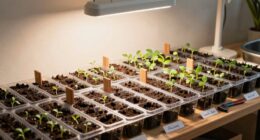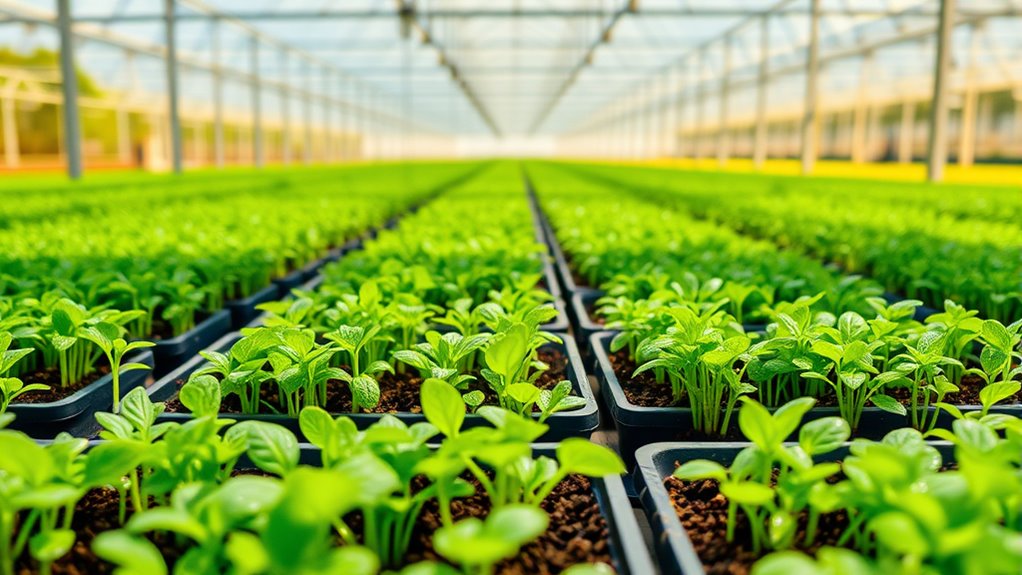

Growing microgreens in a greenhouse allows you to produce fresh, nutritious greens all year by controlling temperature, humidity, and lighting. Use high-quality soil, keep it moist, and sow seeds evenly for best results. Supplement natural sunlight with full-spectrum LED grow lights, especially during winter, and aim for 12–16 hours of light daily. Monitoring environmental conditions guarantees healthy growth, and exploring these techniques further will help you master your microgreen harvest.
Key Takeaways
- Control temperature, humidity, and lighting conditions to optimize microgreen growth year-round in the greenhouse.
- Use full-spectrum LED grow lights with a 12–16 hour schedule to supplement natural sunlight.
- Prepare sterile, well-draining soil mixes and keep them evenly moist for healthy germination.
- Ensure proper airflow and monitor environmental parameters to prevent mold and stress.
- Regularly adjust watering, lighting, and environmental controls based on microgreen variety needs.

Have you ever considered growing microgreens in a greenhouse? If you’re looking to produce fresh, nutritious greens year-round, a greenhouse offers an ideal environment. To succeed, you’ll want to focus on proper lighting techniques and soil preparation, which are fundamental to healthy microgreen growth. Lighting is critical because microgreens need ample light to develop vibrant color and strong flavor. In a greenhouse, you can optimize natural sunlight, but supplementing with grow lights is often necessary, especially during shorter winter days. Use full-spectrum LED grow lights, positioning them close enough to the seedlings to prevent stretching but not so close as to cause heat stress. A consistent light schedule of 12 to 16 hours per day encourages rapid, uniform sprouting and growth. Adjust the light intensity and duration based on the specific microgreen varieties you’re cultivating, as some plants thrive with more intense or extended lighting.
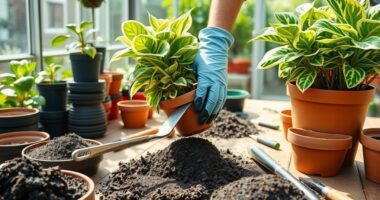
Soil preparation plays a essential role in setting the foundation for healthy microgreens. Start with a high-quality, sterile seed-starting mix or make your own blend with compost, peat moss, and vermiculite. This ensures good drainage, aeration, and nutrient availability. Avoid using garden soil, which can harbor pests and diseases, and may be too dense for microgreens. Before sowing, thoroughly moisten the soil to create an even, damp surface—microgreens germinate best in moist conditions. Spread the seeds evenly across the prepared soil, pressing them gently into the surface to ensure good contact. Cover very tiny seeds lightly with a thin layer of soil or a damp paper towel to improve germination rates. Keep the soil consistently moist but not waterlogged, using a spray bottle or gentle watering can. Maintaining proper soil moisture helps prevent mold and encourages swift sprouting.
In a greenhouse, you also have control over temperature and humidity, which complements your efforts with lighting techniques and soil prep. Keep temperatures around 65–75°F to promote fast germination and vigorous growth. Proper airflow reduces humidity buildup, decreasing the risk of mold or damping-off disease. Regularly monitor these conditions, adjusting your lighting and watering schedule as needed. With the right combination of lighting techniques and meticulous soil preparation, you’ll create an environment where microgreens thrive. This approach ensures a steady supply of fresh, flavorful greens, regardless of the season outside. Growing microgreens in a greenhouse becomes not just feasible but highly productive when you manage these key elements effectively.
Frequently Asked Questions
What Are the Best Microgreen Varieties for Greenhouse Cultivation?
You should choose microgreen varieties like basil, radish, sunflower, and pea shoots for greenhouse cultivation. Focus on seed selection, opting for high-quality, disease-free seeds suited for your climate. Prepare your soil with well-draining, nutrient-rich media to guarantee healthy growth. These varieties thrive indoors and produce quick, flavorful greens, making them ideal for a greenhouse setup. Proper seed selection and soil preparation are key to a successful microgreen harvest.
How Does Humidity Affect Microgreen Growth Indoors?
Ever wonder how humidity impacts your microgreen growth indoors? Proper humidity control is essential—if it’s too high, moisture management becomes a challenge, leading to mold and damping-off; if it’s too low, your microgreens may dry out and stunt. Maintaining ideal humidity levels ensures healthy, vigorous growth, so you should monitor and adjust your environment regularly. Keep the humidity just right for thriving microgreens!
Can Microgreens Be Grown Year-Round in a Greenhouse?
Yes, you can grow microgreens year-round in a greenhouse. To guarantee continuous growth, make seasonal adjustments like controlling temperature and humidity. Use proper watering techniques, such as misting or gentle watering, to prevent overwatering or drought stress. Regular monitoring helps you adapt to changing seasons, maintaining ideal conditions. This way, you’ll enjoy fresh microgreens all year, regardless of outside weather variations.
What Are Common Pest Issues in Greenhouse Microgreen Farms?
You’ll often face pest issues like aphids, fungus gnats, and whiteflies in greenhouse microgreen farms. To manage pests effectively, prioritize pest management strategies such as introducing beneficial insects and using organic insecticides. Additionally, practicing crop rotation helps prevent pest buildup and reduces the risk of infestations. Regular monitoring and maintaining cleanliness are essential to keeping your microgreens healthy and pest-free year-round.
How to Optimize Light Conditions for Microgreens Indoors?
You might think natural light is enough, but for ideal growth, use LED lighting to enhance indoor conditions. Adjust the light duration to mimic natural daylight, typically around 12-16 hours daily, ensuring the microgreens receive consistent, sufficient light. Position LED lights close enough to prevent stretching without overheating. By fine-tuning these factors, you’ll promote healthy, vigorous microgreens regardless of indoor lighting limitations.
Conclusion
Growing microgreens in a greenhouse opens a world of vibrant, nutrient-packed greens that can transform your meals and impress everyone who tastes them. With a little effort, you’ll cultivate a miniature jungle bursting with flavor and energy—so lush and abundant, it’s like nature’s own treasure chest right in your backyard. Keep nurturing your microgreens, and you’ll enjoy a never-ending supply of fresh, homegrown goodness that makes every meal a celebration. Your green thumb is truly unstoppable!