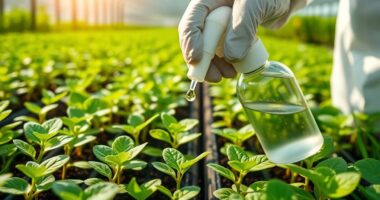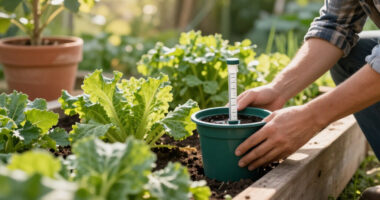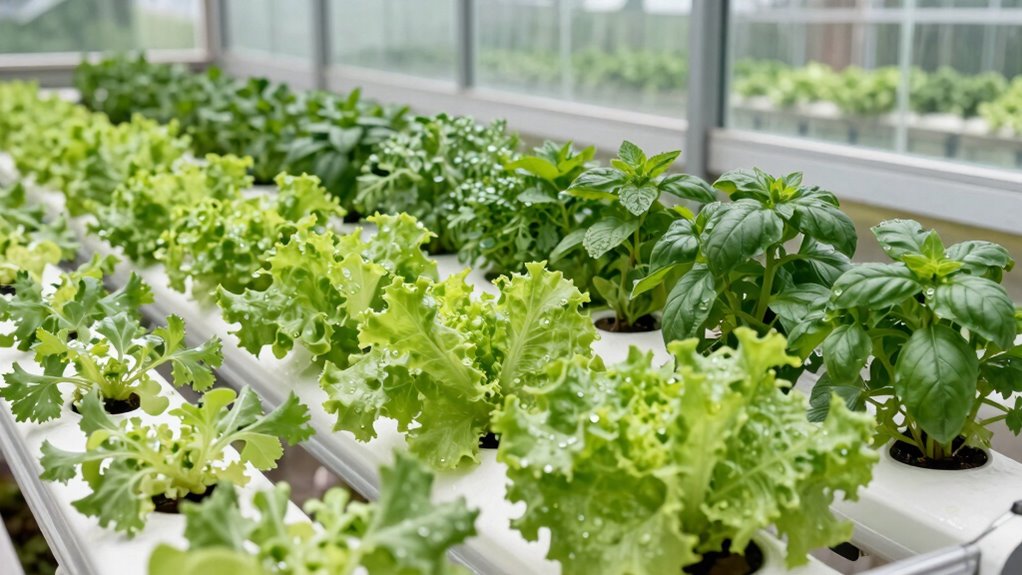

The best lettuce-and-herb strategy for your hydroponic greenhouse involves integrating these plants to maximize space and promote natural pest control. By pairing lettuce with herbs like basil or mint, you enhance nutrient efficiency and create a balanced environment. Herbs help repel pests and attract beneficial insects, reducing chemical use. Fine-tuning your nutrient solutions for each crop supports healthy growth and higher yields. Keep exploring to discover how these methods can boost your greenhouse’s success.

Get garden gear delivered free with Prime
- Fast, free delivery on millions of items
- Prime Video, Amazon Music and more included
- Member-only deals all year
Key Takeaways
- Integrate lettuce with herbs like basil and mint for natural pest control and enhanced crop health.
- Use tailored nutrient solutions with higher potassium for herbs and steady nitrogen for lettuce.
- Employ companion planting to promote beneficial insects and reduce chemical pest interventions.
- Optimize crop rotation and diversification to prevent diseases and improve sustainability.
- Maximize space and resource efficiency through continuous harvests of diverse, complementary crops.
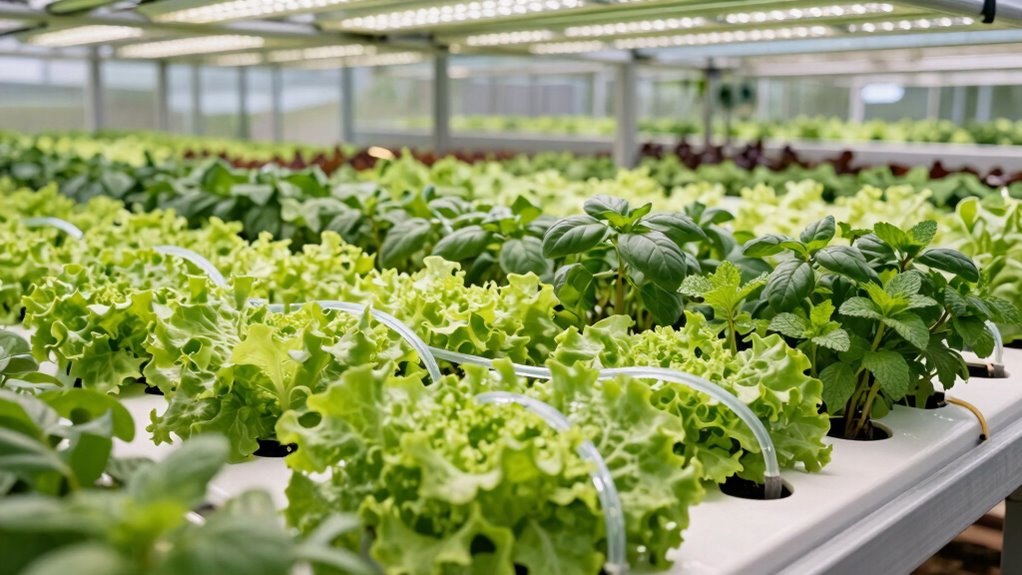
Have you ever considered how combining lettuce and herbs can maximize your hydroponic greenhouse? This pairing isn’t just about maximizing space; it’s about creating a balanced environment that benefits your plants and your overall system. When you integrate lettuce and herbs thoughtfully, you can streamline pest management and enhance nutrient efficiency, leading to healthier crops and better yields.
Combining lettuce and herbs creates a balanced, efficient, and pest-resistant hydroponic greenhouse environment for healthier, higher-yielding crops.
Lettuce and herbs have complementary growth patterns and nutritional needs that make them ideal companions in a hydroponic setup. By planting these together, you can maintain a more stable environment, which helps prevent pest outbreaks. For instance, some herbs like basil or mint naturally repel common pests that target lettuce, reducing the need for chemical interventions. This natural pest management keeps your greenhouse healthier without compromising your produce’s quality or safety. Additionally, the diversity in plant types encourages beneficial insects and natural predators, creating a balanced ecosystem that keeps pest populations in check.
Nutrient efficiency is another major advantage of this strategy. Lettuce and herbs require specific nutrient profiles, and growing them together allows you to fine-tune your nutrient solutions to meet both plants’ needs. For example, herbs like basil thrive with slightly higher levels of potassium and phosphorus, while lettuce prefers a balanced, steady supply of nitrogen. By carefully adjusting your nutrient mix, you guarantee both crops receive what they need for ideal growth. This targeted approach minimizes waste and maximizes efficiency, which is essential in a controlled environment like a hydroponic greenhouse. It also simplifies your fertilization schedule, reducing the risk of over- or under-feeding, which can impair plant health or lead to nutrient runoff. Incorporating plant compatibility into your planning can further optimize your crop combinations and growth success. Moreover, understanding soil-less cultivation principles can help you better manage your hydroponic system for even greater productivity. Additionally, selecting compatible plant varieties can help prevent disease buildup and promote healthier growth.
Furthermore, this combination promotes continuous harvests and crop diversity, which is indispensable for a sustainable operation. Lettuce grows quickly, providing rapid turnover, while herbs can be harvested multiple times, offering ongoing revenue streams. The synergy between the plants encourages efficient use of space and resources, making your greenhouse more productive and resilient. Regularly rotating and mixing these crops also prevents disease buildup and discourages pests that target specific plants, maintaining a healthier environment overall. Understanding the biodiversity benefits of plant diversity can help you create a more resilient and sustainable greenhouse ecosystem. Including plant diversity in your crop planning can significantly boost your system’s resilience and productivity.
hydroponic lettuce and herb grow kit
As an affiliate, we earn on qualifying purchases.
As an affiliate, we earn on qualifying purchases.
Frequently Asked Questions
How Does the Lettuce-And-Herb Strategy Impact Greenhouse Energy Consumption?
You’ll find that the lettuce-and-herb strategy improves energy efficiency by optimizing lighting and temperature control, reducing overall power use. It also promotes crop diversification, allowing you to grow multiple plants simultaneously, which maximizes space and resource utilization. This approach minimizes energy waste, making your greenhouse more sustainable. By focusing on diverse, fast-growing crops like lettuce and herbs, you streamline operations and lower energy consumption while increasing productivity.
What Are the Initial Costs for Implementing This Hydroponic Approach?
They say, “You get what you pay for,” and startup expenses for this hydroponic approach vary. Your initial costs include equipment like grow lights, nutrient delivery systems, and climate controls, along with building modifications. Cost estimation can range from a few thousand dollars for small setups to much more for larger, commercial-scale greenhouses. Planning carefully guarantees your investment matches your goals and helps you budget effectively from the start.
Can This Strategy Be Adapted for Outdoor Hydroponic Systems?
Yes, you can adapt this lettuce-and-herb hydroponic strategy for outdoor systems. For outdoor adaptation, you’ll need to take into account environmental challenges like temperature fluctuations, pests, and weather conditions. You might need protective covers or shade structures to maintain ideal growth. Adjust nutrient delivery and watering schedules based on outdoor conditions, and monitor plants closely to address any environmental challenges promptly, ensuring healthy growth and high yields.
How Does Pest Management Differ With This Lettuce-And-Herb Setup?
Like a well-tuned orchestra, pest management in your hydroponic setup relies on harmony. You’ll use integrated pest control, blending physical barriers with biological agents to target pests without harming your plants. This approach minimizes chemical use, keeps your herbs and lettuce healthy, and reduces environmental impact. By focusing on biological agents, you foster a balanced ecosystem, making pest issues easier to control, just like a conductor guiding a seamless performance.
What Varieties of Herbs Are Most Compatible With Lettuce in This System?
You should consider basil, mint, and cilantro as the most compatible herbs for lettuce in this hydroponic system. Herb compatibility and crop pairing are key for maximizing space and health. These herbs grow well alongside lettuce, sharing similar nutrient needs and light requirements. Their growth habits complement each other, reducing pests and disease risks. Just guarantee proper spacing and airflow, and you’ll create a thriving, harmonious greenhouse environment.
Conclusion
By adopting the lettuce-and-herb strategy, you can optimize your hydroponic greenhouse’s productivity and sustainability. For instance, imagine a small farm that doubles its yield by combining basil with crisp lettuce, maximizing space and resource use. This approach not only boosts your crop diversity but also attracts more customers. So, whether you’re starting out or expanding, integrating herbs with lettuce can make your greenhouse more efficient and profitable, paving the way for long-term success.
Halloween Picks
halloween
As an affiliate, we earn on qualifying purchases.