
Choosing the right irrigation layout can save more water than just upgrading equipment. By strategically positioning your watering methods and following natural land contours, you reduce runoff, evaporation, and overwatering. Incorporating drip irrigation for targeted watering guarantees every drop reaches plant roots efficiently. Proper layout keeps water where it’s needed most, especially on slopes or uneven terrain. To discover how effective design choices can maximize your water savings further, keep exploring these strategies.

Get garden gear delivered free with Prime
- Fast, free delivery on millions of items
- Prime Video, Amazon Music and more included
- Member-only deals all year
Key Takeaways
- Optimizing irrigation layout ensures targeted watering, reducing water waste more effectively than equipment upgrades.
- Incorporating drip irrigation along contours enhances water efficiency and minimizes evaporation and runoff.
- Strategic placement of watering methods improves water delivery directly to plant roots.
- Proper landscape design reduces runoff and overwatering, maximizing water conservation.
- Aligning layout with terrain and climate conditions increases watering efficiency beyond equipment improvements.

Efficient irrigation layout is vital for reducing water waste and maximizing savings. When planning your system, the way you arrange your watering methods can make a bigger difference than investing in new equipment. Instead of relying solely on upgrading your tools, optimizing your layout often results in more significant water savings. For example, incorporating drip irrigation can deliver water directly to the roots of plants, minimizing evaporation and runoff. This targeted approach guarantees that every drop counts, especially in areas prone to drought or where water conservation is a priority. Drip systems are flexible and can be adapted to fit various landscape shapes, making them a smart choice for precise watering.
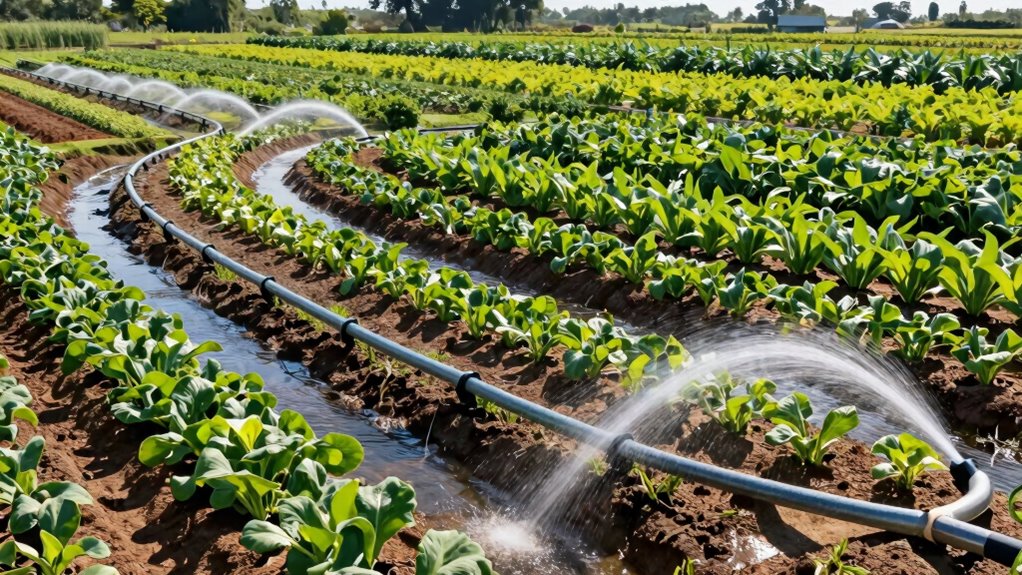
Alongside drip irrigation, contour farming plays an indispensable role in improving your irrigation efficiency. By aligning your planting and watering along natural land contours, you reduce water runoff and soil erosion. This method slows the flow of water across the landscape, allowing it to soak into the soil more effectively. When combined with a thoughtful irrigation layout, contour farming ensures that water remains on your property longer, reaching roots that might otherwise be missed by traditional systems. It’s particularly useful on sloped terrain, where water tends to flow away quickly, wasting precious resources. Understanding the terrain and customizing your layout accordingly is crucial for maximizing water conservation. Incorporating soil type considerations can further enhance the effectiveness of your irrigation plan. Additionally, considering climate conditions can help tailor your watering schedule to seasonal needs, further increasing overall efficiency. Implementing these landscape-specific strategies allows for more sustainable water management practices.
Contour farming reduces runoff, improves water absorption, and ensures water reaches more roots, especially on sloped terrain.
The key to maximizing water savings is understanding the terrain and customizing your layout accordingly. Instead of a one-size-fits-all approach, tailor your irrigation plan to the specific contours and plant needs of your land. Integrate drip lines along the contours to take advantage of the slowed water flow, ensuring even distribution. This strategic combination of contour farming and drip irrigation reduces the need for excess watering, lowers your water bills, and promotes healthier plants. It also minimizes the risk of overwatering, which can lead to root rot and other issues. A comprehensive understanding of water management principles can significantly improve your system’s efficiency. Properly balancing these principles with your landscape design enhances overall water use efficiency and helps protect local water resources.
Furthermore, optimizing your irrigation layout encourages uniform water distribution, reducing dry spots and over-saturated areas. You avoid wasting water on unnecessary runoff or evaporation, which often happens with poorly planned sprinklers or overspray. By focusing on a precise, contour-aware design, you create a system that’s efficient and environmentally friendly. This approach not only saves water but also lessens your environmental impact, making your landscape more sustainable. Employing smart irrigation technology can further refine water application by adjusting schedules based on weather conditions, ensuring even greater conservation.
In the end, it’s clear that a well-designed irrigation layout—one that emphasizes drip irrigation and contour farming—is more effective for water conservation than simply upgrading equipment. Thoughtful planning and strategic placement guarantee that every drop is used wisely, leading to healthier landscapes and significant savings over time. You’ll find that investing time into the layout pays off through reduced water use, lower costs, and a more resilient, thriving garden or farm.
drip irrigation system for landscape
As an affiliate, we earn on qualifying purchases.
As an affiliate, we earn on qualifying purchases.
Frequently Asked Questions
How Does Soil Type Influence Irrigation Layout Efficiency?
Soil type greatly influences irrigation layout efficiency because permeability and water retention vary. You should modify your layout based on soil permeability—more permeable soils like sandy types require more frequent, shallow watering, while clay soils with high water retention need less frequent irrigation. Properly tailoring your layout ensures water reaches roots effectively, reduces runoff, and minimizes waste, making your system more efficient and conserving water better than simply installing new equipment.
Can Irrigation Layout Adjustments Be Made Mid-Season?
Yes, you can make irrigation layout adjustments mid-season by focusing on seasonal adjustments and layout flexibility. You should evaluate your current system’s performance, identify areas needing more or less water, and modify sprinkler placement or zones accordingly. This allows you to optimize water usage without investing in new equipment. Regular monitoring and adjustments guarantee your irrigation remains efficient and responsive to changing weather and crop needs throughout the season.
What Are the Cost Implications of Changing Layout Versus Equipment?
Changing your irrigation layout can be more cost-effective than replacing equipment when considering water conservation. A detailed cost analysis reveals layout adjustments often require lower initial investment and less ongoing maintenance. By redesigning your system, you maximize water efficiency with minimal expenses, making it a smart choice for long-term savings. Overall, layout modifications provide significant water conservation benefits without the hefty costs associated with new equipment installation.
How Does Climate Variability Affect Layout Effectiveness?
Climate variability is like a wild card in your irrigation deck, making layout effectiveness a moving target. You need to prioritize climate adaptation strategies that optimize water conservation, adjusting your layout to handle unpredictable rainfall and temperature swings. By designing flexible, responsive systems, you can minimize waste and guarantee your crops get the right amount of water, no matter how the weather plays out. This proactive approach keeps your water use efficient and sustainable.
Are There Specific Plant Types That Benefit More From Layout Changes?
Certain plant types, like deep-rooted perennials and drought-tolerant species, benefit more from layout changes. By focusing on plant-specific watering and root zone optimization, you guarantee each plant receives the right amount of water, reducing waste. Adjusting the layout to match root zones prevents overwatering and encourages healthy growth, especially for water-sensitive plants. This targeted approach maximizes water efficiency and promotes healthier, more resilient landscapes.
Conclusion
Choosing the right irrigation layout can save you more water than investing in new equipment. For instance, implementing a drip irrigation system can reduce water use by up to 50%, making a huge difference for your water bill and the environment. By carefully planning your layout, you can maximize efficiency without extra costs. Remember, small changes in how you water your landscape can lead to big savings—so it’s worth considering smarter layout choices before upgrading your gear.
Fall yard work Picks
leaf blowers
As an affiliate, we earn on qualifying purchases.