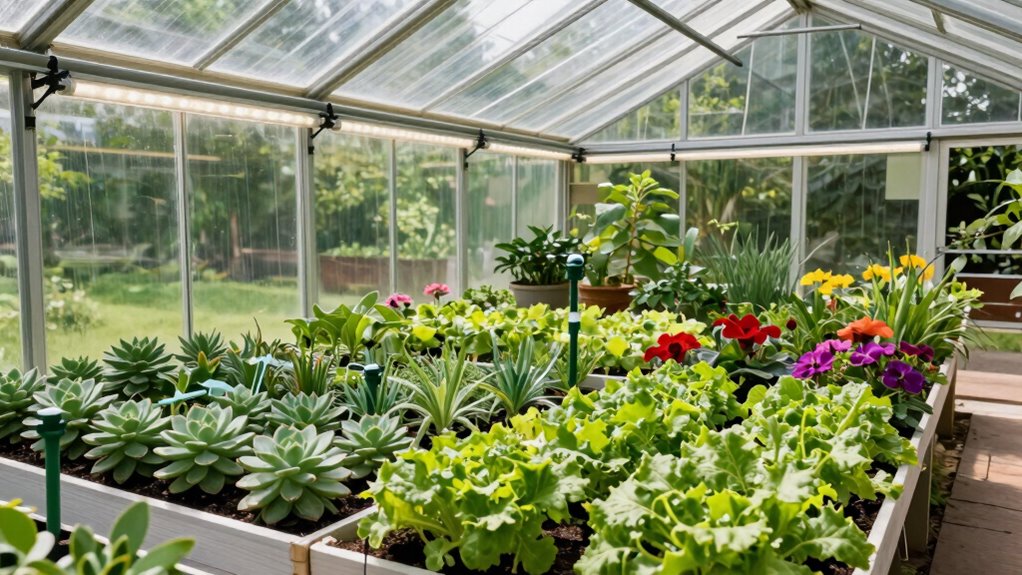

In a backyard greenhouse, being efficient means carefully managing resources to maximize plant health and growth while minimizing energy and water use. You do this by using passive heating with thermal mass, collecting rainwater, and employing targeted watering techniques. Good airflow and natural ventilation keep conditions ideal without relying heavily on electricity. By focusing on sustainable practices, you make every element work smarter. Keep exploring how these methods can help you create a truly effective greenhouse.

Get garden gear delivered free with Prime
- Fast, free delivery on millions of items
- Prime Video, Amazon Music and more included
- Member-only deals all year
Key Takeaways
- Maximizing resource use by integrating passive heating, cooling, and water conservation techniques.
- Reducing energy consumption through high-efficiency equipment and natural ventilation.
- Achieving stable temperatures and humidity with thermal mass and optimal airflow management.
- Minimizing water waste via targeted irrigation and rainwater harvesting.
- Continuously optimizing systems to enhance productivity while conserving energy and resources.
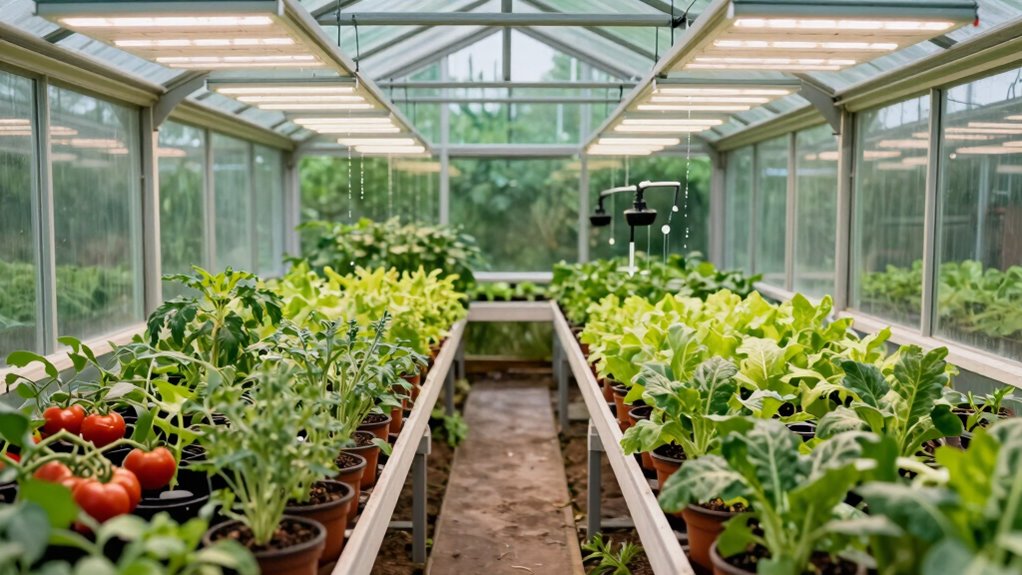
Have you ever wondered how to maximize productivity while minimizing resource use in a greenhouse? Achieving efficiency isn’t just about growing more plants; it’s about making every element work smarter, not harder. When you prioritize efficiency, you’re focusing on sustainable practices that save energy and conserve resources, helping your backyard greenhouse thrive without unnecessary waste. One key to this is understanding how solar heating can considerably cut energy costs. By strategically positioning your greenhouse in a sunny location and using materials that absorb and retain heat, you harness natural sunlight to warm your plants. Simple additions like thermal mass—think water barrels or rocks—absorb heat during the day and release it at night, reducing the need for supplemental heating. This approach not only lowers your energy bills but also creates a more stable environment for your plants.
Harness natural sunlight and thermal mass to reduce heating costs and create a stable, energy-efficient greenhouse environment.
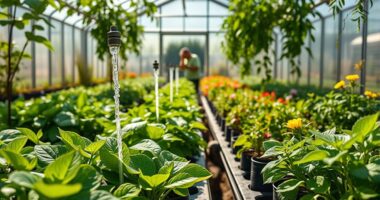
Water conservation is another essential aspect of efficiency. In a backyard greenhouse, every drop counts, so adopting water-saving techniques makes a big difference. Using drip irrigation or soaker hoses ensures water goes directly to the roots, minimizing waste through runoff or evaporation. Collecting rainwater is an excellent way to supplement your watering needs naturally, reducing reliance on municipal supplies and lowering your water bill. Mulching around your plants helps retain soil moisture and keeps roots cool, further reducing watering frequency. Additionally, scheduling watering during cooler parts of the day, like early morning or late evening, minimizes evaporation. These small adjustments can lead to substantial water savings over time, making your greenhouse more sustainable and less resource-intensive. Incorporating water-saving techniques can significantly enhance your overall efficiency.
Efficiency also involves thoughtful management of airflow and ventilation to maintain ideal temperatures without overusing fans or heaters. Good insulation and shading help regulate internal temperatures passively, reducing energy consumption. Using natural ventilation, such as roof vents or windows that open automatically with temperature changes, can keep your greenhouse comfortable without electricity. Incorporating passive heating methods like thermal mass or natural ventilation further enhances overall efficiency. Regularly monitoring environmental conditions and making adjustments accordingly ensures your greenhouse remains optimized for plant health and resource conservation. Being proactive about environmental control can optimize your greenhouse’s performance and sustainability. Additionally, integrating energy-efficient equipment such as LED grow lights and low-energy fans can further reduce electricity use while supporting healthy plant growth.
Ultimately, being efficient in your backyard greenhouse means making smarter choices about how you use energy and water. It’s about designing your space to work with nature’s resources rather than against them. By implementing solar heating, conserving water, and managing airflow wisely, you create a sustainable, productive environment that benefits both your plants and the planet. Efficiency isn’t just a goal; it’s a continuous process of optimizing every aspect of your greenhouse to get the most out of limited resources.
backyard greenhouse thermal mass water barrels
As an affiliate, we earn on qualifying purchases.
As an affiliate, we earn on qualifying purchases.
Frequently Asked Questions
How Can I Measure Greenhouse Efficiency Accurately?
You can measure greenhouse efficiency accurately by tracking energy conservation and light enhancement. Use a wattmeter to monitor electricity use and compare it to your plant growth outcomes. Measure light levels with a light meter to ensure ideal sunlight exposure. Keep records of temperature, humidity, and energy costs to see how well your greenhouse maintains perfect conditions. Regularly analyzing these factors helps you identify improvements and improve overall efficiency.
What Are Common Mistakes That Reduce Greenhouse Efficiency?
You often reduce greenhouse efficiency by neglecting ventilation issues, which can cause temperature and humidity imbalances. Poor airflow leads to mold and plant stress. Additionally, overlooking shading strategies results in overheating during peak sunlight, decreasing productivity. To improve, regularly check and optimize ventilation systems, and implement effective shading to control temperature. These steps help maintain ideal conditions, ensuring your greenhouse operates efficiently and your plants thrive.
Does Size Affect Greenhouse Efficiency?
Yes, size affects greenhouse efficiency. Larger greenhouses require careful plant spacing to prevent overcrowding, which can hinder airflow and increase humidity. Implementing effective ventilation techniques is vital, especially in bigger structures, to maintain ideal temperature and humidity levels. Properly spaced plants and good airflow ensure your greenhouse operates efficiently, minimizes energy use, and promotes healthy plant growth. Keep these factors in mind to maximize your greenhouse’s productivity.
How Does Climate Impact Greenhouse Efficiency?
Climate impacts your greenhouse efficiency like weather shaping a river’s flow. You need to take into account climate considerations and microclimate management to optimize conditions. Hot, humid climates require ventilation and shading, while cold regions demand insulation and heating. By tailoring your greenhouse setup to your local climate, you ensure plants thrive with minimal energy use, making your backyard greenhouse not just productive but truly efficient.
Can DIY Modifications Improve Efficiency?
Yes, DIY modifications can boost your greenhouse’s efficiency. Installing solar shading helps reduce excess heat during hot days, maintaining a stable temperature. Adding thermal insulation, like bubble wrap or foam panels, minimizes heat loss at night. These simple upgrades optimize energy use, ensuring your plants stay healthy with less reliance on artificial heating or cooling. With some effort, you’ll create a more sustainable and productive backyard greenhouse.
Conclusion
In a backyard greenhouse, efficiency isn’t just about growing more; it’s about making the most of your space and resources. Did you know that using passive solar heating can reduce energy costs by up to 80%? By optimizing ventilation, insulation, and layout, you’ll maximize your yield while minimizing waste. Remember, an efficient greenhouse isn’t just sustainable—it’s your best tool for thriving year-round gardening. So, stay smart, stay resourceful, and enjoy the lush rewards!
Fall Picks
fall essentials
As an affiliate, we earn on qualifying purchases.