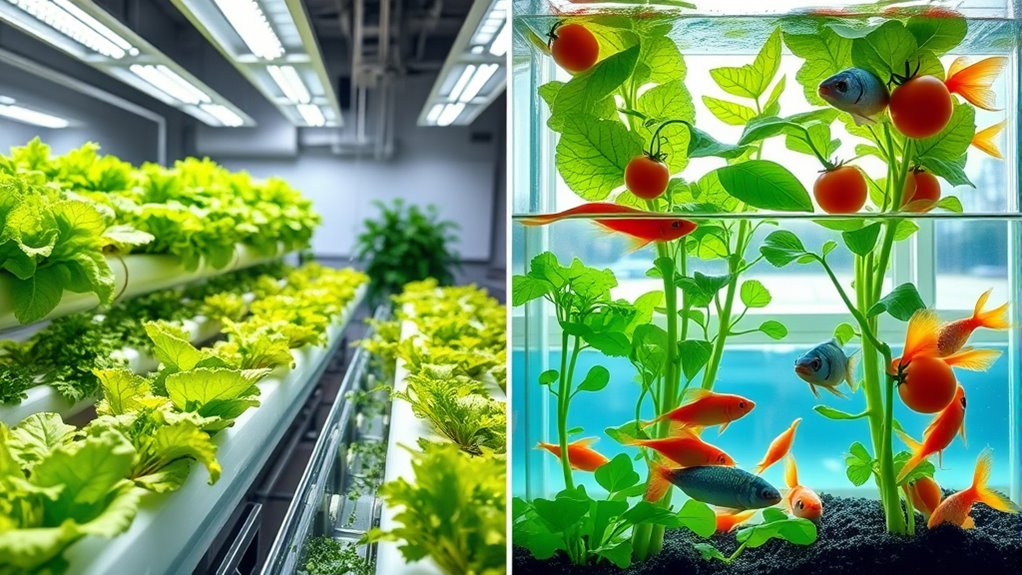

If you’re comparing which system is greener, aquaponics generally takes the lead due to its closed-loop design that combines fish farming with plant growth, reducing the need for external inputs and chemicals. Hydroponics also conserves water but relies more on synthetic nutrients, which can impact its ecological footprint. Both systems are efficient, but aquaponics’s integration of fish waste and minimal resource use make it more sustainable overall. Learn more about their differences to make an informed choice.

Get garden gear delivered free with Prime
- Fast, free delivery on millions of items
- Prime Video, Amazon Music and more included
- Member-only deals all year
Key Takeaways
- Aquaponics offers a more sustainable, closed-loop system that minimizes external inputs and reduces environmental impact.
- Hydroponics often relies on synthetic nutrients, which can negatively affect its ecological footprint.
- Aquaponics integrates fish farming, providing natural fertilizer and additional protein sources, enhancing overall sustainability.
- Both systems conserve water efficiently, but aquaponics’s recirculating design generally yields greater water savings.
- The environmental friendliness of each system depends on management practices and input sources used.
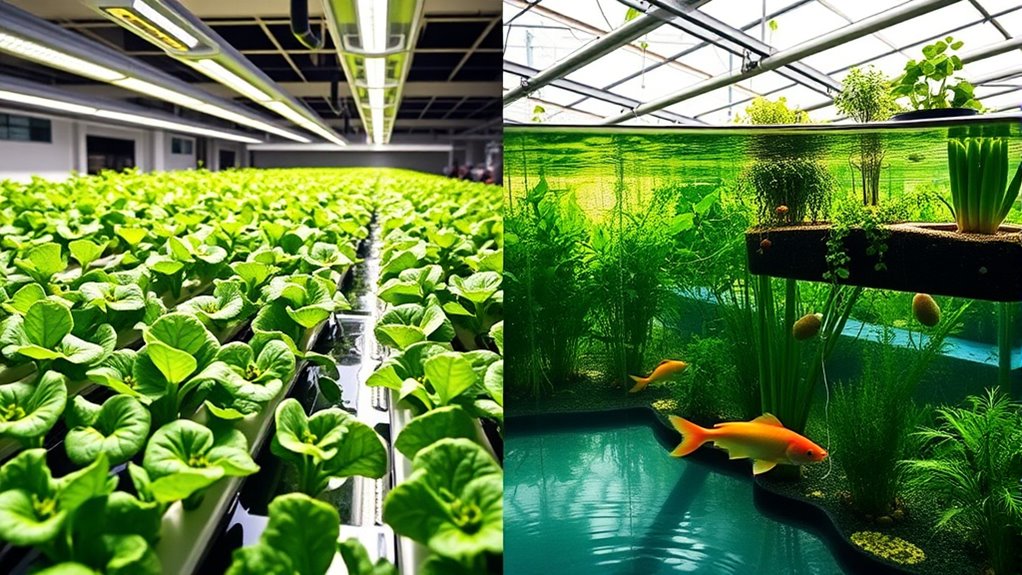
When deciding between hydroponics and aquaponics, it’s important to understand how each system works and what benefits they offer. Both methods are innovative ways to grow plants, but they differ markedly in their approach to sustainability metrics and water conservation. As you explore these options, you’ll find that hydroponics relies on a nutrient-rich water solution to deliver nutrients directly to plant roots, while aquaponics combines fish farming with plant cultivation, creating a symbiotic environment. This distinction impacts not only how plants grow but also how efficiently each system uses resources.
Hydroponics generally conserves water better than traditional soil farming because it recycles the water within the system, reducing wastage. However, its water conservation benefits depend on proper management, as the system’s reliance on synthetic nutrients means it can require more frequent adjustments and replenishments. When considering sustainability metrics, hydroponics scores well in water efficiency and rapid plant growth, but it may fall short in terms of ecological impact if synthetic inputs are used extensively. Conversely, aquaponics excels in sustainability metrics because it utilizes fish waste as a natural fertilizer, creating a closed-loop system that minimizes external inputs. This approach not only conserves water but also reduces the need for chemical fertilizers, making aquaponics a greener choice overall.
Hydroponics recycles water and promotes rapid growth, but may need more management due to synthetic nutrient reliance.
Aquaponics’s ability to maximize water conservation stems from its recirculating design, where water is continuously filtered and reused by both plants and fish. This efficiency means you’ll use considerably less water compared to traditional soil-based farming. Additionally, because aquaponics integrates fish, it offers an additional protein source, making it a more resource-efficient system for small-scale farms and urban gardens. Hydroponics, on the other hand, often requires a steady supply of water and nutrients, but its controlled environment allows for precise management, which can lead to less water wastage if maintained properly. Furthermore, advancements in sustainable aquaponic design are helping to further improve resource efficiency and ecological benefits.
Ultimately, your choice hinges on what you prioritize for sustainability. If reducing water consumption and ecological impact are top concerns, aquaponics generally offers a more sustainable, closed-loop system that enhances water conservation and lowers dependency on synthetic inputs. Hydroponics can also be sustainable, especially with organic nutrients and efficient water recirculation, but it often involves more external inputs. Both systems have their merits, but understanding how they perform on sustainability metrics and water conservation helps you make an informed decision aligned with your environmental goals.
As an affiliate, we earn on qualifying purchases.
Frequently Asked Questions
Can Hydroponics and Aquaponics Be Combined Effectively?
Yes, you can combine hydroponics and aquaponics effectively by creating integrated systems. This hybrid farming approach leverages the strengths of both methods, using fish waste to fertilize plants while providing nutrient-rich water. By integrating these systems, you optimize resource use, reduce waste, and promote sustainability. With proper management, your hybrid farm can become more efficient and environmentally friendly, making it an excellent choice for eco-conscious growers.
Which System Requires Less Energy for Operation?
Think of energy efficiency as the heartbeat of your garden. Aquaponics generally requires less power consumption because it relies on natural fish waste to nourish plants, reducing the need for artificial nutrients and pumps. Hydroponics, on the other hand, often demands more energy to maintain ideal nutrient solutions and water circulation. So, if you’re aiming to save energy, aquaponics might be your greener, more sustainable choice.
Are There Specific Crops Better Suited for Each Method?
You’ll find that crop compatibility and plant selection vary between hydroponics and aquaponics. Leafy greens like lettuce and herbs thrive in hydroponics due to their fast growth and simple nutrient needs. In aquaponics, you’re better suited for fish-friendly plants like tomatoes and cucumbers, which benefit from the nutrient-rich water. Match your crop choices to each system’s strengths for ideal growth and sustainability.
How Do Initial Setup Costs Compare Between Hydroponics and Aquaponics?
Like two ships passing in the night, hydroponics usually costs less to start, making it more economically feasible for beginners. You’ll find that hydroponic systems require simpler infrastructure and fewer components, reducing initial investment. In contrast, aquaponics involves more complex infrastructural needs—fish tanks, plumbing, and biofilters—leading to higher setup costs. So, if budget is your compass, hydroponics often charts a less expensive course.
What Are the Long-Term Environmental Impacts of Each System?
You’ll find that aquaponics has a smaller environmental footprint long-term because it promotes sustainability challenges like natural nutrient recycling, reducing waste and chemical use. Hydroponics, while efficient, often relies on synthetic nutrients, which can lead to runoff and pollution. By choosing aquaponics, you support a more sustainable system that integrates fish and plant health, minimizing environmental impact over time.
Conclusion
Both hydroponics and aquaponics offer sustainable farming options, but aquaponics often has the edge by creating a natural ecosystem. Imagine setting up a small aquaponic system in your backyard, where fish fertilize plants, reducing waste and water use. This integrated approach not only conserves resources but also produces fresh vegetables and fish. By choosing aquaponics, you’re helping the environment while enjoying a sustainable, self-sufficient garden. That’s truly a greener way to grow.
Fall yard work Picks
leaf blowers
As an affiliate, we earn on qualifying purchases.