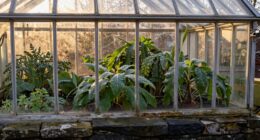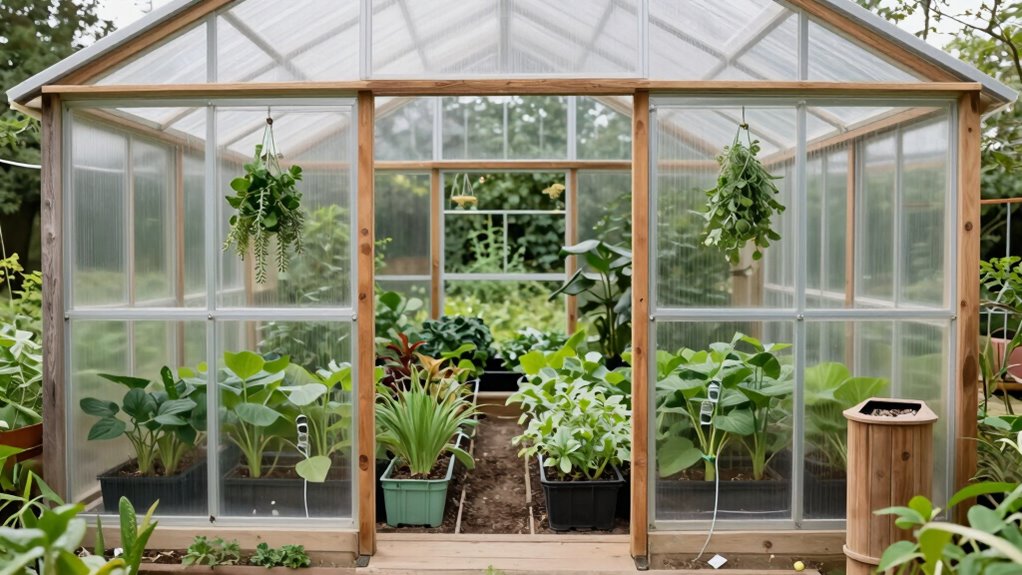
To set up a low-waste greenhouse appreciated by serious gardeners, focus on sustainable materials like reclaimed wood, bamboo, or recycled polycarbonate panels. Incorporate rainwater harvesting, drip irrigation, and natural fertilizers to conserve water and reduce waste. Use organic, recyclable growing media and reuse containers to keep waste minimal. Enhance energy efficiency with solar and wind power, and implement natural pest control. Stay consistent with crop rotation and long-term maintenance to guarantee a thriving, eco-friendly space—more tips await as you explore further.
Key Takeaways
- Utilize recycled and locally sourced materials like reclaimed wood, old windows, and biodegradable films for a sustainable greenhouse structure.
- Implement rainwater harvesting and drip irrigation to minimize water waste and promote efficient water use.
- Use organic, recyclable growing media and composting techniques to reduce waste and enhance soil health naturally.
- Incorporate renewable energy sources such as solar panels and wind turbines for eco-friendly power and climate control.
- Maximize space with vertical gardening, crop rotation, and raised beds to increase yield while minimizing environmental impact.
How to Design a Low-Waste, Eco-Friendly Greenhouse

Designing a low-waste, eco-friendly greenhouse starts with selecting sustainable materials and minimizing waste during construction. You can draw inspiration from historical techniques and cultural practices that emphasize resourcefulness and durability. For example, traditional methods often used locally sourced reeds, clay, or stone, reducing the need for imports and heavy manufacturing. Incorporating these principles helps you create a structure that respects the environment and preserves cultural heritage. Focus on reusing materials, repurposing old windows, or utilizing natural building methods that have stood the test of time. By understanding and applying these historical techniques, you guarantee your greenhouse minimizes waste and embodies eco-conscious design. This approach connects you to sustainable practices rooted in centuries of proven, resource-efficient building. Additionally, natural building methods often involve techniques that are adaptable to various climates and require minimal processed materials. Emphasizing resourcefulness ensures you make the most of available materials, reducing waste and environmental impact.
Choosing Sustainable Materials for Your Greenhouse Frame and Covering

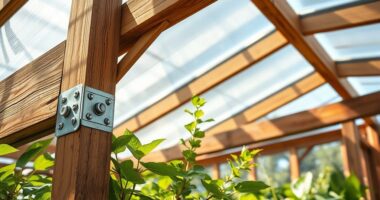
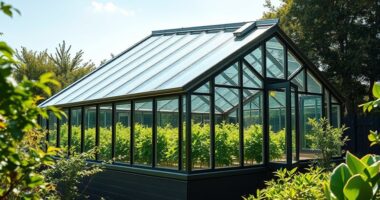
Choosing sustainable materials for your greenhouse frame and covering is essential to creating an eco-friendly design. Opt for recycled or renewable resources like bamboo, reclaimed wood, or metal with low environmental impact. These materials are durable and minimize waste, supporting a low-waste setup. For the covering, consider using recycled polycarbonate panels or biodegradable films that allow sunlight transmission while reducing plastic waste. Natural alternatives like hemp or cork can also serve as insulating layers or interior components. By selecting eco-friendly materials, you reduce your carbon footprint and promote sustainability. This approach not only benefits the environment but also guarantees your greenhouse remains resilient and efficient over time. Prioritize these sustainable choices to build a truly eco-conscious structure that aligns with your gardening values.
Water-Saving Techniques for an Eco-Conscious Greenhouse
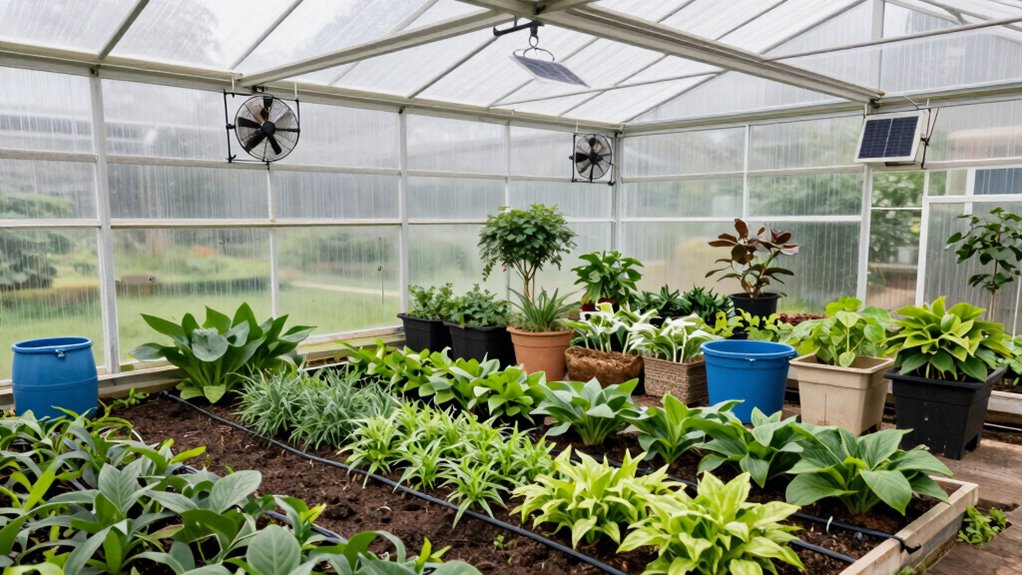
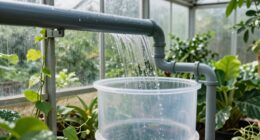
Implementing drip irrigation systems helps you deliver water directly to plant roots, reducing waste. Collecting rainwater through harvesting strategies guarantees you have an eco-friendly water source without increasing your utility bills. Additionally, using water-efficient systems like automatic timers and moisture sensors can further optimize water usage and promote sustainability in your greenhouse. Incorporating native plants can also support biodiversity and reduce the need for supplemental watering, keeping your setup more environmentally friendly. To enhance water conservation efforts, you can also consider ultrawide monitors to monitor and manage your greenhouse conditions more effectively from home. Together, these techniques keep your greenhouse sustainable and water-efficient.
Drip Irrigation Systems
Drip irrigation systems are an efficient way to conserve water while ensuring your plants receive consistent moisture. They’re especially helpful during plant propagation, as steady watering promotes healthy root development. Before installation, perform soil testing to understand your soil’s moisture needs and adjust the system accordingly. This step helps prevent overwatering and reduces waste. With drip lines, you can target individual plants, minimizing runoff and evaporation. Keep emitters close to the root zone for maximum absorption. Regularly check the system for clogs or leaks to maintain efficiency. Using drip irrigation encourages responsible water use, making it ideal for eco-conscious greenhouses. Additionally, integrating water-saving techniques can further optimize your irrigation system’s performance. Incorporating performance fluids into your system can also help maintain optimal operation and extend the lifespan of your irrigation equipment. Proper maintenance and the right system components are essential for long-term sustainability and efficiency. Regularly scheduling system inspections ensures the system remains effective and minimizes potential water waste. Remember, choosing high-quality irrigation parts can significantly improve the durability and effectiveness of your setup.
Rainwater Harvesting Strategies
After setting up an efficient watering system like drip irrigation, capturing and utilizing rainwater becomes a natural step toward a sustainable greenhouse. Start by collecting rainwater in harvesting containers placed strategically around your greenhouse. Use rainwater filtration to remove debris and contaminants, ensuring your plants receive clean water. Connect your harvesting containers to your irrigation system with simple piping or hoses, making water transfer seamless. Regularly clean and maintain the containers to prevent algae and mosquito breeding. By harvesting rainwater, you reduce reliance on mains water and lower your environmental impact. Incorporating electric bike generators can also support your eco-friendly efforts by providing renewable energy for small greenhouse operations. This eco-friendly strategy not only conserves water but also promotes healthier plant growth, creating a low-waste, sustainable greenhouse environment for serious gardeners.
Selecting Organic and Recyclable Growing Media for Healthy Plants

Have you ever wondered how choosing the right growing media can boost your garden’s health? Opting for organic and recyclable materials guarantees sustainability and vibrant plants. Start by selecting:
Choosing organic and recyclable growing media enhances garden health and sustainability naturally.
- Organic mulch, like straw or wood chips, to retain moisture and enrich the soil naturally.
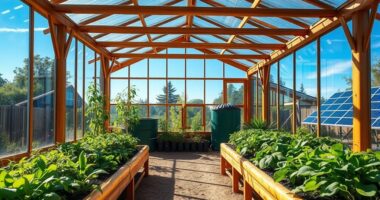
- Recycled containers, such as used pots or repurposed buckets, to minimize waste and provide versatile planting options.
- Reclaimed growing media, like composted bark or coconut coir, which foster healthy root development while reducing environmental impact. Incorporating sustainable gardening practices can further enhance your garden’s health and resilience. Additionally, understanding soil health is essential for maintaining a thriving garden ecosystem. Using eco-friendly materials contributes to reducing your garden’s carbon footprint and promotes long-term sustainability.
- Incorporating sound science into your gardening practices can further enhance plant growth and overall health.
These choices support a low-waste approach, enhancing plant vitality without relying on synthetic inputs. By integrating organic mulch, recycled containers, and eco-friendly media, you create a sustainable, healthy environment for your plants to thrive.
Power Your Greenhouse With Renewable Energy
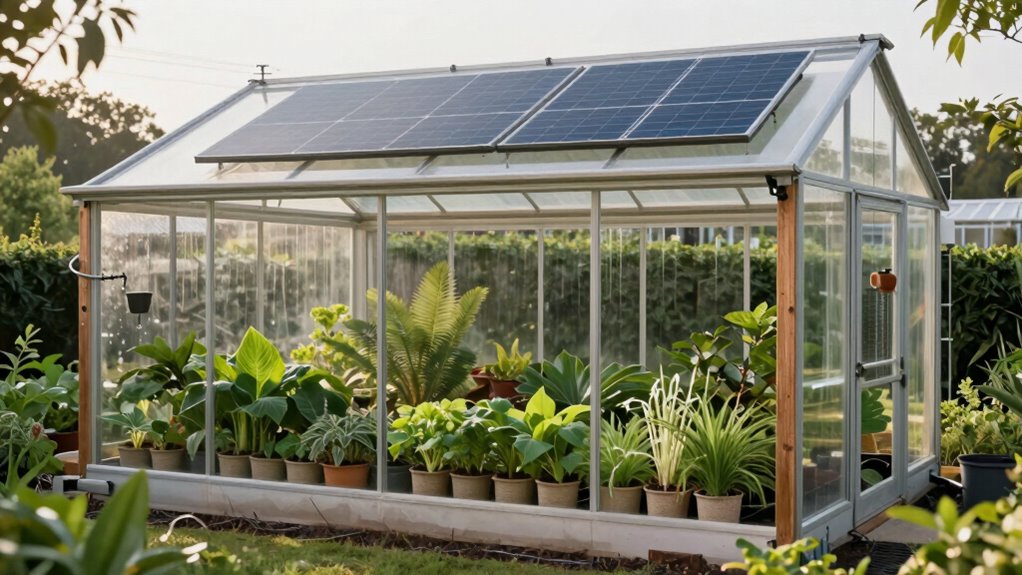
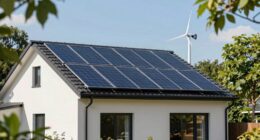
You can reduce your greenhouse’s reliance on the grid by integrating solar panels or wind turbines. These renewable energy options provide sustainable power for heating, lighting, and ventilation. Exploring different setups will help you find the most efficient and cost-effective solution for your space. Additionally, proper placement and safety considerations, such as rapid shutdown placement, are essential to ensure safe and effective solar system operation. Using high-quality solar panels with battery storage can further enhance energy independence and reliability. Regular system maintenance, including monitoring for filter failures, is also vital to keep your renewable setup functioning optimally. Implementing power quality measures can help maintain stable energy supply and protect sensitive greenhouse equipment. Proper system design is crucial to maximize efficiency and minimize potential issues.
Solar Panel Integration
Ever considered how harnessing solar energy can transform your greenhouse? Solar panel integration offers a sustainable way to power your setup while reducing waste. To maximize efficiency, you should focus on three key aspects:
- Regular solar panel maintenance to ensure peak energy capture and longevity.
- Choosing effective energy storage solutions that store excess power for cloudy days or nighttime use.
- Proper positioning of panels to maximize sunlight exposure throughout the year.
- Incorporating proper gear care practices can help protect your system from dust and debris, maintaining optimal performance. Regular cleaning and inspections are essential for solar panel efficiency and extending the lifespan of your setup. Additionally, understanding the industry standards can help you select the most reliable components for your system.
Wind Energy Options
Harnessing wind energy is a powerful way to add renewable power to your greenhouse setup. Installing wind turbines allows you to generate electricity sustainably, reducing reliance on grid power. Small-scale turbines are ideal for garden-focused greenhouses, especially in windy locations. They convert kinetic wind into usable energy, supporting your heating, lighting, and watering systems. Wind energy complements solar panels by providing power during cloudy days or at night. Combining both sources maximizes your renewable energy output while minimizing waste. Confirm your turbines are properly positioned in open, unobstructed areas to optimize efficiency. Proper placement can significantly boost the effectiveness of your wind turbines, ensuring you get the most energy output. With wind turbines, you gain a reliable, eco-friendly way to power your greenhouse, decreasing your environmental footprint and supporting your low-waste gardening goals. Renewable energy sources can be combined effectively to ensure a consistent power supply.
How to Set Up Composting Systems to Reduce Organic Waste
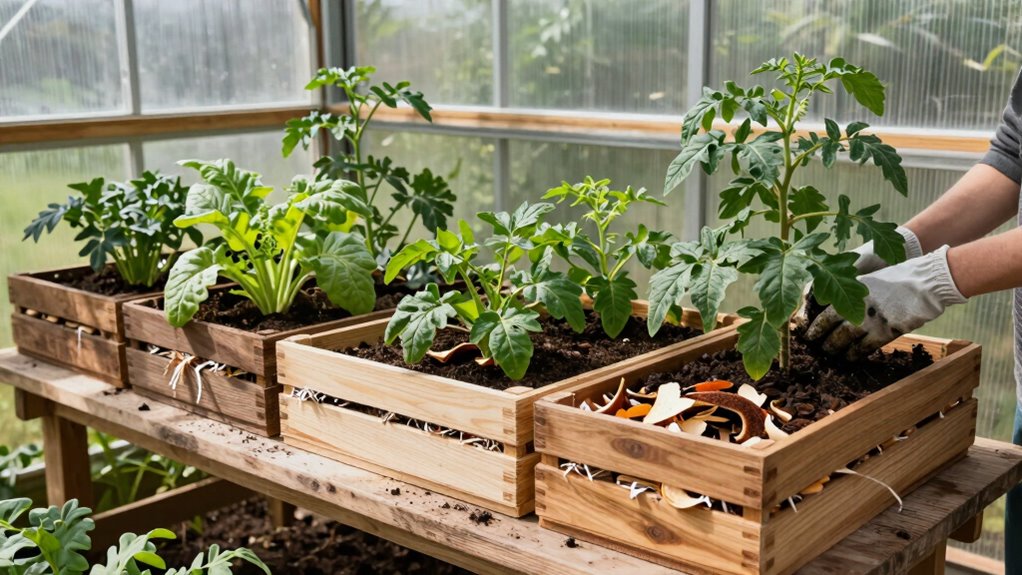
Wondering how to turn organic waste into valuable compost? Setting up an effective composting system is key to sustainable organic waste management. Begin by choosing a suitable location, like a shaded corner or a dedicated bin. To optimize composting techniques, follow these steps:
- Layer green (kitchen scraps, fresh plant material) and brown (dried leaves, straw) waste.
- Maintain moisture levels similar to a damp sponge.
- Turn or mix the compost regularly to aerate and speed up decomposition.
Keep an eye on temperature and moisture, adjusting as needed. Properly managed compost reduces waste and creates nutrient-rich soil for your greenhouse. By mastering these methods, you’ll turn organic waste into a valuable resource efficiently and sustainably.
Reusable Containers and Natural Fertilizers for Waste-Free Gardening
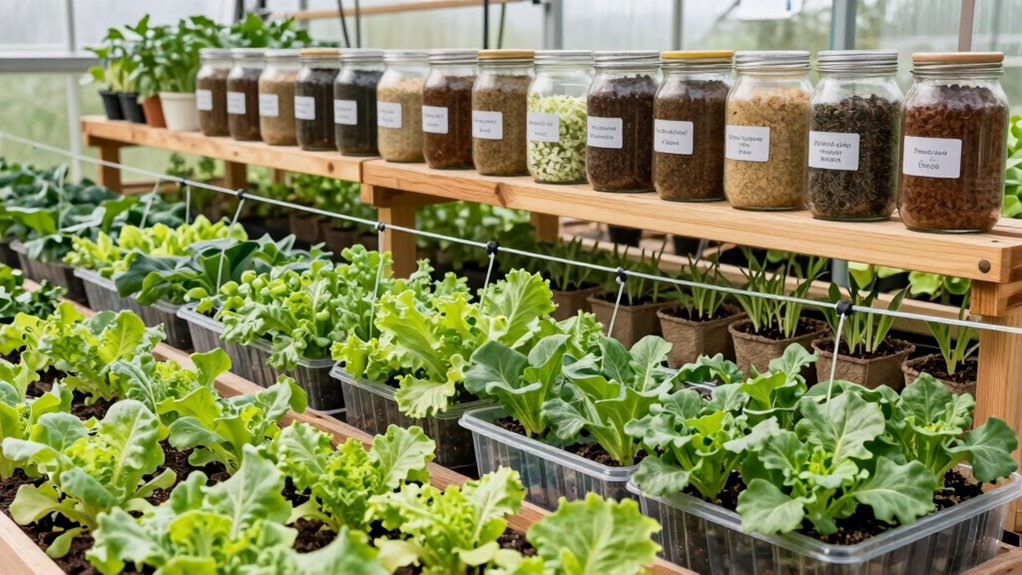
Choosing eco-friendly containers helps you reduce plastic waste and keeps your gardening sustainable. Natural fertilizers like compost or fish emulsion boost plant health without chemicals. By adopting these strategies, you can minimize waste and create a more eco-conscious greenhouse.
Eco-Friendly Container Choices
Opting for reusable containers and natural fertilizers is a practical way to make your greenhouse gardening more eco-friendly. When choosing containers, focus on options with high container durability, ensuring they withstand repeated use without cracking or degrading. This longevity not only reduces waste but also enhances the aesthetic appeal of your setup. Consider these top choices:
- Clay or ceramic pots – durable and attractive, they add a natural look.
- Reclaimed wood planters – eco-friendly and customizable for style.
- Recycled plastic containers – lightweight, long-lasting, and versatile.
Natural Fertilizer Options
To maintain a truly eco-friendly greenhouse, incorporating natural fertilizers into your gardening routine is essential, especially when paired with reusable containers. Compost tea is a powerful, sustainable option that enriches your soil with beneficial nutrients and microorganisms. You can easily brew it using kitchen scraps and water, then apply it directly to your plants. Organic sprays, like neem oil or garlic solutions, offer pest control without chemicals and also contribute nutrients to your plants. These natural fertilizers minimize waste since you can produce them in reusable containers, reducing packaging waste and reliance on synthetic options. Using compost tea and organic sprays helps you create a balanced, healthy environment for your plants while keeping your gardening practices waste-free and environmentally conscious.
Waste Reduction Strategies
Implementing waste reduction strategies is essential for maintaining an eco-friendly greenhouse, and using reusable containers plays a key role in this effort. You can minimize waste by selecting durable, washable containers instead of single-use options. Incorporate composting techniques to turn plant scraps and organic waste into nutrient-rich soil, reducing landfill contributions. Additionally, opt for biodegradable packaging for seedlings and supplies to prevent plastic waste. To streamline your waste reduction, consider these steps:
- Switch to reusable containers for watering and plant storage.
- Use compost bins to process organic waste efficiently.
- Choose biodegradable packaging for seedlings and fertilizers.
These practices support waste-free gardening while boosting your greenhouse’s sustainability and health.
Natural Pest Control Methods to Protect Your Greenhouse

Natural pest control methods are essential for maintaining a healthy greenhouse without relying on chemical pesticides. One effective strategy is companion planting, where you grow specific plants together to repel pests or attract beneficial insects. For example, marigolds deter nematodes, while basil repels aphids. Encouraging beneficial insects like ladybugs, lacewings, and predatory mites can naturally reduce pest populations. You can attract these helpful insects by planting nectar-rich flowers or providing habitats such as insect hotels. Regular monitoring helps you identify pest issues early, allowing you to act swiftly with natural remedies. Combining companion planting with the promotion of beneficial insects creates an eco-friendly, low-waste approach to pest management, keeping your greenhouse thriving without harmful chemicals.
Maximize Space and Practice Crop Rotation for Sustainable Production

After establishing effective pest control methods, optimizing your greenhouse space becomes the next step toward sustainable production. You can achieve this by practicing crop rotation and enhancing soil health. Diversify your crops to prevent soil depletion and reduce disease risk. Consider these strategies:
- Rotate crops based on families (e.g., solanaceae, brassicas, legumes) to maintain crop diversity and soil vitality.
- Use raised beds or vertical gardening to maximize space and improve accessibility.
- Implement cover crops during off-season periods to enrich soil nutrients and protect against erosion.
Tips for Maintaining Your Low-Waste Greenhouse Long-Term

Maintaining your low-waste greenhouse over the long term requires consistent effort and mindful practices. Regularly monitor plant propagation techniques to guarantee healthy growth and reduce waste. Use natural methods like cuttings and seed saving to sustain your stock. Proper greenhouse cooling is crucial, especially during hot months, to prevent overheating and stress on plants. Incorporate shading or ventilation to maintain ideal temperatures without energy waste. Here’s a quick guide:
| Practice | Key Benefit | Tips |
|---|---|---|
| Plant Propagation | Boosts sustainability | Use recycled containers |
| Greenhouse Cooling | Prevents overheating | Install passive ventilation |
| Pest Management | Protects crops | Use organic deterrents |
| Water Conservation | Reduces waste | Collect rainwater, drip irrigation |
| Soil Health | Ensures healthy growth | Compost and add organic matter |
Consistent care keeps your low-waste greenhouse thriving.
Frequently Asked Questions
How Can I Retrofit an Existing Greenhouse to Be More Eco-Friendly?
To make your greenhouse more eco-friendly, start by incorporating composting techniques to recycle organic waste into nutrient-rich soil, reducing landfill waste. Use recycled materials for shelving, containers, and pathways to minimize new resource consumption. Improve insulation with recycled polystyrene or eco-friendly insulation options, and install energy-efficient lighting and ventilation. These steps will cut your environmental impact and create a sustainable, low-waste greenhouse environment.
What Are the Best Low-Waste Pest Control Options for Sensitive Plants?
You should opt for natural predators like ladybugs or predatory mites to control pests without chemicals. They actively hunt harmful insects, keeping your plants healthy and safe. Additionally, use organic repellents such as neem oil or garlic spray to deter pests without harming your sensitive plants. Regularly monitor your greenhouse, remove affected leaves, and maintain cleanliness to prevent pest buildup, creating a low-waste, eco-friendly environment.
How Do I Monitor and Reduce Energy Consumption Effectively?
You should regularly perform energy audits to identify where your greenhouse consumes the most power. Use the audit results to implement efficiency upgrades, like installing better insulation, sealing leaks, and upgrading to energy-efficient lighting and climate control systems. Continuously monitor your energy use, adjusting practices as needed to keep consumption low. These steps help you save energy, reduce costs, and maintain a sustainable greenhouse environment.
Can I Grow All Types of Plants in a Low-Waste Greenhouse?
Yes, you can grow many types of plants in a low-waste greenhouse. To maximize success, incorporate composting techniques to enrich your soil naturally and practice water recycling to conserve resources. These sustainable methods support diverse plant growth while reducing waste and environmental impact. Keep in mind that some plants may need specific conditions, so adapt your greenhouse practices accordingly for *best* growth and sustainability.
What Are Cost-Effective Ways to Start a Sustainable Greenhouse on a Budget?
You can start a sustainable greenhouse on a budget by using cost-effective composting methods like worm bins or compost piles to enrich your soil naturally. Focus on sustainable watering techniques such as drip irrigation or rain barrels to conserve water. Reuse and repurpose materials for your structure, and grow hardy, low-maintenance plants to reduce costs. These strategies help you create an eco-friendly greenhouse without breaking the bank.
Conclusion
Think of your low-waste greenhouse as a well-tended garden of good habits. When I first started, I felt like I was nurturing a tiny ecosystem—each sustainable choice, from rainwater harvesting to natural pest control, became a seed that grew into thriving plants. Just like a garden needs care and patience, your eco-friendly setup rewards your effort with bountiful, healthy harvests. Keep nurturing your green oasis, and it’ll flourish for years to come.