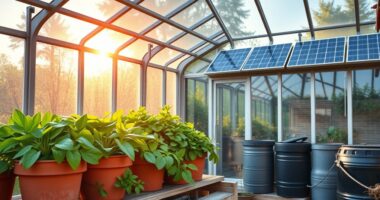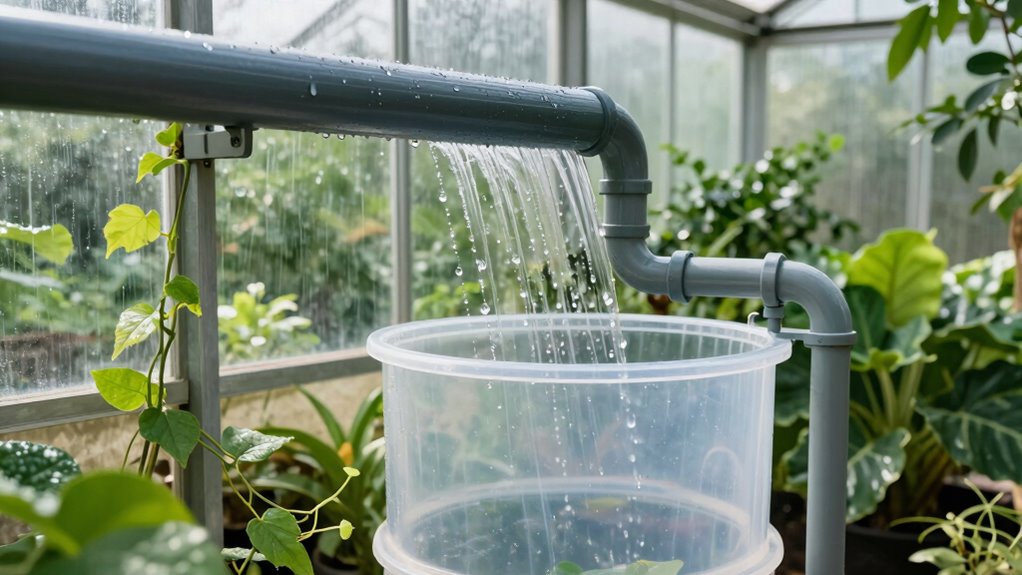
Implementing a simple rainwater harvesting system in your greenhouse is easy and effective. You’ll pick a good location for your collection tank, guarantee it’s stable and shaded, and use screens to filter debris. Choosing food-grade tanks and installing filters like diverters helps keep the water clean. Regularly inspecting and maintaining your system boosts reliability. Keep it simple, affordable, and efficient—if you want detailed tips, there’s more to discover.

Get garden gear delivered free with Prime
- Fast, free delivery on millions of items
- Prime Video, Amazon Music and more included
- Member-only deals all year
Key Takeaways
- Select a location with good drainage and easy access for installing rainwater collection and storage systems.
- Use food-grade tanks and filters to ensure high water quality suitable for greenhouse plants.
- Install screens, mesh, and first-flush diverters to keep debris and pollutants out of the storage tank.
- Regularly inspect and clean filters, screens, and tanks to prevent clogs and algae growth.
- Keep the system simple, durable, and compliant with local regulations for reliable, cost-effective water harvesting.
rainwater harvesting tank for greenhouse
As an affiliate, we earn on qualifying purchases.
As an affiliate, we earn on qualifying purchases.
What Is Rainwater Harvesting and Why Use It in Greenhouses?
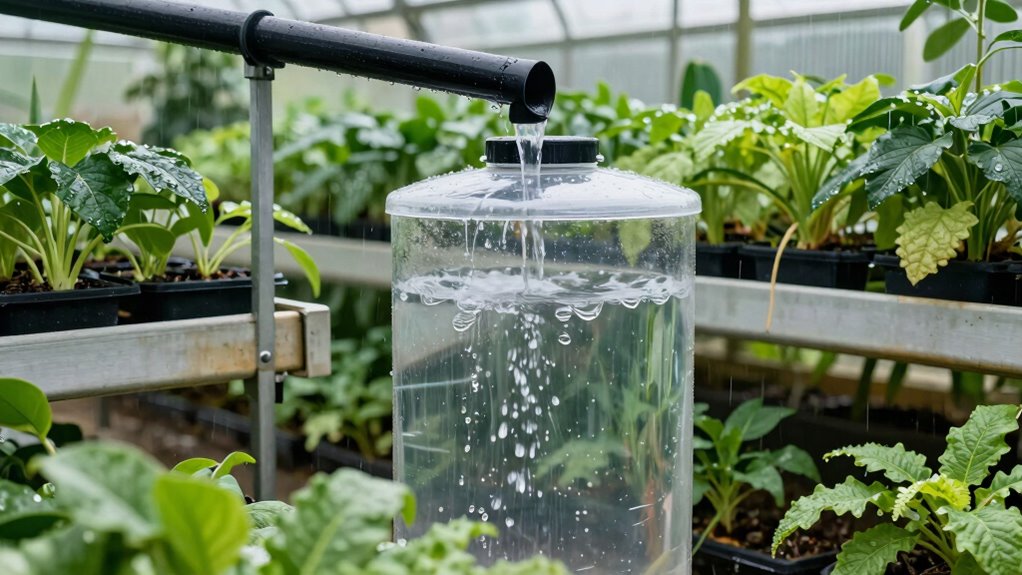
Rainwater harvesting involves collecting and storing rainwater for later use, and it plays a essential role in sustainable greenhouse operations. By capturing rainwater, you can guarantee high rainwater quality, free from chemicals and pollutants often found in tap water. This improves plant health, reduces reliance on municipal water sources, and promotes eco-friendly practices. Using harvested rainwater offers significant environmental benefits, such as conserving groundwater and reducing runoff that can carry pollutants into local waterways. It also minimizes the energy needed for water treatment and distribution, lowering your overall carbon footprint. Incorporating rainwater harvesting in your greenhouse supports sustainable growth, helps maintain balanced ecosystems, and boosts your operation’s environmental responsibility. This simple step enhances both plant vitality and ecological integrity.
How to Set Up a Simple Rainwater Collection System
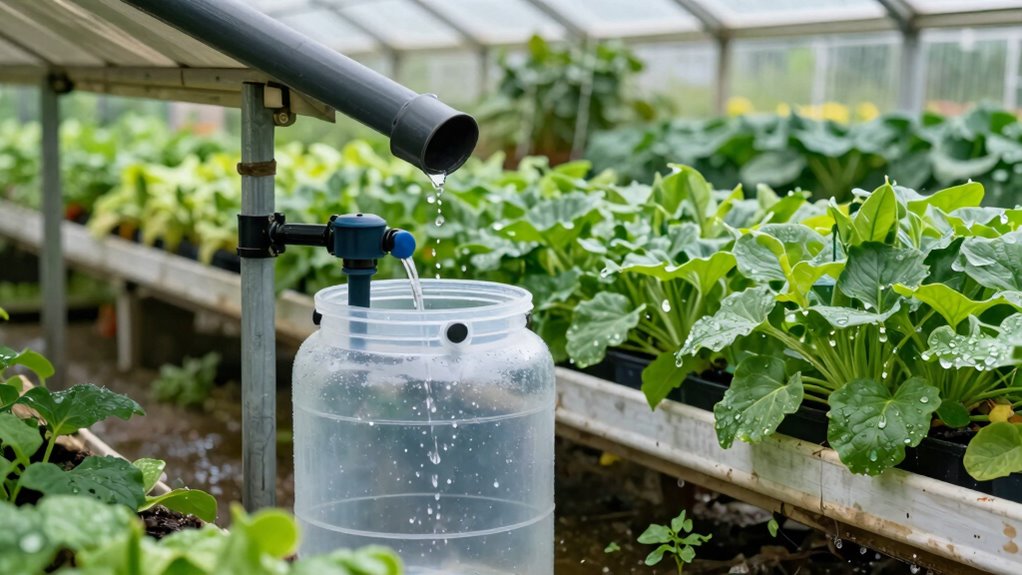
Setting up a simple rainwater collection system starts with selecting the right location and materials. Choose a spot close to your greenhouse with good drainage and easy access for maintenance. Confirm your tank placement is stable and secure, ideally on a level surface to prevent tipping. To maximize rainwater filtration, position your collection surface—such as a gutter or catchment area—so water flows smoothly into your tank, avoiding debris and leaves. Use a screen or mesh at the inlet to keep out larger particles. Keep the tank shaded if possible to prevent algae growth and temperature fluctuations. Proper placement and initial filtration help maintain clean, usable water for your greenhouse, making your rainwater harvesting system both effective and low-maintenance. Incorporating content formats that are adaptable can help you monitor and optimize the system over time. Additionally, utilizing natural filtration methods can further improve water quality without relying heavily on chemicals. Understanding the importance of sustainable practices can also guide you in creating an environmentally friendly and cost-effective setup. Regularly inspecting your system and maintenance routines can extend its lifespan and ensure consistent performance. Implementing simple monitoring tools can assist in keeping your system working efficiently and detecting issues early.
Choosing Storage Tanks and Filters for Your Rainwater System

Choosing the right storage tanks and filters is essential for ensuring clean, safe water for your greenhouse. Your goal is to maintain ideal rainwater quality while preventing contaminants. First, select storage tank materials like food-grade plastic or stainless steel, which resist corrosion and keep water pure. Second, size your tank appropriately based on your rainfall and water needs. Third, install filters such as first-flush diverters and mesh screens to remove debris and prevent clogging. Fourth, consider adding a UV filter if you want extra purification, especially if your rainwater might contain bacteria. Properly chosen tanks and filters safeguard your plants and extend the system’s lifespan, ensuring you always have access to clean rainwater for your greenhouse. Additionally, selecting high-quality electric dirt bikes can enhance mobility around your property, making maintenance and water collection more efficient. Incorporating rainwater quality management practices can further optimize your system’s performance and longevity. Understanding large number conversions can also help you better plan your storage capacity and system costs based on rainfall data in your region, which is especially useful when evaluating different market options for tanks and filters. Using precise calculations and system design strategies ensures your rainwater harvesting setup operates efficiently and sustainably.
Maintaining and Troubleshooting Your Rainwater Harvesting System
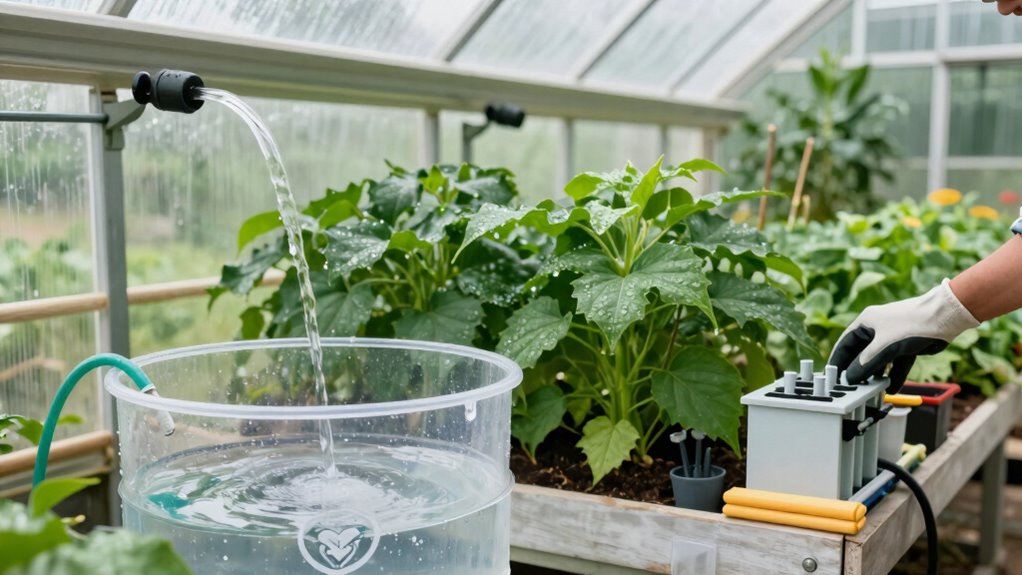
Regular maintenance is essential to keep your rainwater harvesting system functioning efficiently and prevent costly issues. You should regularly inspect your system for leaks, clogs, or damage, ensuring all components operate smoothly. Clean filters and screens to prevent debris buildup, which can hinder water flow. Check for stagnant water or algae, especially in storage tanks, and take steps to address these issues promptly. Troubleshooting techniques include verifying the integrity of pipes and fittings, testing the flow rate, and ensuring the pump and valves work correctly. Staying attentive to your system’s performance helps catch problems early, reducing long-term repair costs. Consistent system maintenance keeps your rainwater harvesting system reliable, so you can enjoy a steady supply of clean water for your greenhouse.
Cost, Materials, and Tips for Successful Rainwater Harvesting

Maintaining your rainwater harvesting system requires ongoing attention to its costs and the materials used, which can vary widely depending on your setup. To guarantee good rainwater quality, choose durable, food-grade materials like PVC or galvanized steel for storage tanks. Be aware of potential costs involved in obtaining harvesting permits, which vary by location.
Here are some tips for success:
- Use a first-flush diverter to improve rainwater quality and reduce debris.
- Select cost-effective, long-lasting materials suited to your climate.
- Regularly inspect and clean filters and screens to prevent clogs.
- Research local regulations to stay compliant and avoid fines.
A well-planned system balances costs, materials, and permits, assuring reliable, safe rainwater use in your greenhouse.
Frequently Asked Questions
Can Rainwater Harvesting Systems Be Scaled for Large Commercial Greenhouses?
Yes, rainwater harvesting systems can be scaled for large commercial greenhouses. You need to focus on scaling infrastructure to handle increased water collection and storage capacity efficiently. While initial costs might rise, the commercial feasibility improves with larger systems, reducing reliance on municipal water and lowering long-term expenses. Proper planning guarantees your system remains effective and sustainable as your greenhouse expands, supporting more plants and higher yields.
What Are the Environmental Benefits of Using Harvested Rainwater?
You’ll notice how harvesting rainwater naturally promotes water conservation and reduces pollution. By using collected rainwater, you cut down on the demand for municipal water, conserving this essential resource. Plus, it lessens pollution from runoff and chemical treatments, helping protect local waterways. This eco-friendly approach not only benefits the environment but also creates a sustainable, healthier growing system—making your greenhouse a positive force for the planet.
Are There Any Legal Restrictions or Permits Required for Rainwater Harvesting?
You’ll need to check local laws to guarantee legal compliance before installing rainwater harvesting systems. Permit requirements vary depending on your location, so it’s important to contact your local authorities or environmental agency. Some areas may require permits, especially for larger systems or specific uses. By understanding these regulations, you can avoid fines or legal issues, ensuring your rainwater harvesting setup is both eco-friendly and fully compliant with regulations.
How Does Rainwater Harvesting Impact Plant Health and Growth?
Did you know that plants absorb up to 95% of their nutrients through water? Rainwater harvesting positively impacts your plant health by enhancing nutrient absorption and maintaining soil moisture balance. When you use harvested rainwater, your plants experience fewer issues caused by chemicals found in tap water, leading to healthier growth. This natural water source promotes stronger roots, better yields, and overall more vigorous plants in your greenhouse.
What Safety Precautions Should Be Taken When Handling Collected Rainwater?
When handling collected rainwater, you should take safety precautions to prevent water contamination. Always wear safety equipment like gloves and goggles to protect yourself from potential pollutants. Make sure the water storage system is clean and regularly maintained to reduce risks. Avoid direct contact with stagnant or dirty water, and wash your hands afterward. These measures help keep you safe while maintaining healthy, uncontaminated water for your plants.
Conclusion
Think of your greenhouse as a lush garden oasis, where rainwater is the gentle rain nurturing every leaf and flower. By setting up a simple harvesting system, you’re creating a steady stream of nourishment, like a quiet river flowing just for your plants. With a little care and attention, your system becomes the heartbeat of your greenhouse, ensuring your plants thrive effortlessly—turning nature’s gift into your personal oasis of growth and beauty.
Fall yard work Picks
leaf blowers
As an affiliate, we earn on qualifying purchases.