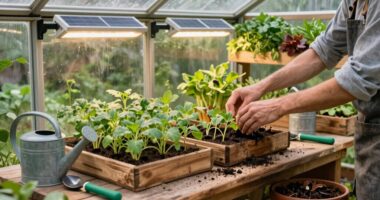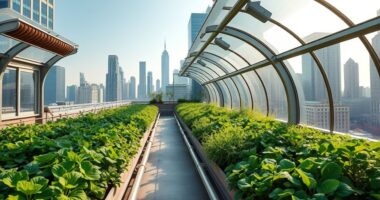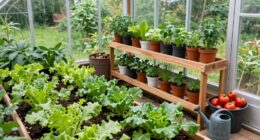

To reduce plastic use in greenhouse construction, opt for biodegradable plastics made from renewable resources like cornstarch or sugarcane, which break down safely and quickly. Consider alternatives like glass, metal, or natural fabrics such as hemp for covering materials, ensuring durability and eco-friendliness. Recycle and select bio-based or recycled components for piping and structural parts. By choosing sustainable materials, you support environmental health and set an example for greener practices—learn more about how to implement these strategies effectively.

Get garden gear delivered free with Prime
- Fast, free delivery on millions of items
- Prime Video, Amazon Music and more included
- Member-only deals all year
Key Takeaways
- Utilize biodegradable plastics with UV resistance and faster decomposition rates in greenhouse components.
- Replace traditional plastics with recyclable or bio-based materials like glass, metal, or natural fabrics.
- Incorporate natural shading fabrics such as hemp to reduce plastic reliance while maintaining light diffusion.
- Evaluate specific greenhouse needs to select sustainable materials that ensure durability and eco-friendliness.
- Promote eco-conscious practices by adopting innovative, environmentally friendly materials to minimize ecological footprint.
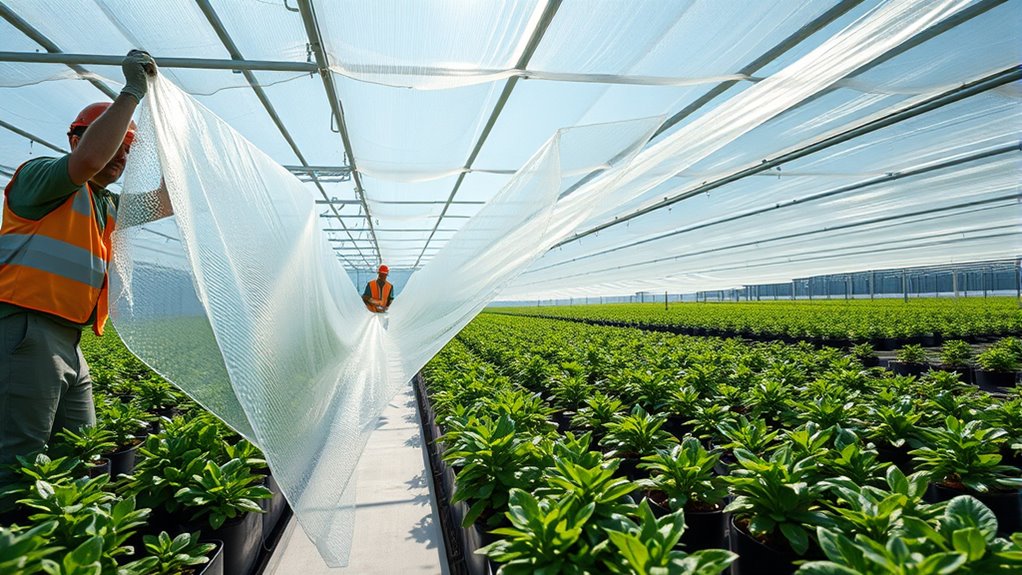
Reducing plastic use is essential for protecting our environment and conserving natural resources. When it comes to greenhouse construction, you have a real opportunity to make sustainable choices that can considerably lessen your ecological footprint. Traditional plastics, often used in film coverings, piping, and other components, contribute to pollution because they are durable and take centuries to decompose. Instead, you should explore biodegradable plastics, which are designed to break down more quickly and safely in natural environments. Using biodegradable plastics in your greenhouse not only reduces waste but also helps prevent microplastic pollution, which harms wildlife and contaminates water sources. These materials are made from renewable resources like cornstarch, sugarcane, or other plant-based substances, making them more environmentally friendly than conventional plastics.
Reducing plastic is vital; choose biodegradable options to protect the environment and promote sustainable greenhouse construction.
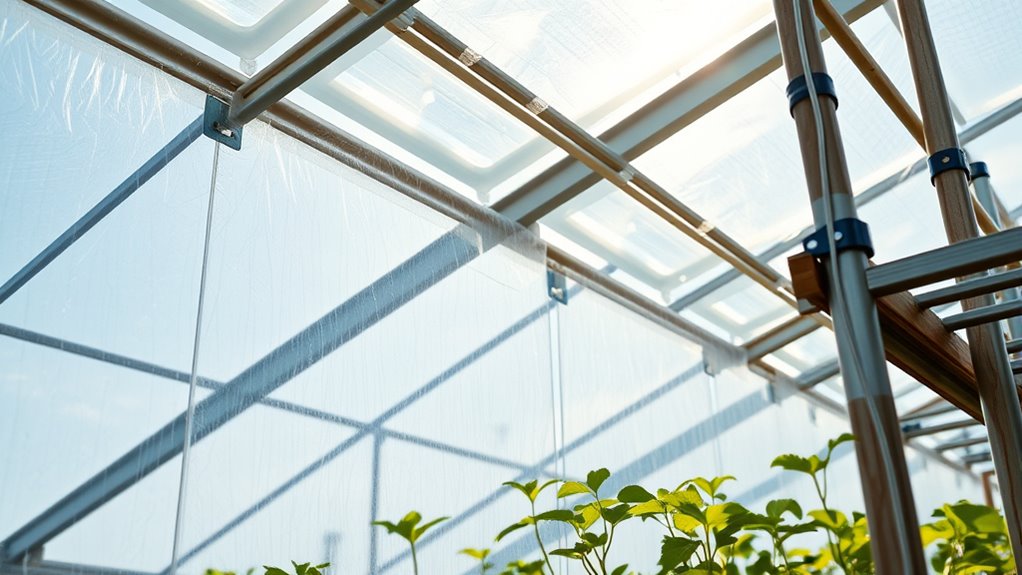
Beyond biodegradable plastics, there are plenty of alternative materials you can consider to replace traditional plastics altogether. For example, you might opt for glass or metal components where feasible, as these materials are highly durable and recyclable. When it comes to covering materials, consider using natural fabrics like shade cloths made from hemp or other biodegradable fibers, which can serve as effective alternatives to plastic films. These materials allow you to maintain proper light diffusion and airflow within your greenhouse while reducing reliance on non-biodegradable plastics. Additionally, some innovative products made from recycled or bio-based materials can serve as sustainable substitutes, further decreasing the environmental impact of your construction. Incorporating AI-driven research can help identify the latest sustainable materials and techniques to enhance your project’s eco-friendliness.
To effectively incorporate these alternatives, you need to evaluate your greenhouse’s specific requirements and select the most suitable options. For instance, if you’re replacing plastic film covers, look for biodegradable plastics that offer UV resistance and durability comparable to traditional plastics. For piping and structural components, seek out alternative materials that are either recyclable or made from bio-composites. You should also stay informed about new developments in sustainable construction materials, as technology is advancing rapidly, offering better options that align with eco-friendly principles. By choosing biodegradable plastics and alternative materials, you not only reduce your greenhouse’s environmental footprint but also set an example for sustainable practices in agriculture and construction.
In the end, your commitment to reducing plastic use can have a meaningful impact. Switching to biodegradable plastics and alternative materials supports a circular economy, decreases landfill waste, and fosters a healthier planet. Every decision you make about materials in your greenhouse construction contributes to this goal. Your mindful approach not only benefits the environment but also encourages others in the industry to adopt more sustainable practices, creating a ripple effect that can lead to widespread change. So, take the initiative to research, select, and implement greener options—your efforts will contribute substantially to a more sustainable future.
biodegradable greenhouse plastic film
As an affiliate, we earn on qualifying purchases.
As an affiliate, we earn on qualifying purchases.
Frequently Asked Questions
Are There Eco-Friendly Alternatives to Traditional Plastic Films?
Yes, you can use eco-friendly alternatives like biodegradable films and recycled plastics instead of traditional plastic films. Biodegradable films break down naturally over time, reducing environmental impact, while recycled plastics give new life to used materials, lowering waste. You should consider these options to make your greenhouse construction more sustainable, helping to protect the environment while maintaining effective plant growth. These alternatives are practical and environmentally responsible choices.
How Does Reducing Plastic Impact Greenhouse Climate Control?
A stitch in time saves nine, and reducing plastic helps your greenhouse climate control stay effective. When you cut back on plastic, you prevent plastic degradation and microplastic pollution, which can harm plant health and reduce insulation efficiency. Less plastic means fewer pollutants entering the environment, resulting in better temperature regulation inside your greenhouse. By choosing eco-friendly options, you guarantee a healthier, more stable climate for your plants and the planet.
What Are the Cost Differences Between Plastic Reduction Methods?
Reducing plastic use typically lowers material expenses, but the cost comparison varies based on alternative methods. For example, switching to natural materials or reusable options might have higher upfront costs but save money long-term. You could find that eco-friendly options like biodegradable films or recycled materials sometimes cost more initially but reduce disposal expenses. Overall, evaluating your project’s scale and materials helps determine the most cost-effective plastic reduction strategy.
Can Plastic-Free Greenhouses Withstand Extreme Weather Conditions?
Yes, plastic-free greenhouses can withstand extreme weather conditions if you choose sustainable materials with high durability, like treated wood or metal. These materials offer better structural integrity, reducing concerns about damage during storms or heavy snowfall. By properly designing and reinforcing the structure, you guarantee it maintains strength and longevity, making your greenhouse resilient without relying on plastics. Just remember, selecting the right materials is key to overcoming structural integrity concerns.
How Do Regulations Influence Plastic Use in Greenhouse Construction?
While regulations gently guide industry practices, they profoundly influence your choices in greenhouse construction. Plastic bans and regulatory standards encourage you to explore sustainable materials and innovative designs, ensuring compliance and environmental responsibility. These rules shape your approach, pushing you toward eco-friendly alternatives, reducing plastic reliance, and fostering long-term sustainability. By adhering to these guidelines, you can build resilient greenhouses that meet both legal expectations and ecological goals.
Conclusion
By choosing sustainable materials and innovative practices, you can considerably cut down plastic use in greenhouse construction. Think about how small changes, like using biodegradable alternatives or repurposing existing materials, can make a big difference. Isn’t it your responsibility to protect the environment for future generations? Every step you take toward reducing plastic not only benefits the planet but also sets a powerful example for others to follow. Will you commit to making your greenhouse greener today?
Fall yard work Picks
leaf blowers
As an affiliate, we earn on qualifying purchases.