

To think about sustainability beyond just solar panels, focus on managing resources wisely by reducing waste, conserving water, and supporting sustainable products and practices. Your choices impact the environment at every stage—from manufacturing to disposal. It’s essential to contemplate your overall carbon footprint and support initiatives like recycling and ecosystem protection. By adopting a holistic approach, you help create a resilient future. Keep exploring how your everyday actions can make a real difference.

Get garden gear delivered free with Prime
- Fast, free delivery on millions of items
- Prime Video, Amazon Music and more included
- Member-only deals all year
Key Takeaways
- Consider the entire lifecycle and environmental impact of products, not just their energy source.
- Prioritize resource conservation, reuse, and recycling to reduce raw material extraction and waste.
- Make smarter choices in food, clothing, and gadgets to lower indirect carbon emissions.
- Support sustainable practices in businesses and opt for energy-efficient appliances and minimal single-use plastics.
- Balance renewable energy adoption with overall resource management and waste reduction for genuine sustainability.
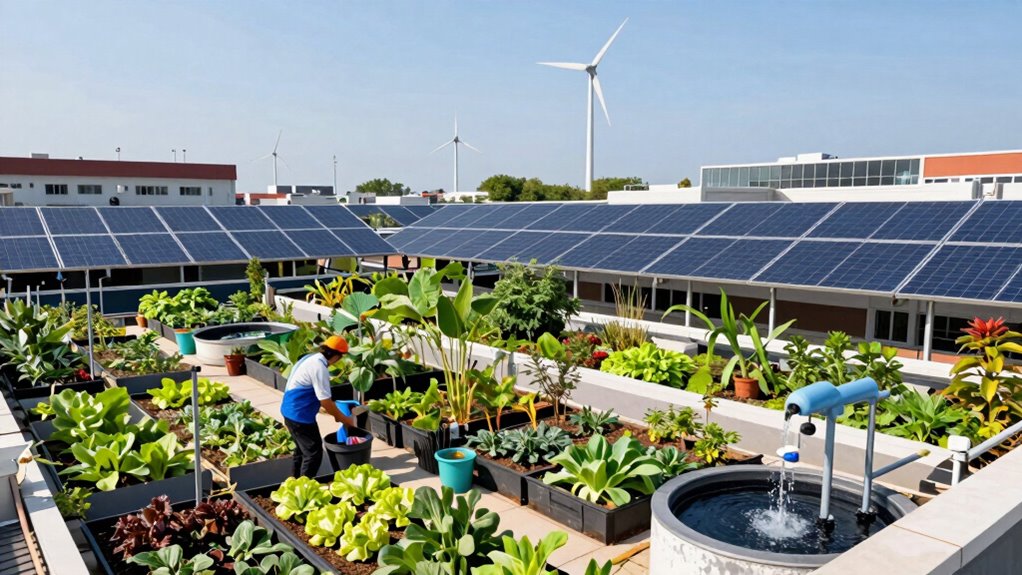
While solar panels often steal the spotlight in discussions about sustainability, true environmental responsibility extends far beyond just harnessing solar energy. You need to consider how your everyday choices impact your overall carbon footprint and how effectively you’re managing resources. Solar panels are a step in the right direction, but they don’t solve all problems. To truly think beyond solar, you must look at the entire system of resource management—how you use, reuse, and reduce materials throughout your life and community.
Your carbon footprint isn’t just about the energy you consume directly; it also includes the indirect emissions from manufacturing, transportation, and disposal of the products you rely on. For example, the clothes you wear, the food you eat, and the gadgets you use all contribute to your overall emissions. Reducing your footprint involves making smarter choices—opting for locally sourced food, minimizing waste, and choosing products with longer life spans. You should also evaluate how your consumption habits influence the environment, not solely through energy use but through the lifecycle of what you buy.
Reducing your footprint means choosing sustainable products, minimizing waste, and considering the full lifecycle of what you consume.
Resource management plays a pivotal role in sustainability. It’s not enough to install solar panels if you’re wasting water, overusing materials, or generating unnecessary waste. You need to look at how efficiently you’re managing resources in every aspect of your life. For example, conserving water reduces the energy required to pump, heat, and treat it. Reusing and recycling materials help minimize the extraction of raw resources, which often leads to habitat destruction and pollution. You can also support initiatives that promote sustainable resource management, from community recycling programs to policies that protect natural ecosystems. Additionally, understanding the impact of resource extraction helps emphasize the importance of reducing raw material consumption. Developing awareness of the full lifecycle of products can further enhance your efforts to minimize environmental harm.
Thinking beyond solar means adopting a holistic view of your environmental impact. It involves questioning how your choices influence the planet’s finite resources and how they can be optimized. You should contemplate not just the immediate benefits of renewable energy but also how to reduce overall consumption and waste. This might include choosing energy-efficient appliances, reducing single-use plastics, or supporting businesses committed to sustainable practices. Every small action adds up and influences resource management at a larger scale. Recognizing the environmental impact of manufacturing can help guide more responsible purchasing decisions.
Ultimately, your goal should be to create a balanced approach—embracing renewable energy like solar while actively reducing your carbon footprint and better managing resources. This all-encompassing mindset fosters genuine sustainability, where every decision contributes to a healthier planet, not just a cleaner energy grid. By expanding your focus beyond solar panels, you help build a more resilient and sustainable future for everyone.
As an affiliate, we earn on qualifying purchases.
Frequently Asked Questions
How Does Sustainability Impact Local Communities Beyond Energy Production?
Sustainability impacts your local community by fostering community engagement, where residents get involved in decision-making and shared projects. It also supports cultural preservation, ensuring traditions and local identities thrive alongside environmental efforts. When you prioritize sustainability, you’re helping create resilient, inclusive communities that respect cultural diversity and promote collective well-being. This approach strengthens social bonds and maintains the unique character of your neighborhood for future generations.
What Are the Social and Economic Benefits of Sustainable Practices?
You might think sustainable practices cost too much, but they bring significant social and economic benefits. By promoting environmental justice, you help underserved communities access cleaner resources, reducing health disparities. Green innovation spurs job creation and boosts local economies while fostering a healthier environment. Embracing sustainability creates a more equitable society, proving that caring for the planet benefits everyone, not just the environment. Your choices can drive positive change and economic growth simultaneously.
How Can Businesses Incorporate Sustainability Into Their Supply Chains?
You can incorporate sustainability into your supply chain by prioritizing supply chain transparency and ethical sourcing. Regularly audit your suppliers to guarantee they meet sustainable standards and openly share this information with stakeholders. Choose partners committed to environmentally friendly practices and fair labor conditions. By integrating these principles, you strengthen your business’s reputation, reduce risks, and contribute positively to global sustainability efforts.
What Role Does Policy Play in Promoting Comprehensive Sustainability?
Think of policy as the wind guiding a ship toward sustainability. Policy frameworks set the course, establishing clear guidelines for responsible practices. Regulatory incentives act as favorable currents, encouraging businesses to adopt eco-friendly innovations. When governments champion sustainability through robust policies, they turn the tide, making it easier for companies to navigate the complex waters of environmental responsibility. Ultimately, policy shapes a sustainable future by steering collective efforts in the right direction.
How Can Individuals Contribute to Sustainability Beyond Using Solar Panels?
You can contribute to sustainability by adopting eco-friendly habits like reducing water and energy use, reusing items, and choosing sustainable products. Waste reduction is also key—think composting, recycling, and avoiding single-use plastics. Small daily actions add up, so be mindful of your consumption and waste. By making these conscious choices, you support a healthier planet beyond just installing solar panels, helping create a more sustainable future for everyone.
Conclusion
Remember, sustainability isn’t just about shiny solar panels soaking up the sun; it’s about weaving a tapestry of mindful choices that echo through every corner of your life. By embracing a mindset that values resourcefulness, community, and innovation, you become the architect of a future where our planet thrives like a lush, vibrant garden—not just a patchwork of isolated solutions. So, step beyond the panels and let your actions bloom into a sustainable legacy.
Fall yard work Picks
leaf blowers
As an affiliate, we earn on qualifying purchases.