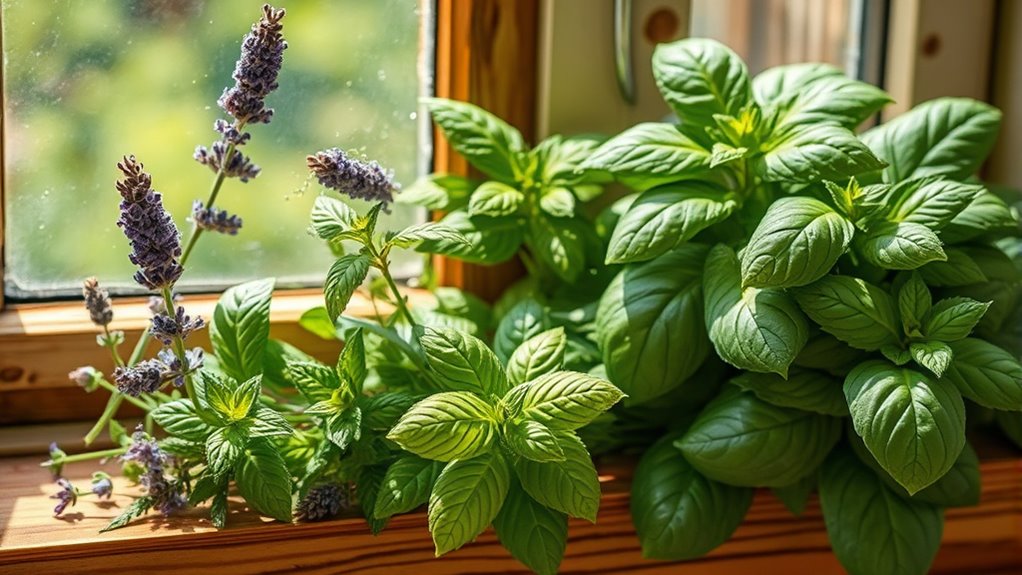

Growing medicinal herbs at home is a smart way to access fresh, chemical-free remedies like chamomile, peppermint, and thyme. Start with healthy soil, rich in compost or organic amendments, and use natural pest control methods like companion planting and homemade repellents. Maintain soil vitality with regular fertilizing and mulching to keep herbs potent and safe. Keep exploring further to discover how to create a thriving, sustainable herbal garden that supports your health and well-being.
Key Takeaways
- Select medicinal herbs suited for your climate and space, such as chamomile, peppermint, and thyme.
- Prepare healthy, organic soil with compost or aged manure to ensure potent, disease-resistant herbs.
- Use natural pest control methods like companion planting and homemade repellents to keep herbs chemical-free.
- Mulch and monitor soil moisture to maintain optimal growing conditions and prevent root issues.
- Harvest herbs carefully and promptly to preserve their medicinal potency and ensure a continuous supply.
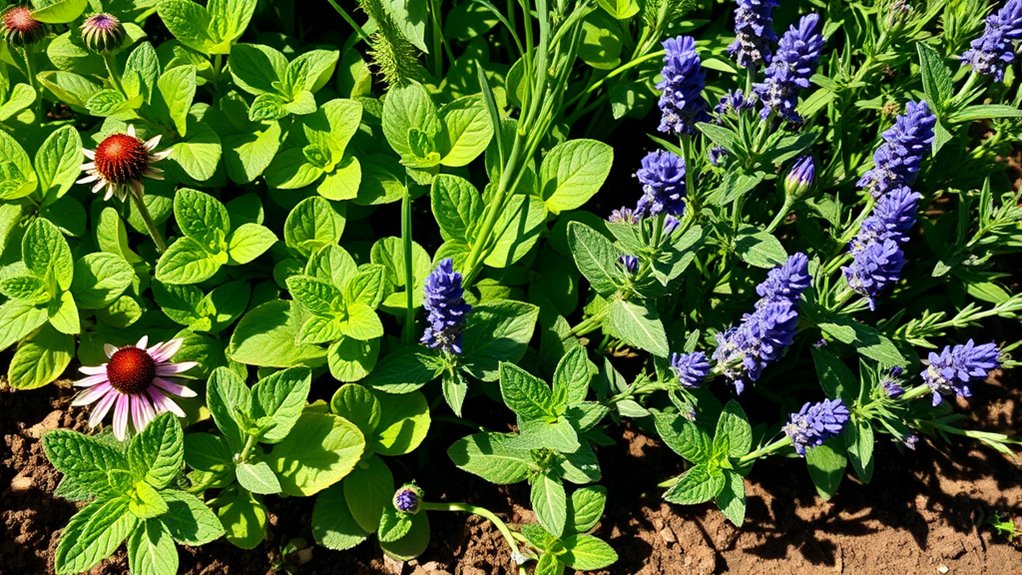
Growing medicinal herbs at home is an easy and cost-effective way to have natural remedies at your fingertips. When you cultivate your own herbs, you gain control over their quality and freshness, guaranteeing you always have access to healing plants like chamomile, peppermint, or thyme. To maximize your success, start with healthy soil and implement organic practices that promote vigorous growth. Incorporating organic soil amendments, such as compost or aged manure, improves soil fertility and structure, giving your herbs the nutrients they need to thrive. Healthy soil not only boosts plant vitality but also reduces the need for chemical interventions, making your garden more eco-friendly and safe for medicinal use.
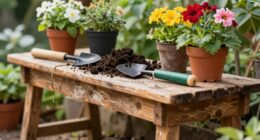
Growing your own medicinal herbs ensures fresh, high-quality remedies with organic practices.
One of the key benefits of growing herbs yourself is the ability to manage pests naturally through herbal pest control methods. Instead of resorting to synthetic pesticides, you can use companion planting strategies, such as planting basil near tomatoes to repel pests, or grow marigolds alongside your herbs to deter insects. Herbal pest control is both effective and safe, ensuring your plants remain uncontaminated and suitable for harvesting for remedies. Additionally, you can make homemade pest repellents using herbs like mint or neem oil, which keep pests at bay without harming your plants or the environment. This approach not only protects your herbs but also preserves their medicinal properties, which can be diminished by chemical treatments.
As you tend your garden, always focus on maintaining healthy soil conditions. Organic soil amendments play a crucial role in this, providing essential nutrients that support strong, disease-resistant plants. Regularly adding compost or organic fertilizers helps maintain soil vitality, leading to robust herbs that are more potent for medicinal use. Furthermore, healthy soil enhances the plant’s ability to fend off pests naturally, reducing the need for intervention. Keep an eye on soil moisture and avoid overwatering, which can lead to root rot or attract pests. Mulching around your herbs helps retain soil moisture, suppress weeds, and maintain consistent soil temperature, creating ideal growing conditions. Incorporating integrated pest management strategies can further enhance your pest control efforts in a sustainable way.
Growing medicinal herbs at home allows you to take an active role in your health and sustainability. By focusing on organic soil amendments and herbal pest control, you create a thriving environment that yields potent, chemical-free herbs. This proactive approach ensures your herbs are safe for making tinctures, teas, and salves, giving you confidence in their quality and effectiveness. With a little effort and attention to organic practices, you can enjoy a continuous supply of fresh medicinal herbs that support your well-being naturally.
Frequently Asked Questions
Which Medicinal Herbs Are Easiest for Beginners to Grow?
You’ll find basil, mint, and chamomile easiest to grow as a beginner. When herb seed selection, choose these hardy varieties, and use simple soil preparation techniques like well-draining soil and organic compost. Keep herbs in a sunny spot and water regularly. These herbs thrive with minimal effort, making them perfect for your home garden. Start small, and you’ll quickly enjoy fresh, medicinal herbs for home remedies.
How Do I Prevent Pests on My Medicinal Herbs?
Think of your herbs as peaceful allies, not battlegrounds. To prevent pests, plant pest-resistant plants nearby and use natural pest deterrents like neem oil or garlic spray. Keep your herbs healthy by watering properly and removing affected leaves promptly. This balanced approach creates a natural barrier, reducing pests without chemicals. With care, your herbs thrive peacefully, giving you fresh remedies and a lush, pest-free garden.
Can I Grow Medicinal Herbs Indoors Successfully?
Yes, you can grow medicinal herbs indoors successfully with proper indoor plant care and herbal container gardening. Place your herbs in bright, indirect sunlight and keep the soil consistently moist. Use well-draining containers and guarantee good airflow. Regularly monitor for pests and adjust watering as needed. With attention to these details, your indoor herb garden will thrive, providing fresh medicinal herbs right at your fingertips for home remedies.
What Are the Best Harvesting Times for Medicinal Herbs?
You should harvest medicinal herbs at their peak potency, which often aligns with their flowering stage. Check your planting schedules and aim for seasonal harvesting, typically just before or during flowering for maximum medicinal properties. For herbs like chamomile or peppermint, harvest in late morning after dew evaporates, but before the sun gets too hot. Timing your harvest guarantees you get the most potent, effective herbs for your remedies.
How Should I Store Dried Medicinal Herbs for Maximum Potency?
To guarantee maximum potency, you should store dried medicinal herbs in airtight containers, like glass jars with tight-fitting lids. Keep them in a cool, dark, and dry place to prevent exposure to light, heat, and moisture, which can degrade herb storage quality. Label each jar clearly, and avoid frequent opening to preserve herb potency. Proper storage techniques help you maintain the herbs’ effectiveness for your home remedies.
Conclusion
By nurturing these medicinal herbs at home, you’re quietly cultivating a garden of gentle healing. As they flourish under your care, they become your subtle allies in wellness, offering comfort in quiet moments. With each leaf and blossom, you’re creating a sanctuary of natural remedies that softly support your health. Embrace this peaceful journey of growth and healing, where your garden becomes a tender haven of well-being, whispering promises of health with every gentle breath.