TL;DR

Get garden gear delivered free with Prime
- Fast, free delivery on millions of items
- Prime Video, Amazon Music and more included
- Member-only deals all year
A report by Ideal Home says wildlife experts recommend considering a heated bird bath or a separate de-icer to keep water from freezing during cold weather. Experts describe thermostatic heaters as devices that keep water ice-free, not warm, but they require a suitable outdoor power supply and careful electrical safety. The effectiveness of alternatives such as floating balls depends on conditions.
Wildlife experts interviewed by Ideal Home say a thermostatically controlled heated bird bath or a separate de-icer can help keep garden water ice-free during cold weather, giving birds access to a water source when exposed baths freeze. The advice is a winter-care recommendation, not a report of a new product or a formal wildlife study, and experts say powered models need a suitable, protected outdoor electrical supply.
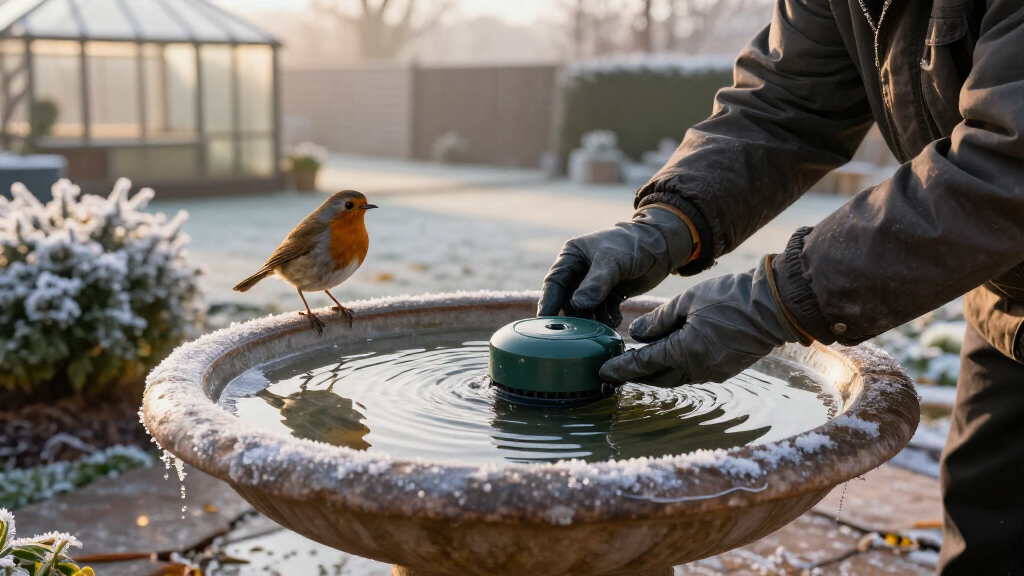
James Ewens, a bird specialist at Green Feathers, told Ideal Home that many heated baths have a low-wattage element in the base and a thermostat that switches it on when temperatures approach freezing. The aim, he said, is to stop the water freezing rather than heat it. A separate de-icer can be placed in or under an existing bath, while some products have the heater built in.
Ewens said he prefers a mains-powered model to solar for UK autumn and winter, when daylight can be limited. He also advised checking product compatibility: the report warns that some online heated baths, particularly products sold through Amazon, are designed for American outlets rather than the UK’s 240-volt standard. Buyers should check the device’s specifications before purchase.
Victoria Parkinson, a garden expert at Arctic Cabins, told the publication that the main drawbacks are the upfront cost, typically £40–£70, and the need for an outdoor power source. She advised using an outdoor-rated extension cord, keeping plugs dry and using an RCD-protected outlet. The report does not independently verify product prices or lifespan claims; Parkinson said some owners report heated baths lasting a decade or more.
A Reliable Winter Water Source
The advice addresses a practical problem for people who provide water for garden birds: during frost, a bath can become inaccessible when its surface freezes. The experts quoted by Ideal Home say a functioning heated bath can maintain an available water source, and Parkinson described reliable winter water as a draw for birds to gardens. The article does not quantify effects on bird populations or establish that every garden needs a heated model.
For readers, the choice involves weighing convenience against cost and electrical safety. A thermostatic heater is designed to operate automatically near freezing, but it still needs regular attention: the bath must be kept clean and topped up, and the electrical installation must be appropriate for outdoor use. Those without a safe outdoor socket may prefer non-powered measures, while recognizing that they may require more frequent checks.
As an affiliate, we earn on qualifying purchases.
Heaters, De-Icers and Alternatives
The Ideal Home report presents heated baths as one option for winter bird-bath care, alongside de-icers that can be added to existing baths. It also describes lower-cost steps suggested by Ewens: placing a ping-pong or tennis ball in the water, moving the bath to a sunny, sheltered area, and breaking ice before adding warm—not boiling—water. These measures are not described as guaranteed solutions in every freeze.
Ewens said a floating ball can create gentle surface movement that may slow or prevent complete freezing, and noted that frost may be short-lived in some parts of the UK. The report also mentions a frost-free additive marketed as safe around wildlife, but provides no ingredient list or independent assessment. Anyone considering an additive should follow its product directions and confirm it is intended for use in wildlife water.
“They’re super, really — designed to simply keep the water ice-free rather than warm.”
— James Ewens, bird specialist at Green Feathers, speaking to Ideal Home
Questions Buyers Should Check
The source material does not give a publication date, identify specific tested models, or provide independent performance testing. It is not clear how well different heaters work across varying temperatures, bath sizes or exposure to wind and weather, or how much electricity they use over a winter. The £40–£70 price range is attributed to the report and may vary by product and retailer.
The report does not establish that floating balls or sunny placement will keep every bath ice-free in a prolonged cold spell. It also gives no technical detail about the wildlife-safe additive it mentions. Readers should check the instructions and compatibility of any equipment or treatment rather than assuming all products are suitable for a UK garden or safe for every wildlife setting.
Check Conditions Before Installation
People considering a powered bath should check its voltage and outdoor-use instructions, confirm that the socket is RCD-protected, and keep plugs and connections dry. They should compare the cost and power requirements of a built-in heater with a separate de-icer and check that a chosen unit is intended for the bath in which it will be used.
During cold weather, the practical next step is to monitor the bath, keep it clean and topped up, and check whether the chosen method is preventing ice. The Ideal Home report offers general expert advice; it does not announce a new regulation, product launch or follow-up test, and no further development is specified in the source material.
Key Questions
What does a heated bird bath do?
According to bird specialist James Ewens, many models use a low-wattage, thermostatically controlled heater to keep water from freezing. They are designed to keep water ice-free, not warm.
How much does a heated bird bath cost?
The Ideal Home report gives a typical upfront price of £40–£70, citing garden expert Victoria Parkinson. Prices can vary, and the report does not provide a survey of current retailers.
Can I use a heated bird bath with a UK socket?
Check the product specifications first. The report says some online models are made for American outlets and advises confirming compatibility with the UK’s 240-volt standard. Follow the manufacturer’s installation instructions and use appropriate outdoor electrical protection.
What can I do if I cannot use an outdoor heater?
Suggestions in the report include placing a ping-pong or tennis ball in the water, choosing a sunny, sheltered position, and clearing ice before adding warm—not boiling—water. These methods may need repeated attention and are not guaranteed to prevent freezing in all conditions.
Source: rss
Evergreen bestsellers Picks
bestsellers
As an affiliate, we earn on qualifying purchases.