
TL;DR

Get garden gear delivered free with Prime
- Fast, free delivery on millions of items
- Prime Video, Amazon Music and more included
- Member-only deals all year
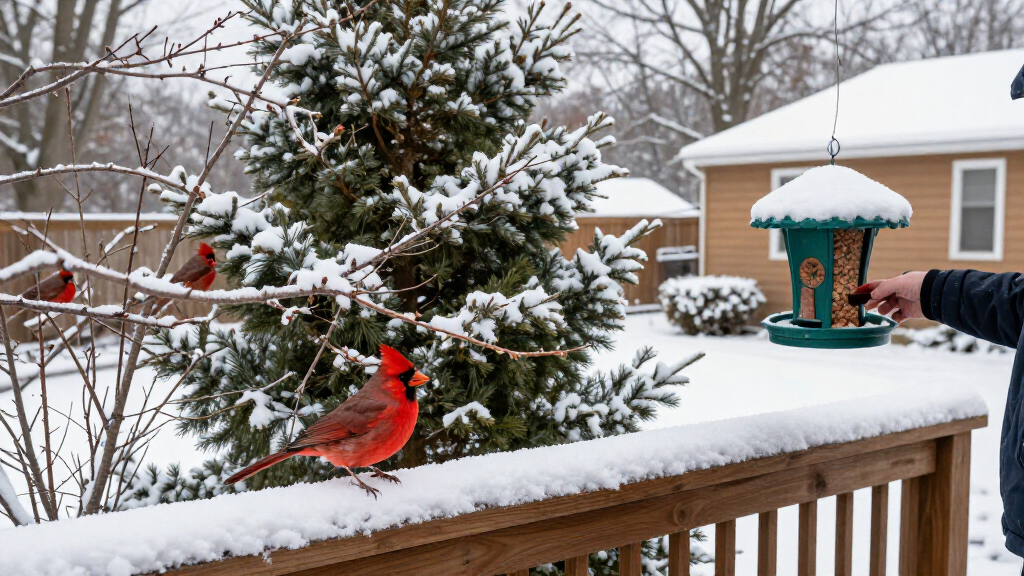
A Homes & Gardens report published in October recommends seven ways to support Northern cardinals as winter approaches, including leaving leaf piles, creating brush piles and maintaining berry-bearing plants. Experts quoted in the report say birds need both food and protective cover; the advice is seasonal guidance, not a guarantee that cardinals will visit a particular yard.
Homes & Gardens has published seven ways to help Northern cardinals through winter, drawing on advice from experts at the Cornell Lab of Ornithology’s Project FeederWatch and the American Birding Association. The recommendations focus on preserving natural food and cover, adding water, and making yards more useful to birds as temperatures fall and wild resources become less available.
The report says cardinals may gather in larger groups in fall and winter than during the breeding season, when pairs compete for food, mates and territory. It also notes that the birds are typically quieter in winter, when they are no longer singing to attract mates or defend territories. The observations are attributed to Miranda Rinck, an engagement support specialist with Project FeederWatch at the Cornell Lab of Ornithology.
Several of the suggested steps involve leaving natural material in place. Gardeners can leave fallen leaves or gather them into piles, where insects, seeds and fruit may provide foraging opportunities. They can also make brush piles from branches and twigs, which the report describes as potential shelter and protection from harsh weather and predators.
The other recommendations include preserving shrubs, vines and thickets for roosting cover; planting native berry-producing trees and shrubs suited to the local area; retaining grasses and sedges; avoiding pesticides to protect invertebrates that birds may eat; and providing a dependable source of water, such as a bird bath. The report names dogwood, sumac, holly and hawthorn as examples of plants that can provide berries or cover, while stressing that suitable species depend on local habitat.
Food and Cover in Cold Weather
The advice highlights that supporting birds is not just a matter of putting out seed. Natural food, shelter and water can all matter when conditions change, and the suggested actions largely involve preserving resources already in a garden rather than intensive landscaping. Leaf litter and brush can also support insects and other wildlife, while berry-bearing plants offer food as well as places to hide.
For readers, the practical implication is to think about a yard as habitat across seasons. Keeping some areas less tidy, retaining protective vegetation and choosing plants suited to the region may benefit cardinals and other wildlife. The source does not provide measured results showing how much any one action increases cardinal visits, so these steps should be understood as habitat guidance rather than a promise of a particular outcome.
As an affiliate, we earn on qualifying purchases.
How Cardinal Needs Change
The article frames its suggestions around fall and the approach of winter, when food and shelter can become harder to find. Rinck says cardinals tend to form larger groups outside the breeding season, when competition between pairs is lower. Their quieter winter behavior also reflects the end of mate-attraction and territorial singing, according to her explanation.
American Birding Association editor Ted Floyd emphasizes that cover matters even when it does not provide food. The report also says cardinals in warmer parts of the Southeast may eat many invertebrates in October and winter. Because diets and plant suitability vary by region, the recommendations call for locally appropriate native species and wildlife-friendly gardening rather than a single planting list for every yard.
“Leaving your leaves is a great way to provide a variety of food for Cardinals and other birds in your yard.”
— Miranda Rinck, Engagement Support Specialist for Project FeederWatch at the Cornell Lab of Ornithology
What the Advice Cannot Guarantee
The report offers expert recommendations but does not provide trial data comparing the effects of the seven actions, nor does it quantify changes in cardinal survival or yard visits. It is also not clear that every measure will suit every location: local climate, native plant ranges and available habitat differ. The supplied source text cuts off during its discussion of berry-producing plants, so it does not give the complete explanation for that recommendation or all supporting details for the seven steps.
Individual birds’ behavior and the food available in a given neighborhood can also vary. The source does not identify a specific date by which each action must be completed or say that installing a heated bird bath is necessary; it presents a heater as one product example, not as a requirement.
Seasonal Steps for Gardeners
As fall progresses, readers can start with low-impact actions: leave some leaves, keep a branch pile in a quiet spot, and avoid cutting back all protective vegetation. Before planting, they can check which berry-bearing trees and shrubs are native to their area. If providing water, they can maintain a bird bath and consider whether it can remain usable in local cold weather.
The report does not announce a new program or scheduled follow-up. Its next step for readers is practical and ongoing: adapt the recommendations to local conditions, observe what birds use, and preserve food and cover through the colder months.
Key Questions
What are the main ways to help cardinals in winter?
The report recommends leaving leaf piles, creating brush piles, preserving shrubs and thickets, planting locally suitable berry-producing plants, retaining grasses and sedges, avoiding pesticides that can reduce invertebrates, and providing water.
Why leave fallen leaves in the yard?
Miranda Rinck of Project FeederWatch says leaf piles can harbor insects, seeds and fruit that birds can forage for. They also provide a simple way to retain natural material in the garden.
Which plants does the report mention for cardinals?
It names dogwood, sumac, holly and hawthorn, as well as berry-producing shrubs and vines. Check local native ranges and growing conditions before choosing plants.
Do cardinals need a heated bird bath?
The report recommends providing water and mentions a bird-bath heater as a product example. It does not say a heater is necessary for every yard or location.
Will these steps guarantee that cardinals visit?
No such guarantee is made. The recommendations are intended to improve food and shelter availability; the report gives no measured prediction of visits or survival outcomes.
Source: rss
Evergreen bestsellers Picks
bestsellers
As an affiliate, we earn on qualifying purchases.