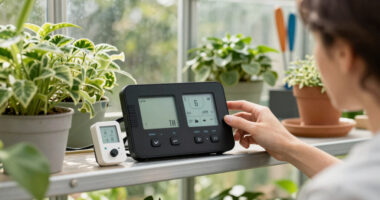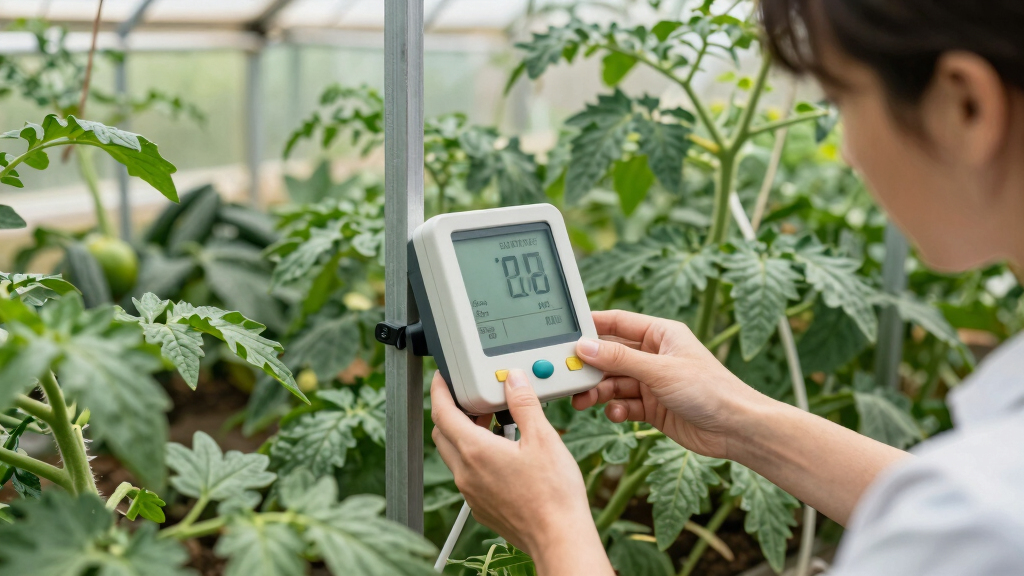
For growers who understand that optimal vapor pressure deficit (VPD) management is essential for maximizing yields, choosing the right monitor makes all the difference. The Growlink climaLINK stands out for its comprehensive real-time data and aspirated design, ideal for high-humidity environments. Meanwhile, the VIVOSUN AeroLab THB1 offers wireless convenience and dual-channel monitoring at a budget-friendly price. Both have their strengths and tradeoffs, which I will explore to help you decide.
Key Takeaways
- Growlink climaLINK offers highly accurate, real-time monitoring with integrated CO2 and light sensors, suited for advanced, data-driven growers.
- VIVOSUN AeroLab THB1 provides wireless Bluetooth connectivity and dual-channel temperature/humidity tracking, ideal for growers needing flexibility and affordability.
- The aspirated design of the climaLINK ensures consistent readings in fluctuating greenhouse conditions, unlike the simpler VIVOSUN sensor that relies on ambient airflow.
- VIVOSUN’s Bluetooth range limits remote monitoring unless upgraded to Wi-Fi, making it less suitable for large or distant setups.
- Choosing between these depends on whether you prioritize comprehensive data integration or wireless convenience.
| Growlink climaLINK – Precision Climate Sensor for Temp, Humidity, Light, VPD, and CO2 – Engineered with Aspirated Design |  | Best Overall for Advanced Data and Integration | Display Type: Digital | Operating Temperature: 20°F and above | Sensors Included: Temp, Humidity, Light, CO2, VPD | VIEW LATEST PRICE | See Our Full Breakdown |
| VIVOSUN AeroLab THB1 Wireless Bluetooth Hygrometer Thermometer Indoor, Smart Temperature Monitor, VPD, Digital Humidity Meter |  | Best Budget Wireless Monitor with Dual Channels | Display Type: LCD | Operating Temperature: 122°F max | Sensors: Temp, Humidity, VPD | VIEW LATEST PRICE | See Our Full Breakdown |
More Details on Our Top Picks
Growlink climaLINK – Precision Climate Sensor for Temp, Humidity, Light, VPD, and CO2 – Engineered with Aspirated Design
Compared with the VIVOSUN AeroLab THB1, the climaLINK offers a broader spectrum of environmental data, including CO2 and light, with automatic VPD calculation. Its aspirated design ensures consistent readings even in high-humidity or fluctuating conditions, making it ideal for serious growers who want accurate, reliable data. The system integrates seamlessly with Growlink HUB and OS, enabling automation and centralized monitoring. The main tradeoff is the higher cost and the need for a separate canopyLINK sensor for full functionality, which adds complexity and expense. Nonetheless, it’s a top choice for those managing large greenhouses or precision cultivation setups.
Pros:- Comprehensive real-time climate data including CO2, light, and VPD
- Aspirated active airflow ensures accurate readings in fluctuating environments
- Seamless integration with Growlink automation systems
- Robust build designed for high-humidity conditions
Cons:- Higher price point and extra cost for canopyLINK sensor
- Requires setup and calibration, which might be complex for new users
- Dependent on Growlink ecosystem, limiting flexibility
Best for: Serious growers seeking integrated, high-precision climate control and automation.
Not ideal for: Beginners or growers with small, simple setups who don’t need extensive data logging or automation.
- Display Type:Digital
- Operating Temperature:20°F and above
- Sensors Included:Temp, Humidity, Light, CO2, VPD
- Design:Aspirated
- Connectivity:Integrated system with Growlink HUB
- Made In:USA
Bottom line: This monitor excels in precision and integration, making it the best choice for large-scale, data-driven greenhouse operations.
VIVOSUN AeroLab THB1 Wireless Bluetooth Hygrometer Thermometer Indoor, Smart Temperature Monitor, VPD, Digital Humidity Meter
Compared with the Growlink climaLINK, the AeroLab THB1 emphasizes convenience and affordability, offering wireless Bluetooth connectivity and dual-channel monitoring of inside and outside conditions. Its user-friendly LCD screen displays current, highest, and lowest readings, along with comfort indicators. The Bluetooth range is limited, which is its main drawback, especially for larger setups where remote viewing is desirable. Still, for growers with smaller or indoor setups, this device provides essential data at a fraction of the cost, making it perfect for those starting to optimize their environment without investing heavily.
Pros:- Easy-to-use with large LCD display
- Wireless Bluetooth connectivity for quick setup
- Dual-channel measurement for inside and outside conditions
- Data logging and alert notifications via app
Cons:- Limited Bluetooth range restricts remote access
- Less comprehensive environmental data compared to climaLINK
- Requires Bluetooth connection within proximity for updates
- No integration with automation systems
Best for: Growers seeking a straightforward, cost-effective wireless VPD monitor for small or indoor setups.
Not ideal for: Large-scale or outdoor growers needing long-range monitoring or integration with automation systems.
- Display Type:LCD
- Operating Temperature:122°F max
- Sensors:Temp, Humidity, VPD
- Connectivity:Bluetooth
- Power:Battery operated
- Data Storage:2 years free
Bottom line: A cost-effective option for small-scale growers who want wireless, real-time VPD and climate data without complicated setups.

How We Picked
Our selection process focused on monitors specifically designed for serious greenhouse operators who require precise environmental control. We evaluated accuracy, sensor durability, ease of installation, data logging capabilities, integration with automation systems, and connectivity options. The products had to serve high-humidity environments without sacrificing reliability or ease of use. We also considered user feedback and price-to-value ratio, aiming to recommend options suitable for professional-scale growers.
Factors to Consider When Choosing Best Vpd Monitors For Serious Greenhouse Growers
Choosing a VPD monitor for serious greenhouse growing involves assessing accuracy, environmental durability, data integration, and connectivity options. An ideal device should provide precise, real-time data in high-humidity conditions, support automation, and be easy to install and calibrate. The decision hinges on your specific setup size, budget, and whether you prioritize comprehensive data or wireless convenience.
Measurement Accuracy and Sensor Durability
For serious growers, sensor accuracy is paramount. Aspirated sensors like the climaLINK’s active airflow system are less prone to errors caused by environmental fluctuations, providing consistent readings even in humid or variable conditions. Durability in high-humidity environments prevents sensor degradation, ensuring reliable long-term performance. Consider the build quality and sensor lifespan when making your choice.
Connectivity and Data Integration
Integration with automation systems can significantly streamline climate management. The climaLINK offers extensive system compatibility, ideal for those managing large or complex operations. Conversely, the AeroLab THB1’s Bluetooth connectivity suits smaller setups but limits remote monitoring unless upgraded to Wi-Fi, which could involve additional costs or accessories. Decide if seamless automation or simple remote access better aligns with your grow operation.
Ease of Installation and Use
Ease of setup is critical, especially for high-volume growers. The aspirated climaLINK is designed for high-humidity environments, but it may require professional installation or calibration. The VIVOSUN AeroLab THB1 is straightforward to install, with versatile mounting options and a user-friendly interface. Your choice depends on your technical comfort level and the scale of your grow space.
Frequently Asked Questions
Why is VPD monitoring important for greenhouse growing?
VPD monitoring is essential because it directly influences plant transpiration, nutrient uptake, and overall health. Proper VPD levels optimize growth rates and reduce stress, especially in controlled environments like greenhouses. Accurate VPD data allows growers to fine-tune temperature and humidity, leading to healthier plants and higher yields.
Can I use these monitors outdoors or in high-humidity environments?
Yes, both monitors are designed to withstand high-humidity conditions, but the climaLINK’s aspirated system offers more consistent accuracy in fluctuating environments. Its specialized filters and active airflow system make it more suitable for large greenhouses with variable humidity, whereas the AeroLab THB1 is better suited to indoor or small-scale setups.
Is connectivity important for a VPD monitor?
Connectivity affects how easily you can access real-time data and integrate the monitor with automation systems. The climaLINK’s wired and system integration options make it ideal for automation-heavy setups, while the AeroLab THB1’s Bluetooth is sufficient for small or indoor operations but limits remote access. Consider your grow size and automation needs when choosing.
What are the main tradeoffs between these two monitors?
The climaLINK provides comprehensive, precise data with automation capabilities but comes at a higher cost and complexity. The AeroLab THB1 offers wireless convenience and affordability but with limited range and fewer environmental sensors. Your decision depends on whether you prioritize detailed data and control or ease of use and lower price.
How long do these sensors typically last?
Sensor lifespan varies based on environmental conditions and maintenance. The climaLINK is built for durability in high-humidity environments, with sensors designed to last several years with proper calibration. The AeroLab THB1’s sensors are also long-lasting but may require periodic replacement or recalibration, especially if exposed to extreme conditions or frequent use.
Conclusion
If you’re managing a large, professional greenhouse and need detailed, integrated climate data for automation, the climaLINK is the best choice despite its higher price. Small-scale or indoor growers seeking simplicity and affordability will find the AeroLab THB1 more suitable. Serious growers should weigh the importance of advanced features against budget and setup complexity to choose the right VPD monitor for their operation.