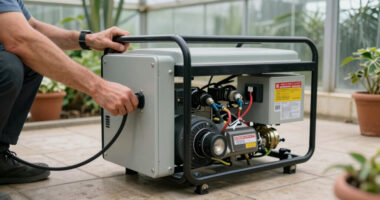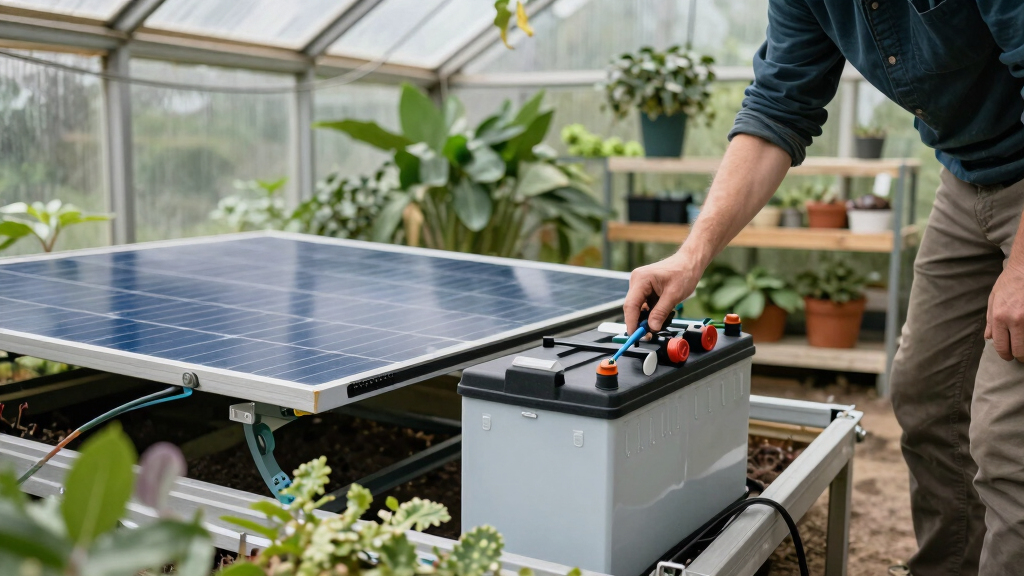
For greenhouse growers seeking reliable off-grid power, choosing the right solar kit can be transformative. The Renogy 400 Watt 12 Volt Premium Kit stands out as the best overall for its balanced performance and expandability. The ECO-WORTHY 1200W 24V Lithium System offers robust capacity for larger setups, while the ECO-WORTHY 200W Starter Kit provides a simple entry point for beginners. These options highlight the main tradeoffs: higher capacity versus affordability, ease of installation versus customization. Keep reading to see how these kits compare and find the best fit for your greenhouse needs.
Key Takeaways
- Top-performing kits balance capacity with ease of installation, making them suitable for a range of greenhouse sizes.
- Higher wattage systems tend to include larger batteries and inverters, offering more consistent power but at a higher cost.
- Compact kits are ideal for small greenhouses or supplemental power, but may lack scalability for larger operations.
- Battery chemistry, especially LiFePO4 versus lead-acid, significantly impacts longevity and maintenance requirements.
- Pre-configured complete kits simplify setup but may limit customization options for advanced users.


More Details on Our Top Picks
This kit stands out for its combination of high-quality Grade A+ solar cells with an impressive 22.5% efficiency, backed by a 10-year warranty, making it a top choice for serious greenhouse growers. Its sturdy glass surface and aluminum frame ensure durability against wind and snow loads, which is essential for off-grid setups exposed to the elements. The integrated MPPT charge controller exceeds traditional PWM models, offering 99% tracking efficiency and smart temperature regulation, which maximizes energy harvest. The Bluetooth monitoring module elevates this system by allowing remote system management and parameter adjustments via a phone app. Compared with the ECO-WORTHY 1200W system, this kit offers more precise control and durability, but it involves a slightly higher initial investment. This pick makes the most sense for greenhouse owners who want reliable, long-term off-grid power with real-time system insights and easy scalability.
Pros:- High-efficiency EL-tested Grade A+ solar cells with 22.5% efficiency
- Robust construction with low-iron tempered glass and aluminum alloy frame
- Advanced MPPT charge controller with 99% tracking efficiency
- Bluetooth module for remote monitoring and system adjustments
Cons:- Higher upfront cost compared to basic systems like ECO-WORTHY 400W kit
- Requires some technical knowledge for optimal setup and monitoring
- Longer installation time due to system complexity
Best for: Gardeners and small commercial greenhouse operators seeking a durable, efficient, and monitorable solar system.
Not ideal for: Beginners or those with very limited budget, as the installation and setup require some technical familiarity.
- Max Battery Voltage:32V
- Number of Panels:4
- Panel Power:100W
- Controller Type:MPPT
- Bluetooth Monitoring:Included
- Warranty:10 years on panels, 3 years on controller
Bottom line: Ideal for greenhouse owners who prioritize durability, high efficiency, and real-time system management in off-grid setups.
[Ultra] ECO-WORTHY 1200W 24V 5.52KWH Lithium Battery Solar System Off Grid:6pcs 195W Solar Panels+2Pcs 12.8V 280Ah Lithium Battery+60A MPPT Charge Controller+3000W Pure Sine Wave Inverter
ECO-WORTHY 1200W 24V 5.52KWH Lithium Battery Solar System Off Grid:6pcs 195W Solar Panels+2Pcs 12.8V 280Ah Lithium Battery+60A MPPT Charge Controller+3000W Pure Sine Wave Inverter” image=”https://m.media-amazon.com/images/I/511dZ9S3EPL._SX342_SY445_QL70_FMwebp_.jpg” link=”0″]Best for High Capacity Off-Grid Greenhouses with Deep Cycle Lithium Storage
View Latest PriceThis system excels in providing substantial daily energy output of over 5.5kWh, suitable for larger greenhouses or those with high energy demands. Its dual-axis tracker improves efficiency by over 40%, capturing more sunlight during the day, which compensates for its higher complexity. The inclusion of two 280Ah lithium batteries ensures long-term deep-cycle capability, ideal for winter months or low-light periods. The 60A MPPT controller and 3000W inverter deliver high conversion efficiency and ample power for multiple devices simultaneously. Its Bluetooth monitoring feature keeps you informed about system performance remotely. Compared with the Renogy 400W kit, this system offers far greater storage capacity and power output but involves more installation effort and cost. This system makes sense for advanced users needing large-scale off-grid greenhouse power with reliable backup.
Pros:- High total output of 5.52KWh daily under ideal conditions
- Dual-axis tracker boosts efficiency significantly
- Large 280Ah lithium batteries with over 6000 deep cycles
- Bluetooth app for remote monitoring and system control
Cons:- Higher initial investment and installation complexity
- Requires space and mounting considerations for tracker setup
- Longer setup time compared to plug-and-play options
Best for: Larger greenhouse operators or serious hobbyists needing high-capacity, deep-cycle lithium storage with advanced tracking.
Not ideal for: Casual gardeners or small-scale growers with limited budget or minimal power needs, due to its complexity and cost.
- Total Power:1200W
- Battery Capacity:2 x 280Ah Lithium
- Panel Power:6 x 195W
- Controller:MPPT 60A
- Inverter:3000W pure sine wave
- Tracker:Dual-axis
Bottom line: Best suited for large or energy-intensive greenhouses that need extensive storage and advanced tracking features.
ECO-WORTHY 200 Watt 12V Complete Solar Panel Starter Kit for RV Off Grid with Battery and Inverter: 200W Solar Panels+30A Charge Controller+50Ah Lithium Battery+600W Solar Power Inverter
This beginner-friendly kit includes everything needed to start off-grid solar in a small greenhouse or RV, with a 200W monocrystalline panel, 50Ah lithium battery, and a 600W inverter. Its durable aluminum and tempered glass construction ensures longevity outdoors, while the plug-and-play setup simplifies installation even for newcomers. The 30A PWM charge controller offers basic regulation, suitable for small systems but less efficient than MPPT models, which means it may not harvest as much energy on cloudy days. Its compact size and included mounting brackets make it ideal for quick, straightforward deployment. Compared with the Renogy 400W kit, this system sacrifices some efficiency and scalability but excels in ease of use and affordability. It makes sense for hobbyists or small-scale greenhouses just getting started with off-grid solar power.
Pros:- Complete kit with panels, battery, inverter, and mounting hardware
- Durable aluminum frame and tempered glass panels
- Lightweight and easy to install
- Affordable for small-scale use
Cons:- Uses PWM controller, less efficient than MPPT systems
- Limited capacity with 50Ah battery, not suitable for high loads
- Lower scalability if expansion is needed later
Best for: Beginners or hobbyists with small greenhouses or RV setups who need an easy, all-in-one starter kit.
Not ideal for: Large greenhouses or growers needing high power output and monitoring capabilities, as this system has limited capacity and basic controls.
- Panel Power:200W
- Battery Capacity:50Ah Lithium
- Inverter:600W
- Controller Type:PWM
- Voltage:12V
- Dimensions:41.8 x 20.9 inches
Bottom line: Perfect for beginners or small greenhouse owners looking for a simple, all-in-one off-grid solar solution.
ECO-WORTHY 25 Watts 12V Off Grid Solar Battery Charger Kit: Waterproof Solar Panel + Adjustable Mount Bracket + SAE Connection Cable +10A Charge Controller for Car RV Marine Boat 12V Battery
This compact and affordable 25W solar panel kit is ideal for maintaining small batteries in greenhouses, RVs, or boats, providing a steady trickle charge with minimal setup. Its monocrystalline cells and waterproof design ensure durability in harsh weather, while the included 10A PWM controller manages safe charging. The adjustable mount bracket allows optimal positioning for sun exposure, making it versatile for different applications. Its modest power output makes it unsuitable for powering appliances or larger systems, but it is excellent for long-term battery health and emergency backup. Compared to larger systems like the ECO-WORTHY 400W or Renogy kits, this is a minimal, low-cost solution for small-scale needs. It makes sense for users needing simple, reliable battery maintenance without complexity or high capacity.
Pros:- Waterproof and weather-resistant design
- Includes adjustable mounting bracket for optimal sunlight capture
- Easy to connect with SAE cables
- Low-cost and simple to operate
Cons:- Limited power output at only 25W
- Not suitable for powering devices or running systems
- PWM controller less efficient than MPPT
Best for: Small greenhouses or off-grid setups requiring battery maintenance or emergency backup with minimal power demands.
Not ideal for: Greenhouses that require powering grow lights, pumps, or other appliances, as this provides only 25W of power.
- Panel Power:25W
- Voltage:12V
- Controller:PWM 10A
- Material:Monocrystalline Silicon
- Dimensions:16.8 x 13.4 inches
- Weight:2.3 kg
Bottom line: A great choice for battery maintenance or small backup needs in off-grid greenhouses or RVs.
Renogy 200 Watts 12 Volts Monocrystalline RV Solar Panel Kit with Adventurer 30A LCD PWM Charge Controller and Mounting Brackets for RV, Boats, Trailer, Camper, Marine, Off-Grid Solar Power System
This all-in-one solar kit offers a balanced mix of quality and ease of use, featuring two 100W monocrystalline panels with a 30A PWM controller and mounting brackets. Its high solar cell efficiency of 22% ensures decent energy production in moderate sunlight, suitable for small to medium greenhouses. The plug-and-play cables and pre-drilled holes simplify setup, making it accessible for users with minimal technical skills. The system’s robust aluminum frame and weatherproof design guarantee long-lasting outdoor operation. While it lacks advanced monitoring features like Bluetooth, its straightforward operation and proven performance make it a dependable choice. Compared to the ECO-WORTHY 400W kit, it offers less capacity but is more user-friendly and quicker to install, making it ideal for those starting with off-grid solar.
Pros:- High-quality monocrystalline panels with 22% efficiency
- Easy to install with pre-drilled holes and plug-and-play cables
- Weatherproof aluminum frame for durability
- Good balance of power and simplicity for small greenhouses
Cons:- No Bluetooth or remote monitoring features
- Limited capacity at 200W, not suitable for high energy loads
- PWM controller less efficient than MPPT models
Best for: Small to medium greenhouse owners looking for a reliable, easy-to-install solar power system with proven efficiency.
Not ideal for: Large-scale operations or those needing sophisticated system monitoring, as this kit offers basic controls and moderate capacity.
- Panel Power:200W
- Voltage:12V
- Controller:PWM 30A
- Number of Panels:2
- Dimensions:41.8 x 20.9 inches
- Weight:16.5 lbs
Bottom line: A dependable, easy-to-install system for small greenhouses seeking proven performance without complex features.
ECO-WORTHY 10KW Output 9.36KWH Off Grid Solar System Complete Kit for Home
This kit stands out for its impressive 9.36KWh daily output under just 4 hours of full sun, making it suitable for larger greenhouses or properties needing reliable backup. Compared to smaller systems like the ECO-WORTHY 5KW kit, it offers significantly higher power, ideal for powering multiple high-demand devices like AC units and refrigerators. The inclusion of 12 upgraded bifacial panels with a high 25% efficiency, coupled with UL-certified batteries and a UL 1741 inverter, ensures safety and durability. However, the setup is complex and demands professional installation, which can increase initial costs. Its wifi monitoring and flexible charging modes add to its appeal for serious off-grid users. This kit is perfect for those who need robust, scalable energy for extensive greenhouse operations or remote homes.
Pros:- Large daily energy output of 9.36KWh
- High-efficiency bifacial panels with double-sided generation
- UL safety certifications and durable build
- Wifi monitoring for real-time system insights
- Requires professional installation and setup
- Higher upfront investment and complexity
Pros:- High daily energy production of over 9.36KWh
- Durable, high-efficiency bifacial solar panels
- Advanced safety certifications ensure reliability
- Remote monitoring capability
Cons:- Installation complexity necessitates professional help
- Higher initial cost compared to smaller kits
Best for: Farmers or homeowners with large greenhouses needing dependable, high-capacity off-grid power
Not ideal for: Small-scale gardeners or hobbyists who only need minimal power, due to the complexity and cost
- Maximum Power:10,000 Watts
- Number of Panels:12pcs 195W
- Inverter:10KW UL 1741 certified
- Batteries:2pcs 48V 100AH Lithium
- Efficiency:25%
- Output Voltage:120V/240V
Bottom line: This system makes the most sense for those seeking a powerful, scalable off-grid solution for large greenhouse or property needs.
ECO-WORTHY 5KW Off Grid Solar System Complete Kit
This kit strikes a balance between capacity and affordability, providing around 9.36KWh daily generation with 12 panels and a 5KW inverter, making it suitable for medium-sized greenhouses. Compared with larger kits like the 10KW ECO-WORTHY system, it’s easier to install and less costly, though it still offers ample power for most greenhouse needs. The 195W bifacial panels with 25% efficiency, combined with a UL-certified 100Ah LiFePO4 battery, ensure safety and longevity. Its plug-and-play design simplifies setup, and Bluetooth monitoring adds convenience. However, it’s less expandable than the larger system, and its power output may fall short for very high-demand setups. It makes sense for those wanting reliable power without the complexity of bigger systems.
Pros:- Good balance of capacity and cost
- High-efficiency bifacial panels
- Easy to install with plug-and-play design
- Bluetooth system monitoring
- Limited scalability for future expansion
- Lower total capacity than larger kits
Pros:- Cost-effective, balanced system
- High-efficiency bifacial panels
- Simple installation process
- Bluetooth monitoring included
Cons:- Limited scalability for future growth
- Lower maximum power than bigger systems
Best for: Greenhouse growers or small farms seeking reliable power without high complexity or cost
Not ideal for: Large commercial greenhouses or property owners needing extensive power capacity
- Maximum Power:5,000 Watts
- Number of Panels:12pcs 195W
- Inverter:5KW split-phase
- Battery:1pcs 48V 100Ah LiFePO4
- Efficiency:25%
- Output Voltage:120V/240V
Bottom line: Ideal for small to medium greenhouses looking for dependable, straightforward off-grid power at a reasonable price.
ECO-WORTHY 7.168KWH 800W Solar Panel Kit for RV Off Grid
This kit offers around 9.36KWh daily with 4 panels and a 3KW inverter, making it well-suited for RVs or portable greenhouse setups. Compared to larger, fixed systems, it emphasizes portability and ease of setup, ideal for seasonal or mobile applications. The 200W bifacial panels with high efficiency and a 280Ah lithium battery provide ample reserve for typical RV or small greenhouse needs. The built-in MPPT controller enhances efficiency, and Bluetooth monitoring ensures ease of use. Nevertheless, its smaller capacity and limited expansion options mean it’s not suited for large-scale or permanent greenhouse operations. It’s a good fit for users needing flexible, off-grid power on the go or for small, temporary greenhouses.
Pros:- Portable, easy to set up
- High-efficiency bifacial panels
- Integrated inverter and controller for simplicity
- Bluetooth monitoring included
- Limited total capacity for large greenhouse demands
- Designed primarily for RV or mobile use
Pros:- Portable and easy to install
- High-efficiency bifacial panels
- Integrated inverter and charge controller
- Bluetooth connectivity for monitoring
Cons:- Limited overall capacity
- Best suited for mobile or temporary use only
Best for: RV owners or seasonal growers needing flexible, portable off-grid power solutions
Not ideal for: Large, permanent greenhouses or users requiring high continuous power for extensive systems
- Maximum Power:800 Watts
- Number of Panels:4pcs 200W
- Inverter:3KW built-in
- Battery:2pcs 12.8V 280Ah LiFePO4
- Efficiency:25%
- Output Voltage:120V
Bottom line: This kit is perfect for RV travelers or seasonal growers who need reliable, portable off-grid power at a smaller scale.
ECO-WORTHY 200 Watt 12V Complete Solar Panel Starter Kit for RV
This compact system delivers about 800Wh daily with 2 panels and is ideal for small RVs or hobby greenhouses. Compared to larger systems like the 10KW setup, it’s simple, affordable, and quick to install, perfect for beginners or minimal power needs. The 200W panels with a 1100W inverter and 100Ah lithium battery make it a reliable, low-cost option for small-scale off-grid applications. Its straightforward wiring and included cables support quick setup, and Bluetooth monitoring allows easy oversight. Its main tradeoff is limited power and expandability, which restricts its use to small greenhouses or auxiliary power for RVs. It’s well-suited for users starting out or with modest energy demands.
Pros:- Compact, easy to install
- Affordable and beginner-friendly
- Includes battery, inverter, and cables
- Bluetooth monitoring available
- Limited power capacity
- Not suitable for large greenhouses
Pros:- Small, easy to set up
- Cost-effective starter kit
- Includes all necessary components
- Bluetooth monitoring included
Cons:- Limited power output
- Not expandable for larger needs
Best for: Hobbyists, small RV owners, or hobby greenhouse growers needing an entry-level off-grid system
Not ideal for: Large commercial greenhouses or users with high energy requirements
- Maximum Power:200 Watts
- Number of Panels:2pcs 100W
- Inverter:1100W
- Battery:1pcs 12.8V 100Ah LiFePO4
- Efficiency:21%
- Output Voltage:12V
Bottom line: This kit is ideal for small-scale, beginner off-grid setups such as hobby greenhouses or RV auxiliary power.
How We Picked
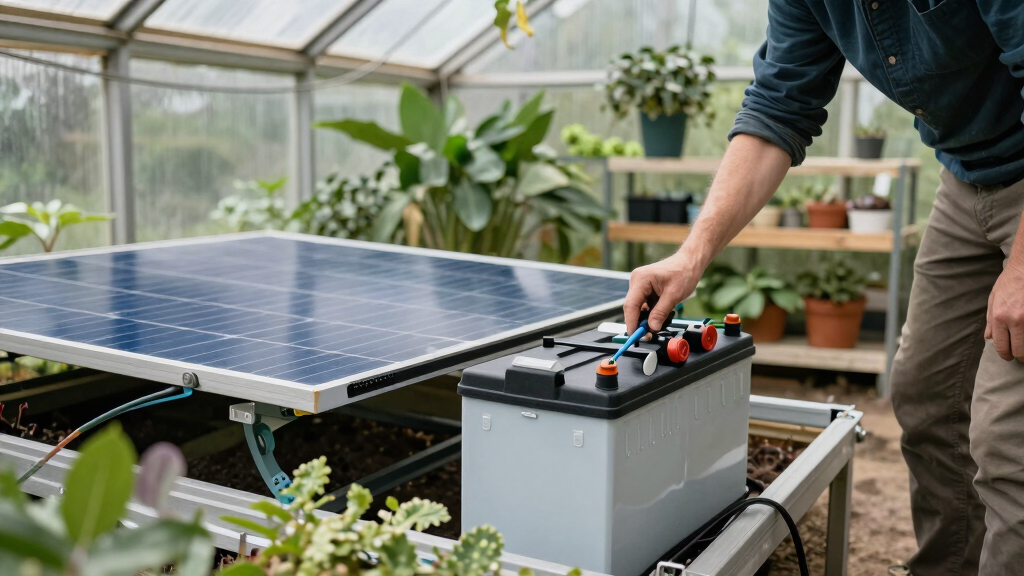
To evaluate these solar kits, I focused on performance, usability, build quality, and value. I prioritized systems that provide sufficient power for typical greenhouse needs, including lighting, ventilation, and watering systems. Ease of installation and included components were also key, as many users seek straightforward solutions. Kits with durable build quality and reliable components earned higher rankings, while those with flexible configurations scored better for scalability. Cost was taken into account, but greater value was given to systems offering balanced features for their price. The ranking reflects these criteria, highlighting options suitable for different greenhouse sizes and user expertise levels.Factors to Consider When Choosing Best Off-grid Solar Kits For Greenhouses
When selecting an off-grid solar kit for a greenhouse, several factors influence how well it will meet your needs. Understanding capacity needs, system expandability, and component quality can prevent costly mistakes. It’s also important to consider your climate, available space, and future growth plans. A good solar kit should not only power your current setup but also adapt as your greenhouse expands or your energy demands increase.System Capacity and Power Needs
Accurately estimating your greenhouse’s energy requirements is essential. Calculate the wattage of all devices you plan to run simultaneously, then select a kit with a capacity that exceeds this total to account for future growth or unexpected usage spikes. Oversizing slightly can help ensure reliability during cloudy days or seasonal changes without overpaying for unnecessary capacity.
Battery Chemistry and Storage
Battery type greatly influences system lifespan and maintenance. Lithium Iron Phosphate (LiFePO4) batteries tend to be more durable, lighter, and safer, making them a wise investment for long-term greenhouse operations. Lead-acid batteries are cheaper upfront but require regular maintenance and have shorter lifespans, which might lead to higher costs over time if not managed properly.
Expandability and Flexibility
Choose a kit that allows for future upgrades if your greenhouse expands or your energy needs grow. Modular systems with additional panels, batteries, or inverter options provide this flexibility. Avoid overly integrated kits that lock you into a fixed configuration, as they can limit your ability to adapt or scale later.
Ease of Installation and Maintenance
Consider how much technical skill is required to set up and maintain the system. Kits with clear instructions, plug-and-play components, and included mounting hardware reduce installation time and errors. Conversely, highly customizable systems may offer better performance but demand more technical knowledge and ongoing upkeep.
Cost and Overall Value
While it might be tempting to choose the cheapest option, investing in quality components can save money over time through increased durability and reliability. Balance initial costs with long-term benefits, including energy efficiency, system lifespan, and potential upgrades. Remember, the most expensive system isn’t always the best fit if your needs are modest.
Frequently Asked Questions
Will these solar kits be sufficient during winter months?
Many off-grid solar kits can operate efficiently year-round, but winter sunlight is less intense and days are shorter. To maintain performance, select a system with extra capacity, larger batteries, or additional panels to compensate for lower solar input. Proper orientation and mounting angle also maximize sunlight capture during winter, ensuring your greenhouse remains powered through seasonal changes.
Can I expand a small solar kit if my greenhouse grows?
Yes, many kits are designed with scalability in mind. Look for systems with modular components, additional ports, or compatible expansion options. Planning for future growth by choosing a slightly larger system initially can save time and money later, avoiding the need for complete replacements or complex upgrades.
What’s the difference between lead-acid and lithium batteries in these kits?
Lead-acid batteries are generally more affordable upfront but require regular maintenance and have shorter lifespans, making them less suitable for continuous greenhouse operations. Lithium batteries, especially LiFePO4, offer longer durability, faster charging, and lighter weight, with less maintenance. While the initial cost is higher, lithium systems often provide better long-term value and reliability.
Are portable or smaller kits enough for a large greenhouse?
Small or portable kits are ideal for supplemental power, small greenhouses, or as backup systems. However, for larger operations with substantial energy needs, more robust, high-capacity systems are necessary. Oversizing ensures that your greenhouse can operate smoothly during cloudy days or increased demand, avoiding power shortages that could disrupt your plant care routines.
How much maintenance do these off-grid solar systems require?
Most modern solar kits require minimal ongoing maintenance beyond periodic cleaning of panels and checking connections. Lithium-based batteries need less attention than lead-acid types, which require regular equalization and water top-ups. Regular inspections ensure system components remain in good condition, extending their lifespan and maintaining efficiency.
Conclusion
The best overall choice for most greenhouse growers is the Renogy 400 Watt 12 Volt Premium Kit, offering a balanced mix of capacity, expandability, and ease of use. Those seeking the most value might prefer the ECO-WORTHY 200W Starter Kit, which delivers reliable power at an accessible price point. For larger operations or more demanding setups, the ECO-WORTHY 1200W Lithium System provides ample capacity and longevity. Beginners should look toward simpler, pre-wired kits, while advanced users may prioritize modular systems with extensive customization options. Your ideal system depends on your greenhouse size, energy needs, and budget—use these recommendations to find your best fit in 2026.