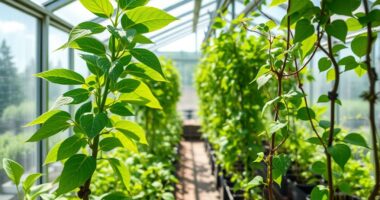
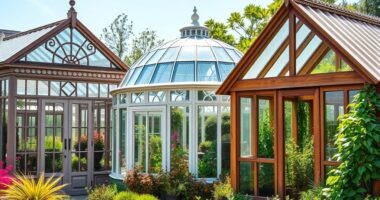
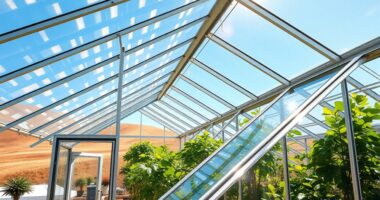
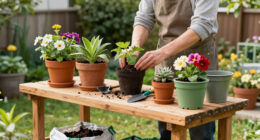
To choose the right greenhouse size, consider your gardening goals, available space, and future plans. Think about whether you want a small setup for herbs or a larger one for vegetables and tropical plants. Assess how much ventilation and accessibility you need for easy maintenance. Keep in mind that larger greenhouses require more time and resources, but may grow with you. For more tips and detailed guidance, continue exploring to find the best fit for your needs.
Key Takeaways
- Assess your current and future plant space needs to match greenhouse size with your gardening goals.
- Consider ventilation options and features suitable for the greenhouse’s size to ensure proper climate control.
- Plan for accessible layouts with walkways or shelving that support maintenance and plant management.
- Evaluate installation and ongoing maintenance requirements to select a size manageable within your resources.
- Align your chosen size with your growth ambitions, ensuring flexibility for expanding projects and evolving skills.
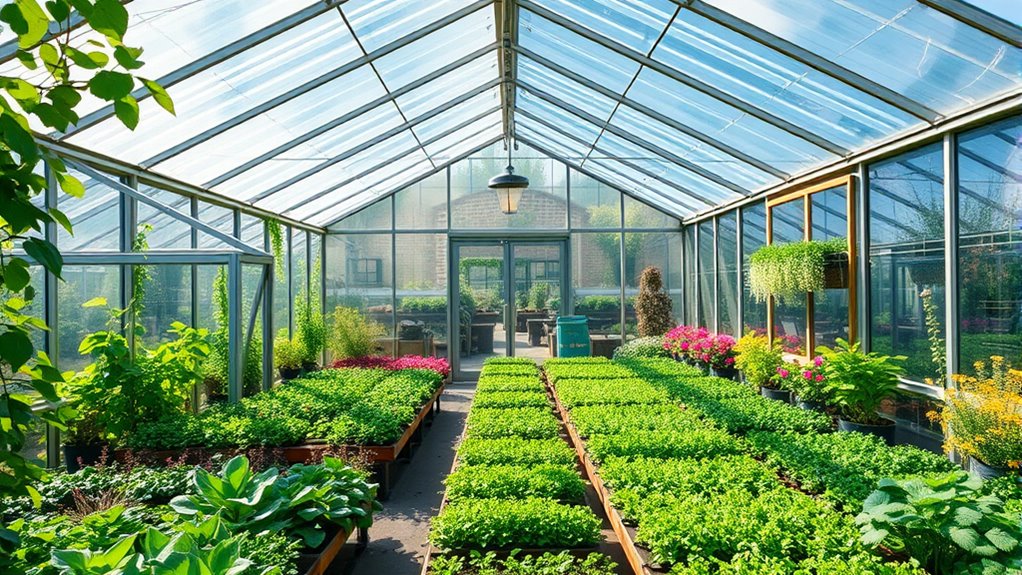
Selecting the right size greenhouse depends on your gardening goals, available space, and future plans. Before making a purchase, think about how much plant space you’ll need for your current and upcoming projects. Do you want a small space for herbs and flowers, or are you aiming to grow larger vegetables or even tropical plants? The size of your greenhouse directly impacts how many plants you can nurture at once, so consider your ambitions carefully. Also, evaluate your available area; a greenhouse that’s too large might overwhelm your yard, while one that’s too small could limit your growth potential. Planning for the future is equally important—if you expect to expand your garden or try new crops, choose a size that accommodates that growth.
Once you’ve determined your ideal plant space, you should consider the ventilation options available in different greenhouse sizes. Proper ventilation is vital, regardless of size, as it helps regulate temperature, humidity, and air circulation, preventing issues like mold, pests, and plant diseases. Larger greenhouses often offer more complete ventilation options, such as roof vents, side vents, or exhaust fans, which can be automated for convenience. Smaller structures might rely on simple side vents or windows, but even these need to be positioned thoughtfully to maximize airflow. Remember, good ventilation isn’t just a luxury; it’s essential for maintaining a healthy environment for your plants, especially if you’re planning to grow in a variety of crops or in different seasons. Additionally, considering the availability of advanced ventilation features can enhance climate control and plant health in larger setups.
When selecting a size, also think about how you’ll access and manage your plants. Will you need walkways or shelving? If so, ensure your greenhouse has enough space for movement without overcrowding. Overly tight spaces can hinder airflow and make maintenance difficult, which in turn affects plant health. Conversely, too much empty space might lead to underutilization and wasted resources. Balance your plant space needs with ease of access and effective ventilation options to create a setup that’s both functional and comfortable.
Finally, consider the logistics of installation and maintenance. Larger greenhouses require more effort to set up and maintain, so be realistic about your time and budget. Smaller structures are often easier to manage and can fit into tighter spots, but they might limit your ambitions. By carefully evaluating your plant space requirements, ventilation options, and future plans, you’ll be able to choose a greenhouse size that supports your gardening goals now and down the line. This thoughtful approach ensures you get a structure that’s not only suitable for your current needs but also adaptable as your skills and ambitions grow.
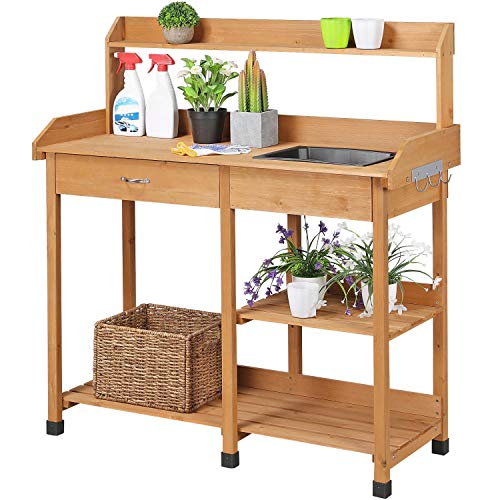
Yaheetech Potting Bench Outdoor Garden Work Bench Station Planting Solid Wood Construction for Horticulture w/Sink Drawer Rack Shelves Natural Wood
Made of Natural Fir: This solid fir wood potting bench features high strength and dimensional stability. Natural wood...
As an affiliate, we earn on qualifying purchases.
Frequently Asked Questions
How Does Climate Affect Greenhouse Size Selection?
Climate variability directly influences your greenhouse size choices because harsher or more unpredictable weather requires more space for proper insulation and ventilation. If you select plants suited for specific climates, you might need a larger greenhouse to maintain stable conditions or a smaller one if your climate is milder. By understanding your climate and plant selection needs, you can optimize your greenhouse size to ensure healthy growth year-round.
Can I Expand My Greenhouse Later?
Yes, you can expand your greenhouse later. When planning for future growth, consider using versatile greenhouse materials like sturdy framing systems that allow for easy extensions. Additionally, incorporate ample ventilation options now, which make expansion smoother by ensuring proper airflow and climate control. Keep in mind that expanding may require adjusting your foundation and integrating new materials carefully to maintain durability and climate stability.
What Are the Cost Differences Between Sizes?
The larger the greenhouse, the higher the cost considerations you’ll face, including materials, foundation, and installation. Smaller sizes generally cost less upfront and are easier to fit into your budget planning. Keep in mind, expanding later might add extra expenses, so choosing the right size initially can save you money. Balancing your needs with your budget guarantees you get a greenhouse that’s both functional and affordable.
How Does Greenhouse Size Impact Energy Efficiency?
Imagine a greenhouse as your personal spaceship, where size influences how efficiently it runs. Larger greenhouses often need more ventilation to prevent overheating and require better insulation options to retain heat. Smaller structures are easier to heat and cool, making them more energy-efficient. So, when choosing size, consider how ventilation requirements and insulation options can impact energy use, helping you save on costs while nurturing your plants.
Is There a Legal Size Limit for Residential Greenhouses?
Yes, there are legal size limits for residential greenhouses, often set by local zoning laws or homeowners’ associations. These limits typically consider factors like plant placement and ventilation options to prevent overcrowding and make certain of proper airflow. You should check your local regulations to determine specific size restrictions. Staying within these limits helps you avoid permits or penalties, while still providing enough space for your plants to thrive.

Yaheetech Outdoor Potting Bench Table Potters Benches Garden Workstation for Horticulture with Drawer/Adjustable Shelf Rack/Removable Sink/Hooks/Pads, Gray
Made of Natural Fir: This solid fir wood potting bench features high strength and dimensional stability. Natural wood...
As an affiliate, we earn on qualifying purchases.
Conclusion
Choosing the right size greenhouse isn’t just about space; it’s about planting the seeds of your dreams. Your greenhouse becomes a sanctuary where growth and patience flourish, symbolizing your dedication and hope. As you nurture your plants, remember that the perfect size supports your journey, not just your garden’s. Trust your instincts and choose what feels right—because in this space, your passion will bloom into something truly beautiful.

Palram - Canopia Steel Work Bench
Sturdy galvanized steel construction
As an affiliate, we earn on qualifying purchases.

4 Tier Mini Greenhouse - Portable Greenhouse with Locking Wheels and PVC Cover for Indoor or Outdoor Green House by Pure Garden
4-TIER GREENHOUSE KIT - The 4 tiers of sturdy shelving in this small greenhouse are 27-inches-wide, have 14-inches...
As an affiliate, we earn on qualifying purchases.