When building a greenhouse on a slope, face it south (in the northern hemisphere) for maximum sunlight and use materials with good thermal mass to trap heat. Install drainage pipes or trenches to direct water away and elevate your structure on a sturdy foundation for stability. Incorporate features like berms or swales to manage water flow and prevent erosion. To learn more about creating a durable, efficient greenhouse on uneven ground, keep exploring these techniques.
Key Takeaways
- Orient the greenhouse with the long side facing south to maximize sunlight capture and passive solar heating.
- Use stepped or tiered foundations to level the structure on uneven slopes and ensure stability.
- Incorporate drainage solutions like pipes, trenches, or swales to direct water away and prevent pooling or erosion.
- Build on a sturdy foundation with gravel beds or drainage channels to enhance water flow and structural integrity.
- Utilize materials with high thermal mass and double-glazing to improve insulation and heat retention on sloped sites.
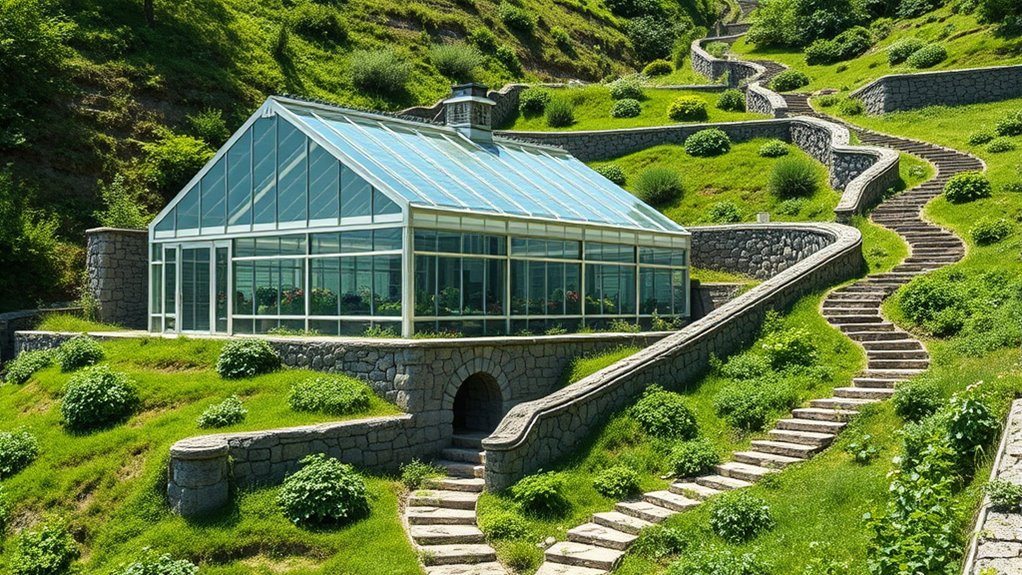
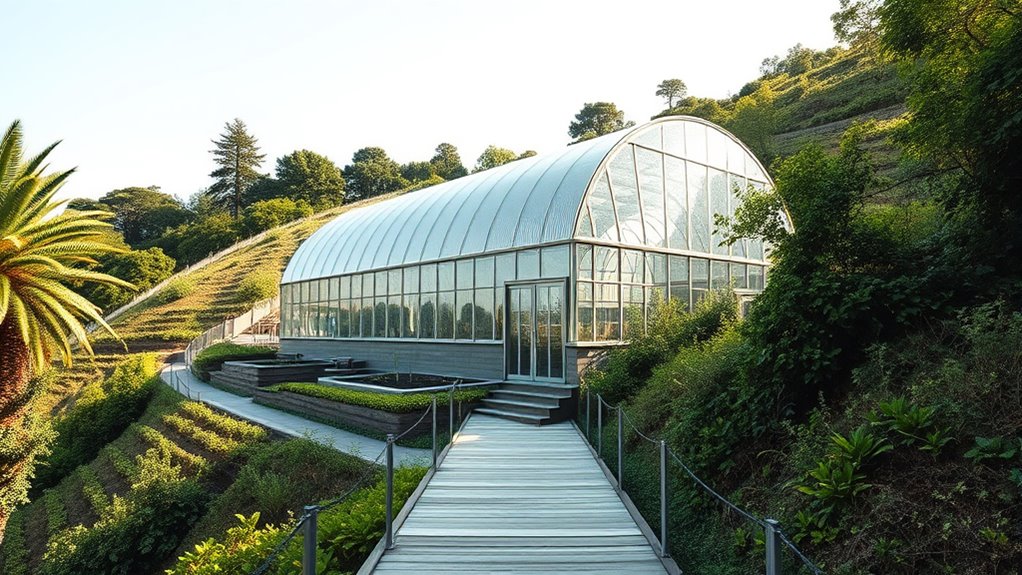
Building a greenhouse on a slope can be a rewarding project that extends your growing season, but it requires careful planning. One key consideration is maximizing solar heating to keep your plants warm during cooler months. Since your site is on a slope, you have the advantage of capturing more sunlight if you orient the greenhouse properly. Position it so that the longest side faces south (in the northern hemisphere), ensuring it receives maximum sunlight throughout the day. To optimize solar gain, consider using materials with good thermal mass, like concrete or stone, which absorb heat during the day and release it at night. Also, installing reflective surfaces or using double-glazing can help trap more heat inside, making your greenhouse more energy-efficient. Incorporating passive solar design principles can further enhance energy efficiency by optimizing natural heat sources and airflow. Water drainage is another critical factor. On a slope, water naturally flows downhill, so you need to design your greenhouse with effective drainage in mind. Poor drainage can lead to water pooling around the foundation, causing structural issues and root rot for your plants. To prevent this, dig a slight trench or install drainage pipes around the perimeter of your greenhouse to direct excess water away. Elevating the structure slightly on a sturdy foundation or footings can also help facilitate proper drainage beneath the greenhouse. Be mindful of the natural flow of water on your slope; you might want to create a drainage swale or berm that redirects water away from the building, ensuring it doesn’t accumulate around the base. Additionally, the slope can influence how you build the foundation. Using stepped or tiered foundations can help stabilize the structure and prevent shifting over time. This method allows you to level sections of the greenhouse on uneven ground, providing a solid, level base for construction. Incorporate drainage channels or gravel beds beneath the foundation to improve water flow and prevent moisture buildup. When planning your greenhouse, consider installing a rainwater harvesting system that captures runoff from the roof, which can then be reused for watering your plants. This not only conserves water but also prevents excess runoff from damaging your site or creating erosion issues.

HayLEa Anti-Heat Thermal Foam Tape for Garden Greenhouse Tunnel (2 mm Thick, 25 m Length, 5 cm Width)
- Heat Resistant Foam Tape: Protects plants in greenhouses and tunnels
- Easy to Apply: Optimal adhesion for secure placement
- Large Size: 5cm x 25m for extensive coverage
As an affiliate, we earn on qualifying purchases.
As an affiliate, we earn on qualifying purchases.
Frequently Asked Questions
How Do I Ensure Proper Drainage on a Sloped Site?
To guarantee proper drainage on a sloped site, you should start with effective slope grading to direct water away from your greenhouse. Incorporate rainwater harvesting systems to manage excess water and prevent pooling. Install drainage channels or French drains along the slope, and add gravel or permeable materials around the foundation to improve water flow. These steps help maintain a dry, stable environment for your greenhouse while preventing erosion.
What Materials Are Best for Slope Stability and Insulation?
Think of your slope as a sturdy fortress wall. For stability, use soil reinforcement materials like geogrids or retaining walls that act as the fortress’s backbone. For insulation, choose materials like foam board or reflective barriers, which act like a warm, protective cloak. These materials keep your greenhouse stable and energy-efficient, ensuring your plants thrive even on challenging terrain.
How Can I Maximize Sunlight Exposure on a Hillside?
To maximize sunlight on your hillside greenhouse, install solar tracking systems that follow the sun’s path, ensuring ideal exposure throughout the day. Use reflective surfaces like mirrors or white paint around the greenhouse to bounce additional light inside. Position the structure to face south (in the Northern Hemisphere), and consider angled glazing to capture more sunlight. These techniques help you harness maximum solar energy, promoting healthy plant growth.
What Permits or Regulations Apply to Hillside Greenhouse Construction?
Building a hillside greenhouse might feel like steering through a maze, but first, you need to check local zoning restrictions and environmental regulations. These rules can be strict, preventing you from building on certain slopes or requiring permits for environmental impact. You should contact your local planning office or environmental agency to make certain you’re compliant. Ignoring these regulations could result in hefty fines or having to dismantle your project entirely.
How Do I Prevent Erosion Around the Greenhouse Foundation?
To prevent erosion around your greenhouse foundation, you should install retaining walls to stabilize the slope and prevent soil movement. Additionally, use erosion control mats on exposed soil areas to hold the soil in place during heavy rains. Combining these techniques will protect your foundation effectively, ensuring your greenhouse remains secure and undamaged. Regularly inspect and maintain these structures to keep erosion at bay over time.
Conclusion
Now that you’ve learned the key techniques for building a greenhouse on a slope, you’re ready to turn your vision into reality. But remember, every slope has its unique challenges — and the biggest secret to success is just around the corner. Will your design withstand the test of time and nature? Stay tuned, because the next step could be the most vital in ensuring a thriving, sustainable greenhouse that surprises everyone. The adventure is just beginning.