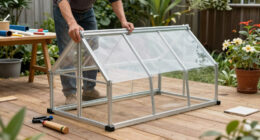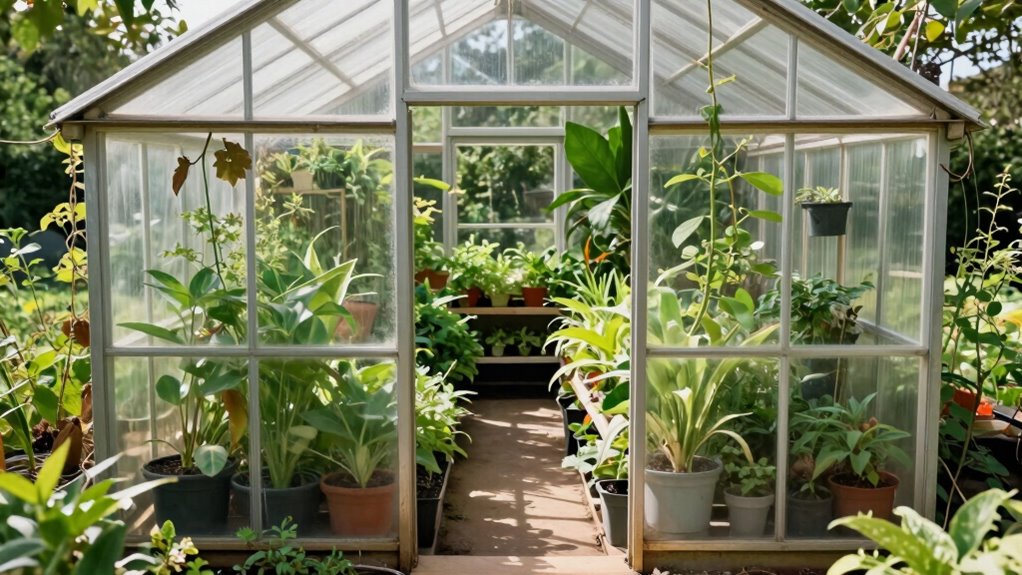

Choosing a greenhouse that’s too small or too large can quickly cost you hundreds in energy bills and costly modifications. An undersized greenhouse leads to constant heating and poor airflow, while an oversized one wastes materials and increases cooling costs. Proper sizing guarantees healthy plant growth, efficient energy use, and room for expansion. If you want to avoid these costly mistakes and maximize your gardening success, keep exploring how to size your greenhouse perfectly.
Key Takeaways
- Choosing a greenhouse size too small leads to constant heating, increasing energy costs for beginners.
- Oversizing results in unnecessary material and structural expenses, draining beginner budgets.
- Improper sizing causes poor airflow and plant overcrowding, risking disease and higher maintenance costs.
- Underestimating space needs hampers plant growth, leading to costly modifications later.
- Failing to plan for future expansion results in expensive renovations or replacements.

Amazon Basics LCD 8-Digit Desktop Calculator, Portable and Easy to Use, Black, 1-Pack
- Display: Bright 8-digit LCD screen
- Functions: Six basic mathematical functions
- Design: User-friendly, durable buttons
As an affiliate, we earn on qualifying purchases.
As an affiliate, we earn on qualifying purchases.
Why Greenhouse Size Matters for Plant Growth and Budget
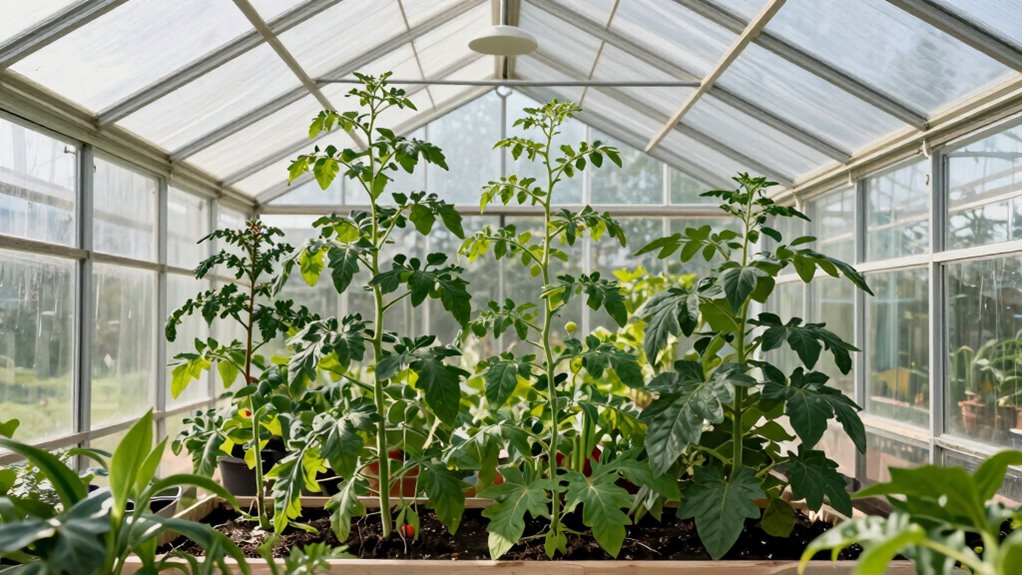
Choosing the right greenhouse size is essential because it directly impacts plant growth and your budget. A well-sized greenhouse allows you to optimize plant placement, giving each plant enough space to thrive without overcrowding, which can hinder growth. Proper spacing also makes pest control more manageable, reducing the risk of infestations spreading quickly. If your greenhouse is too small, plants compete for resources, stunting growth and increasing maintenance. Additionally, a larger size may mean higher costs for construction, heating, and cooling. Balancing size with your needs guarantees you can maintain healthy plants efficiently and affordably. By understanding how size influences plant placement and pest control, you set yourself up for a successful, cost-effective gardening experience. Furthermore, greenhouse design principles can help you make informed decisions about optimal sizing for your specific plant varieties and climate conditions, ensuring you avoid common sizing mistakes that can lead to unnecessary expenses. Being aware of cost considerations related to different greenhouse sizes can also help prevent overspending while still providing a suitable environment for your plants. Considering water management strategies is also vital, as proper watering techniques can influence plant health regardless of greenhouse size. Additionally, understanding climate control needs can help you select the right size that minimizes energy use and operational costs.
Common Mistakes Beginners Make When Sizing a Greenhouse
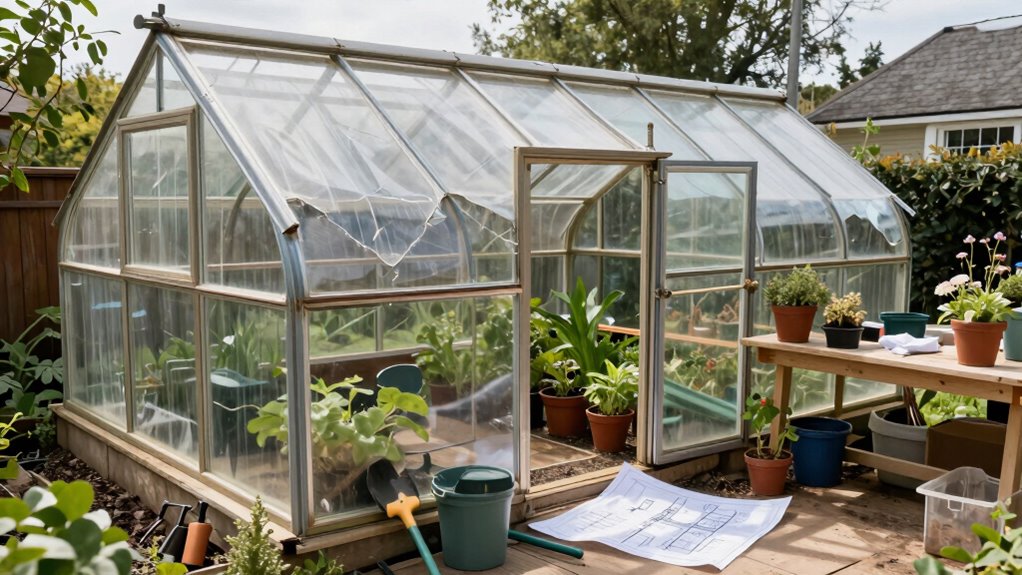
Many beginners underestimate how challenging it can be to select the right greenhouse size, often leading to costly mistakes. One common error is choosing a space that’s too small, which limits plant containers and restricts plant growth. Conversely, oversizing can increase costs and create maintenance issues. Another mistake involves ignoring pest control; a larger greenhouse can be harder to monitor for pests, leading to infestations that spread easily. You might also forget to think about how a bigger space impacts ventilation and temperature regulation, essential for healthy plants. Proper greenhouse sizing takes into account not just space but also how to efficiently manage environmental conditions and airflow. Additionally, understanding space planning can help you avoid pitfalls related to space management and environmental control. Being mindful of these factors helps you avoid mistakes that can compromise your greenhouse’s effectiveness and your budget. It’s also important to consider the role of proper ventilation, which is crucial for maintaining optimal growing conditions in larger spaces.
How to Calculate the Perfect Greenhouse Size for Your Garden
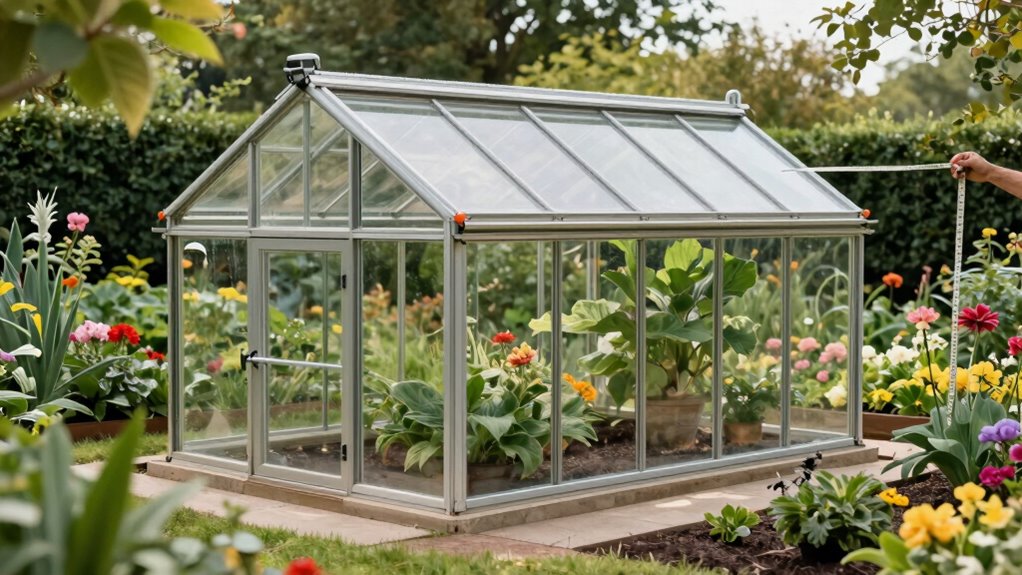
Calculating the perfect greenhouse size begins with understanding your gardening goals and available space. You need to take into account what plants you want to grow, as different species require varying amounts of room and specific climate conditions. For example, vegetables might need less space than fruiting plants or tropical species. Next, think about climate control—larger greenhouses can better regulate temperature and humidity, making it easier to maintain an ideal environment. Measure your outdoor space carefully, accounting for doorways, ventilation, and access points. Keep in mind that an overly large greenhouse can be difficult to heat and maintain, while one that’s too small may restrict plant growth. Aim for a size that balances your plant selection needs with your ability to manage climate control efficiently.
What Factors Influence the Ideal Greenhouse Dimensions?
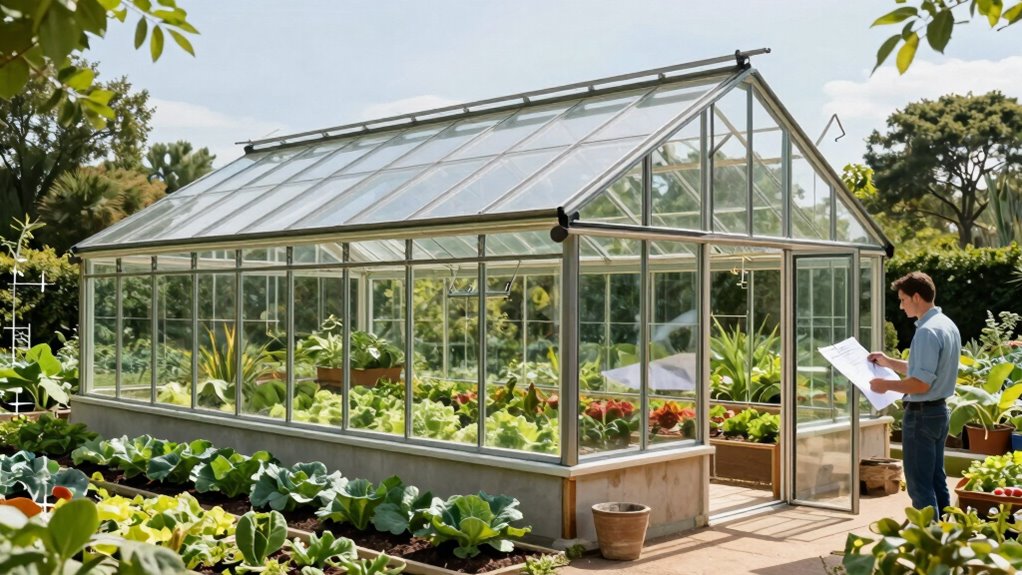
Several key factors directly influence the ideal dimensions of your greenhouse, and understanding these can help you make a more informed decision. First, soil quality determines the space needed for planting beds and soil amendments. Poor soil may require larger or specialized areas for soil improvement. Second, pest management plays a role—larger greenhouses can better accommodate pest barriers and controlled environments, reducing infestations. Third, your intended plant variety and growth cycle impact size: taller or multi-season crops often need more vertical space and airflow. Considering these factors guarantees your greenhouse fits your gardening goals and site conditions. Additionally, understanding seasonal changes can help you optimize greenhouse size to accommodate varying environmental needs year-round. To further enhance your setup, factors like climate conditions and ventilation requirements should also be taken into account. Incorporating projector technology into your planning can help visualize different layouts and optimize space utilization. Balancing soil quality, pest control needs, and plant types helps prevent overcrowding or underutilization, ultimately saving you money and effort in the long run.
Furthermore, paying attention to fuel injection cleaning and maintenance practices can ensure your equipment operates efficiently, which can be crucial if you’re using powered tools or automation in your greenhouse setup.
How Improper Sizing Leads to Higher Energy Bills
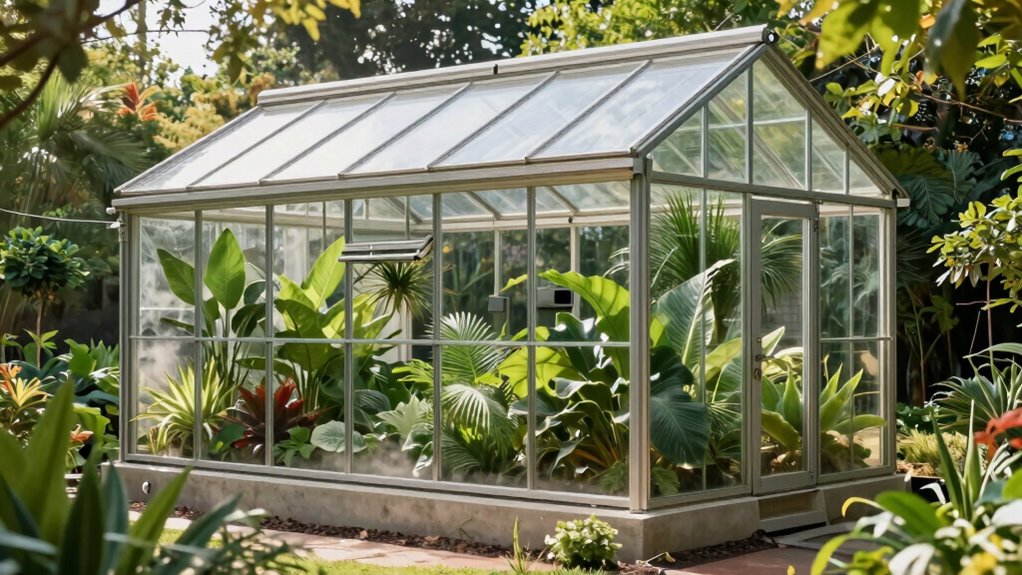
Have you ever noticed your energy bills spike unexpectedly after setting up a greenhouse? Improper sizing directly impacts temperature control, causing your heating and cooling systems to work harder. If your greenhouse is too large, it loses heat quickly or struggles to maintain warmth, increasing energy use. Conversely, an undersized structure may require constant heating to keep plants alive, also raising costs. Material durability plays a role too; low-quality materials degrade faster, reducing insulation and forcing you to spend more on climate control. When your greenhouse isn’t sized correctly, it creates a cycle of inefficient energy consumption. Over time, these higher bills can add up appreciably, making your setup more expensive than it needs to be. Proper sizing helps you optimize energy efficiency and save money. Additionally, selecting the right outdoor‑kitchen essentials can improve overall climate management and reduce energy waste. Ensuring your greenhouse has the appropriate insulation materials is crucial for maintaining consistent temperatures and minimizing energy costs. Proper greenhouse design can also enhance energy efficiency by improving airflow and heat retention.
Planning for Future Expansion: Tips for Greenhouse Size and Design
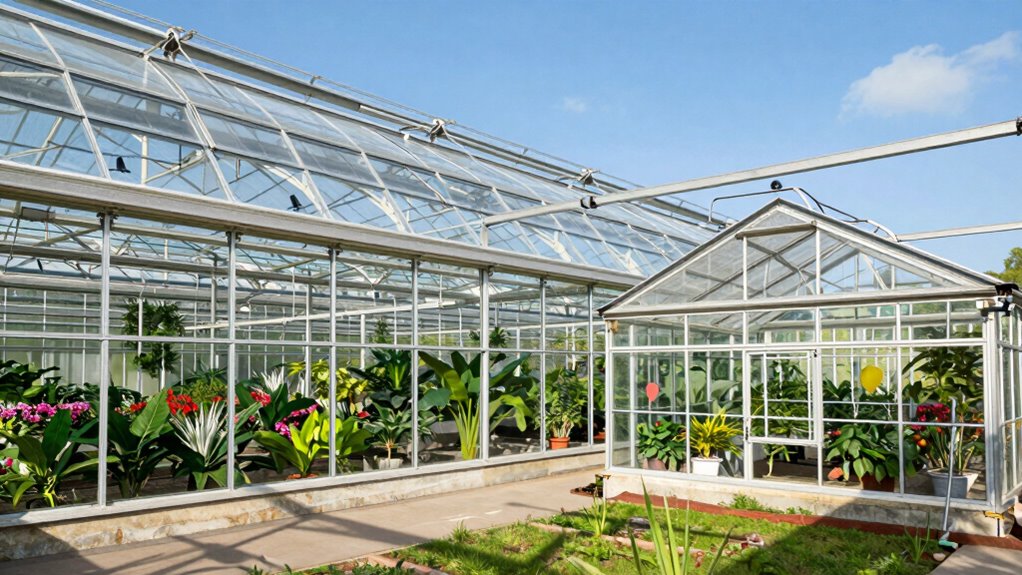
When planning your greenhouse, considering future expansion can save you time and money down the line. Think ahead about how your space might grow, allowing room for vertical gardening to maximize limited space efficiently. Include enough height and width for potential new planting zones, avoiding a cramped setup later. Installing automated watering systems now guarantees easy scalability as your plant collection expands, reducing manual labor. To plan effectively:
- Design flexible layouts that accommodate vertical gardening and additional shelving.
- Leave space for future infrastructure like extra lighting or heating.
- Choose durable materials that support easy modifications over time.
Additionally, understanding greenhouse sizing principles can help prevent unnecessary costs and ensure your setup remains adaptable to your evolving gardening needs.
Balancing Your Budget With Your Long-Term Greenhouse Needs

Balancing your budget with your long-term greenhouse needs requires careful planning and prioritization. Focus on plant selection that aligns with your space and budget, choosing versatile, high-yield species to maximize returns. Consider the costs of pest management upfront; investing in good preventative measures now can save money later by reducing infestations and crop loss. Avoid overextending on expensive equipment or plants that won’t thrive in your environment, which can lead to recurring expenses. Instead, opt for adaptable solutions that support growth and simplify maintenance. Regularly evaluate your ongoing costs versus your goals, adjusting plant choices and pest control methods as needed. Embracing a curiosity-driven mindset can help you explore innovative, cost-effective solutions for your greenhouse. This strategic approach helps you build a sustainable, cost-effective greenhouse that scales with your long-term ambitions.
Key Considerations Before Finalizing Your Greenhouse Size

Before settling on a greenhouse size, you need to take into account your space requirements and potential for future growth. It’s also important to align your size choice with your budget and long-term plans. Making these considerations ensures your greenhouse will meet your needs without costly adjustments later. Additionally, consider how outdoor features like landscaping or seating areas might influence your overall space planning. Planning for greenhouse materials that suit your environment can also help extend the longevity and functionality of your structure. Understanding the importance of cabling solutions and proper installation can prevent issues such as power failures or structural instability over time. Being aware of household organization and maintaining a clutter-free environment inside your greenhouse can contribute to better plant health and easier maintenance. Incorporating smart devices and automation can further optimize your greenhouse management and streamline daily tasks.
Space Requirements and Growth
Choosing the right size for your greenhouse hinges on understanding your current and future space needs. You must consider plant spacing to prevent overcrowding, which affects growth and airflow management. As your plants mature, they require more room, so planning for growth now avoids costly expansions later. Proper plant spacing not only promotes healthier growth but also maximizes the use of available space efficiently. To guarantee your greenhouse supports healthy development, keep these points in mind:
- Allocate enough space for mature plants, not just seedlings.
- Design for proper airflow to reduce disease risk and improve temperature regulation.
- Anticipate future plant varieties or increased production, allowing extra room for growth.
Balancing these factors helps you avoid overcrowding and ensures your greenhouse remains efficient and productive over time.
Budget and Long-Term Planning
Planning your greenhouse size requires careful consideration of your budget and long-term goals. Think about how indoor gardening fits into your lifestyle and whether your current budget can support a larger setup later on. A bigger greenhouse offers more space for diverse plants but also increases costs for materials, heating, and pest management. Consider future expansion plans—will you want to grow more or introduce new plant varieties? Proper planning helps prevent costly upgrades down the line. Focus on sustainable choices that align with your long-term vision, ensuring you can manage pest control effectively and maintain healthy plants. By balancing your budget with your goals, you’ll set a realistic foundation for a thriving greenhouse that grows with your skills and needs.
Avoiding Sizing Mistakes to Ensure Your Greenhouse Flourishes
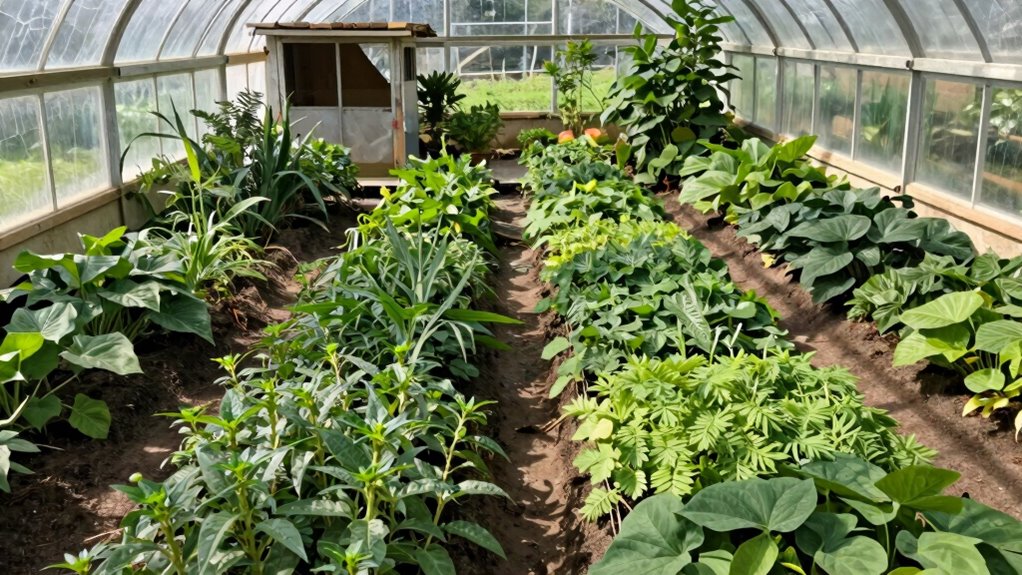
Ensuring your greenhouse is properly sized is essential for its success, as an ill-fitting structure can hinder plant growth and lead to unnecessary expenses. To avoid sizing mistakes, focus on strategic plant placement and careful material selection.
Consider these key points:
- Proper plant placement ensures ideal light and airflow, preventing overcrowding.
- Selecting durable, lightweight materials reduces costs and simplifies construction.
- Size your greenhouse to accommodate future growth, preventing the need for costly expansions later.
Frequently Asked Questions
How Can I Retrofit or Expand My Greenhouse Later?
You can retrofit or expand your greenhouse later by planning for sustainable design and automation technology from the start. Add modular panels or extend framing to increase space. Incorporate automation tech like climate control systems, which make managing a larger space easier. Use durable materials and flexible wiring setups, ensuring future modifications are seamless. This approach lets you grow your greenhouse sustainably while easily accommodating growth or upgrades.
What Are the Best Materials for Cost-Effective Greenhouse Construction?
Opt for polycarbonate panels instead of glass; they’re durable and cost-effective, offering better material durability at a lower price. While wood is affordable, it may not last as long, increasing costs over time. Compare costs carefully, considering both initial investment and longevity. Using these materials, you get a balance of durability and savings, helping you build a greenhouse that’s both sturdy and budget-friendly from the start.
How Does Climate Affect Optimal Greenhouse Sizing?
Climate zones directly influence your greenhouse size; colder zones need larger structures for better insulation, while warmer zones might require smaller sizes. You should also consider ventilation strategies to regulate temperature and humidity effectively. If you neglect climate nuances, your greenhouse could become too hot, cold, or humid, leading to costly adjustments later. Proper sizing tailored to your climate ensures energy efficiency, healthy plant growth, and long-term savings.
Are There Size Guidelines for Different Plant Types?
Yes, there are size guidelines based on plant types. You should consider plant spacing to prevent overcrowding and guarantee healthy growth. For example, leafy greens need less space, while taller plants like tomatoes require more room. Additionally, pay attention to light requirements—some plants need more space for maximum sunlight exposure. Adjust your greenhouse size accordingly to accommodate these factors, making certain each plant gets enough room and light for healthy development.
What Maintenance Issues Arise From Improper Greenhouse Sizing?
When your greenhouse is improperly sized, you face ventilation challenges that can lead to overheating or excessive humidity, harming your plants. Additionally, structural stability becomes a concern, especially if the structure is too large or too small for its foundation and materials. These issues can cause safety risks and increased maintenance costs. Ensuring proper sizing helps maintain ideal conditions, making your greenhouse safer, more efficient, and easier to manage.
Conclusion
Choosing the right greenhouse size can save you hundreds in energy costs and guarantee your plants thrive. Did you know that improper sizing can increase energy bills by up to 30%? By carefully planning your space and considering future needs, you’ll create a sustainable, efficient environment. Don’t rush the process — sizing mistakes are costly. Get it right the first time, and watch your garden flourish while your budget stays in check.