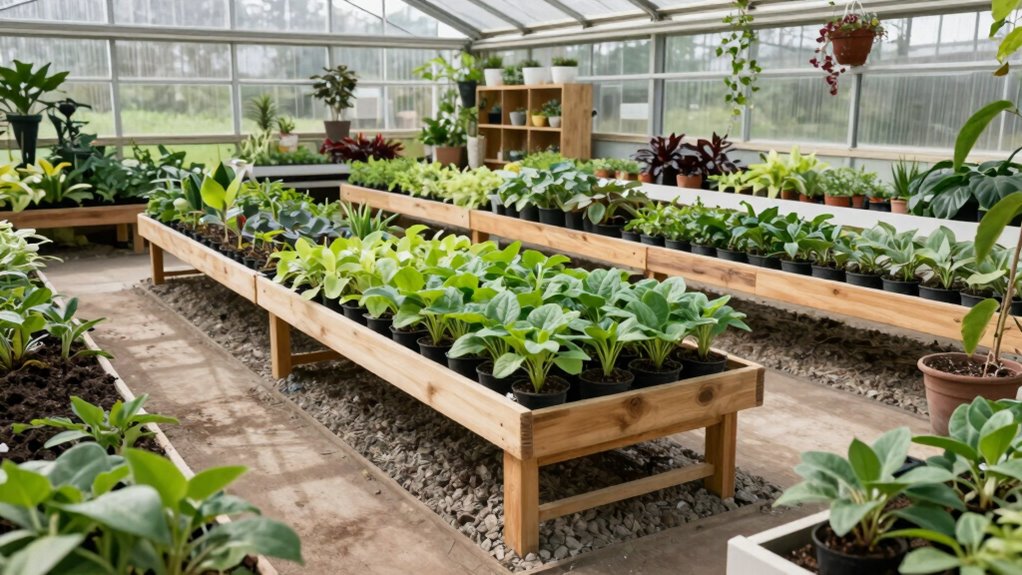

To build a practical greenhouse layout, start by measuring your space and defining zones for benches, beds, and pathways. Guarantee aisles are at least 24 inches wide for easy access, with wider paths if you use equipment. Organize zones to promote good airflow and lighting, using durable materials for pathways. Position benches at ergonomic heights and plan for future expansion with modular elements. Careful placement reduces disease risk and improves maintenance. Keep exploring to discover how to optimize your greenhouse for plant health and efficiency.
Key Takeaways
- Measure total space and plan pathway widths to ensure accessibility and proper plant spacing for airflow and light penetration.
- Organize benches and beds based on plant needs, growth habits, and compatibility, optimizing space and health.
- Design wide, clear aisles (at least 24 inches) for maintenance, harvesting, and equipment movement.
- Incorporate modular pathways and adjustable elements for future expansion and flexible reconfiguration.
- Ensure proper ventilation, lighting, and pest control routes are integrated into the layout for a healthy environment.
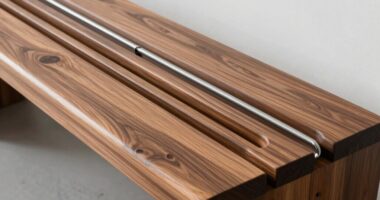
greenhouse benches adjustable height
As an affiliate, we earn on qualifying purchases.
As an affiliate, we earn on qualifying purchases.
Why a Thoughtful Greenhouse Layout Is Essential for Plant Health
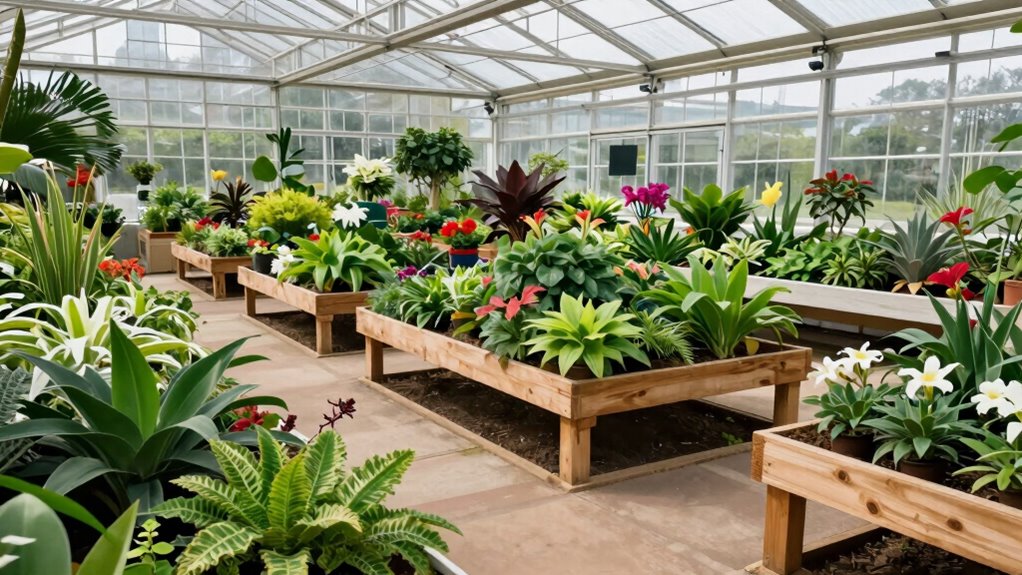
Have you ever wondered why some greenhouses flourish while others struggle? A thoughtful layout is key to healthy plants. Proper plant spacing ensures each plant gets enough light, air, and nutrients, reducing disease risk and promoting growth. When plants are too crowded, they compete for resources and become more vulnerable to pests and diseases. An organized layout makes pest control easier by creating clear pathways for inspections and treatments, preventing infestations from spreading. It also improves airflow, which is critical for disease prevention and plant health. Considering plant health factors during planning can further enhance overall growth conditions. When you plan your greenhouse layout carefully, you’re setting the stage for strong, healthy plants. This not only boosts productivity but also minimizes problems caused by poor spacing and pest issues, guaranteeing your greenhouse thrives.
How to Evaluate Your Space and Choose the Right Benches and Beds
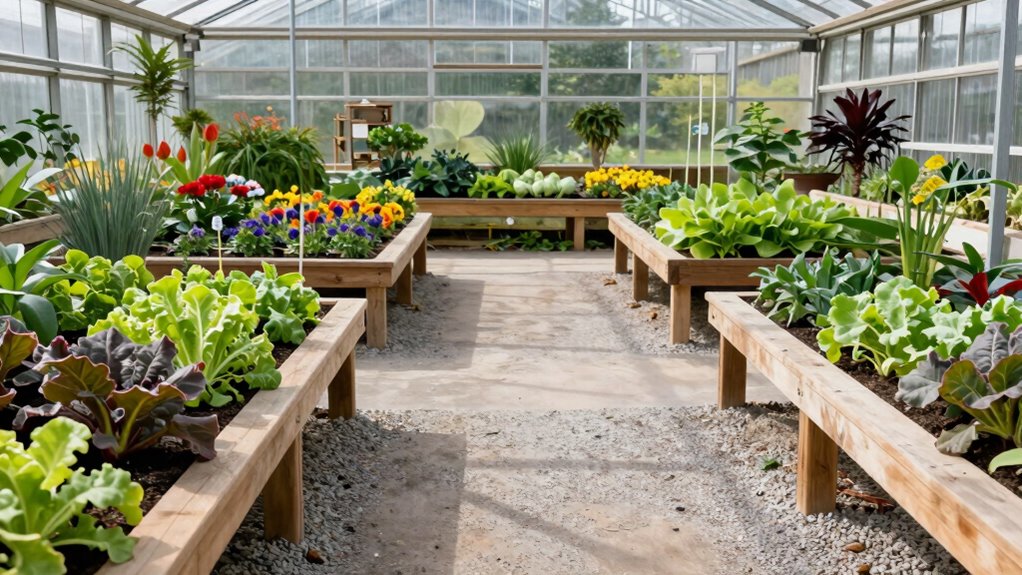
Start by evaluating the space you have available and think about how much room each plant needs to thrive. Keep your plants’ specific needs in mind to choose benches and beds that support their growth. Additionally, considering content formats can help you organize your layout for better functionality. Finally, plan your layout so everything remains easily accessible for maintenance and watering. Incorporating positive intentions into your planning can also help attract abundance and success in your gardening efforts.
Assess Available Space
Before choosing benches and beds for your greenhouse, you need to carefully evaluate the available space. Start by measuring the total area to understand your limits. Next, consider how much space you’ll allocate for pathways—keeping aisles wide enough for movement and pest control access. Lastly, think about how color schemes might influence plant placement; lighter colors can reflect light, improving growth and visibility around the beds. Keep in mind that a well-planned layout minimizes overcrowding, facilitating pest control and airflow. Also, make sure you have enough room for bench height and bed width to optimize plant health. By examining these factors, you’ll create a functional, efficient layout that supports healthy plant growth and easy maintenance.
Consider Plant Needs
How do you determine the best benches and beds for your greenhouse? Start by evaluating your plants’ needs, especially plant spacing and soil preparation. Some plants require more room to grow, while others thrive in tight spaces. Use this table to match plant types with bench and bed setups:
| Plant Type | Spacing Needs | Soil Preparation |
|---|---|---|
| Leafy greens | Close together | Well-draining, rich soil |
| Tomatoes | Moderate distance | Nutrient-dense, pH-balanced |
| Root vegetables | Wide spacing | Deep, loose soil |
Matching these needs ensures healthy growth and maximizes space efficiency. Proper soil preparation and respecting plant spacing are key to a successful, productive greenhouse layout. Incorporating innovative planter designs can further enhance space utilization and plant health. Additionally, understanding plant spacing requirements helps prevent overcrowding and promotes better airflow, reducing the risk of pests and diseases. Paying attention to plant growth habits can also assist in designing a more adaptable and efficient layout. Being aware of plant maturity size allows you to plan for future growth and avoid overcrowding as plants develop. Considering plant compatibility can also help optimize companion planting and pest management strategies.
Optimize Accessibility
Evaluating your greenhouse space carefully is essential for creating an accessible layout that works efficiently. Focus on accessibility enhancements and ergonomic design to make gardening easier and safer. Start by appraising your movement pathways:
- Ensure aisles are wide enough—at least 24 inches—for easy navigation and equipment access.
- Position benches and beds at comfortable heights to reduce strain, supporting ergonomic design.
- Arrange tools and supplies within arm’s reach, minimizing unnecessary movement.
- Incorporate Bollywood music or cheerful sounds to create an inviting atmosphere that encourages regular gardening activity.
- Consider using airless paint spraying tips to maintain clean and efficient workspace surfaces, reducing clutter and improving safety.
Designing Greenhouse Aisle Widths for Easy Access and Workflow
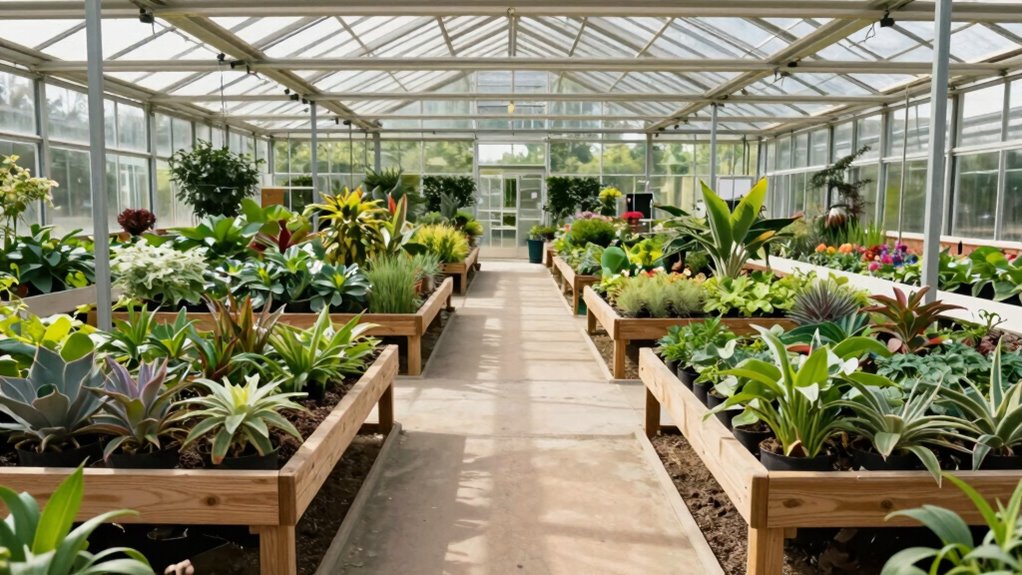
Have you considered how aisle widths can impact both access and workflow inside your greenhouse? Proper aisle dimensions are essential for smooth movement and efficient work processes. Narrow aisles may save space but can hinder workflow efficiency and cause congestion, especially when handling large equipment or multiple workers. Conversely, overly wide aisles waste valuable growing space. Aim for a balance that allows easy navigation without sacrificing plant areas. Typically, a width of 3 to 4 feet provides sufficient room for most tasks, including watering, pruning, and moving tools. Adjust aisle widths based on your specific needs and equipment. Thoughtful aisle design enhances workflow efficiency, reduces fatigue, and guarantees safe, comfortable access for maintenance and harvesting. Considering greenhouse etiquette and the importance of clear pathways can also influence the overall atmosphere and harmony within your greenhouse space. To optimize your setup, integrating smart technology can further improve efficiency and safety.
Planning Light and Air Circulation for Optimal Plant Growth
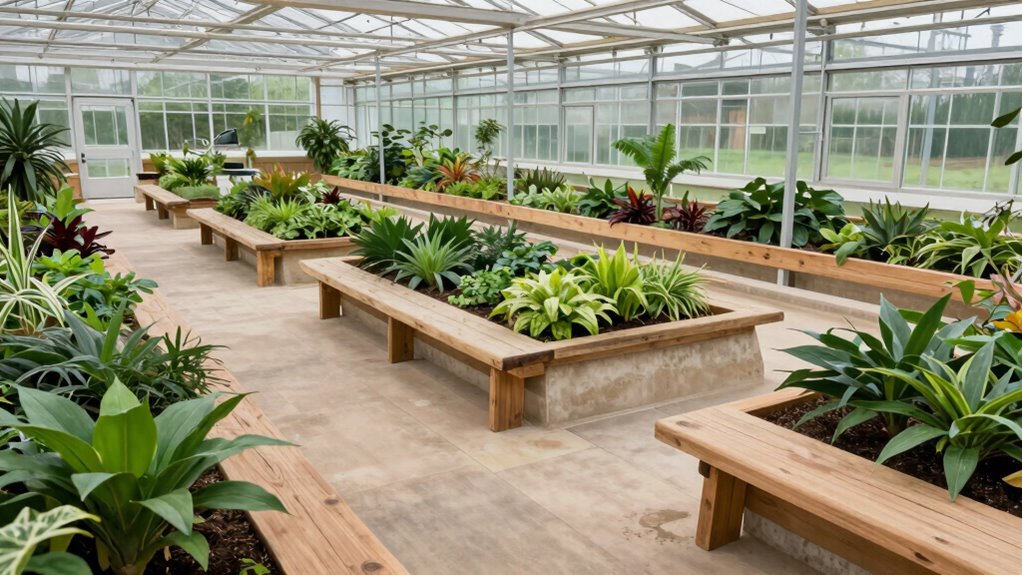
To help your plants thrive, you need to maximize natural light access and guarantee proper airflow throughout your greenhouse. Proper placement of shelves and openings can make a big difference in light distribution and air circulation. When you optimize these elements, you’ll create a healthier environment that promotes vigorous growth.
Maximizing Natural Light Access
How can you guarantee your greenhouse receives maximum natural light? First, position your benches and beds to avoid shadows cast by structural elements or nearby structures. Second, incorporate solar shading and reflectors to diffuse light evenly, preventing hotspots. Third, install pest barriers that allow sunlight penetration while keeping pests out without blocking essential light. These barriers help maintain airflow and prevent pests from damaging plants, ensuring ideal growth. Additionally, consider the orientation of your greenhouse; east-west alignment maximizes sunlight exposure throughout the day. Regularly monitor light levels and adjust shading as needed to prevent overexposure or insufficient light. Incorporating natural light optimization techniques can further enhance plant health and growth efficiency. For optimal results, also pay attention to air circulation, which works in tandem with lighting to promote healthy plant development. By thoughtfully planning light sources and barriers, you’ll create an environment where plants thrive with ample, consistent natural light.
Ensuring Proper Airflow Circulation
Maximizing natural light is essential, but guaranteeing proper airflow often goes hand-in-hand with maintaining a healthy greenhouse environment. Good airflow prevents humidity buildup and reduces disease risk. Use ventilation systems like exhaust fans and vents to promote fresh air exchange. Incorporate airflow barriers, such as screens or curtains, to direct or restrict airflow where needed. Proper placement of vents and fans creates a consistent airflow pattern, avoiding stagnant areas. Here’s a quick overview:
| Aspect | Purpose | Tips |
|---|---|---|
| Airflow barriers | Guide airflow, prevent drafts | Use curtains or screens strategically |
| Ventilation systems | Exhaust stale air, introduce fresh air | Regular maintenance ensures efficiency |
| Air circulation | Distribute air evenly | Position fans for optimal coverage |
| Stagnant zones | Avoid dead spots | Monitor and adjust airflow paths |
Additionally, understanding the importance of airflow in greenhouse management can help optimize plant health and growth. Proper airflow not only improves climate control but also enhances plant disease prevention by reducing moisture accumulation. Ensuring proper ventilation techniques are in place can significantly impact overall greenhouse efficiency and plant vitality. Maintaining optimal airflow patterns can also help in reducing energy consumption by making ventilation more efficient. Regularly checking and adjusting airflow pathways ensures a more balanced environment that supports healthy plant development.
How to Design Pathways and Zones for Efficient Movement
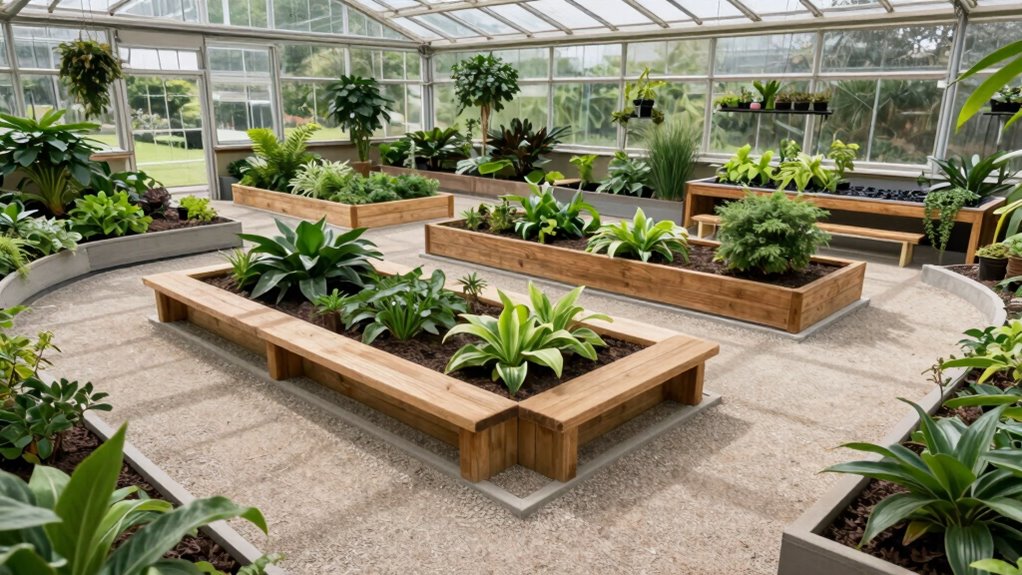
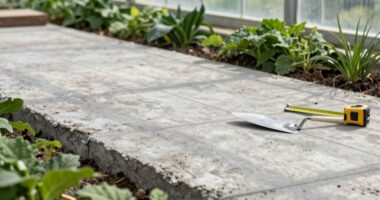
Designing pathways and zones in your greenhouse is essential for smooth and efficient movement. Proper layout minimizes congestion and streamlines work routines. Start by choosing suitable pathway materials, such as gravel, pavers, or concrete, to guarantee durability and easy maintenance. Next, focus on zone separation: clearly define areas for different plant types or activities, using physical barriers or different surface textures. Finally, arrange pathways to connect key zones logically, allowing you to access all areas without unnecessary steps. Use a simple, accessible design that encourages flow and reduces trip hazards. Keep pathways wide enough for equipment and tools, and ensure they don’t obstruct natural light or airflow. Thoughtful planning creates an organized, functional greenhouse that enhances productivity.
Ensuring Easy Access for Maintenance and Harvesting Tasks
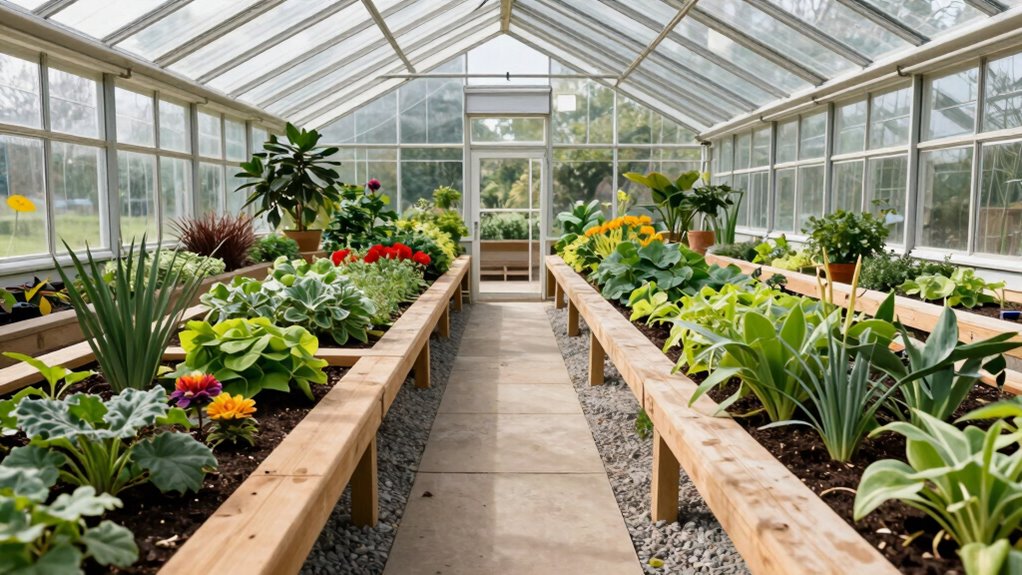
When planning your greenhouse layout, guaranteeing easy access for maintenance and harvesting tasks can save you time and reduce effort. Design wide aisles and clear pathways so you can reach plants quickly for pest control or water management. Keep benches and beds organized to minimize bending and stretching, making routine checks smoother. Incorporate space around water sources and drainage areas for efficient water management and quick repairs. Consider how pest control tools will move through the space, avoiding tight corners that hinder access. Regularly maintaining clear routes helps you spot issues early and perform tasks without unnecessary hassle. A well-thought-out layout ensures you can maintain plant health efficiently while harvesting with minimal disruption.
Incorporating Modular Elements for Future Greenhouse Expansion
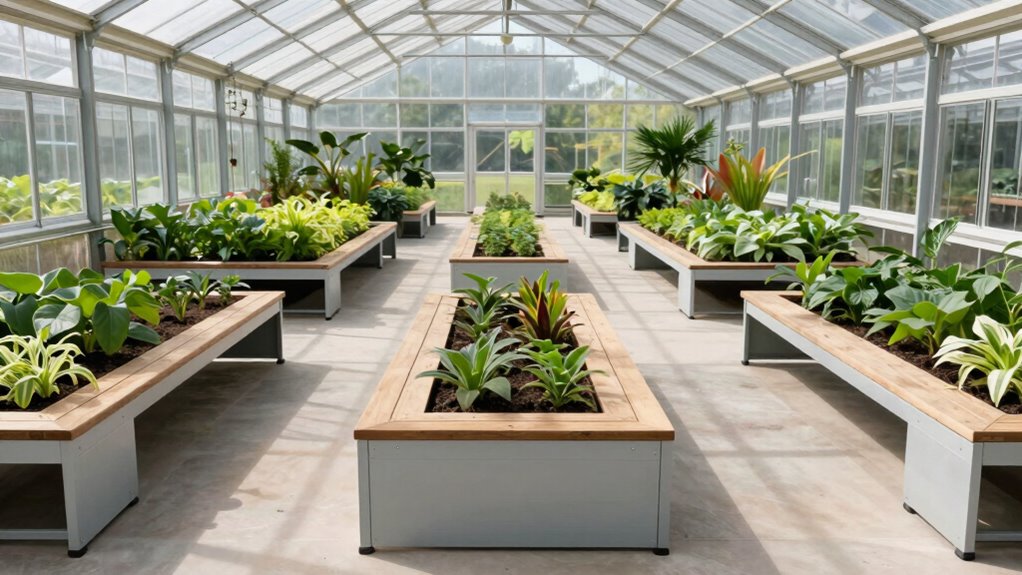
Adding modular elements to your greenhouse layout allows for seamless future expansion, making it easier to adapt as your needs grow. Using a modular design means you can add or reconfigure sections without major disruptions. To implement this effectively, consider these steps:
Incorporate modular elements for easy future expansion and adaptable greenhouse growth.
- Plan for adjustable pathways and removable panels that facilitate easy modifications.
- Use standardized sizes for benches and beds to guarantee compatibility with future modules.
- Incorporate flexible electrical and plumbing connections that can accommodate expansion without extensive rewiring.
This approach guarantees your greenhouse remains adaptable, saving time and resources. Modular design not only streamlines initial construction but also makes scaling up efficient, supporting your long-term gardening goals and increasing productivity.
Tips for Creating a Comfortable, Safe, and Productive Greenhouse Environment
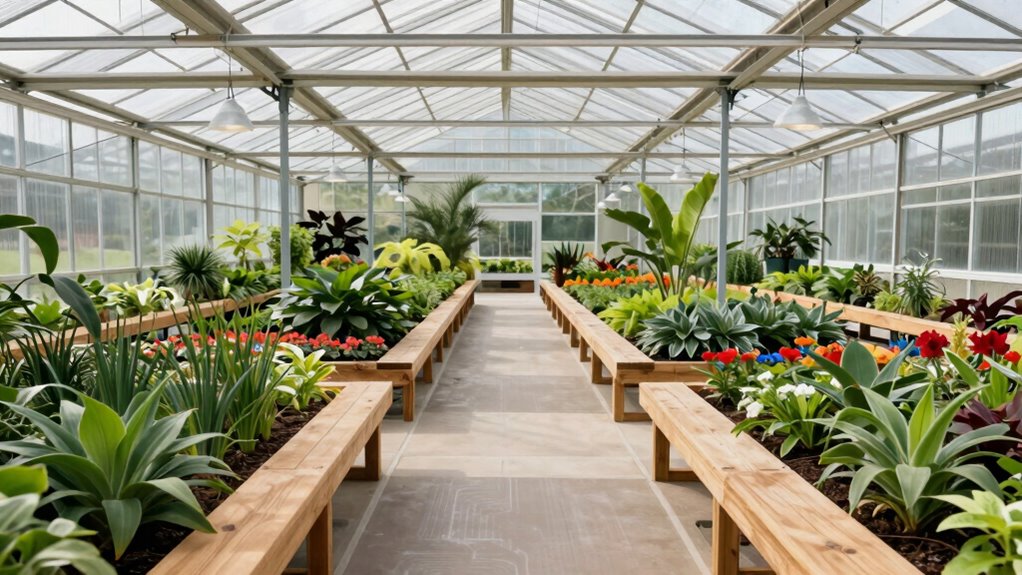
Creating a comfortable, safe, and productive greenhouse environment begins with careful attention to ventilation, lighting, and temperature control. Good climate control helps maintain consistent conditions, preventing stress on plants and reducing disease risk. Guarantee proper airflow to minimize humidity buildup, which can encourage pests and mold. Use adjustable vents, fans, and heaters to regulate temperature effectively. Adequate lighting supports healthy growth, so supplement natural light with grow lights if needed. Implement pest management strategies proactively, such as monitoring regularly and using barriers or biological controls. Keeping the environment stable discourages pest outbreaks and promotes plant health. Proper climate control also involves maintaining appropriate humidity levels to further prevent issues. Incorporating indoor air quality considerations, like air filtration and humidity management, can further enhance plant health and reduce pathogen spread. By focusing on climate control and pest management, you create a safer, more efficient space that supports thriving plants and simplifies ongoing care.
Common Greenhouse Layout Mistakes to Avoid
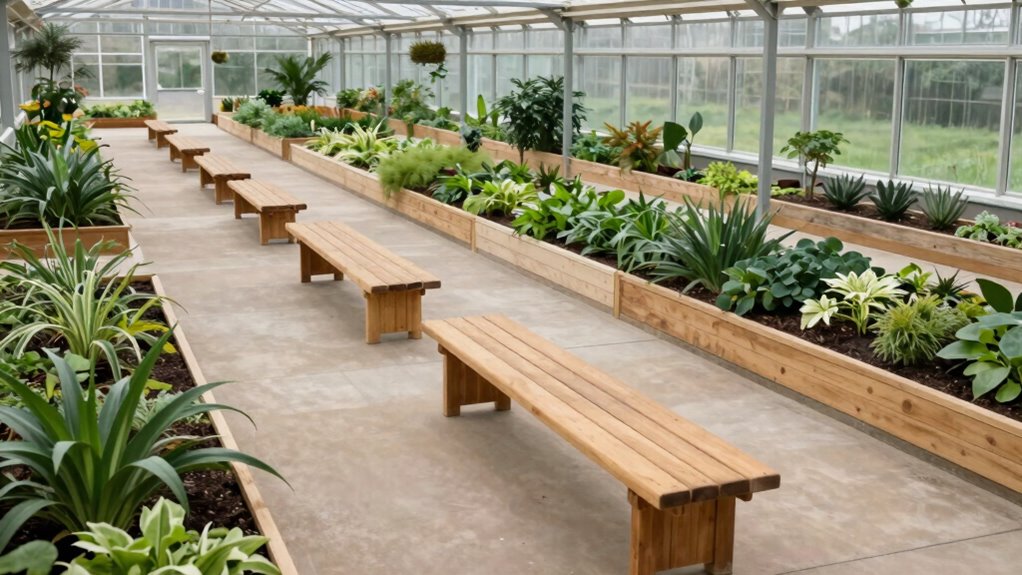
One of the most common mistakes in greenhouse design is neglecting proper space planning, which can lead to overcrowding, poor airflow, and difficulty accessing plants. This hampers growth and complicates maintenance. To avoid this, focus on: 1. Overloading benches with decorative plant arrangements, which can block light and restrict airflow. 2. Ignoring the importance of clear aisles, making it harder to reach plants and perform pest control strategies effectively. 3. Failing to allocate space for pest control, leading to ineffective treatments and increased risk of infestations. Proper layout guarantees good circulation, simplifies plant care, and maintains a healthy environment. Additionally, considering ventilation systems can greatly improve airflow and reduce humidity issues. Avoid these mistakes to improve plant health, reduce pest issues, and streamline greenhouse management.
Frequently Asked Questions
How Can I Maximize Space Efficiency in a Small Greenhouse?
To maximize space efficiency in your small greenhouse, focus on vertical gardening to utilize wall space for additional planting. Use tiered benches and compact beds to optimize floor area. Incorporate water conservation techniques like drip irrigation and rainwater harvesting to reduce waste. These strategies help you grow more plants in limited space, making your greenhouse productive and sustainable while maintaining easy access for care and harvesting.
What Materials Are Best for Building Durable Greenhouse Benches?
You should choose durable greenhouse benches made from sustainable materials like recycled wood or bamboo, which are eco-friendly and strong. Weather-resistant options, such as powder-coated aluminum or galvanized steel, also work well because they withstand moisture and temperature changes. These materials guarantee your benches last longer, require less maintenance, and support eco-conscious gardening. Combining sustainability with weather resistance helps you create a resilient, functional greenhouse space.
How Do I Choose the Best Location for Heating and Cooling Systems?
Think of your greenhouse as a living organism, and its heating and cooling systems as essential organs. You should place heating units where they can evenly distribute warmth, often near the center or on the north side to avoid shading. Establish cooling zones in shaded, well-ventilated areas, away from heat sources. Proper heating placement and strategic cooling zones ensure your plants thrive, regardless of outside weather swings.
What Are Eco-Friendly Options for Greenhouse Flooring?
For eco-friendly greenhouse flooring, you should consider sustainable flooring options like bamboo, reclaimed wood, or cork, which are made from eco-friendly materials. These materials are renewable, biodegradable, and have a lower environmental impact. Additionally, using recycled rubber or gravel can improve drainage and reduce chemical use. Choosing these sustainable options helps you maintain an environmentally conscious greenhouse while providing durable, functional flooring for your plants and workspace.
How Can I Implement Automation in Greenhouse Layout and Management?
Think of your greenhouse as a symphony where automation conducts the perfect harmony. You can implement automated watering systems and climate control to keep conditions just right, without manual effort. Install sensors to monitor temperature, humidity, and soil moisture, and connect them to a smart controller. This setup guarantees ideal growth, saves time, and reduces energy use, turning your greenhouse into a well-orchestrated environment that flourishes effortlessly.
Conclusion
Creating a well-planned greenhouse layout boosts plant health and your efficiency. Remember, a recent study shows greenhouses with optimized layouts see up to 30% higher yields. By thoughtfully arranging benches, beds, and aisles, you’ll enjoy easier maintenance, better airflow, and a safer workspace. Keep future growth in mind with modular designs, and always prioritize good light and circulation. With these tips, you’ll turn your greenhouse into a productive, enjoyable space that supports thriving plants—and your success.