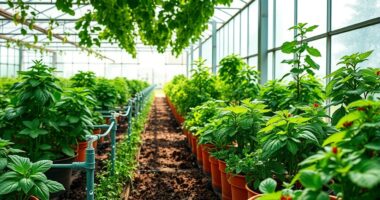
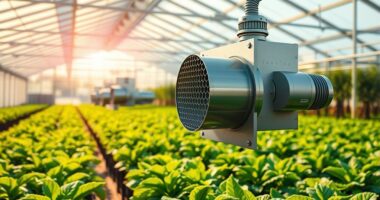
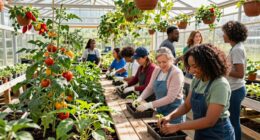
To make your greenhouse more self-sufficient, start by evaluating your setup and food goals, then incorporate renewable energy sources like solar or wind. Use efficient irrigation techniques, such as drip systems and rainwater harvesting, to conserve water. Diversify crops, including vertical farming and companion planting, to extend seasons and improve resilience. Maintain organic pest control and proper storage for your harvest. Keep systems monitored and adjusted for continuous improvements—if you keep exploring, you’ll discover more ways to succeed.

Get garden gear delivered free with Prime
- Fast, free delivery on millions of items
- Prime Video, Amazon Music and more included
- Member-only deals all year
Key Takeaways
- Incorporate renewable energy sources like solar and wind to power climate control and reduce reliance on external energy.
- Implement water conservation techniques such as rainwater harvesting and drip irrigation for sustainable water use.
- Optimize soil health through crop rotation, organic amendments, and natural pest management to maintain fertility and reduce chemical inputs.
- Use season extension tools and vertical farming to maximize space and enable year-round crop production.
- Establish integrated pest management with companion planting and beneficial insects for eco-friendly, self-sustaining pest control.
As an affiliate, we earn on qualifying purchases.
Evaluate Your Greenhouse Setup and Food Goals
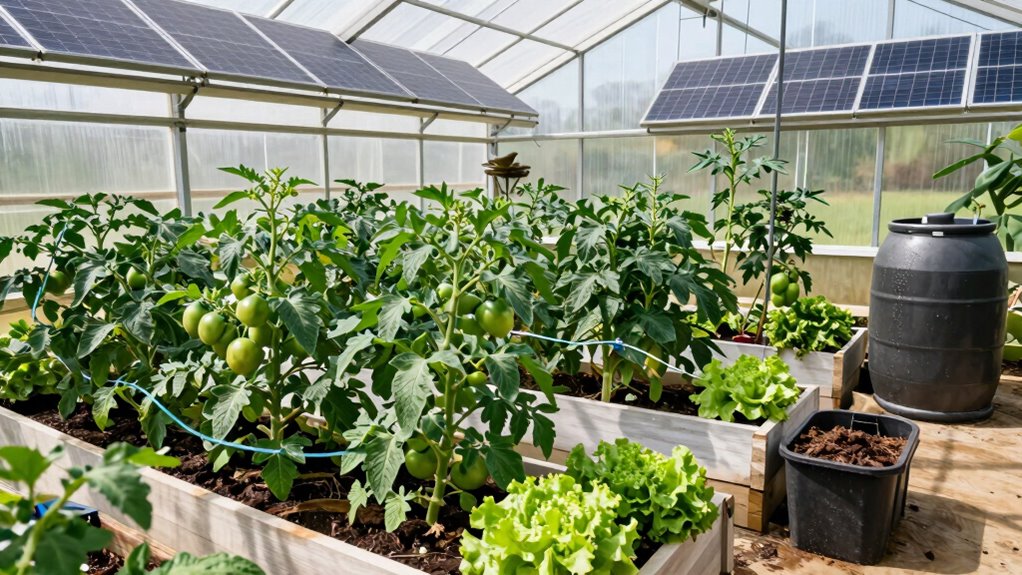
Before making any changes to increase your greenhouse’s self-sufficiency, it’s essential to assess your current setup and define your food goals. Start by evaluating soil health, as healthy soil provides nutrients and supports resilient plants. Consider how well your soil retains moisture and resists pests naturally. Next, review your pest management strategies—are they effective and environmentally friendly? Identify any recurring pest issues and whether your current methods prevent or exacerbate these problems. Clarify your food goals: do you want year-round vegetables, herbs, or fruit? Knowing this helps you plan crop rotations, soil improvements, and pest controls aligned with your objectives. Taking these steps guarantees your greenhouse is optimized for sustainability, productivity, and minimal intervention. Additionally, understanding soil health can guide you in choosing the right amendments and cover crops to boost resilience. Being aware of pest management techniques can also help you develop more eco-friendly solutions while minimizing damage to beneficial insects.
Harness Renewable Energy for Your Greenhouse
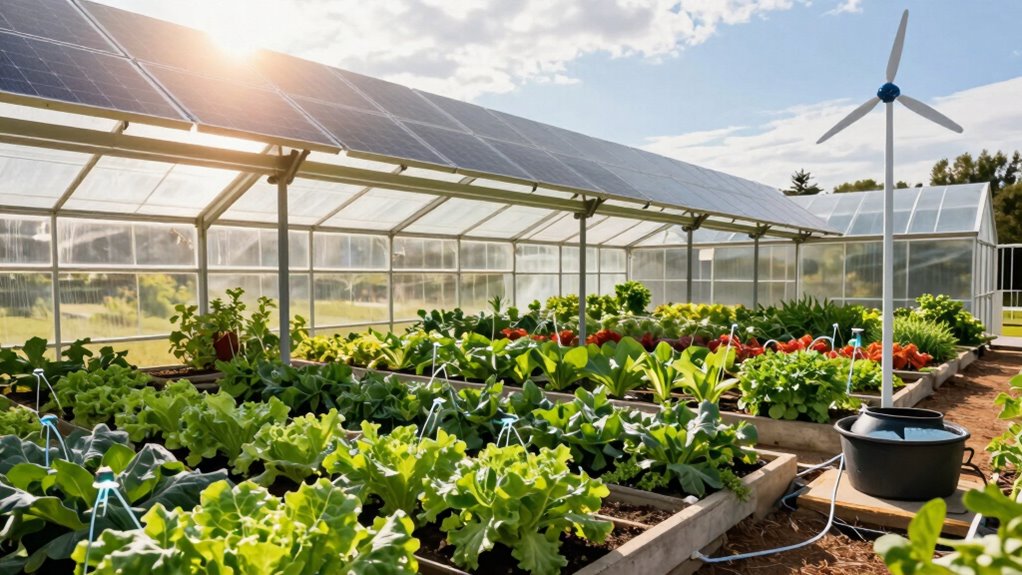
Once you’ve evaluated and optimized your greenhouse’s current setup and food goals, incorporating renewable energy sources can considerably boost your sustainability. Solar energy and wind power are the most practical options. Installing solar panels can harness sunlight to power lighting, heating, and fans, reducing reliance on grid electricity. Wind turbines, if your location has consistent breezes, generate clean energy that can supplement or replace grid power. Both options lower your carbon footprint and long-term costs. To visualize, consider this:
| Energy Type | Benefits | Requirements |
|---|---|---|
| Solar Energy | Reliable, low maintenance | Sunlight, space for panels |
| Wind Power | High output in windy areas | Wind access, space for turbines |
| Both | Reduce energy bills | Investment, permits |
| Combined | Maximize energy independence | Proper site assessment |
| Eco-Friendly | Lower environmental impact | Installation planning |
Additionally, integrating renewable energy into your greenhouse can ensure a more resilient and sustainable food system over time. Understanding regional climate conditions and local wind patterns can help you choose the optimal energy sources for your specific location. Moreover, exploring innovative energy storage solutions can help maximize the efficiency of your renewable systems during periods of low generation.
Save Water With Efficient Irrigation Techniques
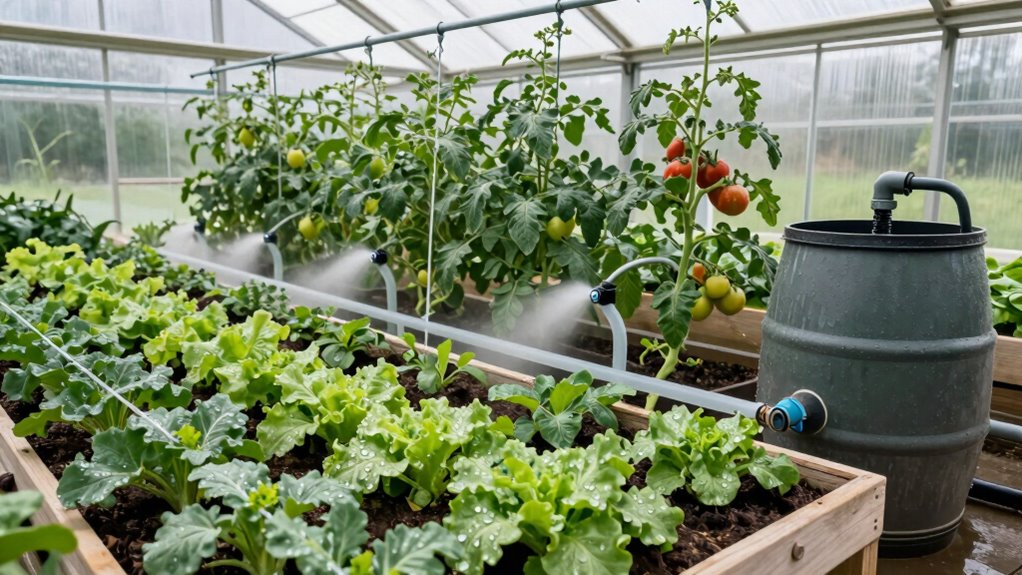
Efficient irrigation techniques can greatly reduce your water consumption and guarantee your plants receive the right amount of moisture. Drip irrigation delivers water directly to the plant roots, minimizing waste and evaporation. It’s easy to install and allows you to control watering precisely. Additionally, rainwater harvesting can supplement your supply, capturing rainwater from your greenhouse roof for irrigation use. This method diminishes reliance on municipal water systems and promotes sustainability. Incorporating vetted materials into your irrigation setup can also enhance its aesthetic appeal while maintaining functionality. Incorporating natural materials such as wood or stone in your irrigation system setup can seamlessly blend it into your greenhouse’s rustic aesthetic. Combining drip irrigation with rainwater harvesting ensures a steady, eco-friendly water source that conserves resources. Regular maintenance of your irrigation system prevents leaks and inefficiencies. Incorporating trusted market information can help you choose the most reliable equipment and strategies for your needs. Using efficient methods can also improve overall water management, ensuring your plants thrive with minimal waste. By adopting these techniques, you optimize water use, reduce costs, and support a resilient, self-sufficient greenhouse food system.
Diversify Crops for Year-Round Resilience
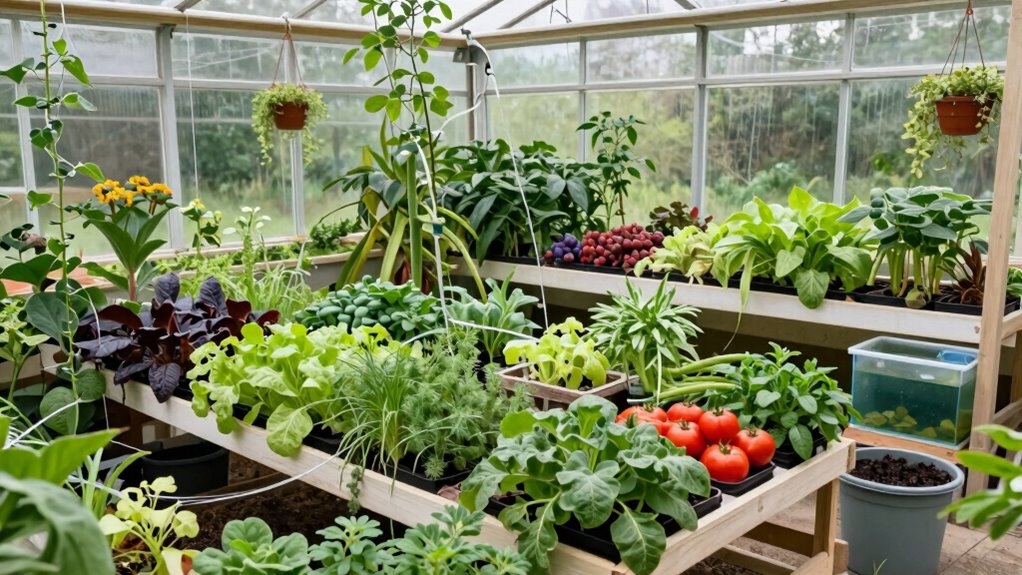
By growing a variety of crops, you can extend your growing seasons and guarantee a steady food supply year-round. Diversifying reduces your reliance on a few staple crops, making your system more resilient to pests and weather changes. This approach helps you maintain food production even when specific plants face challenges. Incorporating sound therapy techniques can also improve your ability to monitor and adapt to environmental changes in your greenhouse. Additionally, selecting pest-resistant plants can further safeguard your crops and promote a healthier, more sustainable garden environment. Embracing minimalist principles in your planting strategies can streamline maintenance and enhance overall efficiency.
Extending Growing Seasons
Extending your growing season is essential for creating a more resilient and self-sufficient food system inside your greenhouse. Season extension techniques, like installing heaters or using thermal screens, help you maintain ideal climate control during colder months. By carefully managing temperature and humidity, you can grow crops beyond their typical outdoor limits. Incorporate crops with different growing cycles to guarantee a steady harvest year-round. Using supplemental lighting can also promote continuous growth, especially in low-light periods. Proper ventilation and insulation are critical for maintaining consistent conditions, preventing cold spots, and reducing energy costs. Additionally, selecting appropriate workspace and tech gear like temperature controllers and automated systems can optimize climate management. With effective climate control, you can extend your season, diversify your crops, and boost your greenhouse’s productivity and resilience throughout the year.
Reducing Crop Dependency
Diversifying your crops is essential for building a resilient, year-round food system in your greenhouse. By planting a variety of vegetables, herbs, and legumes, you reduce reliance on a single crop, minimizing risks from pests and diseases. This approach also enhances soil enrichment, as different plants contribute unique nutrients back into the soil, improving overall health. Incorporate pest deterrents naturally by choosing companion plants that repel common greenhouse pests. For example, marigolds can keep away nematodes, while basil deters aphids. Rotating crops and mixing plant types create a balanced ecosystem, decreasing the likelihood of pest outbreaks and crop failure. Ultimately, diversification guarantees continuous harvests, stabilizes your food supply, and fosters a more sustainable, self-sufficient greenhouse environment.
Optimize Space With Vertical Farming and Companion Planting

Maximizing your greenhouse space is essential for creating a more self-sufficient food system, and two effective methods are vertical farming and companion planting. Vertical integration allows you to grow multiple layers of crops, making the most of limited space while increasing yields. Use shelves, hanging planters, or trellises to elevate plants and create efficient use of vertical space. Companion planting enhances space efficiency by pairing plants that benefit each other, reducing the need for additional space and inputs. For example, planting basil near tomatoes can improve flavor and deter pests. Combining vertical farming with companion planting optimizes your greenhouse’s layout, boosts productivity, and promotes healthier plants. These strategies help you make the most of every inch, advancing toward a more self-sufficient food system.
Use Organic Methods for Pest Control
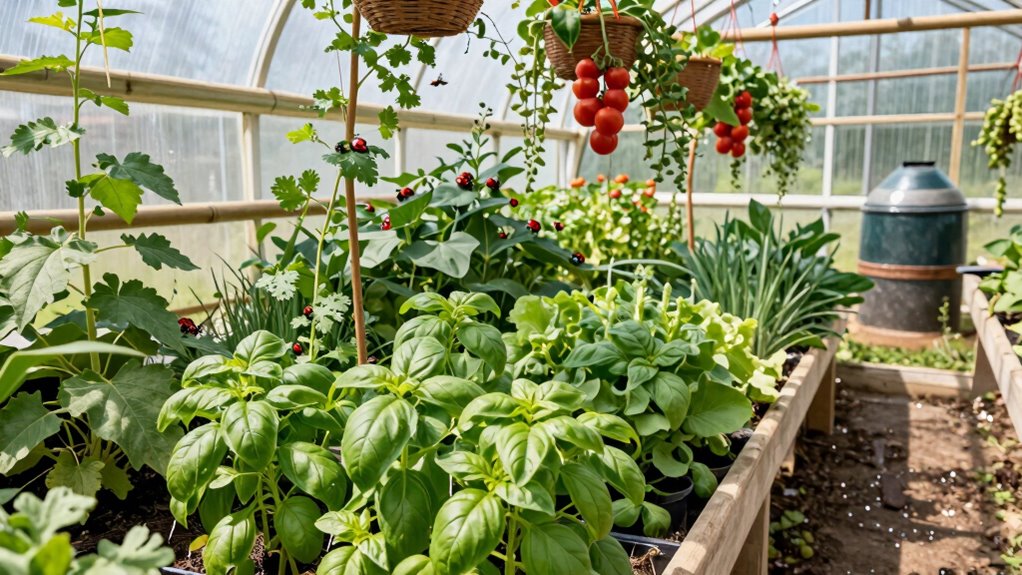
Organic pest control methods are essential for maintaining a healthy greenhouse without relying on synthetic chemicals. You can achieve this by practicing companion planting, which naturally repels pests and draws in beneficial insects. For example, planting marigolds near vegetables deters nematodes, while basil can repel aphids. Introducing beneficial insects like ladybugs, parasitic wasps, and lacewings helps control pest populations without harmful pesticides. These insects prey on common greenhouse pests, reducing the need for chemical interventions. Regularly monitor your plants to catch pest issues early, and encourage a diverse ecosystem within your greenhouse to promote natural pest control. By combining companion planting with the strategic release of beneficial insects, you create a balanced environment that minimizes pest problems and supports healthy plant growth. Incorporating integrated pest management practices can further enhance your efforts by providing a comprehensive approach to pest control.
Install Storage Systems to Preserve Your Harvest

Proper storage systems are essential for keeping your harvest fresh and reducing waste. You need to focus on humidity control and temperature regulation to preserve your produce effectively. Use airtight containers or bins with ventilation to prevent excess moisture, which can lead to mold or spoilage. Consider installing climate-controlled storage areas or refrigeration units for delicate items like herbs or berries. Maintaining consistent temperatures slows down ripening and decay, extending shelf life. Label and organize your harvest to easily track freshness and avoid cross-contamination. Regularly check storage conditions to guarantee humidity levels stay balanced and temperatures remain stable. Implementing proper storage techniques can also help you plan your harvest better and ensure you have fresh food throughout the year. Additionally, monitoring climate control within your storage spaces ensures optimal conditions for different types of produce. Understanding storage technology can further improve the efficiency and effectiveness of your preservation methods. Using appropriate ventilation systems can significantly enhance airflow and reduce the risk of spoilage. Incorporating innovative storage solutions can optimize space and improve preservation outcomes. Effective storage doesn’t just keep your food fresh—it also maximizes your self-sufficiency by reducing the need for frequent harvests and minimizing waste.
Monitor and Adjust Your Systems for Continuous Improvement
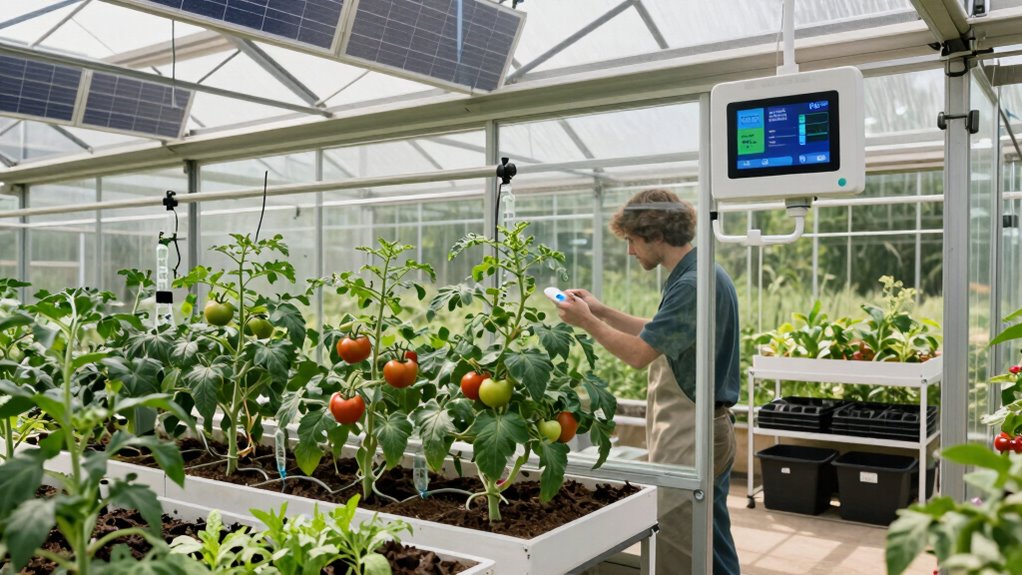
Once you’ve set up your storage systems, the next step is to keep a close eye on how they perform over time. Regular data analysis helps identify issues and opportunities for improvement. Use sensors to monitor temperature, humidity, and other critical factors, ensuring they’re properly calibrated. This guarantees accurate readings. Then, review the data consistently to spot trends or irregularities. Adjust your systems based on insights, such as tweaking ventilation or water delivery. Key steps include:
- Calibrate sensors periodically for precision.
- Analyze data to detect inefficiencies or risks.
- Implement adjustments to optimize conditions.
- Incorporate air system components like ERVs to enhance ventilation efficiency. Additionally, understanding regional flavors and chicory/coffee insights can inform better environmental controls tailored to specific crop needs.
Plan for Long-Term Sustainability and Expansion
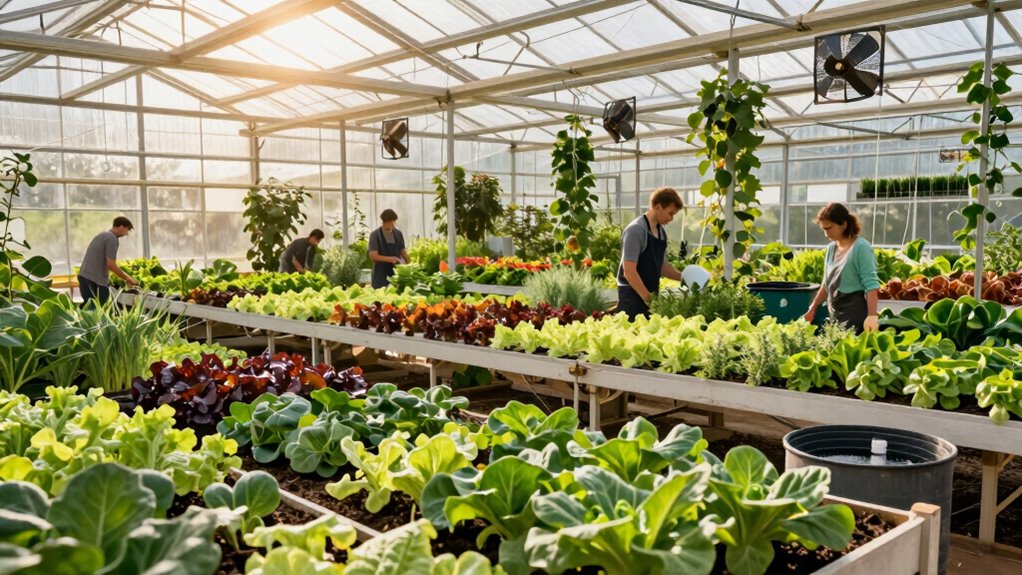
To guarantee your greenhouse remains productive over time, consider implementing crop rotation strategies that maintain soil health. Adopt water conservation techniques to minimize waste and reduce your environmental footprint. Planning for modular system expansion allows you to grow your food system gradually and adapt to changing needs. Incorporating efficient watering methods can further enhance sustainability and resource management. Additionally, integrating companion planting can naturally deter pests and improve crop yields.
Crop Rotation Strategies
Implementing effective crop rotation strategies is essential for maintaining soil health and guaranteeing a sustainable food system within your greenhouse. By rotating crops, you enhance soil structure, prevent nutrient depletion, and promote crop diversity. This reduces pest buildup and minimizes disease risks. Consider these strategies:
- Rotate plant families each season to prevent soil exhaustion.
- Incorporate legumes to fix nitrogen naturally, enriching soil fertility.
- Alternate heavy feeders with crops that restore nutrients.
These practices keep your soil vibrant and productive, supporting diverse crops over time. Crop rotation not only boosts soil health but also expands your planting options, making your greenhouse more resilient and self-sufficient. Proper planning ensures long-term sustainability and a steady food supply.
Water Conservation Techniques
Effective water conservation is essential for guaranteeing your greenhouse remains sustainable and can support expansion over time. Implementing rainwater harvesting systems allows you to collect and store free, clean water, reducing reliance on external sources. Pair this with drip irrigation to deliver water directly to plant roots, minimizing waste and evaporation. To maximize efficiency, consider using the following techniques:
| Technique | Benefit | Implementation Tip |
|---|---|---|
| Rainwater harvesting | Reduces dependence on municipal water | Install gutters and storage tanks |
| Drip irrigation | Conserves water, targets roots | Use emitters for precise watering |
| Mulching | Prevents evaporation | Apply organic mulch around plants |
| Watering early/late | Less evaporation during cooler times | Schedule watering during dawn/dusk |
| Monitoring | Ensures ideal usage | Use moisture sensors for precision |
Modular System Expansion
Planning for modular system expansion is essential to guarantee your greenhouse can grow sustainably over time. Using modular design allows you to add scalable components as your food system expands. To assure smooth growth, consider these key steps:
- Prioritize flexible, scalable components that fit your current needs but can be easily upgraded or expanded.
- Design your layout with modular sections, making it simple to add or reconfigure parts without disrupting existing systems.
- Implement connections that facilitate easy integration of new modules, such as quick-connect plumbing or electrical systems.
This approach helps you adapt to changing needs, avoid unnecessary costs, and maintain efficiency. Modular design keeps your food system future-proof, so your greenhouse can evolve into a fully self-sufficient operation.
Frequently Asked Questions
How Can I Reduce Greenhouse Energy Costs Further?
You can reduce your greenhouse energy costs further by implementing solar heating, which harnesses free, renewable energy from the sun to warm your space. Additionally, conduct regular energy audits to identify inefficiencies and areas where you can improve insulation or upgrade equipment. Combining solar heating with these audits helps you optimize energy use, cut costs, and maintain a more sustainable greenhouse environment.
What Are the Best Native Plants for Greenhouse Biodiversity?
You should plant native species that attract native pollinators, such as milkweed and wildflowers, to boost biodiversity. Incorporate biodiversity corridors within your greenhouse by creating interconnected planting zones with native plants, encouraging native pollinators to thrive. These plants provide essential habitats and food sources, supporting a balanced ecosystem. By focusing on native plants, you enhance biodiversity and create a resilient, self-sustaining environment inside your greenhouse.
How Do I Prevent Pests Without Synthetic Chemicals?
You can prevent pests naturally by practicing natural pest control methods like introducing beneficial insects such as ladybugs and predatory mites. Additionally, use companion planting—pairing plants like marigolds with vegetables to repel pests and attract helpful insects. Keep your greenhouse clean, maintain healthy plant growth, and rotate crops regularly. These strategies create a balanced ecosystem that discourages pests without resorting to synthetic chemicals, ensuring a healthier, more sustainable food system.
What Renewable Energy Sources Are Most Cost-Effective?
You’ll find solar panels and wind turbines are the most cost-effective renewable energy sources. Solar panels harness the sun’s power with astonishing efficiency, transforming sunlight into electricity, while wind turbines capture the relentless breeze to generate energy day and night. Their costs have plummeted, making them accessible for greenhouse setups. Embracing these options means you can slash energy bills, reduce reliance on fossil fuels, and supercharge your self-sufficient food system sustainably.
How Can I Compost Efficiently in Limited Greenhouse Space?
To compost efficiently in limited greenhouse space, monitor your compost temperature regularly to guarantee it stays hot enough to break down materials quickly. Use a worm bin to accelerate composting and produce nutrient-rich soil, especially in tight spots. Keep the bin moist and aerated, and layer greens and browns to maintain balance. This method saves space, speeds up decomposition, and provides you with valuable compost for your greenhouse plants.
Conclusion
By transforming your greenhouse into a self-sufficient food system, you’re planting the seeds for sustainability and resilience. With careful planning, renewable energy, and smart techniques, you’ll turn your space into a thriving oasis that feeds you year-round. Think of it as tending a garden of abundance—each step nurtures growth and independence. Embrace these strategies, and watch your greenhouse blossom into a sustainable sanctuary where nature and your efforts flourish together.
Fall yard work Picks
leaf blowers
As an affiliate, we earn on qualifying purchases.