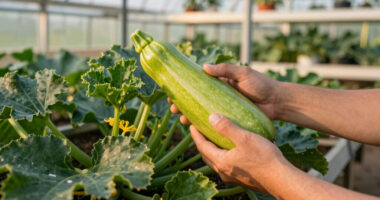
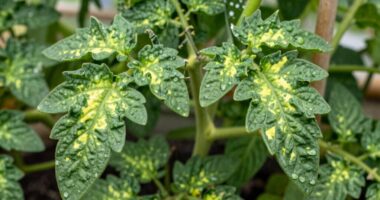
To improve airflow and speed up growth, start by spacing your crops according to their size and growth habits, ensuring they have enough room for roots and foliage to develop freely. Use tools like measuring tapes or spacing sticks for accuracy and regularly monitor your plants for overcrowding. Adjust spacing as plants grow to prevent disease and pest issues while promoting ideal nutrient use. If you want to discover more effective strategies, keep exploring these simple crop spacing fixes.

Get garden gear delivered free — and shop member deals
- Fast, free delivery on millions of items
- Access to Prime Big Deal Days deals on October 6–7
- Prime Video, Amazon Music and more included
Key Takeaways
- Increase plant spacing around vulnerable and fast-growing crops to enhance airflow and reduce humidity buildup.
- Use proper tools and regular monitoring to maintain optimal spacing as plants develop.
- Thin overcrowded plants early to prevent competition and promote quicker growth.
- Incorporate scientific spacing guidelines based on plant size, growth habits, and soil conditions.
- Adjust spacing throughout the season to ensure ongoing airflow, health, and rapid crop development.
measuring tape for garden planting
As an affiliate, we earn on qualifying purchases.
As an affiliate, we earn on qualifying purchases.
Why Proper Crop Spacing Matters for Plant Health
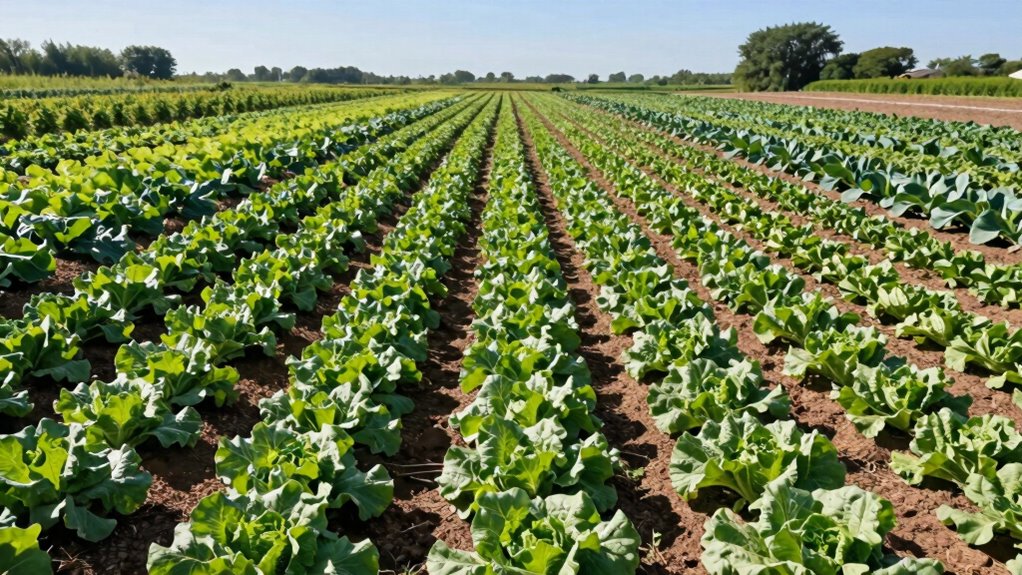
Proper crop spacing is crucial because it directly influences the health and productivity of your plants. When plants are too close, they compete for roots, nutrients,, and water, leading to root competition that stunts growth. Overcrowding also increases the risk of soil compaction, which hampers root expansion and reduces oxygen availability. Soil becomes dense, making it harder for roots to penetrate and access essential nutrients. Adequate spacing guarantees each plant has enough room to develop strong roots and access resources efficiently. It also promotes better airflow, reducing humidity and preventing diseases. Proper crop spacing helps create resilient landscapes that can better withstand harsh desert conditions. By maintaining appropriate distances between crops, you minimize root competition and soil compaction, supporting healthier growth and higher yields. Proper crop spacing is a simple yet crucial step for improving airflow and promoting ideal plant health. Additionally, maintaining proper spacing encourages beneficial microbial activity, which enhances soil fertility and plant resilience. Ensuring proper spacing can also help prevent disease spread by limiting the contact between plants, further supporting overall plant health. Regularly adjusting crop spacing based on plant growth stages can also optimize nutrient uptake and overall yield.
How to Determine the Right Spacing for Different Crops
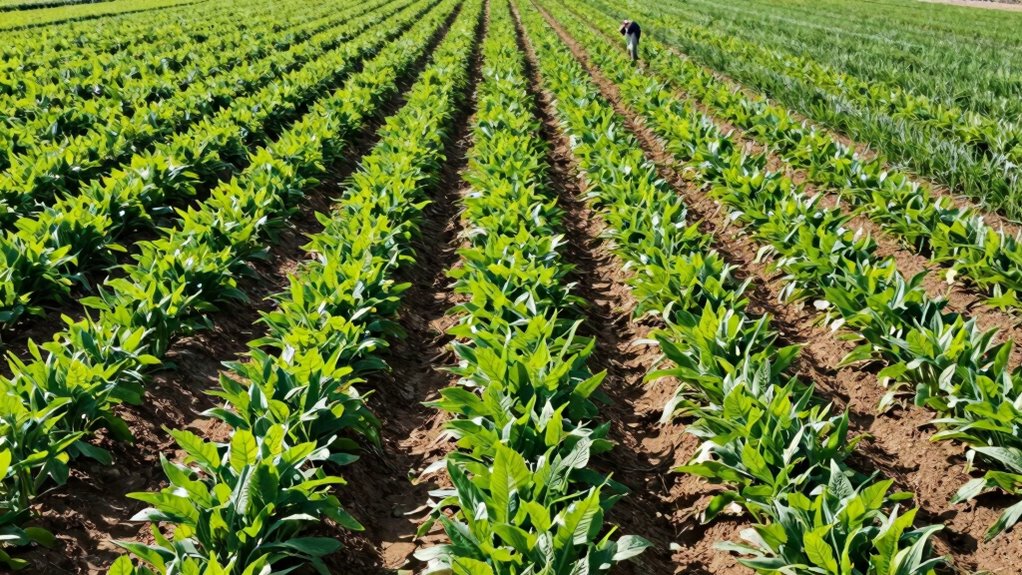
To figure out the right spacing for your crops, you need to take into account factors like plant size, growth habits, and your soil conditions. Each crop has specific guidelines that help maximize yield and health, so knowing those is essential. By understanding these points, you can set your plants up for success from the start. Additionally, considering best planting practices can further enhance airflow and overall plant growth. Proper nutritional balance in your soil also plays a crucial role in supporting healthy development and robust growth. Ensuring adequate spacing can also prevent issues like ear pressure during colds, which can hinder plant health if not properly managed.
Factors Influencing Spacing
Determining the right spacing for different crops depends on several key factors, including their growth habits, mature size, and root systems. Your crop’s size influences how much space it needs to thrive without overcrowding. Soil nutrients also play a role; well-nourished soil supports healthier growth, allowing crops to be spaced closer together if nutrients are ample. Conversely, poor soil may require wider spacing to reduce competition. Pest management considerations are also vital—more spaced-out crops improve airflow, reducing disease risk and making pest control easier. Additionally, understanding the importance of plant health and how soil quality impacts development helps you optimize spacing for better airflow, growth speed, and overall yield. Proper crop planning can further enhance these factors by ensuring optimal layout from the start. Proper spacing not only promotes healthier plants but also contributes to efficient water use and reduces the likelihood of disease spread. Recognizing how soil properties influence root development can also guide you in adjusting spacing for different crop types, especially when considering soil texture and water retention capacity.
Crop-Specific Guidelines
How do you figure out the ideal spacing for different crops? First, consider each crop’s growth habit and mature size. Next, think about companion planting—some plants thrive when spaced close together, while others need room to breathe. Third, evaluate soil fertility; richer soil can support closer planting, but overcrowding can hinder airflow and cause disease. Additionally, understanding Piercing Care and Hygiene can help prevent issues that might affect plant health by reducing the risk of infections and irritation. Furthermore, understanding Gold IRA Rollovers can help diversify your long-term investment strategy, ensuring financial stability alongside your gardening efforts. Finally, check specific guidelines for each crop, as spacing varies widely—for example, leafy greens need less space than tomatoes.
Common Crop Spacing Mistakes and How to Avoid Them
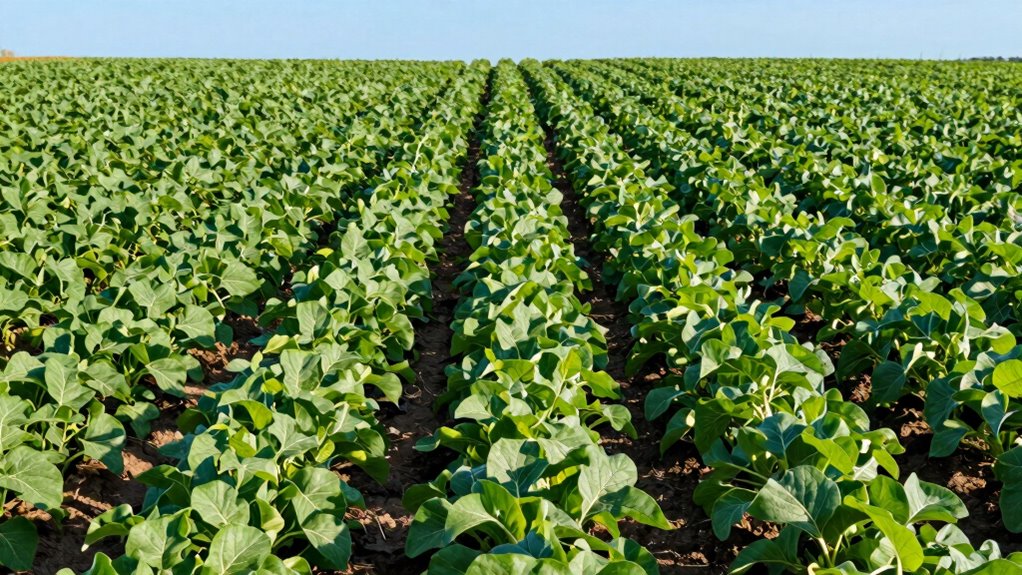
One of the most common mistakes gardeners make is misjudging the proper spacing between crops, which can lead to overcrowding or wasted space. When plants are too close, they compete for soil nutrients, reducing growth and yield. Overcrowding also hampers airflow, creating a humid environment that attracts pests and diseases. Conversely, spacing crops too far apart wastes valuable garden space and can slow overall growth. To avoid these mistakes, research each crop’s ideal spacing requirements and stick to them. Proper spacing promotes healthy root development, ensures sufficient access to soil nutrients, and improves pest management by allowing air circulation. Regularly monitor plant growth and adjust spacing if necessary to maintain maximum conditions for rapid, healthy development. Understanding the growth habits of your crops can help you tailor spacing for optimal performance, especially since different plants have unique needs for airflow and space. Additionally, considering the capacity of your garden can help you plan effective crop arrangements that maximize productivity without overcrowding.
Step-by-Step Guide to Adjusting Your Crop Layout
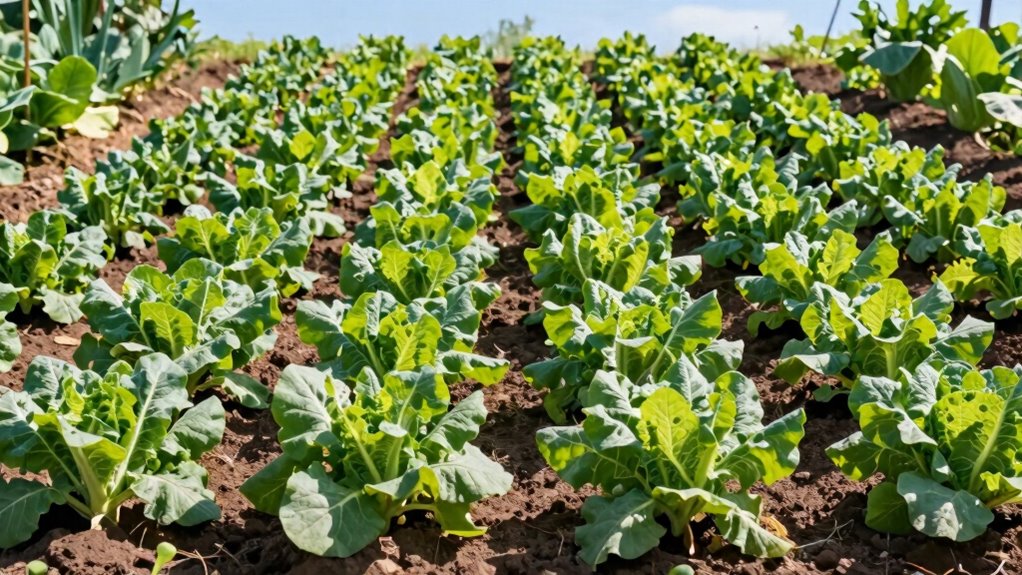
Adjusting your crop layout is a straightforward process that can substantially improve your garden’s health and productivity. Here’s a simple step-by-step guide:
- Identify which crops need more space for airflow and growth.
- Rearrange your plants, considering crop rotation principles to reduce soil depletion and pests.
- Increase spacing between plants prone to pests or disease, enhancing air circulation.
- Mark new positions and prepare the soil accordingly, ensuring each crop has enough room to thrive. Incorporating sound science into your planning can help optimize your crop spacing strategies for better health and yield.
- Incorporate deep research into your planning to select the best spacing strategies for your specific plants. Understanding crop spacing techniques can significantly influence plant health and yield.
How Spacing Improves Airflow and Prevents Disease
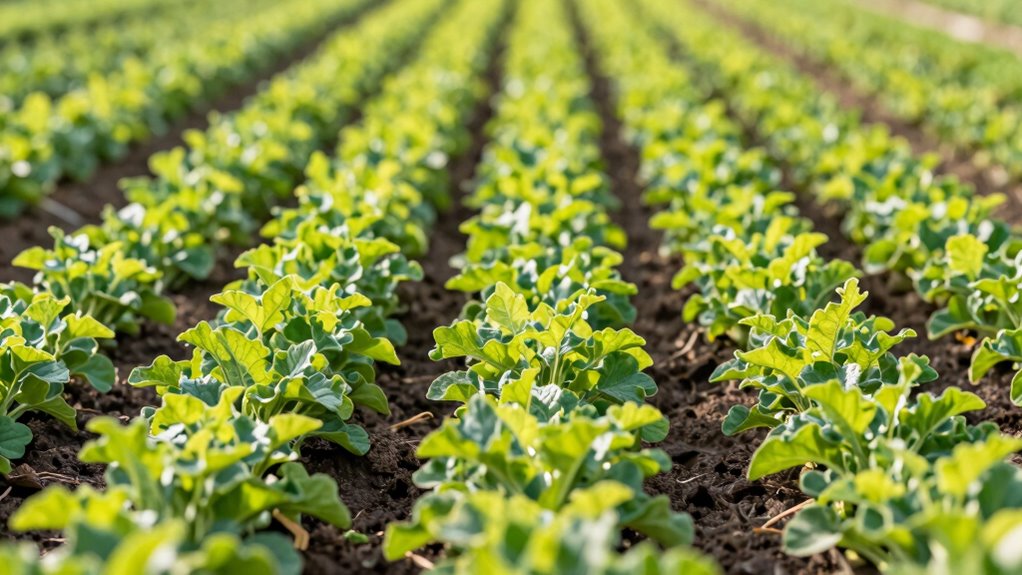
Proper crop spacing boosts air circulation around your plants, helping them stay dry and healthy. When air flows freely, it reduces the chances of diseases taking hold. This simple adjustment can make a big difference in keeping your crops thriving.
Promotes Better Air Circulation
Have you ever noticed how crowded plantings can lead to issues with mold and pests? Proper spacing allows air to flow freely around your plants, preventing moisture buildup that attracts mold. It also helps pests find fewer hiding spots and makes pest control easier. When you space plants correctly, you create a breeze that:
- Keeps soil nutrients evenly distributed, supporting healthy growth
- Reduces humidity levels, discouraging mold development
- Limits pest populations by exposing them to natural predators or traps
- Enhances overall plant health, resulting in stronger, more vigorous growth
- Understanding plant spacing can help you optimize airflow and improve crop yields.
Good airflow is essential for maintaining plant vigor and preventing disease. With better circulation, your plants stay healthier, and you reduce the need for chemical interventions, promoting a more sustainable garden.
Reduces Disease Spread
When plants are spaced too closely, moisture and humidity can linger on their surfaces, creating ideal conditions for disease to spread rapidly. Poor airflow traps dampness, allowing fungi and bacteria to thrive. Proper spacing helps air circulate, drying leaves and reducing surface moisture, which minimizes disease risk. Additionally, healthier plants stay better equipped to absorb soil nutrients and resist pests, further lowering disease vulnerability. By preventing excess humidity, you lessen the need for extensive pest control measures and reduce soil-borne pathogen spread. Proper crop spacing not only promotes strong growth but also forms a natural barrier against diseases, keeping your plants healthier and more productive. Overall, good spacing is essential for effective disease management and maintaining a thriving, resilient garden. Ensuring adequate air circulation is a simple yet powerful way to support plant health. Adequate spacing also allows for easier monitoring and maintenance, making it simpler to spot issues early and take corrective action. Additionally, proper spacing can improve overall crop yield by fostering healthier, faster-growing plants.
How Proper Spacing Accelerates Growth and Boosts Yields
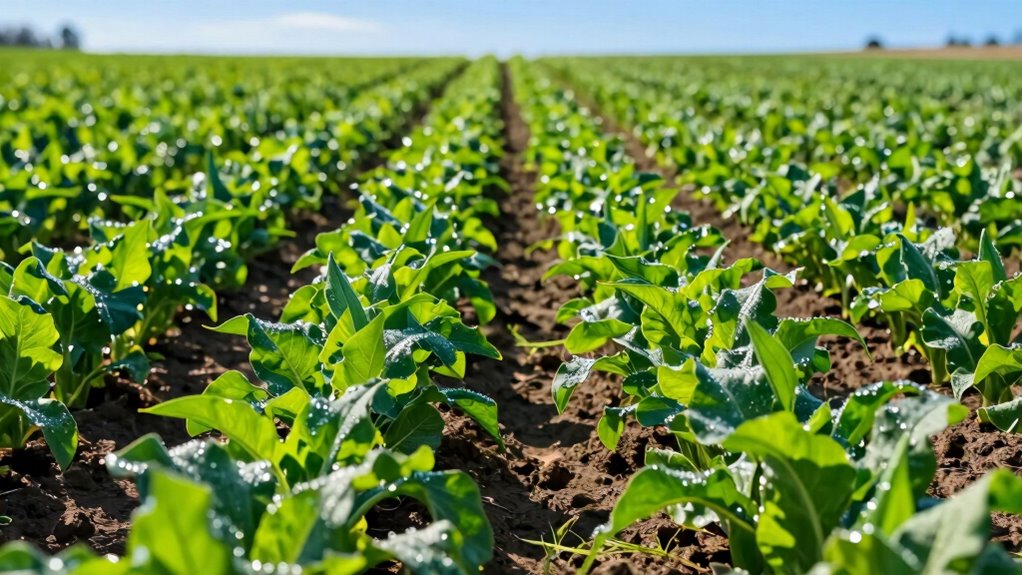
Ensuring the right spacing between crops allows each plant to access the nutrients, sunlight, and water it needs to thrive. Proper spacing promotes faster growth and higher yields by preventing competition. When plants are well-spaced, you can enhance soil enrichment, providing roots room to absorb nutrients efficiently. It also makes pest control easier, reducing infestation risks. Visualize it like this:
- Roots expand freely, maximizing nutrient uptake
- Sunlight reaches all leaves, boosting photosynthesis
- Air circulates, lowering humidity and disease risk
- Easier inspection and targeted pest management
Tools and Techniques for Measuring and Planning Crop Spacing
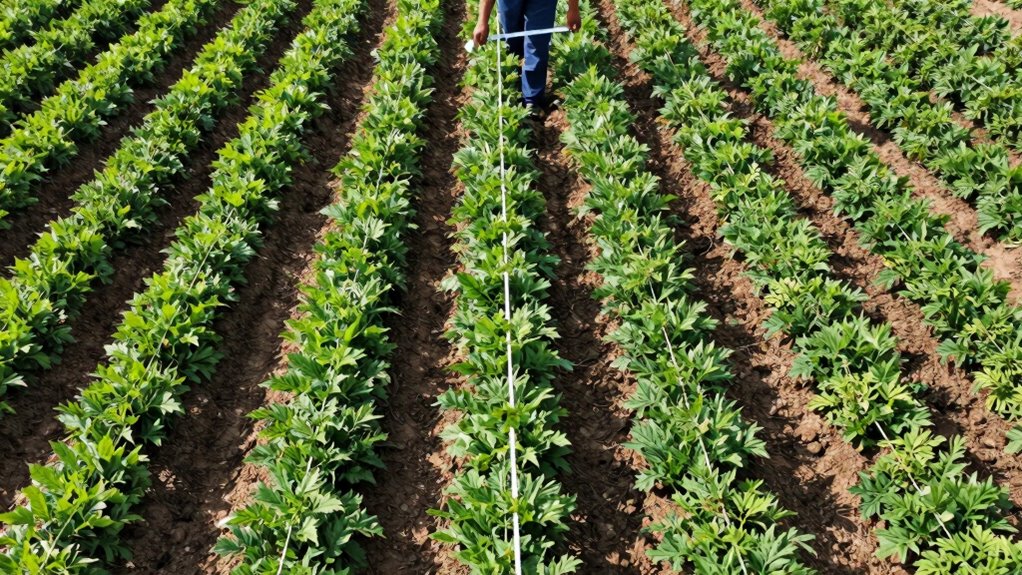
Accurate measurement and careful planning are key to achieving ideal crop spacing. Use tools like measuring tapes, spacing sticks, or even smartphone apps to guarantee consistent distances between plants. Precise spacing promotes better airflow, which helps reduce pest problems and improves soil nutrition absorption. Soil testing kits can determine nutrient levels, guiding you on how much to fertilize and adjust spacing accordingly. Consider using grid or row markers to visualize plant placement before planting, minimizing guesswork. Proper planning minimizes overcrowding and allows crops to grow healthily, boosting pest control naturally by limiting shelter for pests. Investing in these measurement tools and techniques ensures your crop layout supports perfect growth, better soil nutrition, and easier pest management.
Adjusting Spacing Strategies for Gardens and Farms
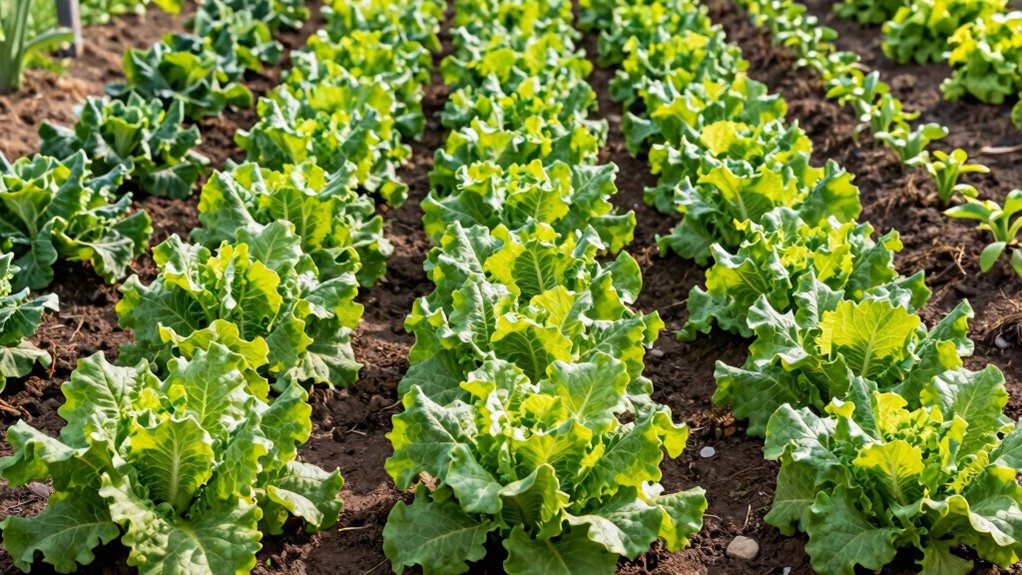
To optimize your garden or farm, you need to adjust your plant spacing based on the specific types you’re growing. Proper airflow reduces disease risks and boosts plant health, making spacing even more critical. By tailoring your strategies to each plant’s needs, you’ll improve yields and guarantee healthier crops overall.
Optimal Plant Spacing Techniques
Adjusting plant spacing is essential for maximizing yield and maintaining healthy growth in both gardens and farms. Proper spacing depends on factors like root depth and soil nutrients, which influence how plants access resources. When spacing correctly, roots have enough room to expand without competing for nutrients, promoting stronger growth.
Consider these strategies:
- For deep-rooted plants, space them farther apart to accommodate growth downward.
- Increase spacing if soil nutrients are abundant to prevent overcrowding.
- Use smaller spacing for shallow-rooted crops that need less room.
- Adjust based on plant size at maturity, ensuring airflow and access to nutrients.
Tailoring spacing to root depth and soil nutrients helps optimize growth and yield, ensuring plants thrive without overcrowding or resource competition.
Benefits of Proper Airflow
Proper airflow between plants is essential for maintaining healthy growth and preventing issues like mold, disease, and pest infestations. When air circulates well, it helps regulate soil nutrients by reducing excess moisture that can cause nutrient leaching or buildup. Improved airflow also makes it harder for pests to settle and proliferate, keeping your plants healthier and reducing the need for chemical controls. With better ventilation, plants dry faster after watering or rain, minimizing fungal growth and disease spread. Additionally, airflow helps distribute soil nutrients more evenly, ensuring roots get what they need for strong growth. By adjusting your spacing strategies, you create a more resilient garden or farm environment that encourages vigorous growth and minimizes pest and disease problems.
Adjusting for Plant Types
Different plant types require different spacing to thrive, making it important to tailor your layout based on their specific needs. For example, leafy greens need close spacing to maximize soil fertility, while tomatoes require more room for airflow. Consider these strategies:
- Use companion planting to pair tall and short plants, optimizing space and encouraging healthy growth.
- Allow larger vegetables like squash or cabbages extra space to prevent overcrowding and promote air circulation.
- Adjust spacing based on growth habits—bush varieties need less room than vining types.
- Keep soil fertility in mind: densely planted areas may need supplemental nutrients to sustain healthy growth.
Tailoring spacing guarantees each plant gets the right airflow and nutrients, improving growth speed and health.
Troubleshooting and Re-Adjusting Your Crop Spacing
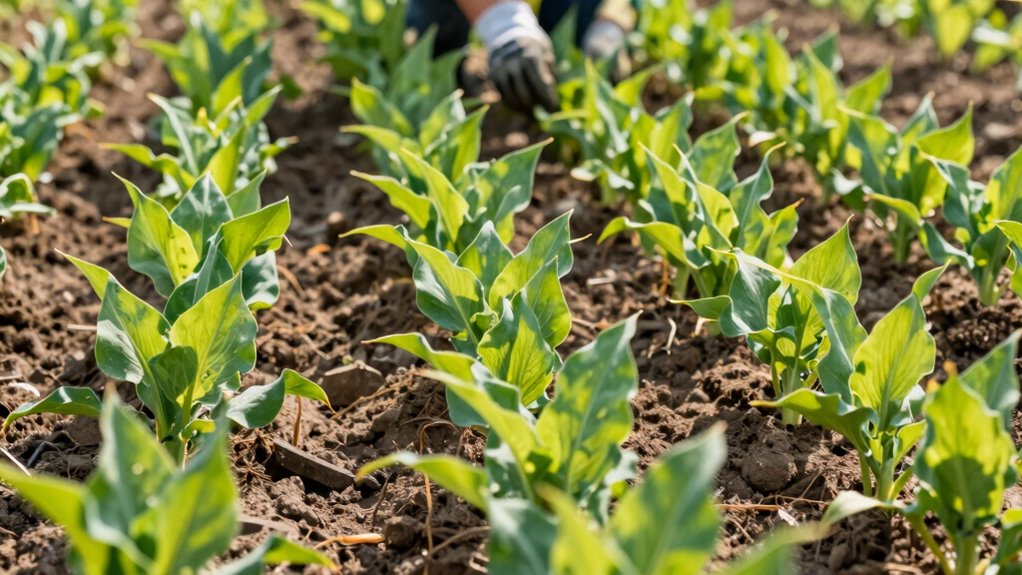
When crop spacing doesn’t seem right, it’s essential to identify the underlying issue before making changes. If plants appear overcrowded or uneven, check if you’ve maintained consistent spacing based on plant type. Poor spacing can hinder garden aesthetics, making your garden look untidy, and reduce airflow, increasing disease risk. It can also make pest management harder, as pests hide in dense foliage. Revisit your original measurements and assess whether plants are competing for resources or shading each other too much. If needed, gently thin out or transplant some plants to improve airflow and reduce pests. Remember, re-adjusting spacing isn’t just about aesthetics; it’s about creating a healthier, more productive garden. Proper spacing leads to better growth and easier pest control.
Tips for Maintaining Optimal Spacing Throughout the Season

Maintaining ideal spacing throughout the season requires regular attention and adjustments as plants grow. To keep airflow efficient and prevent overcrowding, monitor your crops weekly.
Regularly monitor and adjust plant spacing to ensure healthy growth and prevent overcrowding.
- Assess Soil Nutrients: Guarantee soil stays rich by supplementing with fertilizers to support healthy growth without crowding plants.
- Prune and Thin: Remove excess foliage and thin out crowded areas to improve airflow and reduce pest hiding spots.
- Adjust Spacing: Slightly widen plant gaps if they appear to be crowding each other, especially during rapid growth phases.
- Implement Pest Control: Proper spacing discourages pests; stay vigilant and treat affected areas promptly to prevent infestations.
Consistent spacing helps crops grow faster, healthier, and with fewer pest problems.
Frequently Asked Questions
How Does Crop Spacing Influence Pest Control?
You’ll find that proper crop spacing considerably impacts pest control by reducing pest habitat and enhancing air circulation. When plants are spaced correctly, pests have fewer places to hide and reproduce, making it easier to manage infestations. Improved air circulation also lowers humidity levels, creating an environment less favorable for pests and fungal diseases. This simple adjustment helps keep your plants healthier and reduces the need for chemical treatments.
Can Crop Spacing Changes Affect Crop Flavor or Nutrient Content?
Changing crop spacing can dramatically affect flavor impact and nutrient variation in your yields. When plants are spaced too closely, airflow decreases, causing flavors to become dull and nutrients to diminish. Conversely, proper spacing allows for better nutrient absorption and airflow, boosting flavor intensity and nutrient content. You’ll notice your crops become more vibrant, flavorful, and nutrient-rich, transforming your harvest into something truly extraordinary—like tasting sunshine in every bite!
Are There Specific Crop Varieties That Require Different Spacing?
Yes, some crop varieties require different spacing for ideal growth. You should consider variety compatibility and planting density when adjusting spacing. For example, indeterminate tomatoes prefer closer planting, while bush varieties need more space. By tailoring spacing to each crop’s specific needs, you guarantee better airflow, reduce disease risk, and promote healthy growth. Always check the seed packet or consult your local extension for precise recommendations.
How Often Should I Reassess Crop Spacing During the Season?
Think of your crop as a growing crowd at a concert—spacing adjustments keep everyone comfortable. You should reassess crop spacing regularly, especially during peak growth stages. Keep growth monitoring in mind, checking every couple of weeks or after heavy rain or heat, to identify if plants are crowding each other. This way, you guarantee airflow stays smooth, and your crops grow strong and healthy all season long.
What Are the Signs of Poor Spacing Affecting Plant Health?
You’ll notice signs of poor spacing through stunted growth, yellowing leaves, and increased disease susceptibility, all stemming from high plant density. When plants are too close, root competition intensifies, limiting nutrients and water access. This stress weakens plants and hampers overall health. Keep an eye on these indicators, and if you see them, consider adjusting spacing to reduce root competition and improve airflow for healthier growth.
Conclusion
By paying attention to crop spacing, you’ll see healthier plants and faster growth. It might seem like a small detail, but think of it as giving your garden or farm a breath of fresh ambiance—imagine a tight crowd versus a spacious park. Proper spacing prevents disease, improves airflow, and boosts yields. So, don’t hesitate to measure twice and space wisely—your plants will thank you with vibrant, vigorous growth all season long.
Fall yard work Picks
leaf blowers
As an affiliate, we earn on qualifying purchases.