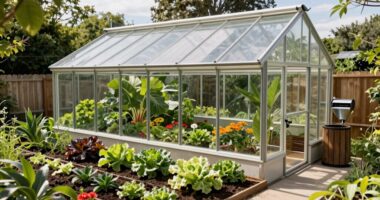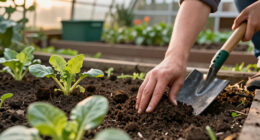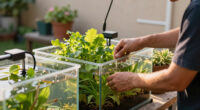
Many gardeners skip the practical aspects like composting and pest management, but these are essential for true self-sufficiency. Composting turns kitchen scraps into rich soil, reducing the need for chemical fertilizers, while pest control with natural methods keeps your plants healthy without harmful chemicals. These ongoing efforts build resilience and sustainability in your greenhouse. If you’re ready to take your gardening skills further, understanding these overlooked steps will make a real difference.

Get garden gear delivered free with Prime
- Fast, free delivery on millions of items
- Prime Video, Amazon Music and more included
- Member-only deals all year
Key Takeaways
- Many overlook proper composting setup and routine maintenance, which are essential for sustainable soil health.
- People often neglect integrated pest management practices that reduce chemical reliance and protect plant health naturally.
- Skipping regular aeration and layering techniques hampers compost efficiency and soil nutrient quality.
- Organic pest control methods and beneficial insect introduction are underused for eco-friendly pest management.
- Consistent, small-scale efforts in composting and pest control build resilience and long-term self-sufficiency in the greenhouse.
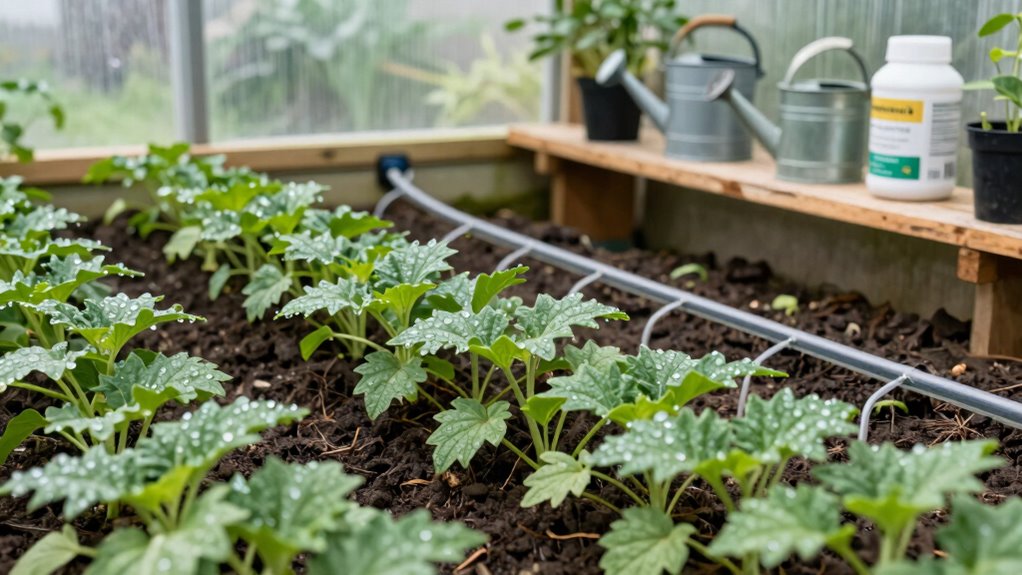
Have you ever wondered how to reduce your reliance on store-bought produce and create a more sustainable lifestyle? One of the most practical steps you can take is mastering composting techniques. While many people focus on growing plants and harvesting crops, they often overlook how vital composting is to sustainable gardening. Instead of tossing kitchen scraps and garden waste into the trash, you can turn them into nutrient-rich compost that boosts your soil’s health naturally. This not only cuts down on waste but also reduces your need for chemical fertilizers, saving you money and supporting eco-friendly practices. When you set up a compost system, consider layering green materials like vegetable scraps and grass clippings with brown materials such as dry leaves or cardboard. Aerate the pile regularly to prevent odors and encourage decomposition. Over time, you’ll produce a dark, crumbly soil amendment that enhances plant growth and resilience. Proper composting techniques ensure you get the most benefit from your efforts and create a sustainable cycle for your greenhouse. Developing a composting routine can help you stay consistent and maximize your compost quality. Additionally, understanding soil enrichment can further improve the health and productivity of your greenhouse plants. Implementing a proper composting method can also help prevent common mistakes that reduce compost quality and efficiency.
Another essential aspect often skipped is pest management. Many assume that pests are unavoidable, but a proactive approach can keep them under control without resorting to harmful chemicals. Integrated pest management (IPM) involves monitoring your plants closely and employing natural deterrents before pests become a problem. For example, introducing beneficial insects like ladybugs and praying mantises can help keep aphids and other pests in check. Companion planting is also effective; planting herbs like basil or marigolds alongside your vegetables can repel pests naturally. You should also be prepared with physical barriers such as row covers or netting to protect vulnerable plants during peak pest seasons. Regularly inspecting your plants allows you to catch infestations early, making it easier to remove pests manually or apply organic solutions like neem oil. This approach keeps your greenhouse environment balanced and minimizes chemical use, which is better for both your health and the ecosystem.
Both composting techniques and pest management are practical, tangible steps that often get overlooked in the pursuit of greenhouse self-sufficiency. They demand some effort upfront but pay off in the long run by creating a healthier, more productive growing environment. Composting enriches your soil naturally, reducing dependency on external inputs, while good pest management ensures your plants stay healthy without harmful chemicals. These practices might seem simple, but they are foundational. When you incorporate them into your routine, you’re taking meaningful strides toward a truly sustainable, self-sufficient greenhouse. Ultimately, it’s these small, consistent efforts that make the difference between just growing food and cultivating a resilient, eco-friendly system.
As an affiliate, we earn on qualifying purchases.
Frequently Asked Questions
How Much Initial Investment Is Required for a Self-Sufficient Greenhouse?
You’ll need about $2,000 to $10,000 for a self-sufficient greenhouse, depending on size and materials. Start with a solid cost analysis and budget planning to determine expenses for your structure, heating, irrigation, and lighting. Investing in quality materials saves money long-term. Keep in mind, initial costs vary based on your goals and location, so plan carefully to guarantee your investment covers all essential components for sustainable growth.
What Are the Best Plants for Year-Round Greenhouse Cultivation?
You can grow a variety of plants year-round in your greenhouse by focusing on hardy, fast-growing options like lettuce, spinach, and herbs. Companion planting boosts growth and pest control, making plant selection even more effective. While some believe tropical plants can thrive indoors, research shows they often require extra care. To maximize yields, select plants suited for your climate and use companion planting strategies for healthier, more productive growth.
How Do I Manage Pests Without Chemical Pesticides?
To manage pests naturally, introduce beneficial insects like ladybugs or predatory mites as natural predators. Practice companion planting by pairing plants that repel pests with those that attract them away from your crops. Keep your greenhouse clean and healthy, remove any infested plants promptly, and use organic sprays when necessary. These methods create a balanced ecosystem, reducing pests without relying on chemical pesticides and promoting sustainable, self-sufficient gardening.
What Are the Common Heating Options for Winter Greenhouse Use?
You can keep your greenhouse warm using simple, cost-effective methods like passive solar heating and effective thermal insulation. Passive solar takes advantage of sunlight during the day, trapping heat naturally, while thermal insulation minimizes heat loss at night. Combining these strategies allows you to maintain a stable temperature, reducing reliance on expensive heating systems. This approach is practical, eco-friendly, and essential for winter greenhouse success.
How Can I Ensure Water Efficiency in My Greenhouse System?
To guarantee water efficiency in your greenhouse, start by implementing water recycling systems that capture and reuse runoff. Use drip irrigation to deliver water directly to the plant roots, minimizing waste and evaporation. Regularly check and maintain your system to prevent leaks. Mulching around plants also helps retain moisture, reducing the need for frequent watering. Combining these methods keeps your water use sustainable and your plants healthy.
Conclusion
Now, imagine stepping into your greenhouse and realizing there’s one vital detail you overlooked—something that could make or break your self-sufficiency journey. You’ve prepared everything else, but this secret challenge still lurks in the shadows. Will you catch it in time? Or will it quietly undermine all your efforts? The key to true independence isn’t just in what you grow, but in mastering the hidden, practical side of greenhouse self-sufficiency. Are you ready to face it?
Halloween Picks
halloween
As an affiliate, we earn on qualifying purchases.