Before adding electricity to your backyard greenhouse, you need to plan for your equipment’s power needs, including fans, heaters, and lights, to avoid overloads. Consider using solar panels for a renewable source, and guarantee proper placement for maximum sun exposure. Protect electrical outlets from water damage with outdoor-rated switches and GFCI outlets, following local safety codes. Regular maintenance and system checks are essential. Keep exploring to learn more about creating a safe, efficient electrical setup.

Get garden gear delivered free with Prime
- Fast, free delivery on millions of items
- Prime Video, Amazon Music and more included
- Member-only deals all year
Key Takeaways
- Assess total power needs for all equipment to prevent overloads and ensure safety.
- Evaluate sunlight exposure and solar options for renewable energy integration.
- Plan water drainage and electrical placement to avoid water damage and ensure safety.
- Follow local electrical codes, use GFCI outlets, and install weatherproof components.
- Schedule regular maintenance and inspections to maintain system safety and efficiency.
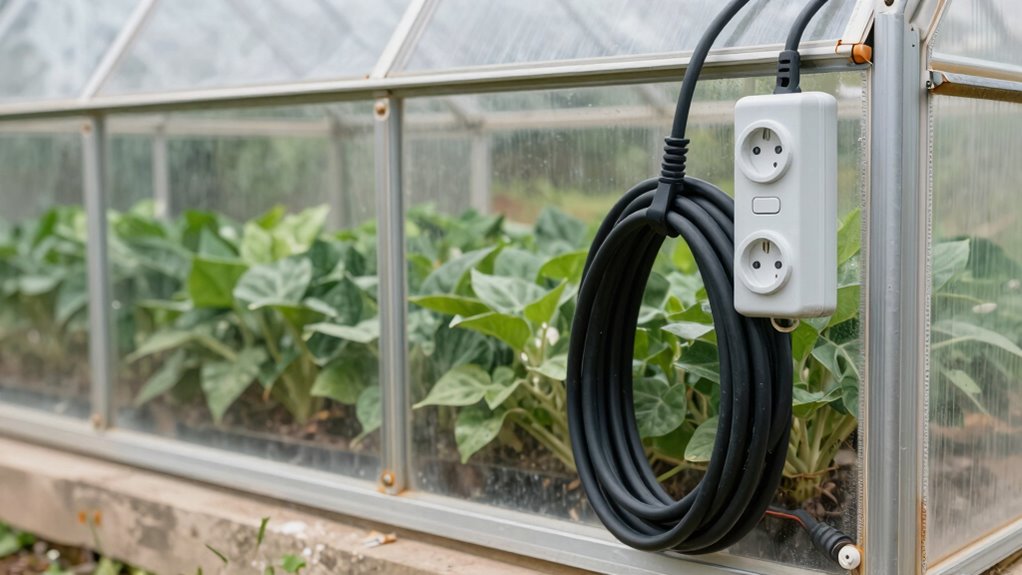
Adding electricity to a backyard greenhouse can considerably extend your growing season and improve overall functionality. Before you start wiring up your space, it’s imperative to consider several factors to guarantee a safe and effective setup. One of the first steps is evaluating your power needs. Think about what equipment you plan to run—fans, heaters, grow lights—and determine the total wattage required. This helps you decide whether to install a dedicated circuit or multiple outlets. Planning ahead prevents overloads and keeps your greenhouse safe.
Assess your equipment needs and plan your electrical setup to ensure safety and efficiency in your greenhouse.
Next, you should think about the source of your electricity. Solar panel installation is an increasingly popular option, especially if you want to reduce your carbon footprint and lower energy costs. Installing solar panels on your property requires evaluating the sun exposure your greenhouse receives throughout the day. Make sure there’s minimal shading from trees or structures, so your panels operate efficiently. Proper placement and sufficient capacity are essential; otherwise, you might find your solar setup underperforming. Once installed, solar power can supply your greenhouse with clean energy, reducing reliance on grid electricity. Understanding the importance of renewable energy can help you make a more sustainable choice. Additionally, considering energy efficiency measures can further optimize your system’s performance and reduce long-term costs. Incorporating smart technology can also help monitor and manage your energy consumption effectively. Incorporating energy-efficient fixtures and appliances can maximize your system’s benefits and further reduce your environmental impact.
Another essential aspect is confirming your water drainage systems are properly planned. When installing electrical components, especially near watering areas or equipment that involves water, you need to prevent any risk of short circuits or water damage. Adequate water drainage systems help manage excess moisture and runoff, protecting your electrical wiring and outlets. Installing outdoor-rated outlets and conduit can keep wiring safe from moisture. Also, consider the placement of electrical fixtures in relation to water sources; keeping outlets and switches away from areas prone to splashing or flooding is critical for safety.
Safety should be your top priority when adding electricity to your greenhouse. Always follow local electrical codes and, if necessary, consult a licensed electrician to guarantee your wiring meets safety standards. Proper grounding, weatherproof outlets, and GFCI (ground-fault circuit interrupter) outlets are essential features that protect you and your equipment from electrical faults. Additionally, planning your wiring layout to minimize clutter and make future maintenance easier can save you time and effort later. Incorporating safety features like weatherproof enclosures and surge protectors can further enhance the longevity and safety of your electrical system. Regular inspections and updates will help maintain safety and efficiency over time.
Finally, think about how you’ll manage the ongoing maintenance of your electrical system. Regular inspections, checking water drainage systems for blockages, and ensuring solar panels are clean and functioning properly will keep your greenhouse running smoothly. By carefully planning your power needs, considering sustainable options like solar panel installation, and prioritizing safety and water management, you’ll create a reliable, efficient environment that enhances your gardening experience.
outdoor GFCI outlets for greenhouse
As an affiliate, we earn on qualifying purchases.
As an affiliate, we earn on qualifying purchases.
Frequently Asked Questions
What Are the Legal Requirements for Outdoor Electrical Installations?
You need to obtain electrical permits before installing any outdoor electrical systems, guaranteeing your setup complies with local codes. Check with your local building department for specific requirements, as regulations vary by area. Follow all safety standards, use approved outdoor-rated wiring and fixtures, and consider consulting a licensed electrician. Proper permits and adherence to local codes protect you legally and ensure your greenhouse’s electrical system is safe and reliable.
How Can I Prevent Electrical Hazards in a Humid Greenhouse?
To prevent electrical hazards in your humid greenhouse, guarantee proper electrical grounding to avoid shocks and equipment damage. Use moisture protection measures like waterproof covers, sealed outlets, and outdoor-rated wiring to keep electrical components dry. Regularly inspect your electrical system for signs of corrosion or wear. Keep electrical devices elevated and away from water sources, and consider installing GFCI outlets for added safety against moisture-related electrical faults.
What Type of Lighting Is Best for Plant Growth?
You should choose grow light options like LED or fluorescent lights, which provide the right spectrum for plant growth. LED grow lights are energy-efficient, saving you money on electricity bills while offering adjustable brightness. They produce less heat, reducing fire risk and maintaining ideal temperatures. For healthy plant development, select lights with full-spectrum or blue and red wavelengths, ensuring your plants get the light they need for photosynthesis and strong growth.
How Do I Budget for Electrical Upgrades in My Greenhouse?
You should start with a clear cost estimation, including materials, labor, and any permits. Consider energy efficiency to reduce ongoing expenses—opt for LED lighting, energy-efficient heaters, and timers. Create a budget that covers both initial setup and future upgrades. Get quotes from licensed electricians to guarantee accurate estimates. Planning carefully helps you avoid surprises and ensures your electrical upgrades are cost-effective and sustainable for your greenhouse.
What Safety Devices Should Be Installed With Greenhouse Electrical Systems?
To guarantee your greenhouse remains a safe haven, you should install essential safety devices like circuit breakers and ground-fault circuit interrupters (GFCIs). These electrical safety devices protect against surges and faults, preventing potential hazards. Incorporate proper wiring and grounding practices to reduce risks further. Regular inspections and maintenance are key to maintaining a safe environment, allowing you to enjoy your greenhouse’s beauty without worry.
Conclusion
Before wiring your greenhouse, remember it’s like planting a delicate seed—you must nurture it carefully from the start. Proper planning, safety measures, and understanding your needs will help your electrical system flourish without issues. Think of your greenhouse as a living ecosystem; adding electricity is like providing it with the energy it needs to thrive. With patience and precision, you’ll create a space that blossoms into a productive, radiant oasis all year round.
Fall yard work Picks
leaf blowers
As an affiliate, we earn on qualifying purchases.