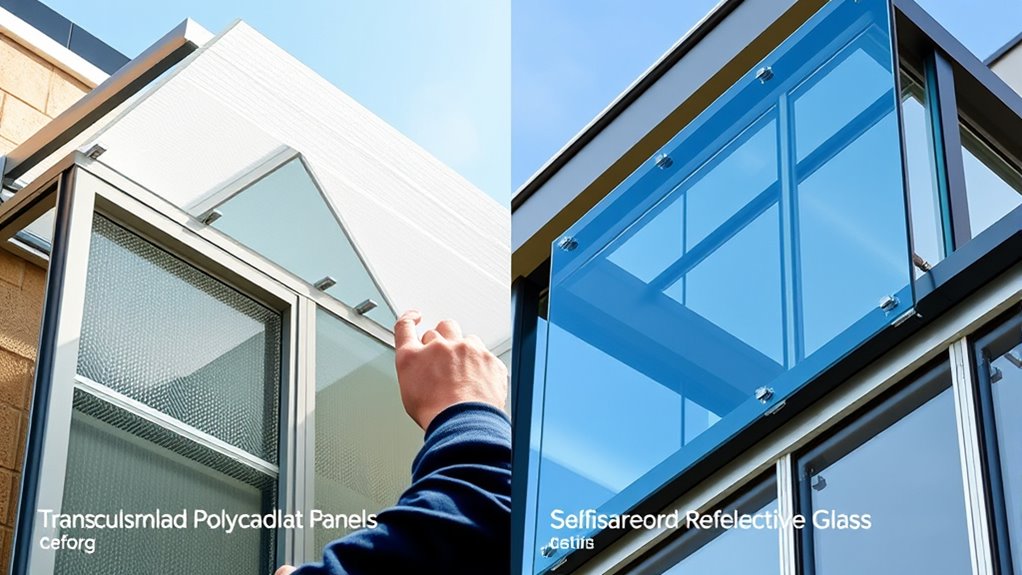

When installing glazing, both polycarbonate panels and glass have benefits and challenges. Polycarbonate is lightweight, durable, and safer to handle, making installation easier and reducing risks. Glass offers superior clarity and aesthetics but requires careful handling and precise installation to avoid breakage. Your choice depends on safety, durability, and aesthetics. If you want to learn more about proper installation techniques and safety tips for each material, keep exploring the details below.
Key Takeaways
- Polycarbonate panels are lightweight, durable, and easier to handle, reducing installation risks compared to fragile glass.
- Glass offers superior clarity and aesthetic appeal but requires careful handling and precise installation to prevent breakage.
- Proper sealing and fastening are essential for both materials to prevent air leaks, water infiltration, and ensure energy efficiency.
- Safety precautions and protective gear are critical when installing glass due to its fragility, whereas polycarbonate is more forgiving.
- Following manufacturer guidelines and using appropriate tools optimizes installation quality, safety, and long-term performance for both glazing options.
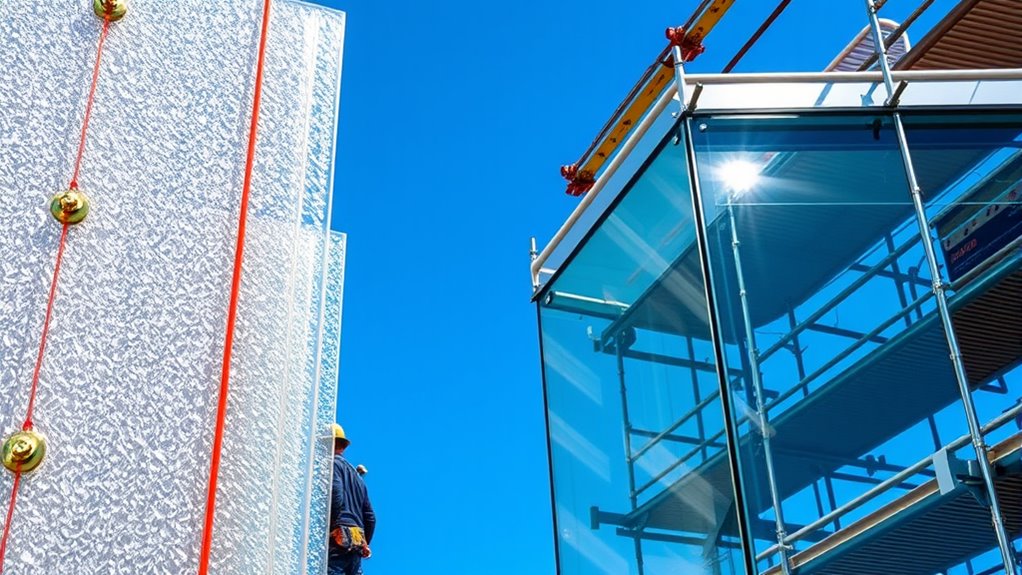
Installing glazing is a essential step in ensuring your windows are energy-efficient and secure. When you choose to install polycarbonate panels or glass, understanding the importance of proper installation becomes fundamental. The right choice can greatly impact your building’s energy efficiency, helping you save on heating and cooling costs, while also maintaining safety standards during the process. Making sure installation safety means following proper procedures, using the correct tools, and wearing protective gear to prevent accidents. Whether you’re opting for polycarbonate or glass, taking the time to do it right protects your investment and enhances your property’s comfort.
Polycarbonate panels are lightweight and highly durable, making them an attractive choice if you prioritize ease of handling and safety during installation. Since they’re less fragile than glass, you’re less likely to experience shattering or dangerous breakage, which improves installation safety. Their light weight also reduces the risk of injury and makes the process smoother, especially if you’re working alone or with limited help. Additionally, polycarbonate offers excellent thermal insulation, contributing to better energy efficiency by reducing heat transfer. This means your space stays warmer in winter and cooler in summer, which lowers your energy bills. When installing polycarbonate panels, ensure you use proper fasteners and sealants to prevent air leaks that could compromise energy efficiency. Proper sealing also enhances safety by preventing drafts and water infiltration, which could cause damage or mold growth.
Furthermore, considering the installation process and following manufacturer guidelines can help prevent potential issues and ensure long-term performance.
Glass glazing, on the other hand, provides a sleek, high-quality appearance and superior clarity, which is why many prefer it for aesthetic reasons. However, glass is inherently fragile and requires careful handling to avoid breakage during installation. This fragility can pose safety risks if proper precautions aren’t taken, such as wearing gloves and eye protection, and working with experienced installers. While glass can offer better longevity and sometimes superior insulating properties, the installation process demands precision and caution. Ensuring proper support and secure fastening is essential to prevent accidents and maintain long-term safety. When installed correctly, double or triple-glazed glass units can achieve high energy efficiency, helping you keep indoor temperatures comfortable while reducing energy consumption.
Ultimately, both polycarbonate panels and glass can enhance your windows’ energy efficiency and security, provided they are installed correctly. Your choice depends on your priorities—whether you value ease of installation and safety or clarity and aesthetic appeal. Whichever material you select, prioritize proper installation techniques, use quality materials, and follow safety protocols. This approach guarantees that your glazing not only looks great but also performs effectively, saving you energy and providing peace of mind for years to come.
Frequently Asked Questions
Which Glazing Option Offers Better Resistance to Extreme Weather?
Polycarbonate panels offer better resistance to extreme weather due to their superior weather durability and structural strength. You’ll find they withstand hail, wind, and heavy rain more effectively than glass, which can crack or break under such conditions. Polycarbonate’s flexibility allows it to absorb impacts without damage, making it a reliable choice for harsh environments. So, if weather resilience is your priority, polycarbonate panels provide the robust protection you need.
How Do Maintenance Needs Compare Between Polycarbonate and Glass?
You’ll find that polycarbonate generally requires less maintenance than glass because it resists scratching and staining better over time. Durability comparisons show polycarbonate is more impact-resistant, reducing the need for repairs. While glass offers a sleek, traditional look, polycarbonate provides greater aesthetic flexibility with various colors and finishes. Overall, polycarbonate’s lower maintenance needs make it a practical choice, especially if you want durability combined with design options.
Are There Significant Cost Differences Over the Lifespan?
You’ll find that the cost comparison over the lifespan favors polycarbonate panels because they’re more durable and less prone to damage, reducing replacement costs. While glass may have a higher initial price, its lower lifespan durability can lead to higher long-term expenses due to repairs or replacements. Overall, polycarbonate offers a more cost-effective solution, especially if you prioritize long-term savings and durability in your glazing project.
Which Material Provides Superior UV Protection?
If you think UV protection’s a joke, think again. Polycarbonate panels often boast superior UV stability, meaning they fend off fading and damage better than glass. This durability keeps your project looking fresh longer, saving you replacement costs. Glass, while clear, usually offers less UV resistance. So, if UV protection matters, you’ll want polycarbonate—it’s the tougher, longer-lasting choice that keeps your space looking sharp.
Can Both Materials Be Customized for Unique Architectural Designs?
Yes, both materials can be customized for unique architectural designs. You can enhance architectural flexibility and design versatility by tailoring polycarbonate panels or glass to fit specific shapes, sizes, and finishes. Polycarbonate offers lightweight, impact-resistant options, while glass provides a sleek, modern look. With proper customization, you can achieve your desired aesthetic and functional goals, making either material suitable for creative, innovative architectural projects.
Conclusion
Whether you choose polycarbonate panels or glass, your decision shapes your space’s beauty, durability, and energy efficiency. Embrace the strength of polycarbonate or the elegance of glass, knowing each option offers unique benefits. Your choice reflects your style, your needs, your vision. So, trust your instinct, weigh your priorities, and create a space that inspires, protects, and endures. Because in the end, your glazing project isn’t just about materials—it’s about bringing your dream to life.