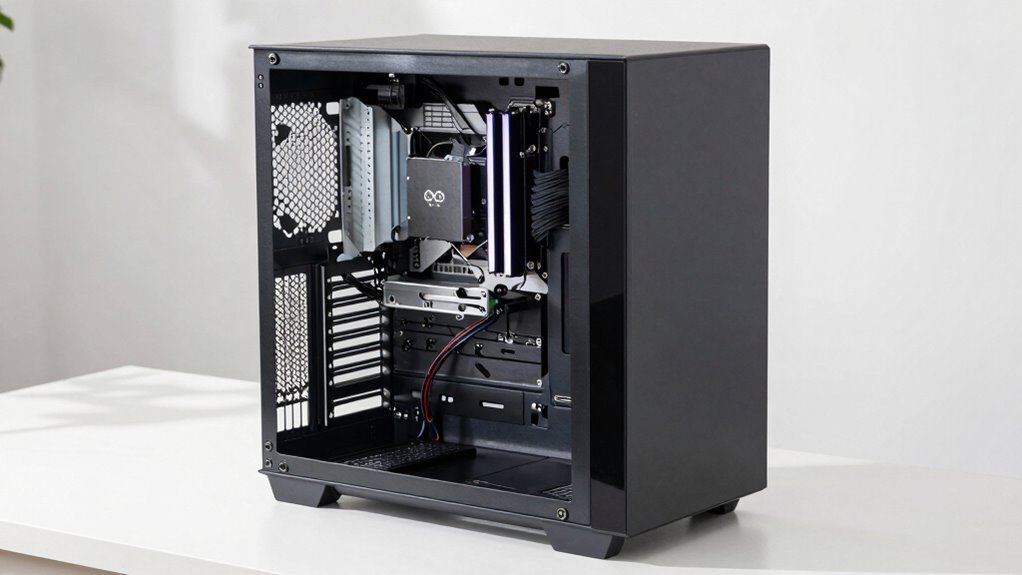

Choosing a motherboard with extra RAM slots and a high-quality power supply designed for future growth makes upgrading easier and more cost-effective. Make sure your cooling solutions are efficient to prevent heat issues during upgrades. Opt for features like multiple PCIe slots and modular components to simplify future hardware changes. Planning these decisions now helps avoid headaches later and keeps your system flexible. If you want to learn how to build a super upgrade-friendly PC, keep going.
Key Takeaways
- Choose a motherboard with extra RAM slots for seamless future memory upgrades.
- Select a high-wattage, modular power supply to support future hardware additions.
- Opt for a case with excellent airflow and cooling options to accommodate upgrades.
- Prioritize components with standardized sockets and multiple PCIe slots for easy hardware swaps.
- Use high-quality, future-proof components to minimize the need for frequent replacements.
Why Upgrading Your PC Can Be a Hassle: and How to Avoid It

Why is upgrading your PC often such a hassle? One major reason is maintaining overclocking stability. When you push your CPU or GPU beyond stock settings, it can become unpredictable if not properly managed, leading to crashes or hardware damage. Additionally, inadequate cooling solutions worsen the problem, as increased heat causes instability and shortens component lifespan. Upgrading components without considering your cooling setup can result in frequent issues, making the process frustrating. Also, incompatible parts or limited space can complicate upgrades further. To avoid this hassle, choose a build with good cooling solutions from the start, and guarantee your components are compatible for overclocking. Planning ahead for cooling and stability helps keep future upgrades smooth and trouble-free. Proper cooling is crucial for maintaining system stability and longevity. Incorporating natural cooling methods, such as optimized airflow and passive cooling techniques, can also support a more stable and sustainable system. Ensuring your case has adequate airflow can make a significant difference in thermal management and overall system reliability. Being mindful of your overall system design can further streamline future upgrades and reduce potential conflicts. Considering component compatibility during initial build planning can save time and prevent costly adjustments later on.
Choosing a Motherboard With Extra RAM Slots for Easier Upgrades
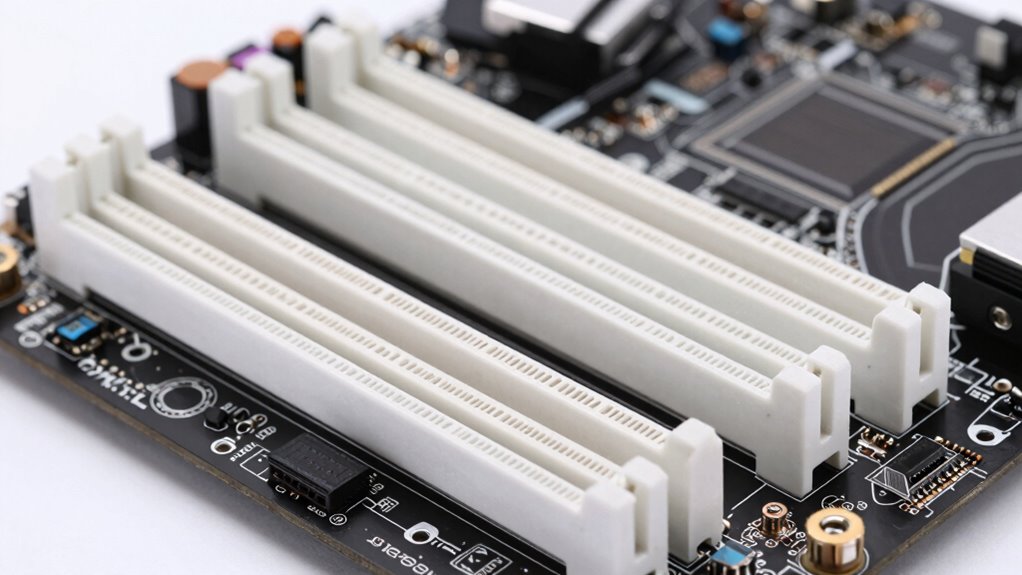
Upgrading your RAM can be one of the simplest ways to boost your PC’s performance, but it becomes even easier if your motherboard has extra RAM slots. When choosing a motherboard, look for one with multiple RAM slots to facilitate future RAM expansion without needing a new board. This not only simplifies upgrades but also helps guarantee compatibility as your needs grow. Verify motherboard compatibility with the type and speed of RAM you plan to install, preventing issues down the line. A motherboard with extra slots gives you flexibility, saving you time and money later. It also allows you to add or replace RAM modules incrementally, making upgrades smoother and less disruptive. Considering the number of available RAM slots on a motherboard ensures you can easily expand your memory capacity as your computing demands increase, providing long-term flexibility. Prioritizing these features ensures your build remains adaptable for future performance enhancements.
Picking a Power Supply Built for Future Growth

Are you planning to future-proof your PC build? Choosing a power supply built for future growth is essential. Opt for a unit with high power efficiency, ideally 80 Plus Gold or better, to reduce energy waste and lower your electricity bills. A modular design allows you to connect only the cables you need, keeping your inside tidy and improving airflow for better cooling. As your system upgrades, you’ll appreciate the flexibility of a modular power supply, making it easier to add components without replacing the entire unit. Look for a power supply with a wattage rating that exceeds your current needs, giving you headroom for future upgrades like a more powerful graphics card. This simple decision guarantees your build remains adaptable and efficient for years to come.
Key Features That Make Upgrading Your PC Simpler

Choosing the right components with key features can make upgrading your PC much simpler. Look for a motherboard with ample PCIe slots to easily swap out graphics cards as new options become available. This flexibility lets you upgrade your graphics card without replacing the entire system. Additionally, select a case with good airflow and support for advanced cooling solutions, making it easier to install larger or more efficient cooling options later. High-quality cooling solutions help maintain ideal temperatures, ensuring your system stays stable during upgrades. Incorporating golf heritage into your planning can also inspire a focus on quality and tradition in your component choices. Modular components, like power supplies with multiple connectors and standardized sockets, also simplify future updates. By prioritizing these features now, you’ll save time and effort when upgrading, keeping your PC current and performing at its best.
Tips for Planning a Long-Lasting, Upgradable PC Build

To guarantee your PC build lasts for years and remains easy to upgrade, start by selecting high-quality, future-proof components. Focus on hardware compatibility to ensure parts fit together and avoid bottlenecks down the line. Choose a motherboard with ample PCIe slots, RAM slots, and support for upcoming technologies. Consider cooling solutions that are efficient and upgradeable, like high-performance air or liquid coolers, to manage heat as you add new hardware. Prioritize cases with good airflow and space for larger coolers or additional fans. Planning for future upgrades means thinking ahead about power supply capacity, guaranteeing it can handle more demanding components later. This proactive approach minimizes upgrades’ hassle and keeps your system flexible for years to come.
Frequently Asked Questions
What Are the Best Brands for Future-Proof PC Components?
For future-proof PC components, go with brands like ASUS, MSI, and Gigabyte. They offer motherboards with excellent overclocking potential and support for cutting-edge CPUs and GPUs. Look for models with RGB lighting to customize your build’s look. These brands consistently deliver high-quality, upgrade-friendly options that help you stay ahead, ensuring your system remains relevant longer while offering great performance and aesthetics.
How Often Should I Plan for Future Upgrades?
You should plan for upgrades every 2-3 years, considering that technology evolves rapidly. A recent study shows 70% of PC users upgrade within this timeframe to stay current. To avoid compatibility concerns, keep future upgrade timing in mind and choose components that are easily compatible with upcoming tech. Regularly evaluating your needs and upgrading proactively ensures your system remains powerful and relevant without costly surprises.
Can a Budget Build Still Be Easily Upgradable?
Yes, a budget build can still be easily upgradable. Focus on selecting a motherboard with multiple RAM slots, PCIe slots, and good airflow for future upgrades like RGB lighting and water cooling. Avoid overly proprietary components, and leave room for better cooling solutions later. This way, you can upgrade your RGB lighting or add water cooling without needing to replace major parts, keeping your system flexible and cost-effective.
What Tools Are Essential for Upgrading a PC?
To upgrade your PC, you’ll need essential tools like a Phillips-head screwdriver for installing components, anti-static wrist straps to prevent static damage, and a compact flashlight for better visibility. These tools help you access parts, improve overclocking potential, and add RGB customization. With the right equipment, upgrading becomes smoother, allowing you to enhance performance, aesthetics, and future expandability without hassle.
How Does Cable Management Affect Future Upgrades?
Good cable management, focusing on cable routing, greatly impacts future upgrades by keeping your case tidy and accessible. Proper routing minimizes clutter, making it easier to add or replace components without hassle. Additionally, it enhances airflow optimization, preventing overheating. When cables are neatly organized, you reduce potential obstructions, ensuring your system stays cool and efficient. This thoughtful approach makes future upgrades smoother, saving you time and effort.
Conclusion
So, next time you’re building your dream PC, remember: choosing a motherboard with extra RAM slots and a future-proof power supply isn’t just smart—it’s like giving your future self a high-five. Avoid the upgrade-day chaos, and keep your system ready for whatever tech trend hits next. Because who wants to rip apart their beloved machine just to add another stick of RAM? Stay savvy, upgrade-friendly, and keep those upgrades coming smoothly!