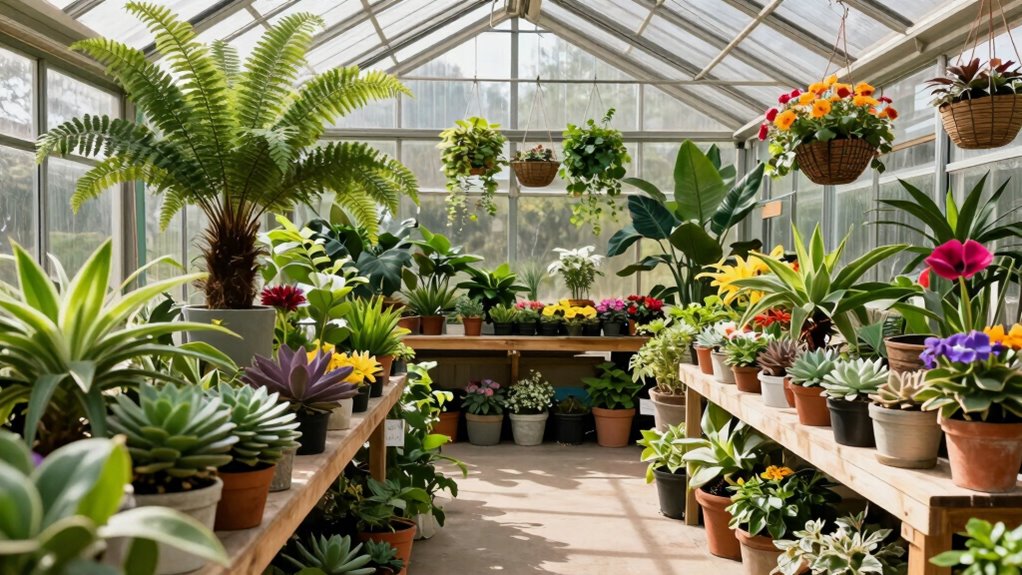

When choosing a greenhouse, consider your garden size, budget, and climate to find the best fit. Start with beginner-friendly styles like mini or pop-up greenhouses made from durable materials like polycarbonate or plastic. Avoid common mistakes, such as ignoring ventilation or insulation needs. Think about features that protect plants and simplify maintenance. To make the most of your investment and guarantee long-lasting success, explore the essential tips shared here.
Key Takeaways
- Assess your available space and gardening goals to choose the right greenhouse size and style for your needs.
- Prioritize durable, insulated materials like polycarbonate or double-glazed glass suited to your climate.
- Opt for easy-to-assemble, DIY-friendly designs such as hoop or pop-up greenhouses to simplify setup.
- Consider ventilation, pest control features, and climate adaptation options to ensure plant health and longevity.
- Balance your budget with necessary features, focusing on cost-effective materials and proper installation for long-term value.
How to Choose the Right Greenhouse Size for Your Garden
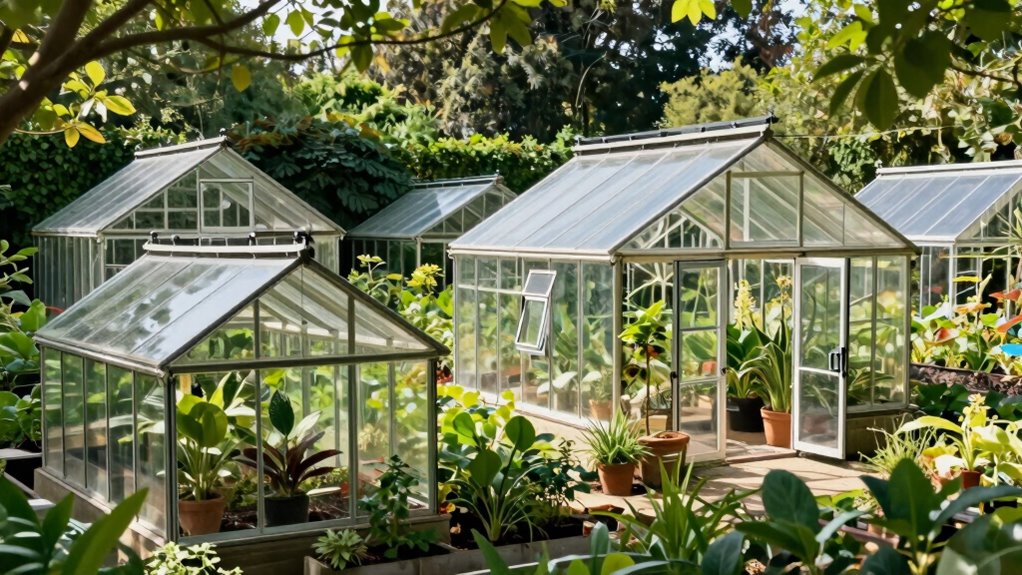
Choosing the right greenhouse size depends on your gardening goals and available space. You need to take into account how many plants you want to grow and how much room each needs for proper plant placement. A larger greenhouse provides more space for diverse crops and easier access, but it also requires more maintenance and space. Smaller greenhouses are easier to manage and fit into tight spots, making them ideal for limited areas. When planning, think about pest prevention—adequate spacing helps reduce pest issues by improving airflow and reducing overcrowding. Proper plant placement within the greenhouse ensures healthy growth and minimizes disease risks. Additionally, consider the greenhouse structure materials to ensure durability and suitability for your climate. Knowing the appropriate greenhouse size for your needs is essential for long-term success and satisfaction with your gardening setup. Incorporating sound healing science principles, like proper airflow and vibration considerations, can also improve the overall health of your plants and environment. To optimize growth conditions, understanding the impact of airflow on plant health is crucial for creating an ideal environment. Paying attention to ventilation systems can further enhance airflow and help maintain the right climate inside your greenhouse.
What Material Makes a Greenhouse Last and Insulate Well?

The durability and insulation of your greenhouse heavily depend on the materials you select. For long-lasting construction, choose materials with high material durability, such as polycarbonate panels or toughened glass. Polycarbonate is lightweight yet resilient, resisting impacts and UV damage, which extends your greenhouse’s lifespan. Glass, especially tempered or reinforced, offers excellent durability but can be heavier and more fragile if not properly installed. When it comes to insulation efficiency, polycarbonate panels typically outperform glass because they have multiple layers or insulating cores that trap air, reducing heat loss. This layered design not only improves insulation but also contributes to the overall material longevity of your greenhouse. Additionally, selecting materials with proven impact resistance can help your greenhouse withstand harsh weather conditions. Proper material selection is essential to ensure your greenhouse remains a durable and well-insulated environment over time. To maximize your investment, consider climate considerations to choose the most suitable materials for your specific location.
Which Greenhouse Features Help Plants Thrive and Make Gardening Easier?
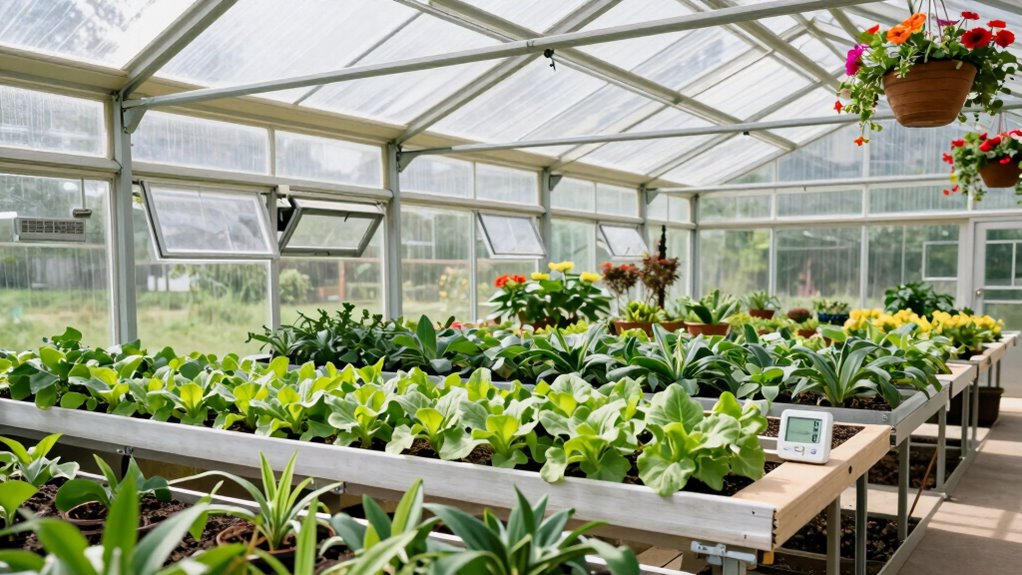
Certain features in a greenhouse can substantially boost plant health and make gardening more manageable. To guarantee your plants thrive, consider these key features:
- Ventilation Systems – Proper airflow regulates temperature and humidity, reducing pests and promoting healthy growth.
- Automatic Vent Openers – These help maintain ideal conditions without constant oversight, preventing overheating.
- Shade Cloths – Protect plants from excessive sunlight, reducing stress and disease risk.
- Integrated Pest Control – Features like screens or barriers keep pests out, safeguarding plant health and minimizing pesticide use.
These features simplify gardening by creating a stable environment, making plant care easier and more effective. Focus on these when choosing a greenhouse to enhance plant health and pest control.
How to Find a Greenhouse That Fits Your Budget and Climate
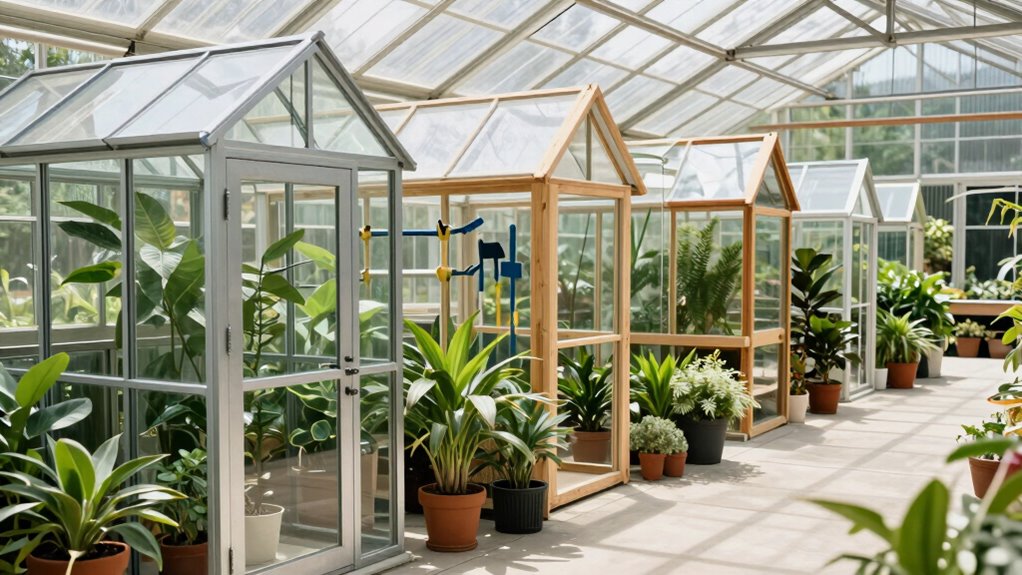
To find a greenhouse that fits your needs, start by evaluating your climate so you can choose a structure that withstands local weather conditions. Then, match your budget with the features that will give you the best value and functionality. This approach helps you make smart choices without overspending or selecting a greenhouse that’s ill-suited to your environment. Considering material choice can also influence the durability and effectiveness of your greenhouse in different climates. Understanding climate adaptability can further ensure your greenhouse performs well over time, especially when verifying specifications and ensuring they match your local conditions. Additionally, researching cost-effective options can help you find a greenhouse that balances affordability with quality. Being aware of cabling solutions and proper installation techniques can also improve the longevity and performance of your greenhouse setup.
Assess Your Climate Needs
Ever wonder how your local climate influences which greenhouse is right for you? Your climate zone and seasonal variations are key factors. To assess your needs:
- Identify your climate zone to determine insulation and durability requirements.
- Consider seasonal temperature swings that could affect heating or cooling needs.
- Evaluate humidity levels, as high moisture might require specific ventilation options.
- Think about prevailing weather patterns, like wind or snow loads, to choose a sturdy structure.
- Additionally, understanding the availability of luxury lifestyle products like premium heating or cooling systems can help you optimize your greenhouse setup.
- Incorporating holistic SEO techniques into your planning process can also help you find the best options tailored to your environment.
- Recognizing the importance of regulatory considerations ensures your greenhouse complies with local codes and standards.
- Being aware of climate adaptation strategies can further help you customize your greenhouse to withstand extreme weather events. Moreover, selecting a greenhouse with appropriate insulation materials can enhance energy efficiency and climate control.
Understanding these elements helps you select a greenhouse that withstands your environment without unnecessary features. By matching your climate needs, you avoid overspending on unnecessary insulation or cooling systems, ensuring your greenhouse functions efficiently year-round.
Match Budget and Features
Balancing your budget with the features you need can seem challenging, but it’s essential for choosing a greenhouse that’s both effective and affordable. Start with budget planning to set clear limits and prioritize must-have features. Comparing different options through feature comparison helps you identify models that meet your climate needs without overspending. Focus on essential elements like size, material durability, and ventilation, then consider optional upgrades if your budget permits. Don’t be tempted by features that won’t serve your climate or gardening goals. Incorporating natural landscaping can enhance the overall environment and reduce costs. Additionally, selecting a greenhouse with high-quality materials can extend its lifespan and improve insulation, ultimately saving you money in the long run. By carefully matching your budget with the features that matter most, you guarantee your investment supports healthy plant growth while avoiding unnecessary costs. This strategic approach keeps your greenhouse project on track and within financial reach.
What Factors Determine Your Greenhouse’s Longevity and Insulation Quality?
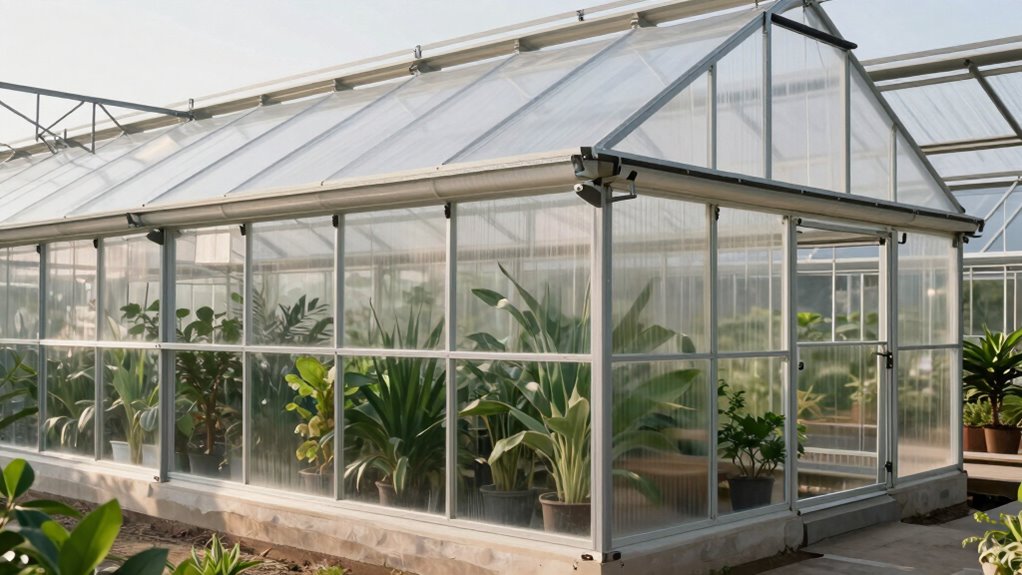
The materials you choose for your greenhouse’s construction play a crucial role in determining its longevity and insulation quality. High-quality materials enhance climate resilience and guarantee your greenhouse withstands weather extremes over time. To maximize durability and insulation, consider these factors:
Choosing durable, high-quality materials ensures your greenhouse’s longevity and optimal insulation against weather extremes.
- Frame Material: Opt for galvanized steel or powder-coated aluminum for strong, rust-resistant structures.
- Covering Material: Use polycarbonate panels for superior insulation and impact resistance, or double-walled glass for long-term durability.
- Sealing and Joints: Guarantee tight seals to prevent drafts, which boosts insulation and reduces heat loss.
- UV Resistance: Select materials with UV protection to prolong lifespan and maintain insulation quality, especially in sunny climates.
- Regular Maintenance: Performing routine inspections and cleaning can further extend the lifespan of your greenhouse by preventing buildup and deterioration fuel injection cleaning.
- Material Quality: Investing in high-quality materials can significantly impact the overall durability and insulation performance of your greenhouse over time.
Which Greenhouse Styles and Designs Are Best for Beginners?

If you’re just starting out, look for greenhouses that fit your budget and are simple to set up. Budget-friendly options like polycarbonate or mini greenhouses can be a great way to get started without overspending. Easy-to-construct designs, such as lean-to or pop-up greenhouses, make setup straightforward and hassle-free. Considering essential oils for plant health can also enhance your gardening experience by naturally promoting growth and protection. Additionally, selecting a greenhouse with appropriate ventilation can help regulate air quality and maintain optimal conditions for your plants.
Budget-Friendly Greenhouse Options
Are you searching for affordable greenhouse options that are perfect for beginners? Opting for budget-friendly styles helps you start without overspending. Here are four options to contemplate:
- Mini Greenhouses – Compact, portable, and easy to set up using cost-effective materials like polycarbonate or plastic sheeting.
- DIY Wooden Frames – Build your own with simple tools, using recycled or inexpensive wood for a customizable, budget-friendly solution.
- Pop-up Greenhouses – Lightweight and easy to assemble, these foldable options are ideal for temporary or seasonal use.
- Polyethylene Tunnel Greenhouses – Affordable and quick to install, these tunnels use plastic sheeting, aligning with budget planning strategies.
Focus on cost effective materials and smart planning to maximize your investment while keeping costs low.
Easy-to-Construct Designs
For beginners, choosing a greenhouse design that’s straightforward to build can make starting your gardening project much easier. Look for models that feature DIY assembly, so you can set up your greenhouse without needing advanced skills or tools. Portable options are also ideal because they offer flexibility—you can move them if needed or adjust their placement easily. Clear instructions and simple framing make these designs accessible and quick to assemble. A pop-up or hoop greenhouse, for example, often requires minimal tools and effort, making it perfect for beginners. These easy-to-construct designs save time, reduce stress, and let you focus on growing your plants rather than battling complicated setups. Ultimately, simplicity and portability make these options the best choice for those just starting out.
Common Greenhouse Shopping Mistakes to Avoid
When shopping for a greenhouse, it’s easy to make mistakes that can cost time and money down the line. Here are common pitfalls to avoid:
- Skipping solar ventilation options, which can lead to overheating and poor airflow.
- Overlooking pest protection features, leaving your plants vulnerable to pests and diseases.
- Choosing a size that doesn’t match your space or future expansion plans.
- Ignoring insulation and climate control needs, risking plant health during seasonal changes.
Frequently Asked Questions
How Much Does a Greenhouse Typically Cost for Beginners?
A beginner’s greenhouse typically costs between $200 and $1,500, depending on your needs and budget. Your pricing options vary with material choices—polycarbonate is affordable and durable, while glass offers better aesthetic appeal but at a higher price. Consider size and features too, as larger or more advanced models increase costs. By weighing these factors, you can find a greenhouse that fits your gardening goals without overspending.
What Are the Best Plants to Start Growing in a New Greenhouse?
You should start with low-maintenance plants like succulents and flowering plants that thrive in greenhouse conditions. Succulent choices such as aloe vera, jade plants, and echeveria are perfect for beginners because they need minimal watering and handle humidity well. Flowering plants like geraniums or begonias add color and are fairly easy to care for. These options boost your confidence and help you learn the basics of greenhouse gardening.
How Often Should I Maintain or Clean My Greenhouse?
You should tend to your greenhouse regularly, ideally once a week, to keep it thriving. Focus on gentle ventilation tips to prevent overheating and humidity build-up, which can invite pests. Regularly clean surfaces and check for unwanted guests, using pest control methods that protect your plants. Consistent maintenance nurtures a healthy environment, ensuring your greenhouse remains a lush, welcoming space for your gardening journey.
Can I Install a Greenhouse Myself or Need Professional Help?
You can definitely do a DIY installation if you’re comfortable with basic tools and following instructions, but for larger or complex greenhouses, professional assistance is a smart choice. Hiring experts ensures proper setup, stability, and safety. If you’re a beginner, considering professional help can save you time and prevent costly mistakes. Ultimately, assess your skills and the greenhouse’s complexity to decide whether to tackle it yourself or seek expert support.
What Safety Features Should I Look for in a Greenhouse?
Are you aware of the safety features that safeguard your greenhouse investment? You should look for ventilation options that prevent overheating and guarantee proper airflow, keeping plants healthy and preventing mold. Security features like sturdy locks and reinforced panels help protect your plants from theft and vandalism. Isn’t peace of mind essential? Prioritize these safety features so you can focus on growing your garden confidently, knowing your greenhouse is both secure and well-ventilated.
Conclusion
Choosing the right greenhouse might seem overwhelming, but with a little guidance, you’ll be able to pick one that fits your needs like a glove. Remember to evaluate size, material, features, and budget carefully—these details can make all the difference in your gardening success. Don’t rush into a purchase; treat it like planting a seed—patience and planning will help your green thumb flourish. Before you know it, you’ll be reaping the rewards!