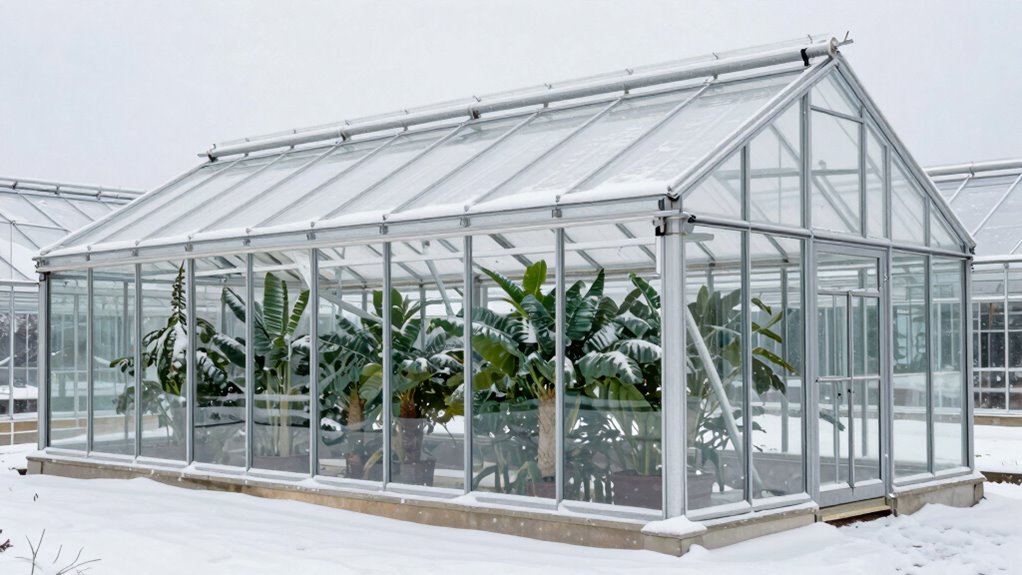

To tell if a greenhouse kit is built for snow, check if it has a sturdy, reinforced frame made from materials like galvanized steel or heavy-duty aluminum. Look for a steep, sloped roof designed for snow shedding, and verify the coverings are impact-resistant and weatherproof. Confirm it has secure anchoring and reinforced joints to handle heavy snow loads. If you want to know more about snow-resistant features and installation tips, keep exploring.
Key Takeaways
- Verify that the greenhouse has a steep, sloped roof designed for snow shedding and to prevent snow accumulation.
- Check for reinforced framing materials like galvanized steel or heavy-duty aluminum rated for heavy snow loads.
- Ensure the structure includes proper snow guards, reinforcement around large spans, and secure anchoring to withstand snow and wind.
- Confirm the covering materials are impact-resistant, such as polycarbonate or tempered glass, suitable for snow impact and weight.
- Look for design features like reinforced joints, proper ventilation, and regular maintenance recommendations for snow load management.
What Are Snow Loads and Why Do They Matter for Greenhouses?

Have you ever wondered why some greenhouses withstand heavy snow while others struggle? Snow loads refer to the weight snow adds to a structure, and they’re essential for greenhouses in snowy areas. If your greenhouse isn’t designed to handle heavy snow, it risks collapse or damage. Properly built greenhouses consider snow load ratings, ensuring they can bear winter’s weight. Additionally, body-based healing techniques used in somatic therapy can help gardeners manage stress and anxiety during harsh winter conditions. This is especially important if you rely on solar energy, since snow-covered panels reduce efficiency. Additionally, pest control becomes more manageable when your greenhouse remains sturdy and intact, preventing pest entry through damage. Knowing your greenhouse’s snow load capacity helps you select the right design and materials, giving you peace of mind that it can withstand winter’s worst while maintaining ideal solar energy collection and pest prevention. Understanding structural integrity is crucial to ensuring your greenhouse’s resilience against heavy snow. Recognizing the importance of snow load ratings can guide you in choosing the most appropriate construction and materials for your climate. Being aware of snow load calculations can further help in assessing your greenhouse’s safety and durability in winter conditions. Moreover, incorporating landscaping elements around your greenhouse can help reduce snow accumulation on the structure itself.
Which Materials Make a Greenhouse Snow-Resistant?
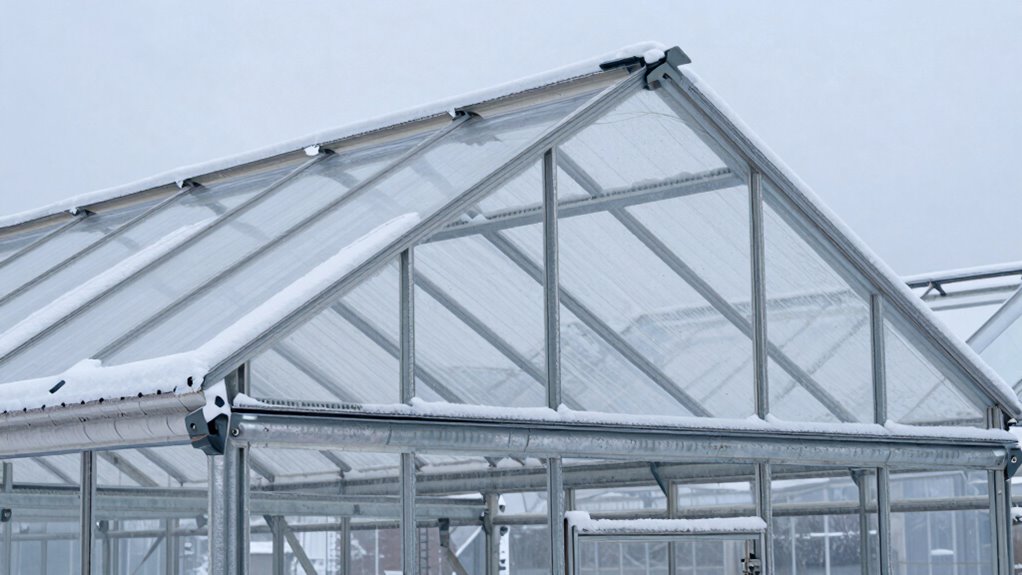
To make your greenhouse snow-resistant, focus on reinforced framing that can withstand heavy loads. Durable, impact-resistant panels help protect against falling snow and ice. Additionally, a snow-heavy structural design guarantees your greenhouse remains stable during harsh winter conditions. Incorporating stronger car protection materials can also inspire the development of more resilient greenhouse components. Using load-bearing technology in the construction can further enhance the ability to support heavy snow accumulation. Selecting materials with high impact resistance ensures added durability against winter-related impacts. Exploring innovative construction techniques can provide additional safety and stability in snow-prone environments. For optimal results, consider evaluating structural engineering principles tailored to winter weather challenges.
Reinforced Framing Strength
The strength of a greenhouse’s framing plays a crucial role in its ability to withstand heavy snow loads. Reinforced framing helps prevent collapse under the weight of snow drifts that can accumulate during winter storms. Look for materials like galvanized steel or heavy-duty aluminum, which offer high durability and strength. These materials provide better winter insulation by maintaining structural integrity even in freezing temperatures. A well-reinforced frame ensures the greenhouse can handle uneven snow distribution and prevents bending or breaking. This stability not only protects your plants but also reduces the need for frequent repairs. When evaluating a greenhouse kit, prioritize those with reinforced framing designed specifically for snow resistance, so you’re confident it can withstand winter’s toughest challenges. Choosing the right framing materials is essential for ensuring your greenhouse’s durability during harsh winter conditions. Properly designed framing incorporates snow load capacity considerations, which are critical for winter resilience. Additionally, understanding the market demand for snow-resistant greenhouses can help you select options that are more likely to perform well in your climate. Recognizing the importance of indoor air quality and humidity control can also support the overall health of your plants throughout winter. Moreover, researching the regulatory requirements for structures in snowy regions can ensure compliance and further enhance safety and durability.
Durable, Impact-Resistant Panels
Strong framing alone won’t protect your greenhouse from heavy snow if the panels can’t withstand impact or weight. Look for impact-resistant materials like polycarbonate or tempered glass, which offer durability and resilience. These panels not only resist cracking under heavy snow but also have good insulation properties, helping maintain stable temperatures inside. When selecting panels, consider their insulation qualities, as better insulation can reduce heating costs during winter. Additionally, impact-resistant panels should support good ventilation efficiency, preventing moisture buildup and mold growth. Materials with high impact resistance and insulation properties ensure your greenhouse stays intact and efficient throughout heavy snowfalls. Investing in sturdy, impact-resistant panels is a key step in making sure your greenhouse is truly built for snow. Incorporating impact-resistant panels with proper ventilation and insulation features can further enhance your greenhouse’s winter resilience. To maximize durability, choose panels that also offer UV protection to prevent deterioration from sun exposure during the warmer months. Selecting panels with thermal insulation qualities can also contribute to maintaining a consistent internal temperature during extreme cold conditions.
Snow-Heavy Structural Design
When designing a greenhouse to withstand heavy snow, selecting the right structural materials is crucial. You need materials that offer strong wind resistance and prevent excessive snow buildup. Steel frames are ideal—they’re durable and resist bending under heavy loads. Aluminum is lightweight yet sturdy, helping reduce wind stress. Wood, although traditional, must be reinforced for snow-heavy environments. The shape of the frame also matters—steeply pitched roofs shed snow more effectively. Consider this table:
| Material | Strength | Wind Resistance | Snow Accumulation |
|---|---|---|---|
| Steel | High | Excellent | Low |
| Aluminum | Moderate to High | Good | Moderate |
| Wood | Moderate | Varies | Higher risk |
Additionally, understanding the drone bees involved in hive health can inform sustainable practices in greenhouse management, especially during winter. Selecting the appropriate structural design and materials ensures your greenhouse stays resilient during winter storms, with proper snow load considerations playing a key role.
How Do Frame Designs Strengthen Greenhouses for Heavy Snow?
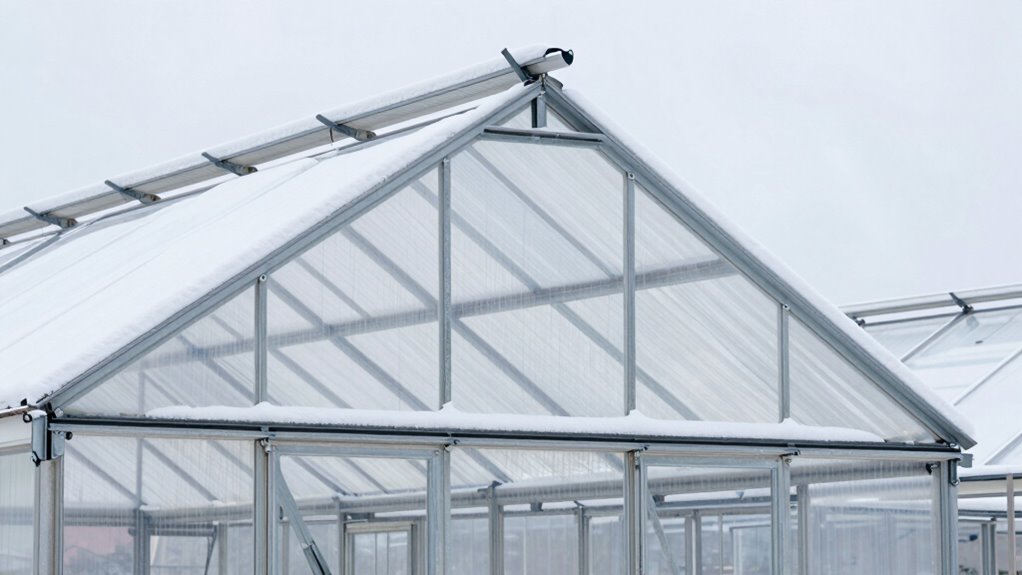
To withstand heavy snow loads, greenhouse frame designs incorporate specific structural features that enhance strength and stability. Reinforced steel or aluminum frames distribute weight evenly, preventing weak points that could collapse under snow. Steeper roof angles help snow slide off, reducing accumulation and pressure. Stronger truss systems add extra support, especially around large spans. These sturdy frames also promote better plant growth by maintaining consistent temperature and light conditions, even after heavy snowfall. Proper ventilation systems are integrated into the design to prevent moisture buildup and ice formation, which can weaken the structure. Additionally, snow load considerations are factored into the design process to ensure durability under harsh winter conditions. The use of structural reinforcement techniques further enhances the ability of the greenhouse to withstand heavy snow, protecting both the structure and the plants inside. Well-designed frames often incorporate winter-proofing features that help endure extreme weather fluctuations. Understanding weather resilience in the context of greenhouse design can guide improvements for winter durability. Overall, a well-designed frame ensures your greenhouse remains stable, protects your plants, and allows for ideal growth despite snowy conditions.
What Coverings Are Best for Snowy Conditions?
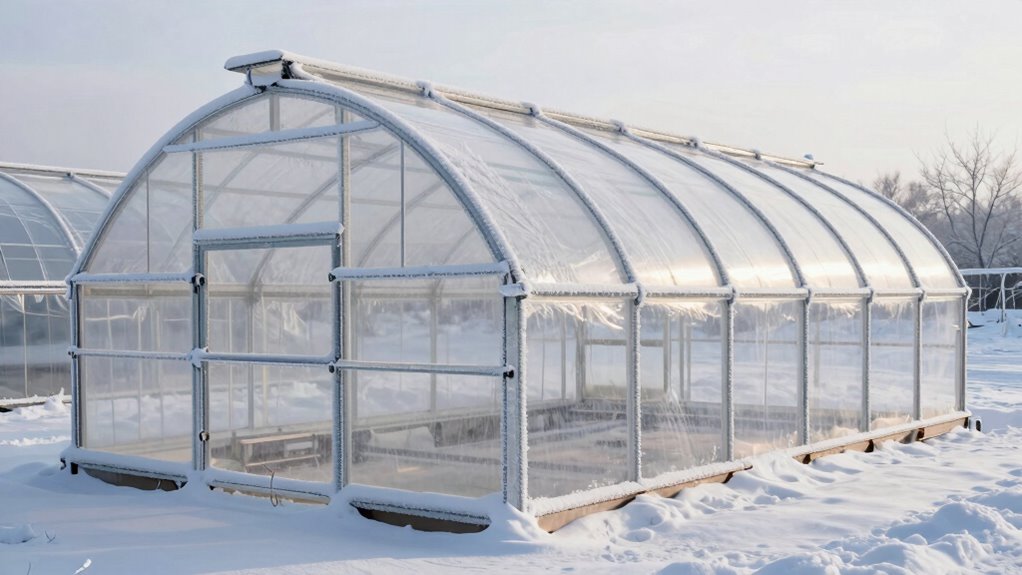
Have you considered how your greenhouse’s covering material can impact its ability to handle heavy snow? The right covering aids in maintaining plant growth and climate control during winter storms. Clear polycarbonate panels offer durability and excellent insulation, helping keep temperatures stable. Polyethylene covers are lightweight and cost-effective, but may require reinforcement for heavy snow. Glass provides robust durability and light transmission but can be more fragile under weight. The choice depends on your climate and snow load expectations. To guarantee maximum performance, consider these options:
| Material | Benefits | Drawbacks |
|---|---|---|
| Polycarbonate | Insulation, durability | Costlier |
| Polyethylene | Cost-effective, lightweight | Less durable, needs reinforcement |
| Glass | Light transmission, durability | Fragile under heavy snow |
How Can You Tell if a Greenhouse Kit Is Ready for Snow?
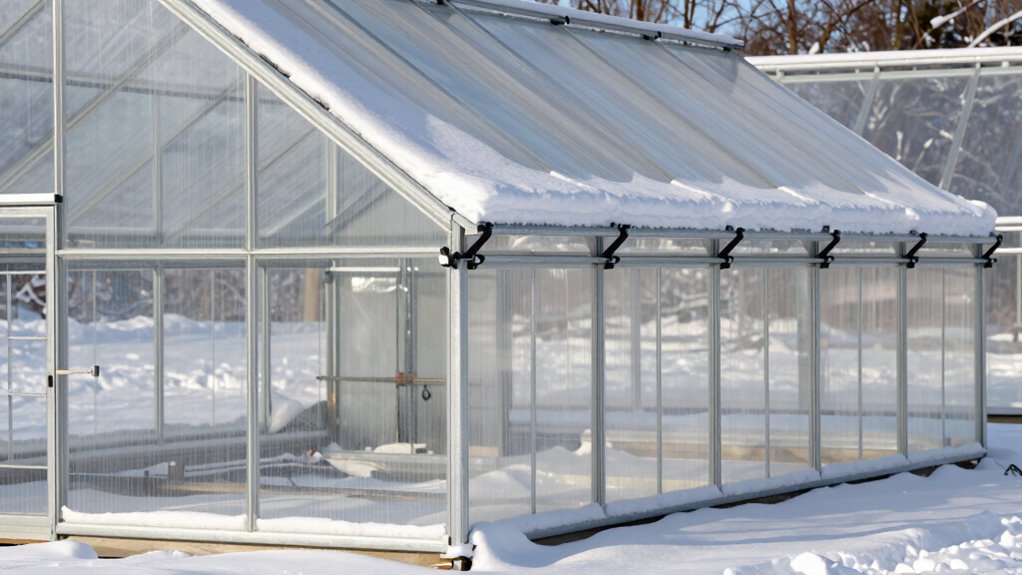
Evaluating whether your greenhouse kit is prepared for snow involves inspecting its structural integrity and materials. Check that the frame is sturdy and free of rust or damage, ensuring it can support heavy snow loads. Confirm that the covering is tightly secured and made from durable, weather-resistant material. For indoor gardening, make sure ventilation systems are functioning properly to prevent excess humidity, which can lead to mold and pest problems. Proper insulation and sealing help maintain temperature and protect plants during snowfalls. Additionally, a well-built greenhouse minimizes entry points for pests, reducing the risk of infestations during harsh weather. If these elements are in place, your greenhouse is more likely to withstand snow and support healthy indoor gardening all season long.
What Installation Tips Help Keep Snow From Causing Damage?
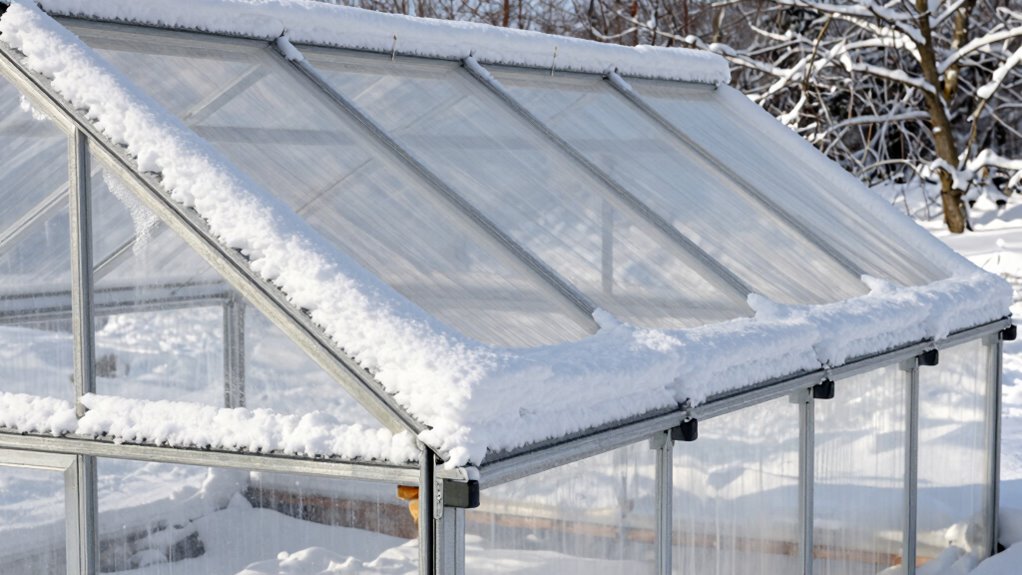
Proper installation is essential for preventing snow from causing damage to your greenhouse. Guarantee the structure is anchored securely to withstand heavy snow loads and strong winds, boosting wind resistance. Consider installing a sloped roof to facilitate snow melting and prevent accumulation. Use durable, weather-resistant materials that can handle snow and ice without warping or breaking. Regularly clear snow buildup, especially after heavy storms, to prevent excessive weight on the frame. Proper ventilation also helps promote snow melting, reducing the risk of ice damage. Reinforce joints and seams to avoid leaks or structural failure during snowstorms. By focusing on wind resistance and facilitating snow melting, your greenhouse remains stable and protected, even during harsh winter conditions.
How Do Regular Maintenance and Upkeep Protect Your Greenhouse in Snow?
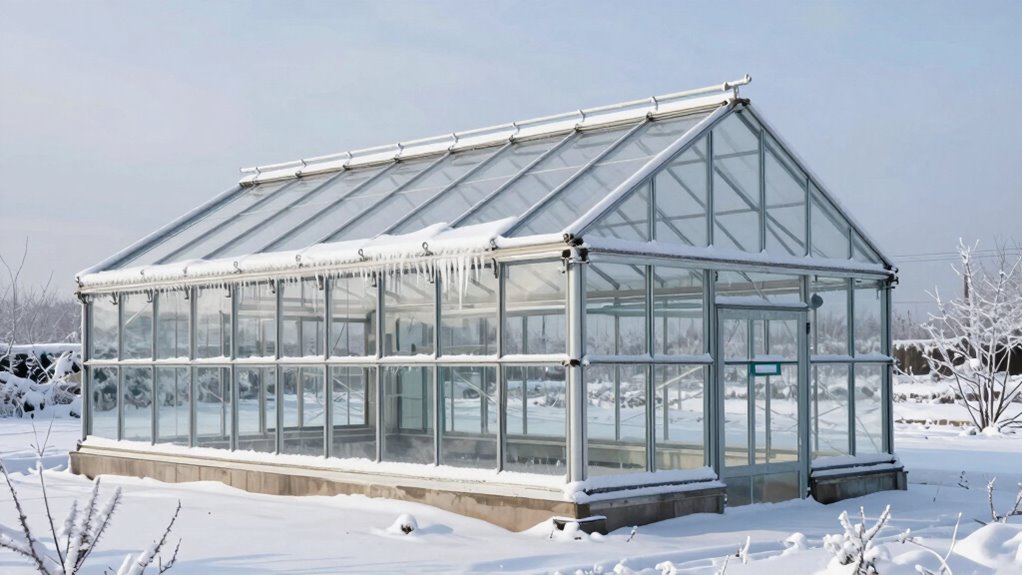
Regular inspections help you catch potential issues before they become serious, ensuring your greenhouse stays strong through winter storms. Maintaining proper drainage prevents water buildup that could weaken the structure under heavy snow. Managing snow load by removing excess snow keeps your greenhouse safe and prevents collapse.
Regular Structural Inspections
How often do you check the structural integrity of your greenhouse during the winter months? Regular inspections are key to preventing snow damage. Focus on these areas:
- Examine the roof for accumulated snow and ice buildup, ensuring it’s supported properly.
- Check the frame for signs of stress or warping, especially after heavy snowfall.
- Assess the solar orientation—make sure the structure isn’t compromised, as good solar exposure helps with ventilation efficiency during snowstorms.
- Inspect vents and openings, ensuring they remain unobstructed to maintain proper airflow and prevent moisture buildup.
Frequent inspections help catch issues early, reinforcing the structure against snow loads. Maintaining a solid frame and ideal ventilation safeguards your greenhouse throughout winter.
Proper Drainage Maintenance
When snow accumulates on your greenhouse, guaranteeing effective drainage becomes essential to prevent water pooling and structural stress. Proper drainage maintains consistent temperature regulation by avoiding excess moisture that can cause temperature fluctuations. It also helps prevent pest problems, as standing water and damp conditions attract insects and mold. Regularly clear snow from gutters and drainage channels to keep water flowing freely. Check and maintain drainage systems, making sure they’re not clogged or damaged. Properly sloped surfaces direct melting snow away from the structure, reducing the risk of leaks and damage. Good drainage also minimizes ice formation around the base, protecting your greenhouse’s foundation. Consistent upkeep ensures your greenhouse stays healthy, temperature-stable, and pest-free during snowy months.
Snow Load Management
Maintaining your greenhouse’s structure is essential for withstanding heavy snow loads, and consistent upkeep plays a key role in this. Regular snow load management guarantees your greenhouse remains resilient during winter.
- Clear accumulated snow promptly to prevent excessive weight, protecting the structure’s climate adaptation features.
- Check roof panels and supports regularly for signs of stress or damage, ensuring ventilation efficiency isn’t compromised.
- Reinforce weak points before snow season to prevent structural failure.
- Maintain proper drainage to prevent water buildup, which can add weight and cause leaks or mold.
What Features Make a Greenhouse Ideal for Heavy Snow Loads?
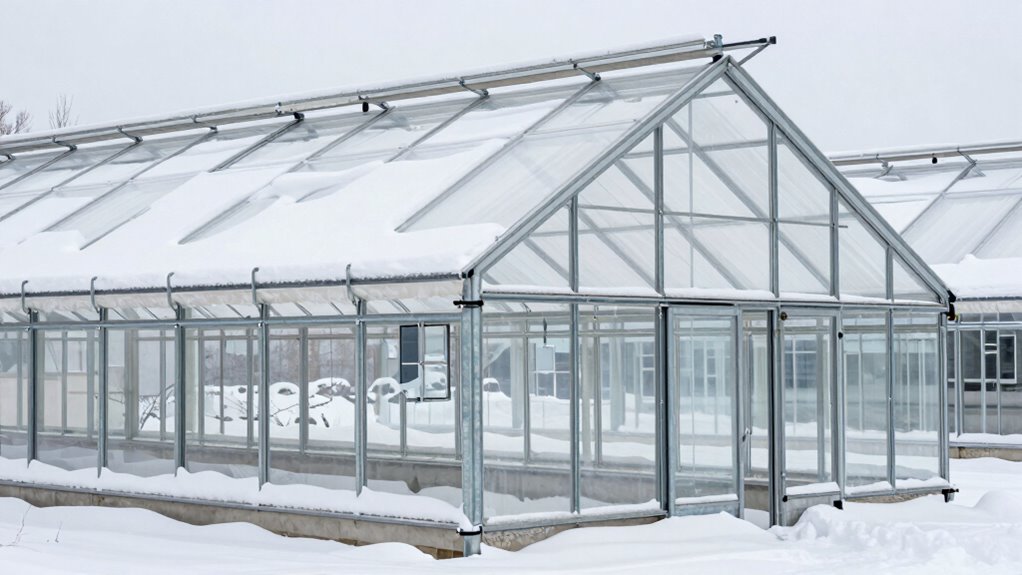
A greenhouse designed to withstand heavy snow loads should feature a sturdy, well-constructed frame that can support the added weight without buckling. Look for reinforced materials like galvanized steel or heavy-duty aluminum, which provide strength and durability. The roof should have a steep pitch to prevent snow buildup and facilitate natural solar heating by maximizing sunlight exposure. Insulation is key, so check if the structure supports additional layers for better heat retention, aiding in pest control during colder months. Reinforced bracing and snow guards help distribute weight evenly, reducing stress on the frame. Proper ventilation also aids in snow load management by preventing excess moisture that can weaken materials. All these features guarantee your greenhouse remains stable and effective through heavy snowfalls.
Frequently Asked Questions
Can All Greenhouse Kits Handle Extreme Snowfalls Equally Well?
Not all greenhouse kits handle extreme snowfalls equally well. You need to take into account ventilation efficiency, which prevents snow buildup and reduces strain, and material durability, ensuring the structure withstands heavy snow loads without damage. Look for features like reinforced frames and weather-resistant materials. If a kit lacks these, it may struggle in heavy snow, risking collapse or damage. Choose a robust, well-ventilated design for snowy conditions.
Are There Specific Brands Known for Snow-Resistant Greenhouses?
You might wonder if any brands stand out for snow-resistant greenhouses, and the answer is yes. Look for brands that use durable greenhouse materials like reinforced polycarbonate or heavy-duty aluminum frames, designed to withstand heavy snow loads. These companies often offer seasonal adjustments, such as reinforced roof supports or snow load ratings. Choosing a trusted brand guarantees your greenhouse remains resilient, even when the snow starts piling up unexpectedly.
How Does Climate Affect the Snow Load Requirements for Greenhouses?
Climate directly impacts your snow load requirements, as colder regions demand better thermal insulation to keep heat in and prevent damage. Wind resistance also becomes essential, especially in areas prone to strong gusts that can add stress to the structure. You should choose a greenhouse kit that balances thermal insulation and wind resistance, ensuring it can withstand heavy snow loads while maintaining ideal temperature and stability during harsh weather conditions.
What Are Signs of Structural Failure Under Heavy Snow?
You notice sagging or bending in the greenhouse frame, which coincides with increased snow accumulation, signaling structural failure. Doors might stick or become difficult to open, and panels could crack or shift under the weight. These signs indicate compromised structural integrity, risking collapse. Always monitor your greenhouse during heavy snowfalls, and reinforce any weak points promptly to prevent dangerous failures and protect your plants and investment.
Is Additional Reinforcement Necessary for Snow-Heavy Regions?
Yes, additional reinforcement is often necessary in snow-heavy regions. You should regularly clear snow accumulation to prevent excessive weight. Incorporate reinforcement techniques like adding extra bracing, strengthening joints, or using sturdier framing materials. These measures help your greenhouse withstand heavy snow loads, reducing the risk of damage. By proactively reinforcing your structure, you guarantee it remains durable and safe throughout winter, protecting your plants and investment.
Conclusion
To truly tackle tough snowy seasons, choose a greenhouse kit that’s built to bear the burden. Look for sturdy structures, smart design, and strong, snow-resistant coverings. Regular maintenance and mindful modifications make a massive difference. When you prioritize quality, craftsmanship, and careful consideration, your greenhouse becomes a sturdy sanctuary against snow’s severity. Stay selective, scrutinize seriously, and guarantee your structure’s strength — because a well-built greenhouse isn’t just beautiful; it’s battle-ready against winter’s worst.