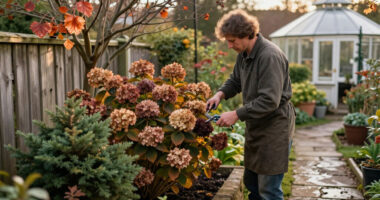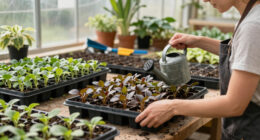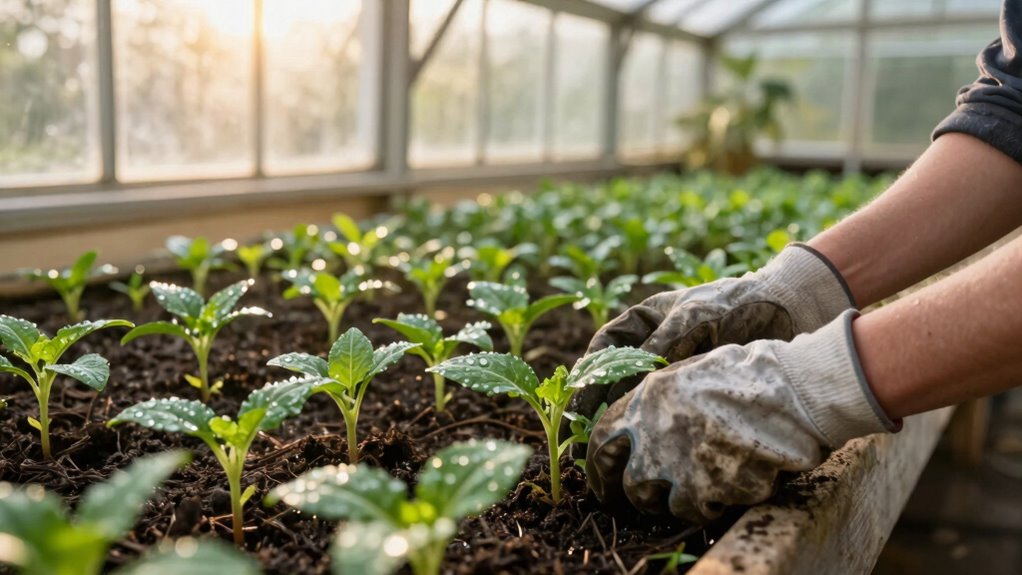

Propagating plants from cuttings or seeds in your greenhouse during fall is the key job that makes spring much easier. By rooting plants now, you create healthy young plants ready for transplanting when spring arrives. This hands-on task keeps you busy, helps you develop gardening skills, and guarantees a vibrant, flourishing garden later. Focus on proper environment control and propagation techniques to get the best results. Keep exploring to discover helpful tips for successful fall greenhouse work.

Get garden gear delivered free with Prime
- Fast, free delivery on millions of items
- Prime Video, Amazon Music and more included
- Member-only deals all year
Key Takeaways
- Propagating plants from cuttings and seeds prepares healthy, vigorous plants for spring transplantation.
- Rooting cuttings indoors ensures continuous greenery and boosts plant multiplication for spring.
- Developing propagation skills reduces spring gardening stress and increases success rates.
- Creating a nursery in fall allows for early plant growth and easier spring garden setup.
- Using techniques like rooting hormones and controlled environments optimizes root development before spring.
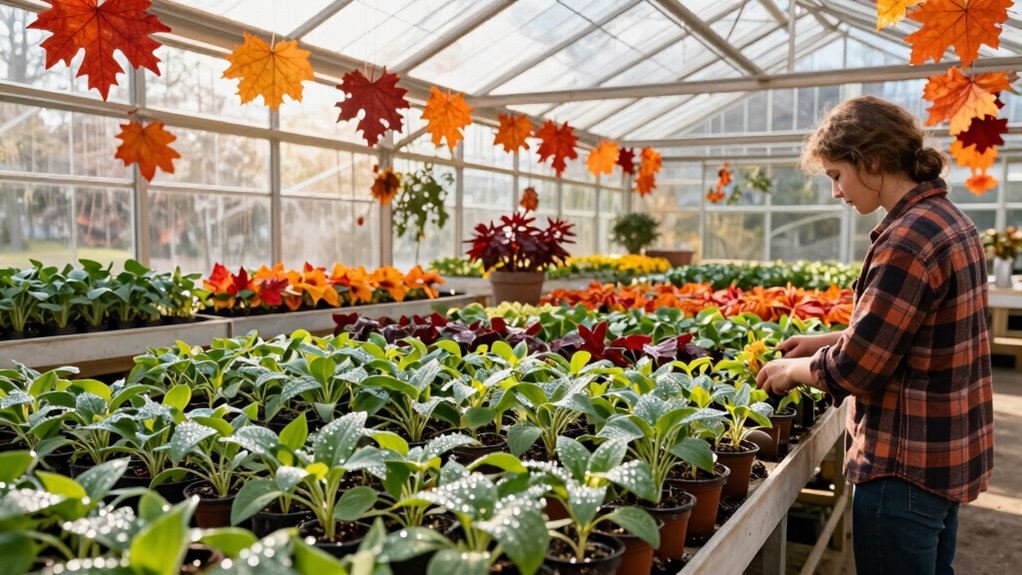
Are you looking for a rewarding way to spend your fall months? If so, diving into a fall greenhouse job focused on indoor gardening and plant propagation could be just what you need. This hands-on activity not only keeps you busy during the cooler months but also sets the stage for a vibrant, flourishing spring. As you work in the greenhouse, you’ll learn the ins and outs of nurturing plants from tiny cuttings and seeds, gaining skills that will make your spring gardening more successful and less stressful.
Indoor gardening inside a greenhouse offers a controlled environment, allowing you to experiment with different plant varieties and propagation techniques. During fall, you can focus on rooting cuttings of popular houseplants or flowering plants, giving them time to develop strong roots before the busy spring season. This process, known as plant propagation, involves taking healthy cuttings and encouraging them to grow their own roots, a skill that’s both satisfying and practical. By the time spring arrives, you’ll have young plants ready for transplanting into your garden or containers, saving money and ensuring healthy, vigorous growth.
Getting involved in plant propagation during fall also means you’ll have a continuous supply of greenery to enjoy indoors during the winter months. You’ll learn how to optimize humidity, light, and temperature levels to encourage successful root growth. Plus, you’ll become familiar with different propagation methods, such as using rooting hormones, soil, or water. These techniques empower you to multiply your favorite plants efficiently, turning your greenhouse into a lively nursery. As you see tiny roots emerge and new leaves sprout, you’ll feel a real sense of accomplishment, knowing your efforts will pay off come spring. Additionally, understanding digital security practices can help protect your digital information while you research or share your gardening journey online. Incorporating proper jewelry sterilization techniques into your plant care routine can also prevent the spread of pests and diseases, ensuring your plants stay healthy. Exploring plant health strategies further enhances your ability to maintain thriving plants and prevent issues before they arise. Maintaining a healthy environment within your greenhouse is essential for successful propagation and plant growth.
A well-maintained greenhouse environment also allows for pest management, which is crucial for preventing infestations that could ruin your plants. The skills you develop can extend beyond your own garden—you might even share cuttings with friends or sell extra plants at local markets.
In short, taking on a fall greenhouse job centered around indoor gardening and plant propagation is a smart move. It keeps you engaged, teaches valuable skills, and makes spring gardening easier and more enjoyable. Instead of letting the season pass by idly, you turn it into an opportunity to nurture growth, both for your plants and your gardening know-how. The effort you put in now will bloom into a lush, thriving garden that stands out in the springtime.
plant propagation rooting hormone
As an affiliate, we earn on qualifying purchases.
As an affiliate, we earn on qualifying purchases.
Frequently Asked Questions
What Tools Are Essential for This Greenhouse Job?
You need essential tools like pruning shears, a trowel, and a watering can for seasonal planting and pest management. Pruning shears help you trim plants, while a trowel makes planting and transplanting easier. A watering can guarantees proper hydration, and pest control supplies like organic sprays help manage pests effectively. These tools streamline your greenhouse tasks, making spring prep smoother and more efficient.
How Much Training Is Needed to Start?
You don’t need extensive training to start this seasonal preparation and greenhouse maintenance job, as it’s designed for beginners. With just a few hours of instruction, you’ll learn essential tasks like watering, pruning, and preparing plants for spring. Hands-on guidance helps you quickly gain confidence, making your shift seamless. This job offers practical experience without requiring prior expertise, ensuring you’re ready to make your greenhouse thrive come springtime.
Is Prior Gardening Experience Required?
No, prior gardening experience isn’t required for this greenhouse job. While having gardening skills and work experience can be helpful, they’re not mandatory. The role typically involves on-the-job training, so you can learn as you go. If you’re enthusiastic to develop your gardening skills and gain hands-on work experience, this job is a great opportunity. Just bring enthusiasm and a willingness to learn!
What Safety Precautions Should I Follow?
Prioritize safety by practicing proper precautions. Always wear protective gear like gloves and goggles to prevent injuries and protect plant health. Keep your workspace clean to avoid pests and promote pest management. Handle tools carefully, and be cautious around sharp or heavy equipment. Ventilate the greenhouse well to reduce fumes and humidity. Staying alert and following safety protocols helps you maintain a safe environment, ensuring healthy plants and a pest-free paradise.
Can This Job Be Done Part-Time?
Yes, you can do this greenhouse job part-time. The seasonal workload allows you to work flexible hours, making it ideal for those balancing other commitments. You’ll find that the job adapts to your schedule, especially during autumn months when planting and maintenance peak. With flexible hours, you can enjoy the benefits of working outdoors without sacrificing your personal time, making it a perfect seasonal opportunity.
Conclusion
As you finish your fall greenhouse tasks, think of yourself as the gardener planting seeds for spring’s bloom. Each task you complete is like tending to a hidden garden, quietly ensuring that when warmer days arrive, nature’s beauty will burst forth effortlessly. Embrace this work now, for you’re the silent architect of spring’s grand awakening. With patience and care, you’re shaping a vibrant, flourishing future—one seed at a time.
Halloween Picks
halloween
As an affiliate, we earn on qualifying purchases.