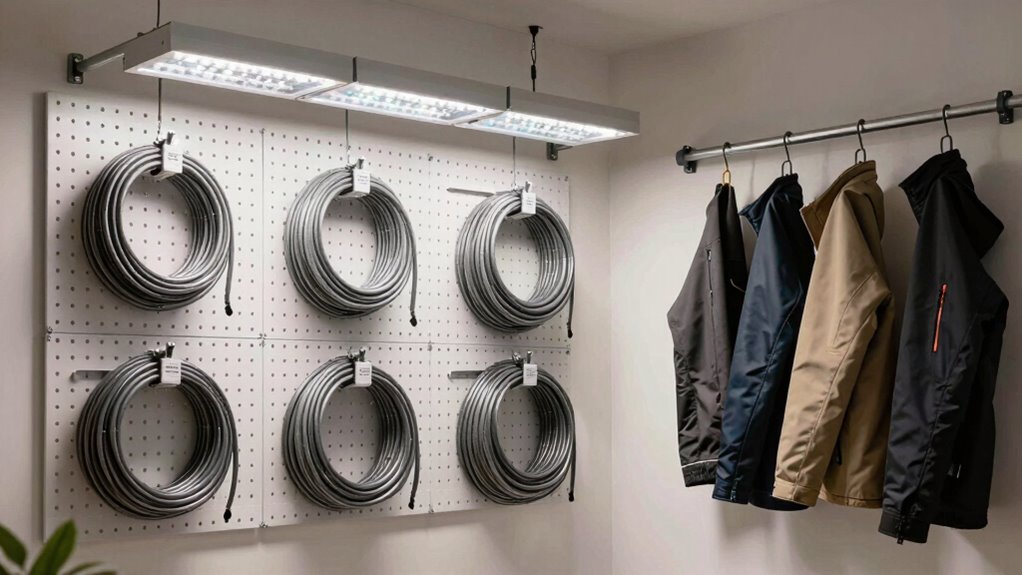
To store grow lights, hoses, and climate gear off-season, thoroughly clean and dry each item to prevent damage or mold. Coil hoses neatly and store them in a dry, sheltered space away from kinks. Clean and inspect grow lights, replacing any damaged bulbs, and store them safely in a cool, dry location with proper ventilation. For climate gear, keep everything in a controlled, well-organized environment. If you follow these tips, you’ll guarantee your equipment stays in top shape for next season.

Get garden gear delivered free with Prime
- Fast, free delivery on millions of items
- Prime Video, Amazon Music and more included
- Member-only deals all year
Key Takeaways
- Clean and inspect grow lights, then store in a dry, cool, and ventilated environment using original packaging or protective covers.
- Coil hoses neatly, drain completely, dry thoroughly, and store in sheltered, indoor locations to prevent mold and damage.
- Clean and dry climate control equipment, keep in a stable environment, and cover with breathable fabric to extend lifespan.
- Organize all gear in labeled containers or shelves, ensuring easy access and reducing clutter for efficient off-season storage.
- Disconnect electrical components, store away from heat or flammable materials, and regularly inspect for damage or pests.
As an affiliate, we earn on qualifying purchases.
How to Prepare Grow Lights for Off-Season Storage
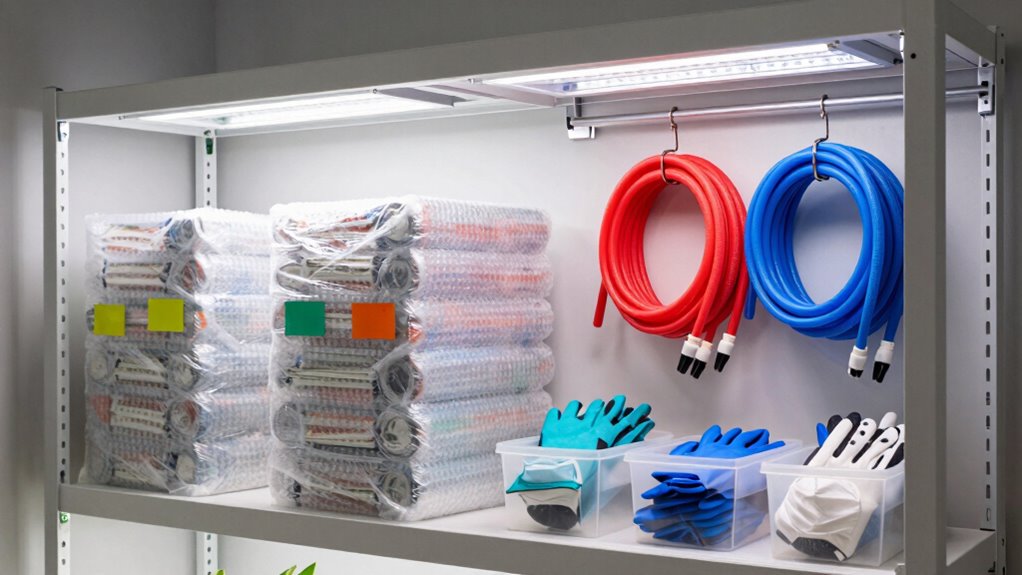
To guarantee your grow lights stay in top condition during the off-season, start by thoroughly cleaning them. Remove grow light bulbs and carefully inspect them for any signs of damage or discoloration. Replace any burnt-out or flickering bulbs to make sure they’re ready for the next cycle. Next, disconnect and examine the electrical cords, checking for frays, cracks, or corrosion. Clean the cords with a damp cloth and let them dry completely before storage. Coil the cords neatly to prevent tangling and damage. Avoid storing grow light bulbs in extreme heat or cold, and keep all electrical components in a dry, ventilated area. Proper cleaning and inspection help extend the lifespan of your grow lights and guarantee they’re in excellent condition when you need them again. Additionally, storing your equipment in a climate-controlled environment can prevent damage caused by temperature fluctuations. Regularly inspecting your equipment and understanding the proper storage methods can significantly enhance its longevity and performance. Being aware of market trends and insights can also help you plan your storage and maintenance schedules more effectively. Incorporating knowledge of technology such as proper calibration and handling can further ensure your grow lights remain effective and reliable for future use. Maintaining awareness of specialized storage solutions can also optimize the protection of your equipment during the off-season.
Cleaning and Maintaining Your Hoses Before Storage
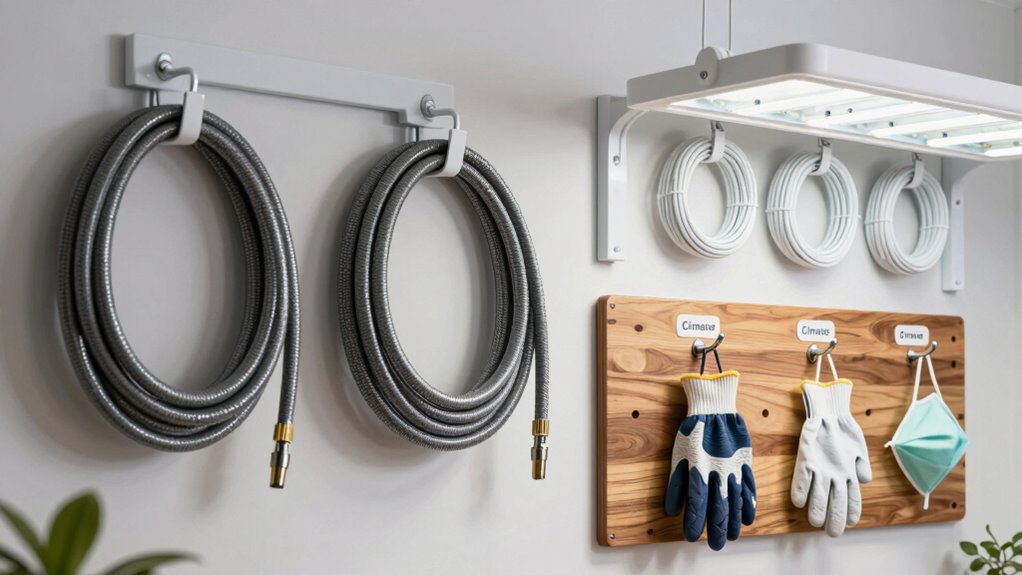
Before storing your hoses for the off-season, it’s essential to give them a thorough cleaning to prevent damage and guarantee longevity. Dirt, mineral buildup, and algae can compromise hose durability if left unchecked. Use cleaning solutions specifically designed for garden hoses to remove stubborn debris and disinfect the interior. Flush the hose with clean water, making sure to run water through both ends to clear out any residual dirt. After cleaning, let the hoses dry completely to prevent mold or mildew growth. Proper maintenance enhances hose durability and guarantees they’re ready for use when the season returns. Regularly inspecting and cleaning your hoses minimizes the risk of cracks or leaks, saving you money and hassle in the long run. Additionally, storing hoses properly and avoiding warp issues can extend their lifespan significantly. Incorporating proper storage techniques can further protect your hoses from environmental damage during the off-season. Being aware of climate considerations can help you choose the best storage environment for your hoses. Ensuring your hoses are stored in a controlled environment can also help prevent deterioration caused by extreme temperatures or humidity. Paying attention to cultural artifacts and natural materials used in Indonesian decor can inspire ways to create organized, aesthetically pleasing storage spaces for your gardening tools.
Storing Climate Control Equipment Safely and Effectively
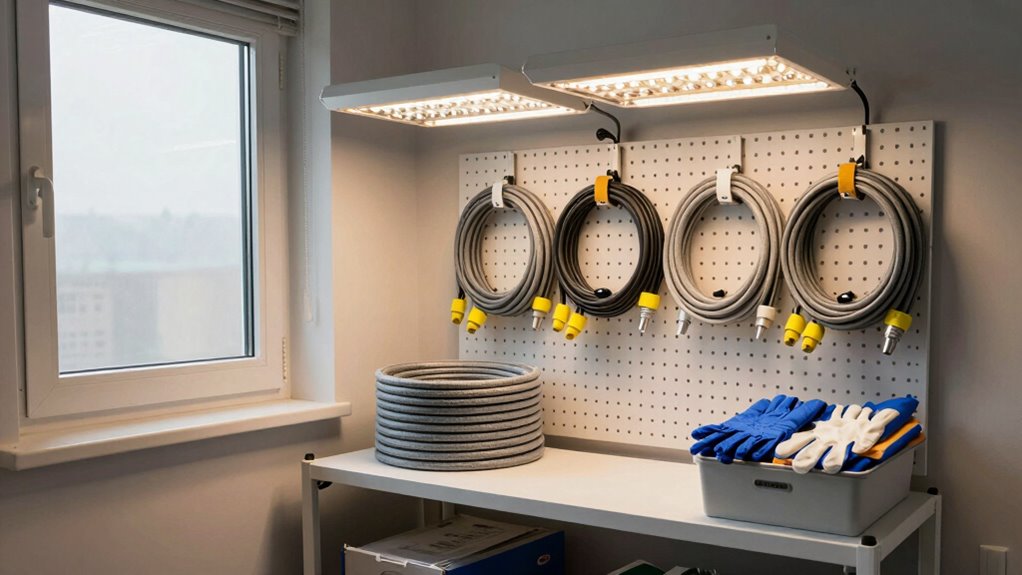
Storing climate control equipment properly is vital to keep it in good working condition and prevent damage during the off-season. To do this, verify you clean and dry all components thoroughly before storage. Keep temperature control devices in a cool, stable environment to prevent overheating or freezing, which can damage sensitive parts. Humidity regulation is also essential; high humidity can cause corrosion, while low humidity may lead to cracking. Use silica gel packs or dehumidifiers if necessary to maintain ideal moisture levels. Store equipment upright or on sturdy shelves to avoid strain on hoses and connections. Cover units with breathable fabric to protect them from dust and pests, but avoid airtight containers that trap moisture. Proper storage preserves your climate gear’s longevity and performance. Additionally, understanding breast cancer symptoms and early detection methods can help you recognize issues promptly and maintain overall health. Ensuring the correct storage conditions can significantly extend the lifespan of your equipment and maintain its efficiency over time.
Choosing the Best Storage Location for Your Grow Gear

When selecting a storage spot for your grow gear, prioritize a light-free zone to prevent damage and deterioration. Make certain the area has good ventilation to avoid moisture buildup and guarantee safety. Choosing a secure, well-ventilated space helps protect your equipment and keeps everything in top shape for the next grow cycle. Proper storage practices also help preserve the integrity of sensitive components like climate gear, ensuring optimal performance when it’s time to grow again. Additionally, considering storage organization techniques can make handling and organizing your gear easier and safer. Ensuring the storage environment remains free from airborne contaminants can further improve the longevity of your equipment and maintain a healthy grow space. Implementing proper environmental controls can also help maintain ideal conditions and extend the lifespan of your gear.
Optimal Light-Free Zone
Choosing the right storage location for your grow gear is essential to protect it from light exposure that can damage sensitive components. An optimal light-free zone keeps your equipment safe and preserves its lifespan. Find a dark closet, basement, or enclosed cabinet for storage. When considering lighting placement, ensure no light leaks reach your gear. Adjust the climate to prevent humidity or temperature fluctuations that could harm electronics or materials. Use the table below to evaluate potential spots:
| Location | Lighting Placement | Climate Adjustment |
|---|---|---|
| Basement closet | No windows, sealed door | Stable temperature & humidity |
| Enclosed cabinet | Lightproof, sealed doors | Controlled environment |
| Storage shed | Interior, no windows | Ventilation, temperature control |
Ventilation and Safety
Proper ventilation is essential to prevent mold, mildew, and stale air buildup that can compromise your grow gear’s safety and longevity. Good air circulation helps keep the storage area dry and reduces humidity, which is critical for maintaining your equipment’s condition. When choosing a storage location, prioritize places with adequate airflow and avoid cramped, poorly ventilated spaces. Fire safety is also vital—keep grow lights, hoses, and climate gear away from heat sources and flammable materials. Ensure there’s enough space around electrical equipment and use proper outlets to prevent overheating. Regularly inspect the area for signs of moisture or potential fire hazards. Utilizing safety measures can further reduce risks during off-season storage. A well-ventilated, safe environment not only preserves your gear but also minimizes risks during off-season storage. Additionally, understanding proper storage techniques can further extend the lifespan of your equipment and ensure safety.
How to Protect Electrical Components During Storage

Ever wondered how to guarantee your electrical components stay safe during the off-season? Proper storage is key to ensuring electrical safety and component protection. Start by disconnecting all power sources, then clean and dry each part thoroughly to prevent corrosion. Store components in a cool, dry place away from moisture and extreme temperatures. Use insulated containers or boxes to shield against dust and accidental contact. Visualize your storage setup:
| Item | Protection Method | Storage Environment |
|---|---|---|
| Grow lights | Cover with plastic, keep dry | Cool, dark, ventilated |
| Power cords | Coil neatly, avoid tangling | Elevated, away from water |
| Connectors | Seal with anti-corrosion spray | Low humidity, stable temp |
This approach minimizes risks, ensuring your equipment remains ready for next season. Additionally, understanding the brine impact of water softeners can help prevent mineral buildup that might affect storage. Properly organizing electrical components also reduces the risk of damage during storage. Maintaining awareness of solar system safety protocols can further protect your gear during off-season storage. Being aware of Italian gelato culture can inspire creative ways to store and display your products once the season resumes.
Organizing Your Equipment for Easy Access Next Season
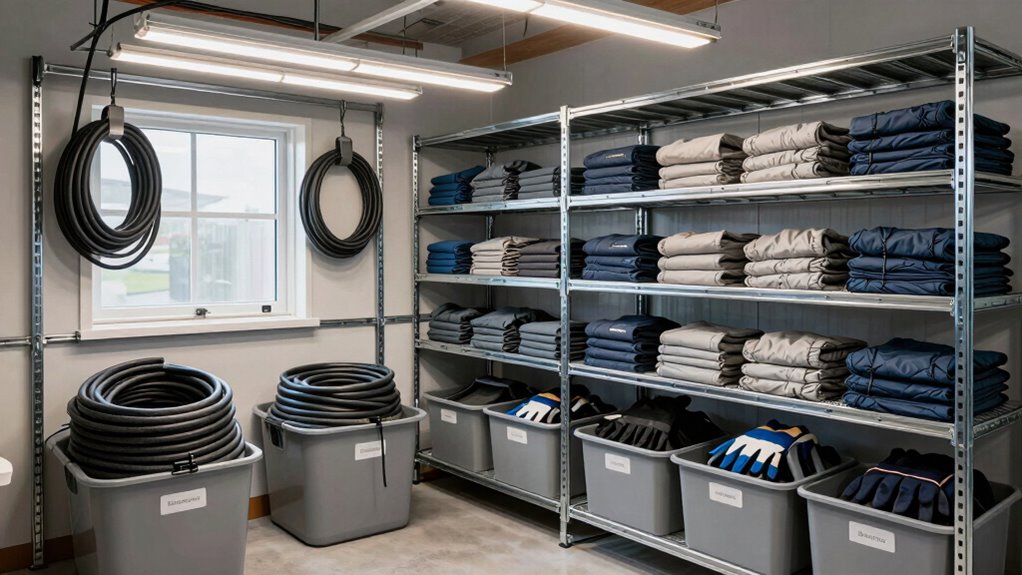
Organizing your equipment for easy access next season starts with sorting items by their function and frequency of use. Keep grow lights, hoses, and climate gear in designated areas to streamline setup. Store crop rotation supplies together to facilitate planning and implementation, which helps maintain healthy soil and plants. Incorporate pest management tools, such as traps and repellents, in accessible spots to quickly address issues when they arise. Use labeled containers or shelves to separate items related to watering, lighting, and climate control. This organization minimizes downtime and confusion, making seasonal changeovers smoother. Plus, a tidy setup helps you identify what needs replacement or repair, ensuring your equipment remains in top shape for the next growing cycle. Additionally, proper storage techniques can extend the lifespan of your gear and improve your overall gardening efficiency.
Preventing Damage and Fire Risks When Storing Grow Equipment
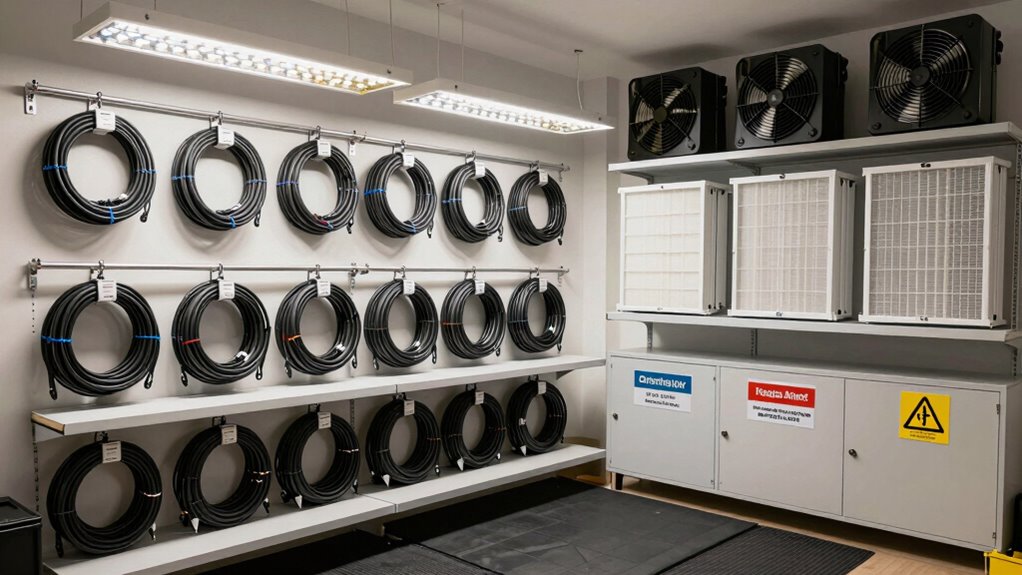
To prevent damage and fire hazards, you should store your grow equipment in dry areas away from any flammable materials. Make sure to inspect your gear regularly for signs of wear or damage, so issues don’t become bigger risks later. Keeping these practices in mind helps protect your equipment and keeps your space safe.
Store in Dry Areas
Storing grow lights, hoses, and climate gear in dry areas is essential to prevent damage and reduce fire hazards. High indoor humidity can cause mold, rust, and deterioration, so keeping equipment in a dry space helps maintain its condition. Dry storage also minimizes pest problems, as pests are less likely to thrive in low-humidity environments. Guarantee the storage area is well-ventilated and free from moisture buildup. Regularly inspect the space for leaks or dampness that could compromise your gear. Properly storing equipment in a dry area not only extends its lifespan but also reduces fire risks associated with moisture-related electrical issues. Stay vigilant about indoor humidity levels to protect your equipment and avoid potential hazards.
Keep Away From Flammable Materials
Since grow equipment often involves electrical components and heat sources, keeping it away from flammable materials is essential to prevent fires. Fire hazards can quickly arise if equipment is stored near items like paper, cloth, or chemicals. To minimize risks, follow these tips:
- Keep grow lights, cords, and fans away from any flammable materials.
- Store all electrical gear on non-combustible surfaces.
- Guarantee proper ventilation around heat-generating equipment to prevent overheating.
This reduces the chance of accidental ignition and damage. Regularly check storage areas for potential hazards, and never place grow equipment near combustible items. Staying vigilant helps protect your space from fire hazards and ensures safe off-season storage.
Regularly Inspect Equipment
Have you ever considered how overlooked inspections can lead to equipment failures or fire hazards? Regularly inspecting your stored grow lights, hoses, and climate gear helps catch issues early. Check equipment labeling to verify items are correctly identified, reducing the risk of misuse or damage. Examine storage container types to confirm they’re suitable for long-term storage—durable containers protect against dust, moisture, and pests. Look for signs of wear, frayed wiring, or corrosion that could cause malfunctions or fires. Keep cords untangled and avoid stacking heavy items that could crush or damage equipment. By inspecting your gear consistently, you minimize potential hazards, extend equipment lifespan, and maintain a safe storage environment during the off-season.
Seasonal Checklist: What to Do Before Storing Your Grow Gear
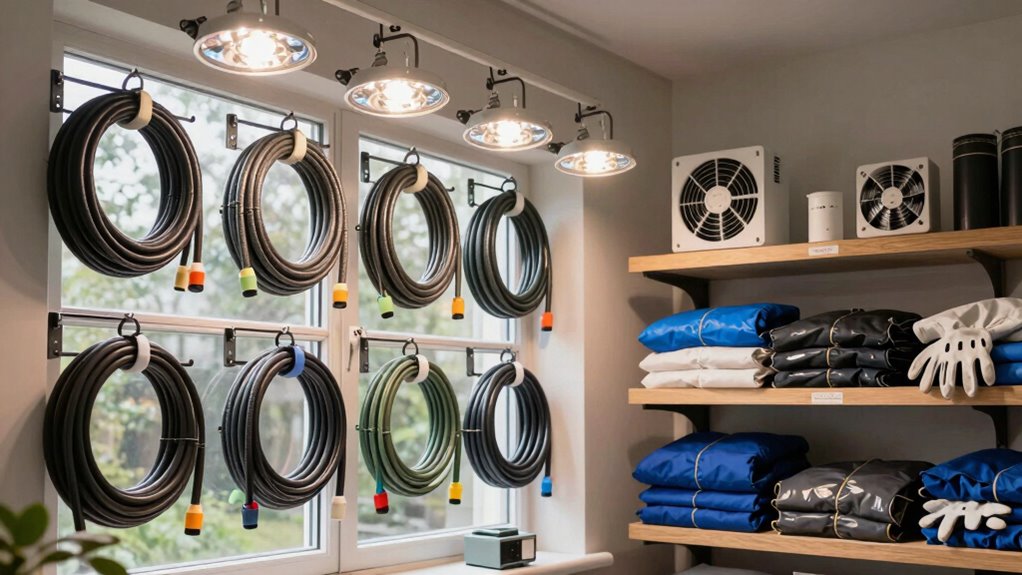
As the growing season winds down, it’s essential to prepare your gear for storage to guarantee it stays in top condition. First, clean all equipment thoroughly, removing dust, debris, and residual plant material. Second, check plant nutrition supplies—make certain nutrients are stored properly or disposed of if expired. Third, inspect for pests and treat any infestations to prevent future problems. Proper pest control now avoids damage during storage. Additionally, dry hoses and climate gear completely to prevent mold and mildew. Label everything clearly, so you know what’s what when you reassemble. Taking these steps ensures your gear remains functional, pest-free, and ready for next season. Proper storage preserves your investment and keeps your grow setup healthy.
Troubleshooting Common Storage Issues and Mistakes
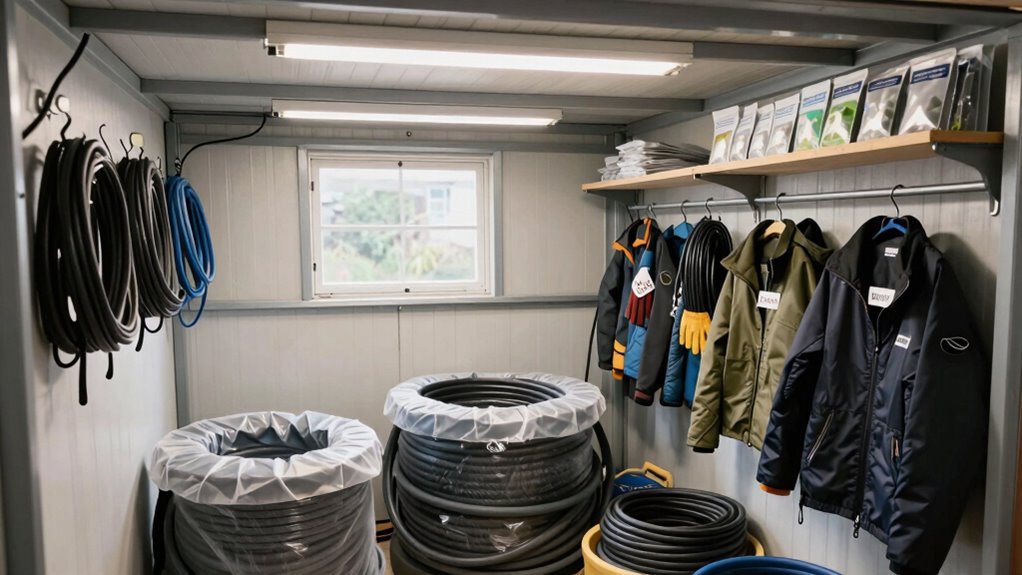
Even with careful preparation, storage issues can still arise if you’re not vigilant. Common storage pitfalls include neglecting to label equipment, which leads to equipment misplacement, and storing items in damp or unventilated areas, risking mold or damage. To prevent these issues, regularly check your storage setup. Use a clear labeling system and organize gear by type or use. Keep a record of stored items to avoid misplacement.
| Issue | Solution |
|---|---|
| Equipment misplacement | Label everything clearly and keep an inventory |
| Damp or humid storage | Use dehumidifiers or silica gel packs |
| Overcrowding | Allocate separate zones for different gear |
Unpacking and Reassembling Your Grow Equipment for the Next Growing Season
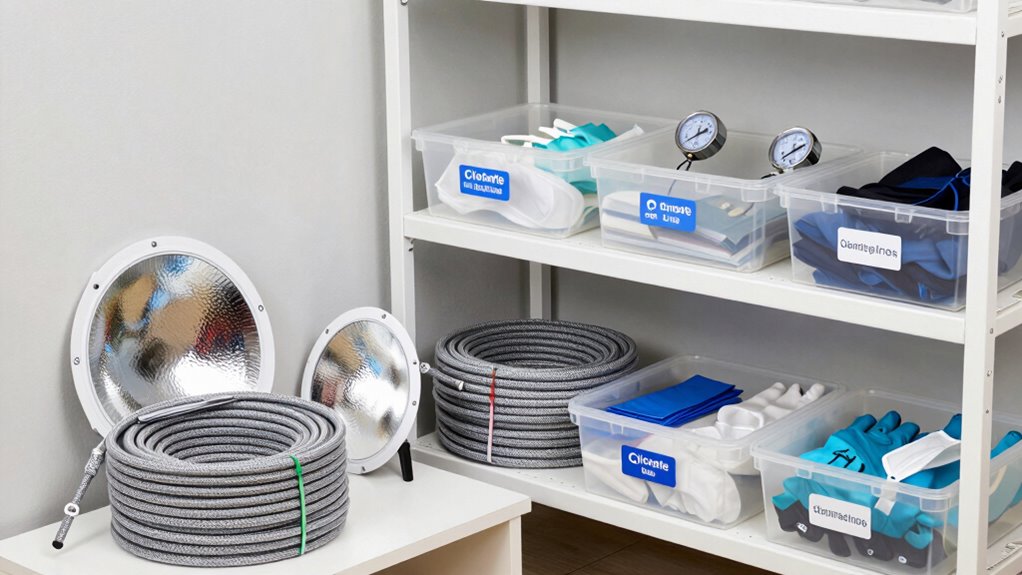
When it’s time to prepare your grow equipment for the upcoming season, unpacking and reassembling carefully guarantees everything functions smoothly. Start by inspecting each item for damage or pests, especially if you stored them with crop rotation in mind. Follow these steps:
- Clean and disinfect all equipment to prevent pest control issues and disease spread.
- Check light fixtures, hoses, and climate gear for wear, replacing any damaged parts.
- Reorganize your gear, ensuring hoses are coiled properly and lights are stored securely to avoid breakage.
While reassembling, adjust your setup based on crop rotation plans, which can improve yields and reduce pest problems. Proper unpacking and reassembling set the stage for a successful, pest-free grow season.
Frequently Asked Questions
How Long Can Grow Lights Be Stored Without Affecting Their Lifespan?
You can store grow lights for several months without affecting their lifespan if you follow proper storage temperature guidelines, ideally between 50-77°F. During this time, avoid extreme temperatures that could damage components. Before reusing, perform a quick grow light calibration to guarantee peak performance. Proper storage helps prevent deterioration, ensuring your grow lights remain effective when you’re ready to use them again.
What Are the Best Humidity Levels for Storing Hoses and Climate Gear?
You might think high humidity helps preserve hoses and climate gear, but it actually promotes mold and mildew. For ideal humidity control, keep storage containers in an environment with 40-50% humidity. This range prevents moisture buildup while protecting materials. Using airtight storage containers further reduces exposure to excess moisture, ensuring your hoses and gear stay dry, clean, and ready for use when the season turns.
Can Stored Grow Equipment Be Affected by Pests or Mold?
Stored grow equipment can be affected by pests or mold if not properly protected. Pest prevention measures, like cleaning and sealing storage areas, help stop insects and rodents from invading. To prevent mold growth, make certain your gear is dry and stored in a well-ventilated, low-humidity space. Regularly inspect your equipment for signs of pests or mold, so you can address issues early and keep your gear in top shape.
How Often Should Stored Grow Lights Be Inspected for Damage?
You should inspect your stored grow lights at least once every three months for damage. This helps guarantee their longevity and maintain peak grow light lifespan. Check for cracked or damaged bulbs, corrosion, and signs of wear on the power cords. Also, assess your storage container durability to prevent moisture or pests from compromising your equipment. Regular inspections keep your grow lights in top shape and ready for use when the season starts.
Are There Specific Containers Recommended for Storing Electrical Components Safely?
Did you know that electrical accidents cause thousands of injuries annually? For electrical safety, you should store components in non-conductive, flame-retardant containers like plastic or rubber bins. Avoid metal containers, which can conduct electricity and pose a hazard. Using the right container materials helps prevent damage and accidents during storage. Always make sure your electrical components are dry, well-organized, and protected from moisture or corrosion for safe off-season storage.
Conclusion
By properly preparing, cleaning, and storing your grow lights, hoses, and climate gear, you protect your equipment, prolong its lifespan, and make sure you’re ready for the next season. By choosing the right location, safeguarding electrical parts, and following a seasonal checklist, you prevent damage, reduce fire risks, and avoid costly mistakes. When you store with care, you set yourself up for a seamless start, a healthy grow, and a successful harvest—year after year.
Fall Picks
fall essentials
As an affiliate, we earn on qualifying purchases.