TL;DR

Get garden gear delivered free — and shop member deals
- Fast, free delivery on millions of items
- Access to Prime Big Deal Days deals on October 6–7
- Prime Video, Amazon Music and more included
Gardening Know How’s fall gardening report explains how to start herb cuttings in water and identifies mint as an easy option. The supplied excerpt gives specific instructions for mint and general preparation advice, but ends before naming the other herbs in the headline.
Gardening Know How has published fall guidance on rooting herb cuttings in water, presenting mint as an easy option for gardeners who want to keep culinary herbs growing indoors as temperatures drop. The available excerpt explains the basic preparation and care steps, but does not include the rest of the article’s promised plant recommendations.
The report recommends taking cuttings in early fall, while plants are still producing soft, green growth. It says these flexible stem tips may root more readily than older, hardened stems. The article frames water propagation as a low-cost way to keep herbs growing indoors and watch roots develop through a clear container; those are the writer’s gardening recommendations, not a guarantee that every cutting will succeed.
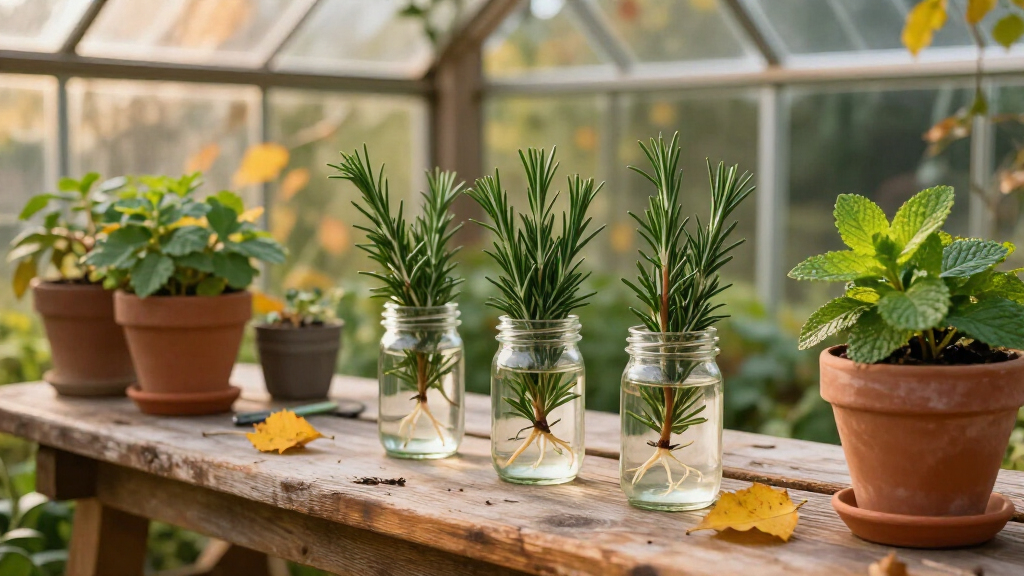
For preparation, the report advises using sharp, clean scissors and cutting just below a leaf joint, or node. It says to remove leaves from the bottom two inches of each stem so foliage stays above the water. The writer also suggests changing the water every few days and says a drop of kelp may be added to a larger glass. The excerpt does not provide a measured amount of water or evidence comparing rooting outcomes with and without kelp.
Mint is the one herb described in detail. The writer recommends 4-to-6-inch mint stems, with lower leaves removed, and a tall jar or other vessel that can keep top-heavy stems upright. Flower buds should be pinched off, or a nonflowering side shoot chosen, according to the report, so the cutting can focus on root growth. The writer recounts seeing roots on a mint sprig after a little more than a week, but that is a personal example rather than a stated timetable for all cuttings.
Keeping Herbs Growing Indoors
Fall cuttings offer gardeners a way to carry some outdoor growth into the colder months. For readers who use fresh herbs in cooking, a rooted cutting may provide an indoor plant to tend when frost threatens the garden. The report also presents propagation as a relatively inexpensive option: it calls for a few stem cuttings, clean jars and tap water.
The method is also visible as it progresses. Clear glass lets growers check whether roots are forming and whether the water has become cloudy. That can help them spot problems such as leaves sitting underwater, which the writer identifies as one detail associated with failed attempts. Results can vary by plant and conditions, and the excerpt gives no success rates or controlled comparisons.
Why the Report Focuses on Fall
The report’s seasonal argument is that early fall can offer a brief opportunity to take cuttings before plants slow down for winter. It describes soft, flexible shoots as active growth and says they are preferable to rigid stems that have hardened. Its advice is aimed at gardeners hoping to preserve selected herbs indoors, rather than a general guide to every kind of plant propagation.
The source is a Gardening Know How article titled “3 Easy Herb Cuttings You Can Root in Water This Fall – Plus, One That’s a Lot Easier than You Might Think.” The supplied text ends partway through its mint section. As a result, it confirms the article’s subject and its mint recommendations, but does not show which other herbs the full headline refers to or what makes the additional one easier.
““softwood tips””
— Gardening Know How report author
Details Missing From the Excerpt
The supplied report text ends in the middle of its mint instructions. It does not identify the other herbs in the headline, describe the herb said to be easier than readers might think, or give instructions for transplanting rooted cuttings into soil. The source material also provides no publication date, so the article’s precise timing cannot be established from the excerpt.
The writer’s account that mint rooted in a little over a week is anecdotal. The excerpt does not state how much light or warmth the cutting received, report repeated trials, or specify how long roots should grow before a cutting is moved. Readers should treat the timing as an example, not a promised result.
Watching Cuttings Take Root
Gardeners following the report’s advice can select healthy, flexible mint shoots, make clean cuts below a node, remove lower leaves and place the stems in water in a stable jar. The report recommends keeping the water clean by replacing it every few days and checking that no leaves are submerged. It gives no fixed schedule for moving a cutting into soil, so that step remains outside the guidance shown in the excerpt.
The next editorial detail needed is the remainder of the original article, which would show the other plants named in its headline and any additional care instructions. Until that text is available, mint is the only herb in the supplied material with specific cutting directions.
Key Questions
Which herb does the supplied report describe?
It gives detailed instructions for mint. Although the headline promises three easy herbs and another option, the supplied excerpt does not name the others.
How long should a mint cutting be?
The report recommends a 4-to-6-inch stem. It says to remove foliage from the lower half before placing the cutting in water.
Where should I cut the stem?
The writer advises cutting just below a leaf node, the point where a leaf joins the stem, and using sharp, clean scissors.
How often should I change the water?
The report says to replace it every few days. It does not give a more exact schedule or a guaranteed rooting time.
Source: rss
Fall yard work Picks
leaf blowers
As an affiliate, we earn on qualifying purchases.