
TL;DR

Get garden gear delivered free — and shop member deals
- Fast, free delivery on millions of items
- Access to Prime Big Deal Days deals on October 6–7
- Prime Video, Amazon Music and more included
A Gardening Know How report says Christmas cactus leaf drop in October can signal stress from changes in temperature, humidity, watering or location. It recommends identifying the cause and adjusting care promptly, but the report does not provide independent research or guarantee that a stressed plant will flower.
A Gardening Know How report says Christmas cactus leaf drop in October can be a sign of environmental stress, including a move indoors, household heating, or a change in watering. The advice matters to owners hoping for winter flowers, but the article does not establish that every plant dropping segments will fail to bloom or die.
The report says a Christmas cactus may shed a small number of segments after a change in its surroundings. It suggests that a plant dropping three or fewer pads in a week may be experiencing a mild reaction, while the loss of four or more segments in a week or whole multi-segment branches may indicate more severe stress. These are the source’s care guidelines, not a clinical test or independently verified threshold.
It describes several possible causes based on the fallen segments. Crispy, brittle pads may point to dehydration or heat exposure; limp green segments may reflect dry indoor air; limp, wrinkled pads may indicate underwatering; and plump, mushy segments may be associated with overwatering. A recent move from outdoors to indoors can also stress the plant, the report says.
For heat or drought stress, the article recommends a fairly steady room temperature of 60–70°F, bright indirect light, and keeping the plant away from heater blasts and cold drafts. It advises watering when the top two inches of soil are dry, with a pot that drains. For low humidity, it suggests a pebble tray, with the pot resting above the water rather than sitting in it.
Protecting Buds Before Winter
The timing matters because the report links October stress with the approach of the plant’s winter flowering period. Correcting a care problem may help the cactus recover, while dry air can also contribute to flower-bud drop, according to the article. That makes checking the plant’s environment useful for people trying to preserve its seasonal display.
However, the source’s warnings about a plant potentially dying within two weeks should be read as its assessment, not a guaranteed outcome. The report offers practical troubleshooting, but it does not cite a controlled study or provide data showing how often each symptom leads to plant loss. Readers should treat the segment-count guide as a prompt to inspect the plant, rather than a definitive prognosis.
As an affiliate, we earn on qualifying purchases.
Why October Can Stress Cacti
The report identifies seasonal changes as a common setting for leaf drop: plants may be brought inside after spending summer outdoors, and central heating may begin as temperatures fall. Both changes can alter temperature and humidity; moving indoors may also change light exposure and watering habits.
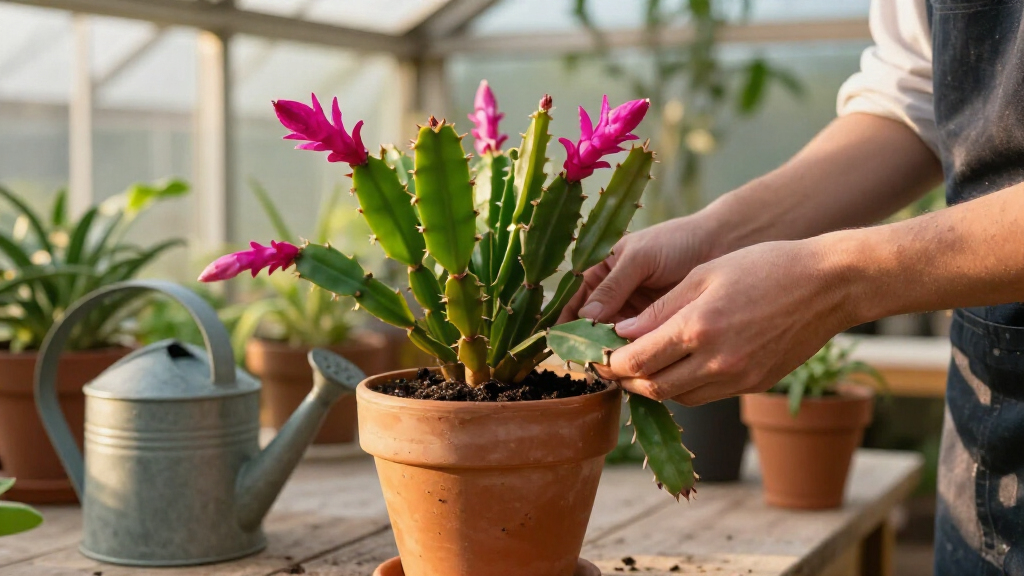
Christmas cactus, identified in the source as Schlumbergera × buckleyi, is described as sensitive to changes in its environment. The guidance is to look at the pads and review recent care changes together, rather than assuming one symptom proves a single cause. The article’s recommendations focus on home growing conditions and do not report a new study, regulatory action, or formal horticultural advisory.
““Christmas cactus do often drop a segment, or pad, when there’s a change of season.””
— Gardening Know How
Limits of the Care Guidance
The report does not say how its weekly segment thresholds were established, nor does it quantify the likelihood of recovery, death, or holiday flowering after leaf drop. A segment’s appearance may suggest a cause, but the article does not present those visual signs as a definitive diagnosis.
The supplied source text ends partway through its overwatering treatment instructions, after advising readers to remove the plant from its pot and inspect the roots. It does not include the full repotting steps, so those details cannot be confirmed from the material provided. The article also does not establish that a plant will bloom if its stress is corrected.
Check Conditions and Monitor Growth
Owners can compare recent changes in the plant’s location, heating exposure, light and watering with the symptoms described in the report. The suggested next steps are to keep the cactus in bright indirect light, avoid sudden hot or cold air, check soil moisture before watering, and use a draining pot. Any change should address the suspected cause rather than add water or humidity automatically.
Monitor whether segment loss continues and whether new symptoms appear. If the plant has mushy pads or suspected root damage, the report indicates that overwatering may be involved, but the supplied material does not provide a complete treatment protocol. No follow-up research or official guidance is cited; the outcome for an individual plant remains dependent on its condition and care.
Key Questions
Why is my Christmas cactus dropping leaves in October?
The Gardening Know How report lists environmental changes as a common explanation, including moving the plant indoors, starting central heating, and changes to watering. These are possibilities to investigate, not a confirmed cause for every plant.
What do mushy Christmas cactus segments mean?
The report says plump, soft or mushy pads may point to overwatering. It recommends checking the plant and its growing conditions; the source material provided does not include the complete root-treatment instructions.
How often should I water a Christmas cactus?
The report advises watering when the top two inches of soil are dry, using a pot with drainage. It does not give a fixed calendar schedule, which can vary with indoor conditions and the plant’s surroundings.
Can a Christmas cactus still flower after dropping segments?
The article says correcting stress may help a plant recover and suggests flowering may still be possible. It does not guarantee winter blooms; the outcome depends on the plant’s condition and care.
Source: rss
Fall yard work Picks
leaf blowers
As an affiliate, we earn on qualifying purchases.