TL;DR

Get garden gear delivered free with Prime
- Fast, free delivery on millions of items
- Prime Video, Amazon Music and more included
- Member-only deals all year
A Gardening Know How report highlights five common houseplants that may add to allergy symptoms for sensitive people as plants move indoors in fall: weeping fig, yucca, peace lily, potted mums and English ivy. The report says dust on leaves and overly wet potting mix may also contribute; it recommends cleaning leaves, adjusting watering and seeking allergy testing if symptoms persist.
Gardening Know How has identified five common houseplants that may contribute to allergy symptoms for some people when plants return indoors in fall: weeping fig, yucca, peace lily, potted mums and English ivy. The report also points to dusty leaves and persistently wet potting mix as potential sources of indoor allergens, and recommends cleaning plants and changing care routines rather than automatically removing them.
The report says fall can bring together several indoor irritants: windows are closed, heating systems begin circulating air, and plants that spent summer outdoors are brought inside. Furnace airflow can stir up dust, dust-mite particles and material from vents. Meanwhile, shorter days slow plant growth, but people may continue watering on a summer schedule, leaving potting mix damp long enough for mold to grow on its surface.
The five plants have different potential triggers. Weeping fig sap contains allergens that can also be found in dust around the plant; some proteins may cross-react with natural rubber latex. Yucca has been associated with sensitization in skin-prick testing, while dust can collect along its long leaves. Peace lily pollen and leaves have featured in documented allergy cases. Mums can contain allergens on flowers and leaf hairs, and English ivy may cause skin irritation or an allergic rash, particularly after handling.
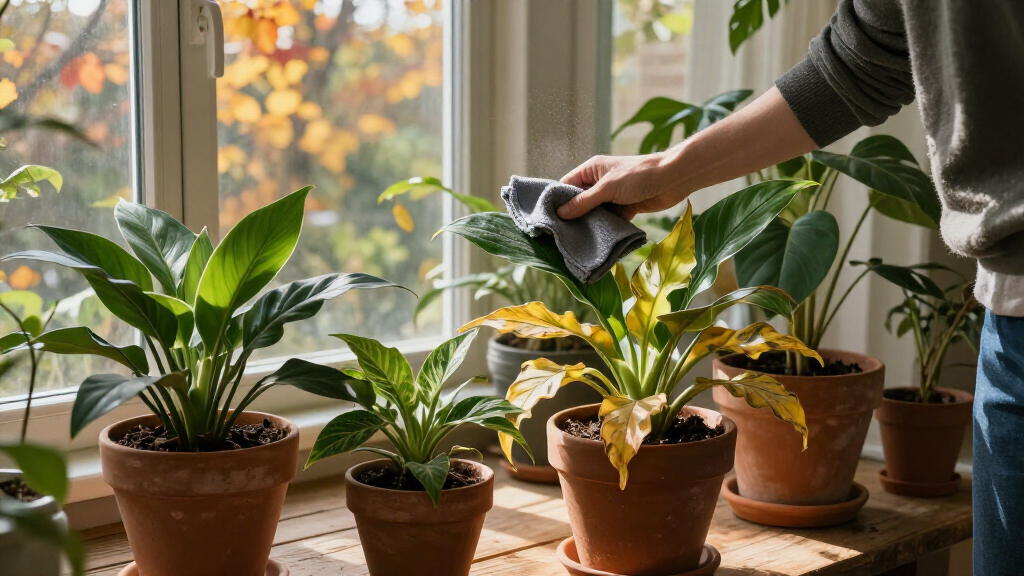
Gardening Know How recommends wiping leaves with a damp cloth, rinsing smaller plants and allowing foliage to dry, and letting the top of potting mix dry between waterings. Emptying saucers can limit persistently wet soil. The report advises gloves when pruning or handling plants that may irritate skin; people with latex allergies should use latex-free gloves around weeping figs. It also suggests keeping flowering peace lilies out of bedrooms and rinsing outdoor plants before bringing them inside.
Why Fall Plant Care Can Affect Symptoms
For people with allergies or sensitive skin, bringing plants indoors can change their exposure even when they have lived with the same plants through summer. Closed windows and heating airflow may increase contact with dust, while indoor watering habits can keep soil damp. A plant may also trigger a reaction through pollen, sap or direct handling rather than through airborne pollen alone.
The report stresses that houseplant allergies are fairly uncommon overall and that having one of the listed species does not mean a person will react. Its practical value is in identifying plausible exposures and low-effort steps to reduce them. Persistent symptoms should not automatically be attributed to a plant: dust, mites, mold and other causes can overlap, and an allergy professional can help identify the trigger.
Products Worth Considering

Orbit B-hyve Smart Indoor/Outdoor 12-Zone Sprinkler Controller

Traeger Woodridge Pro Wood Pellet Grill and Smoker, 970 sq. in., WiFIRE

EGO Power+ Cordless Electric Leaf Blower, 880 CFM, with Two 4.0Ah Batteries (LB8803-2)
As an affiliate, we earn on qualifying purchases.
How Indoor Exposure Changes in Fall
During warmer months, some houseplants remain on patios or porches, and open windows allow more air exchange. By late September, plants may return indoors as windows close and heating systems begin operating. That seasonal shift changes where allergens and dust collect, even if the plants themselves have not changed.
The report says bagged potting mixes may contain molds, including Aspergillus fumigatus, but cites a study in which little of that mold was found in the air of plant-filled homes unless plants or soil were disturbed. It frames overwatering as primarily a plant-care issue that can also contribute to mold exposure, rather than claiming that every indoor pot creates an allergy problem.
What the Plant Links Establish
The report does not provide study citations, prevalence figures or a date for its publication, so the strength and frequency of reactions cannot be compared across the five plants from the supplied material. It describes documented cases and sensitization findings, but those associations do not establish that a given plant is causing an individual’s symptoms.
It is also unclear how much any one plant contributes compared with dust, dust mites, damp soil or other indoor triggers in a particular home. The report says risk depends on the plant, how it is handled and a person’s sensitivity. A purifier may remove some airborne particles, but it will not clean dust from leaves or address wet soil directly.
Steps for the Coming Weeks
As plants come indoors, the report recommends inspecting and rinsing outdoor plants, wiping leaves with a damp cloth, and checking potting mix before watering. Letting the upper layer dry between waterings and pouring water from saucers can help prevent soil from staying wet. People handling mums, ivy or other plants that irritate their skin can use gloves and wash their hands afterward.
If nasal symptoms continue into October or a skin reaction follows plant handling, Gardening Know How says an allergist can test for specific houseplants. A plant that is confirmed as a trigger could be moved to another location, such as a friend’s sunroom, rather than requiring every houseplant to be removed. The supplied report gives no schedule for follow-up research or official guidance.
Key Questions
Which five houseplants does the report identify?
It lists weeping fig, yucca, peace lily, potted mums and English ivy as plants associated with allergy or skin-reaction cases. The report does not say that everyone with these plants will develop symptoms.
Should I remove these plants if I have fall allergies?
Not automatically. The report says reactions depend on individual sensitivity and exposure. Cleaning leaves, adjusting watering and limiting contact may help; an allergist can test for specific plant sensitivities if symptoms persist.
What should I do about dusty leaves and damp soil?
Wipe leaves with a damp cloth or rinse smaller plants, then allow foliage to dry. Let the top of the potting mix dry between waterings and empty excess water from saucers.
Which plants may cause a skin reaction when handled?
The report links handling with possible reactions from mums and English ivy, among others. It recommends gloves and handwashing; people with latex allergies should choose latex-free gloves when pruning weeping figs.
Source: rss