Adding a greenhouse to your homestead is smart because it extends your growing season, boosts productivity, and gives you control over plant health. You can grow more diverse crops, protect plants from harsh weather, and reduce pests with proper environmental controls. A greenhouse helps you maximize space and save resources over time. If you’re curious about how to make it work for you, there’s plenty more to discover that can help you succeed.
Key Takeaways
- Extends growing seasons and boosts crop yields, allowing year-round food production regardless of climate.
- Provides a controlled environment that promotes healthier plants and reduces pest and disease issues.
- Enhances resource efficiency through targeted watering, heating, and cooling, lowering operational costs.
- Enables diversification by growing exotic or non-native plants, expanding homestead resilience and variety.
- Improves overall homestead sustainability and productivity, making it a strategic upgrade for long-term self-sufficiency.

Build a $1500 Portable Greenhouse or Garden Shed: For $150 In Just a few hours without a kit!
As an affiliate, we earn on qualifying purchases.
As an affiliate, we earn on qualifying purchases.
Why a Greenhouse Is a Game-Changer for Your Homestead
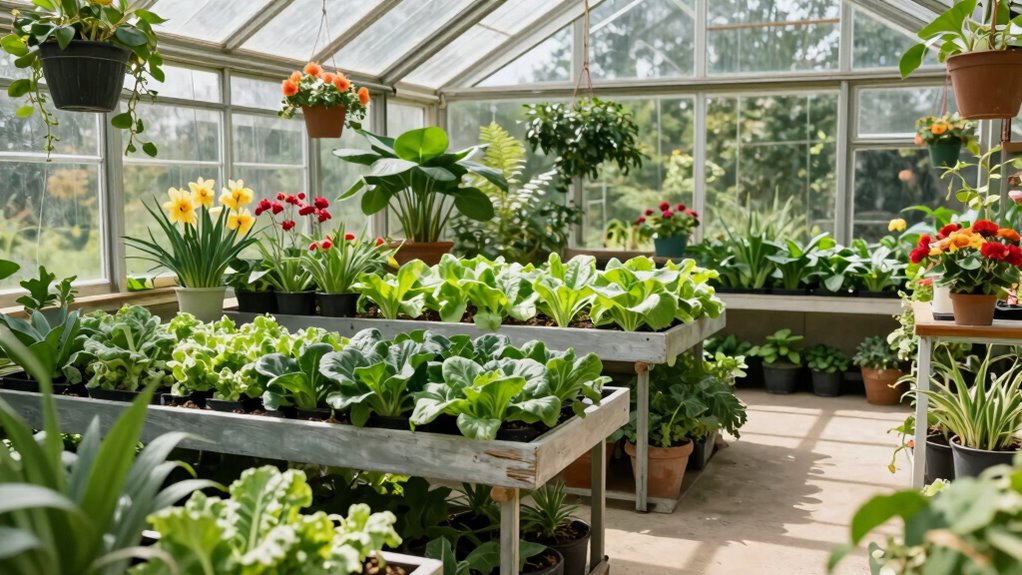
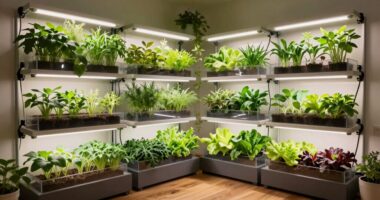
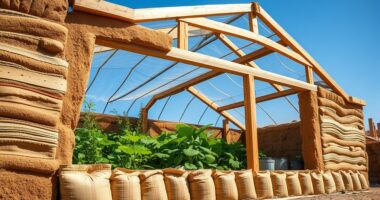
Have you ever wondered how to extend your growing season and boost your homestead’s productivity? A greenhouse is a game-changer, especially if you’re into urban farming or want to maximize limited space. It allows you to grow fresh vegetables, herbs, and fruits year-round, regardless of outdoor weather. Using sustainable materials for your greenhouse, like recycled wood or eco-friendly panels, makes your setup even more environmentally friendly. This approach reduces your carbon footprint and promotes a sustainable lifestyle. Plus, a greenhouse offers control over temperature, humidity, and pests, giving you healthier plants and higher yields. Whether you’re a seasoned gardener or just starting, a greenhouse empowers you to make the most of your homestead’s potential while supporting eco-conscious choices.
Key Factors to Consider Before Building Your Greenhouse
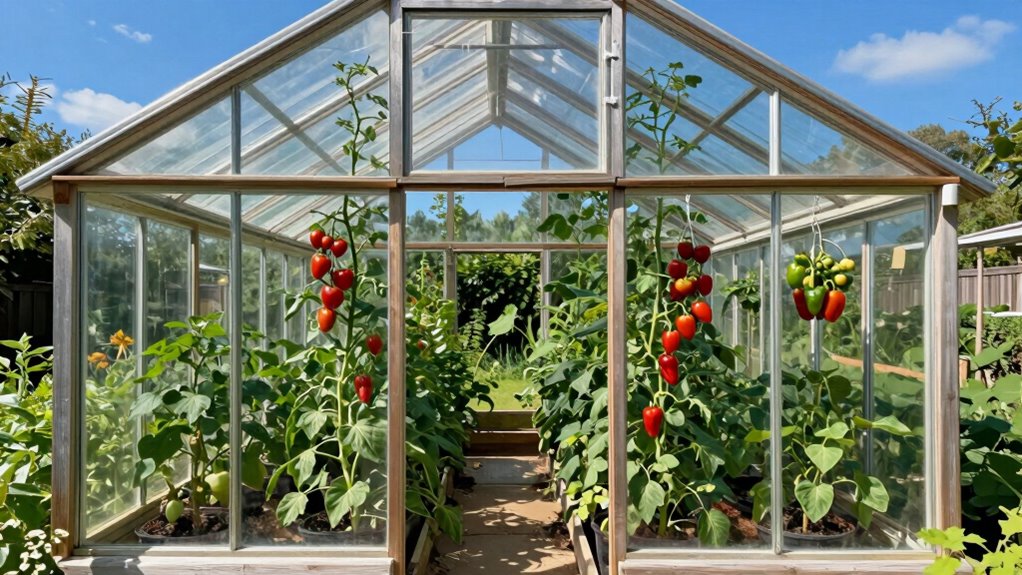
Before building your greenhouse, it’s essential to carefully evaluate several key factors to guarantee it fits your space, budget, and goals. Climate control is critical; consider how you’ll regulate temperature, humidity, and ventilation to keep plants healthy year-round. Proper climate management minimizes stress on your crops and extends growing seasons. Pest management is equally important—plan for barriers, screening, or integrated pest control methods to prevent infestations without relying heavily on chemicals. Additionally, assess sunlight exposure, wind protection, and accessibility to streamline maintenance. Understanding these factors upfront helps you design a greenhouse that’s efficient, sustainable, and easy to operate. Incorporating climate control systems can further optimize climate regulation and pest control, ensuring your greenhouse remains productive and resilient. Regularly monitoring environmental conditions can help detect early signs of imbalance, allowing for prompt adjustments to sustain plant health. Recognizing early warning signs of potential issues like pests or diseases can help you address problems before they become severe. Establishing a routine for environmental monitoring provides ongoing insights to maintain optimal conditions. Addressing climate control and pest management early ensures your investment supports healthy plants and a thriving homestead.
Which Greenhouse Type Fits Your Needs?

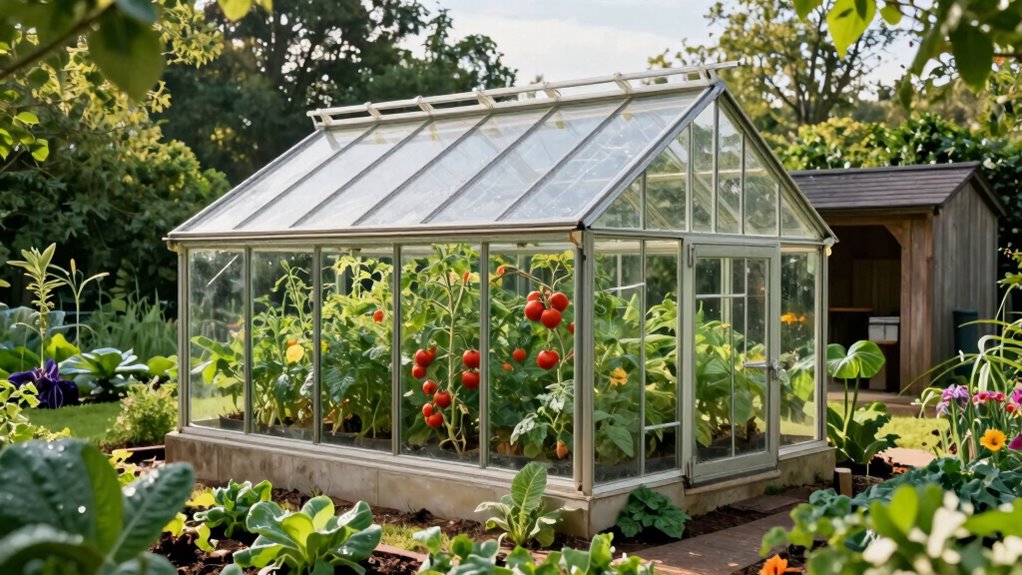
Choosing the right greenhouse type depends on your specific needs, space, climate, and budget. If you want a versatile space for diverse plant selection, a hoop or high tunnel greenhouse offers affordability and easy pest management. For year-round growing, a glass or polycarbonate greenhouse provides better insulation and sunlight, supporting sensitive plants. If space is limited, a lean-to or mini-greenhouse is ideal for starting seedlings or growing herbs. Consider pest management strategies—some greenhouse types are easier to control pests in, especially with enclosed designs. Your choice should also reflect how much effort you want to put into maintaining temperature and humidity. Additionally, incorporating AI-driven automation can help optimize environmental controls, making greenhouse management more efficient. Selecting the right greenhouse involves understanding how different construction materials impact insulation and light transmission, which can significantly influence plant health. The climate of your location also plays a critical role in determining the most suitable greenhouse type, as different designs perform better under varying weather conditions. Being aware of environmental factors can guide you in choosing a design that minimizes energy use and maximizes plant growth. For example, understanding energy efficiency can help you select a greenhouse that reduces operational costs while maintaining optimal conditions for your plants. By matching your plant selection and pest management needs with your available space and budget, you’ll select a greenhouse that enhances your homestead’s productivity and sustainability.
How to Get Started With Greenhouse Gardening
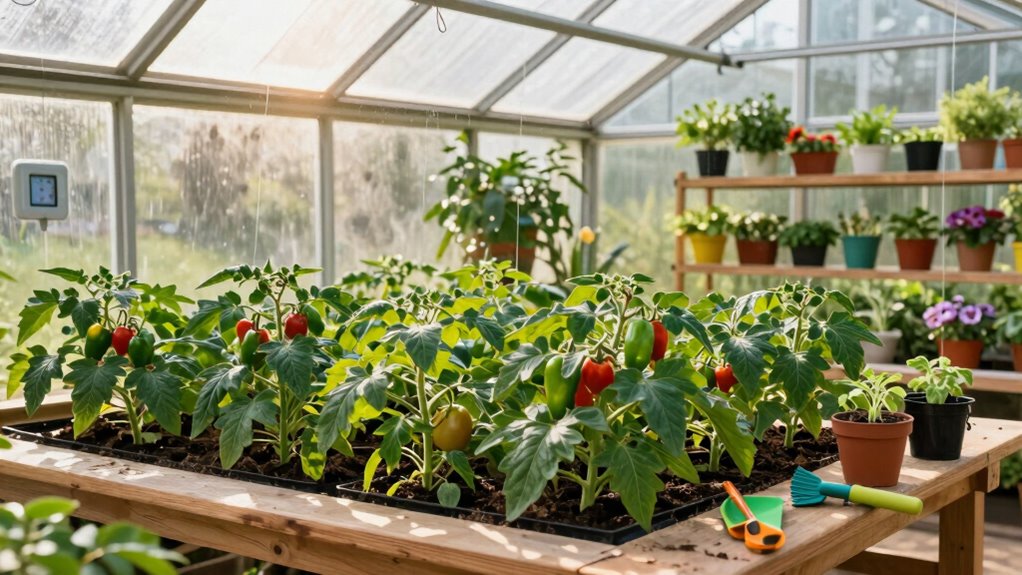
Getting started with greenhouse gardening is an exciting step toward growing your own fresh produce and expanding your plant collection. Begin by planning your space and selecting easy-to-grow plants, such as herbs or seedlings. Use the greenhouse environment to assist with plant propagation, starting seeds early and ensuring healthy root development. Keep a close eye on pest control; a greenhouse can create a perfect habitat for pests if not managed properly. Implement preventive measures like ventilation, screens, and natural repellents to keep pests at bay. Regularly monitor humidity and temperature to create ideal conditions. With a little preparation, you’ll quickly develop a thriving greenhouse garden that boosts your homestead’s productivity and joy. Additionally, understanding how to maintain a balanced microclimate can significantly enhance plant health and growth techniques for microclimate management. To support your overall gardening success, consider integrating sustainable practices that align with your homesteading goals. Being aware of greenhouse safety measures is also essential to ensure a secure environment for both plants and family members. Proper ventilation and climate control are key to preventing issues like mold and heat stress, making climate regulation an important aspect of greenhouse management. Developing a watering schedule tailored to your plants’ needs will further improve their growth and resilience.
Maintaining Your Greenhouse for Year-Round Success
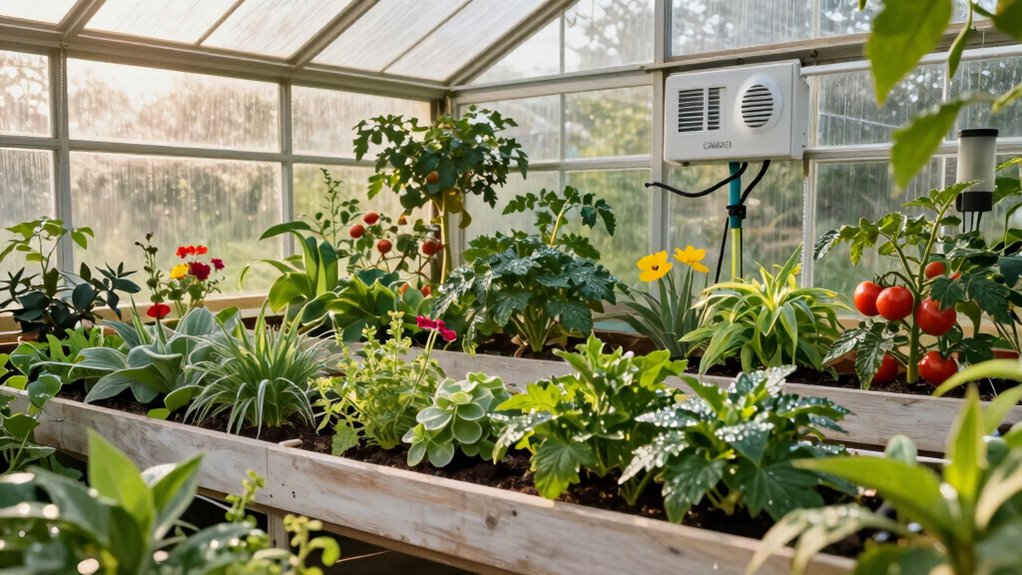
Maintaining your greenhouse throughout the year requires consistent attention to environmental conditions and system upkeep. Regular soil preparation guarantees your plants stay healthy and productive; refresh and enrich the soil as needed to prevent nutrient depletion. Keep an eye on temperature and humidity levels, adjusting vents and heaters to create ideal growing conditions. Pest management is vital year-round—inspect plants frequently, remove any pests promptly, and use integrated pest control methods to avoid infestations. Clean your greenhouse surfaces and tools to prevent disease spread. Proper maintenance also involves checking irrigation systems and replacing worn-out components. Staying proactive ensures your greenhouse remains a productive, pest-free environment, allowing you to enjoy successful gardening regardless of the season. Additionally, understanding the seasonal effects on plant growth can help you plan better and optimize your greenhouse conditions accordingly. Maintaining a balanced water chemistry is essential for healthy plant development and preventing issues like root rot or nutrient imbalances. Regularly monitoring and adjusting these factors based on environmental conditions will help ensure your greenhouse thrives year-round.
Furthermore, using climate control systems can significantly enhance your ability to maintain optimal conditions throughout different seasons.
Frequently Asked Questions
How Much Does It Typically Cost to Build a Greenhouse?
Building a DIY greenhouse typically costs between $200 and $2,000, depending on size, materials, and complexity. For a sustainable building, you might choose recycled or eco-friendly supplies, which can influence costs but boost sustainability. Planning carefully helps keep expenses manageable. If you do it yourself, you save on labor, making it more affordable. Overall, a DIY greenhouse is a smart, cost-effective upgrade that enhances your homestead’s productivity and sustainability.
What Are the Best Plants to Grow in a Greenhouse?
Plant selection is key to thriving in your greenhouse, and you should grow herbs, tomatoes, peppers, and leafy greens. Think of it as planting seeds of success; with the right growing techniques—proper ventilation, watering, and temperature control—you maximize your harvest. These plants flourish in warm, controlled environments, providing fresh produce year-round. By choosing wisely and applying good practices, you’ll turn your greenhouse into a lush, productive oasis.
How Can I Heat My Greenhouse Efficiently?
You can heat your greenhouse efficiently by using a combination of passive and active methods. Install insulation to enhance temperature regulation and reduce energy use. Use energy-efficient heating systems like thermostatically controlled electric or propane heaters. Incorporate thermal mass, such as water barrels or stone, to absorb heat during the day and release it at night. Covering vents at night also helps retain heat and improve overall energy efficiency.
What Pests Are Common in Greenhouse Environments?
You might be surprised by the pests lurking in your greenhouse—aphids, whiteflies, and spider mites are common culprits. But don’t worry; planting pest-resistant plants and practicing natural pest control methods can keep them at bay. Regular monitoring and early intervention are key. With these strategies, you’ll protect your plants without harsh chemicals, ensuring a healthy, thriving greenhouse environment that’s tough for pests to invade.
How Do I Prevent Mold and Mildew in My Greenhouse?
To prevent mold and mildew in your greenhouse, focus on good ventilation strategies and humidity control. Make sure you have adequate airflow by opening vents or using fans, which helps reduce excess moisture. Keep humidity levels in check with dehumidifiers or by watering early in the day, allowing plants to dry out. Regularly clean surfaces and remove dead plant material to prevent mold spores from spreading, keeping your greenhouse healthy.
Conclusion
So, go ahead—build that greenhouse. It’s the smartest move you’ll make, turning your homestead into a year-round oasis of fresh produce and lush greenery. Ironically, that glass fortress might just be your easiest way to beat the weather, pests, and unpredictable seasons. Who knew that the smartest upgrade would be so simple? Now, all that’s left is to enjoy the fruits of your labor—literally—while the outside world struggles with the elements.