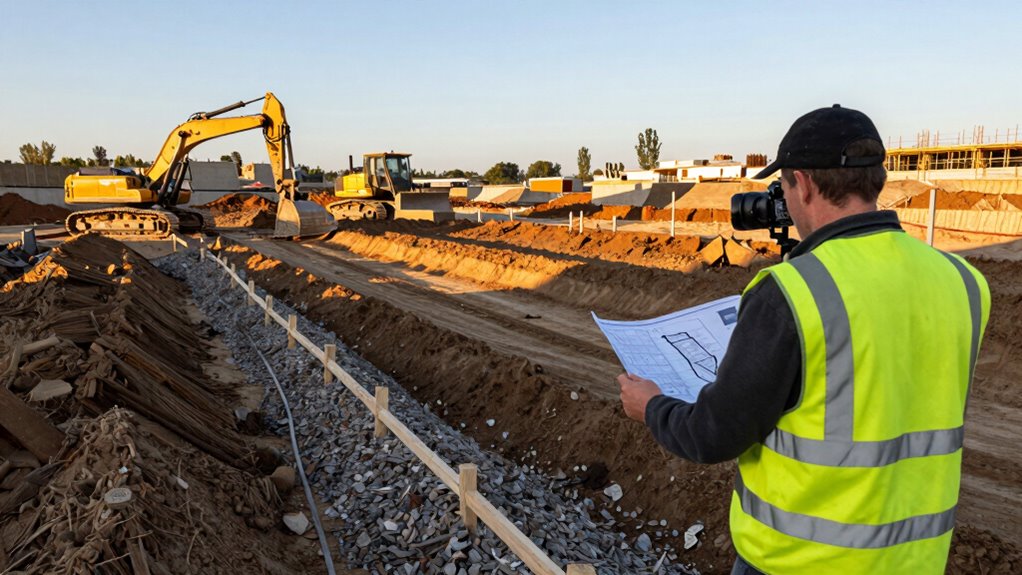

Before building, you need to check several key site prep details to guarantee costly issues. Start with soil analysis to ensure stability, then assess drainage and erosion control to prevent water problems. Verify site accessibility for equipment and analyze topography to plan foundation work accurately. Don’t forget to locate underground utilities to prevent conflicts, and review environmental regulations to stay compliant. Covering these essentials will set your project up for success—keep going to learn more about each step.
Key Takeaways
- Conduct thorough soil testing to assess stability, drainage, and potential stabilization needs before construction begins.
- Evaluate topography and elevation to plan drainage, foundation stability, and avoid costly terrain modifications.
- Identify underground utilities early to prevent damage, delays, and safety hazards during excavation.
- Analyze water flow and design effective drainage systems to prevent erosion, flooding, and water pooling issues.
- Ensure site access and pathways are clear and safe for machinery, reducing risks and workflow disruptions.
soil testing kit for construction
As an affiliate, we earn on qualifying purchases.
As an affiliate, we earn on qualifying purchases.
How to Assess Soil Conditions for Construction

Have you ever wondered how engineers determine whether the soil can support your construction project? They start by analyzing the soil composition, which involves identifying the types of soil present—sand, clay, silt, or gravel—and understanding their properties. This information helps assess stability and drainage potential. Next, compaction testing plays a critical role. You’ll need to have tests like Standard Proctor or Modified Proctor to measure how well the soil can be compacted. Proper compaction ensures the soil can bear the load without shifting or settling over time. These steps provide essential data, guiding foundation design and ensuring your project’s safety and longevity. Skipping this assessment could lead to costly issues down the line, so thorough evaluation is indispensable from the start. Additionally, understanding soil quality and air conditions can influence the choice of foundation type and construction methods. Conducting a site assessment can further identify specific challenges such as moisture levels or contamination that may impact construction plans. Knowing the soil properties can also help determine the need for soil stabilization techniques to improve stability, especially when considering different soil types. Incorporating soil testing methods into your site prep ensures accurate data collection, which is vital for successful construction planning.
Why Evaluating Drainage Is Key to Site Stability
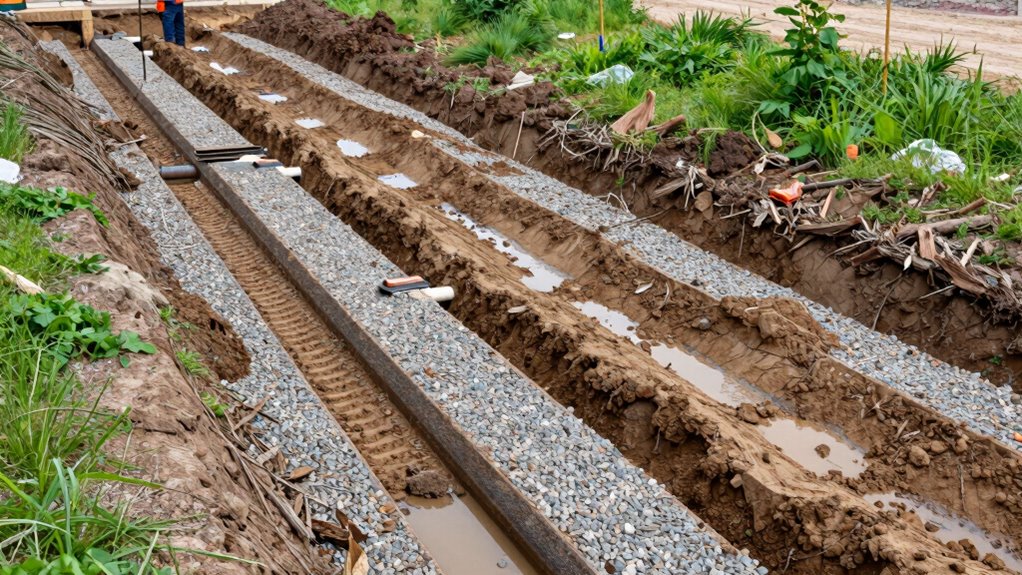
You need to prioritize proper drainage planning to prevent water buildup that can destabilize your site. Managing soil water effectively helps reduce erosion and preserves the integrity of the foundation. Implementing erosion control strategies is essential to maintain site stability and avoid costly issues later on. Additionally, understanding the ethical considerations in land use can guide responsible development practices that respect environmental impacts. Recognizing the importance of digital content formats can also enhance how you communicate your site plans and findings to stakeholders. Incorporating transaction security measures can further ensure that your site management aligns with best practices in digital safety and transparency. Paying attention to indoor air quality during construction can also help safeguard the health of future occupants and workers involved in the project. Moreover, being aware of soulmate splits can provide insight into relationship dynamics that might influence community planning and social cohesion.
Proper Drainage Planning
Proper drainage planning is essential for ensuring the stability of a construction site. Without it, water can accumulate, cause erosion, or weaken foundations. To prevent these issues, focus on key aspects like:
- Evaluating natural flow paths to avoid disruption of existing drainage patterns.
- Designing effective stormwater management systems to direct runoff away from critical areas.
- Installing proper drainage infrastructure, such as pipes and channels, to handle heavy rain.
- Ensuring grading directs water away from structures and slopes safely.
- Considering the impact of soil composition on drainage efficiency and site stability.
Soil Water Management
Effective soil water management begins with thorough evaluation of drainage patterns across the construction site. Poor drainage can reduce soil fertility, impair water retention, and compromise stability. To guarantee proper site conditions, assess how water moves through the soil and identify areas prone to pooling or erosion. Proper drainage maintains balanced moisture levels, supporting healthy soil and foundation stability. Consider the following factors:
| Drainage Condition | Impact on Site Stability |
|---|---|
| Excess water pooling | Weakens soil structure, causes erosion |
| Rapid water runoff | Depletes soil nutrients, reduces fertility |
| Poor water absorption | Increases water retention, risks flooding |
| Well-drained soil | Promotes soil health, ensures stability |
Additionally, understanding the horsepower of electric dirt bikes can inform how equipment and machinery might affect site conditions during construction activities. Recognizing soil properties is essential for predicting how water interacts with the ground and for implementing effective drainage solutions. Proper assessment of drainage patterns helps minimize long-term site issues, ensuring stability throughout the construction process.
A comprehensive understanding of drainage management techniques can further improve site stability and prevent future problems.
Erosion Control Strategies
Understanding how water moves across your site is essential for implementing erosion control strategies that protect the soil and foundation. Proper drainage evaluation helps prevent erosion and guarantees sediment control, maintaining site stability. Without effective erosion prevention measures, rainwater can wash away soil, causing costly damage and delays. To improve your site’s stability, consider these strategies:
- Install silt fences and sediment basins to trap runoff.
- Grade slopes to direct water away from vulnerable areas.
- Use mulch or ground cover to reduce surface erosion.
- Regularly inspect drainage systems for blockages or leaks.
- Monitoring water flow patterns is vital for identifying potential erosion hotspots and adjusting your strategies accordingly.
Implementing these steps guarantees proper drainage, minimizes erosion, and keeps sediment control systems functioning efficiently, safeguarding your site during construction.
Is Your Site Accessible for Construction Equipment?
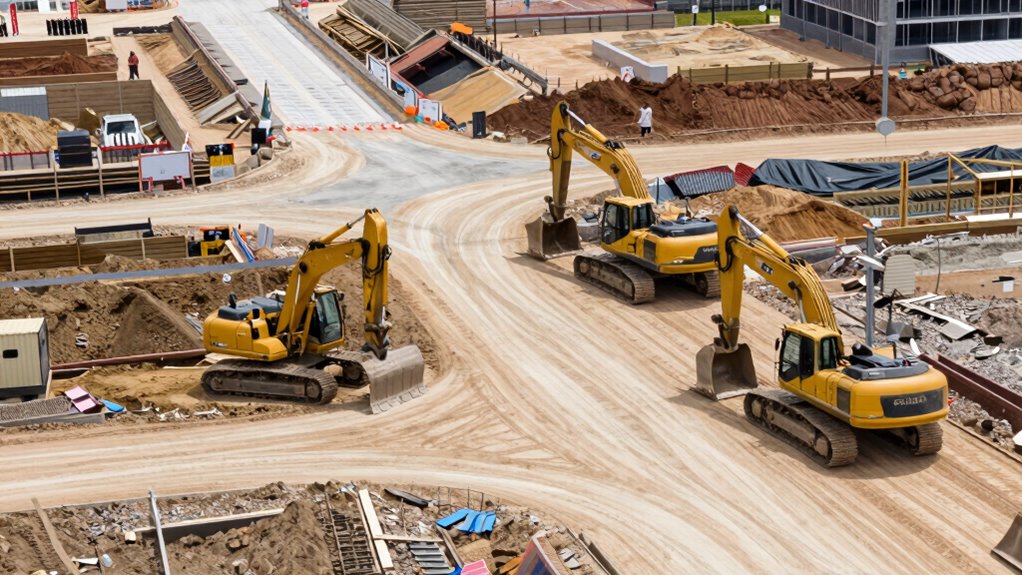
To make certain your site is ready for construction, you need to check if the entrance dimensions are wide enough for your machinery. Clear pathways are essential so equipment can move smoothly without obstacles. If these elements aren’t in place, your project could face delays and added costs. Ensuring proper site preparation can help maintain a smooth construction process. Additionally, considering landscaping plans can prevent future disruptions during development. Proper DIY safety tips can also minimize accidents during site setup and ongoing work. Incorporating creative spark techniques into your planning can also foster innovative design ideas, making the finished space more appealing once completed.
Proper Entrance Dimensions
Ensuring your site has proper entrance dimensions is vital for smooth construction progress, as inadequate sizing can lead to delays and safety hazards. Wide enough entrances prevent equipment from getting stuck or causing damage, while also maintaining good entrance aesthetics. Proper dimensions help accommodate various machinery sizes, avoiding costly reroutes. Additionally, clear signage visibility at the entrance ensures that equipment operators can easily identify access points, reducing confusion and accidents. Incorporating thorough research and analysis into your planning can also help identify site accessibility requirements tailored to your equipment needs. Paying attention to cable management and ensuring accessible pathways further contribute to a safe and efficient construction environment. Addressing these details keeps your site accessible and safe for all construction activities.
Clear Pathways for Machinery
Proper entrance dimensions set the foundation for smooth construction progress, but equally important are clear pathways within the site that allow machinery to move efficiently. Ensuring machinery accessibility means designing pathways wide enough and free of obstructions for cranes, loaders, and trucks. Pathway clearance is critical to prevent delays and accidents, so regularly inspect and remove debris, uneven surfaces, or tight corners. You need to plan for enough turning radius and avoid tight bottlenecks that could hinder equipment flow. Clear, well-marked pathways help machinery operate safely and efficiently, saving time and reducing wear on your equipment. By prioritizing pathway clearance, you create a smoother construction process and minimize disruptions caused by restricted access or unexpected obstacles.
Analyzing Topography and Elevation for Proper Planning
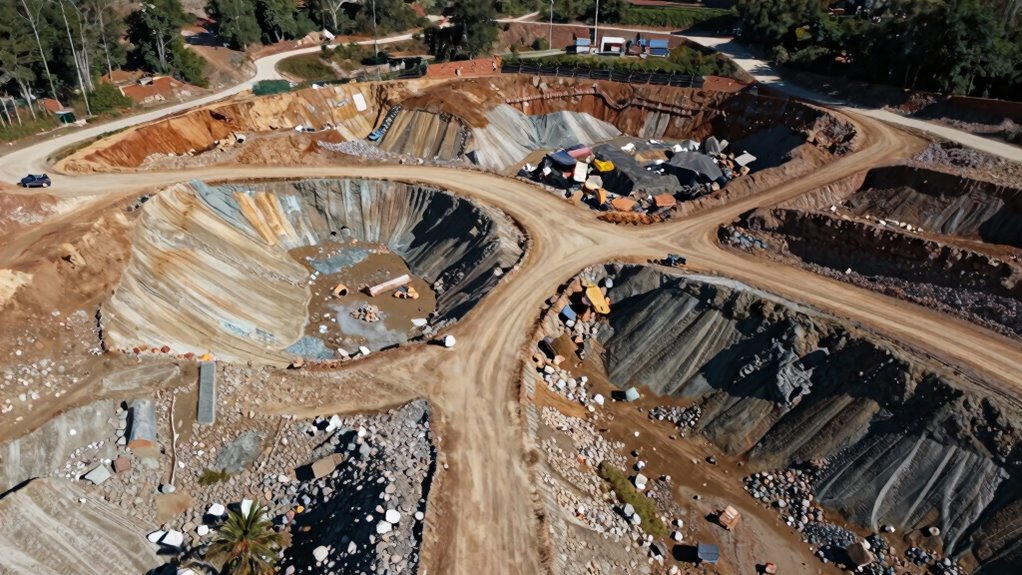
Understanding the topography and elevation of your site is essential because it directly influences drainage, foundation stability, and overall construction approach. Examining landscape features helps you identify natural obstacles that could impact your build. By carefully evaluating elevation changes, you can plan for proper grading and avoid water pooling or erosion issues. Here are key steps to consider:
Assessing site topography ensures proper drainage, stable foundations, and smooth construction planning.
- Map out the site’s contour lines to visualize elevation variations.
- Identify slopes that could require terracing or retaining walls.
- Note natural obstacles like rock formations or dense vegetation.
- Determine drainage flow paths to prevent future water problems.
Focusing on these details ensures your project aligns with the terrain, saving you from costly adjustments later. Proper analysis sets a solid foundation for successful construction.
How to Identify Underground Utilities and Avoid Conflicts
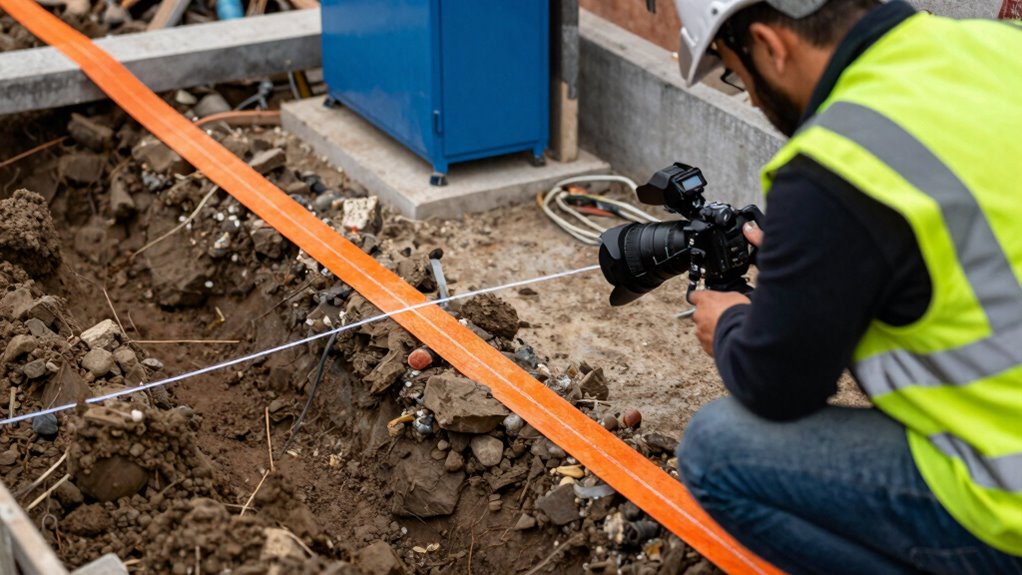
After analyzing the topography and elevation of your site, the next step is to locate underground utilities to prevent accidental damage during excavation. Utility mapping is essential for identifying buried lines such as gas, water, sewer, and electrical cables. Start by consulting existing records and utility company maps, but don’t rely solely on them. Use nondestructive detection methods like ground-penetrating radar or electromagnetic locators to confirm the utility locations. Properly marking these utilities helps you avoid conflicts that could cause delays, costly repairs, or safety hazards. Clear communication with utility providers guarantees accurate information. By taking these steps, you reduce risks and promote conflict avoidance, making your site prep safer and more efficient before you begin any excavation or construction work.
Understanding Environmental Regulations and Permitting
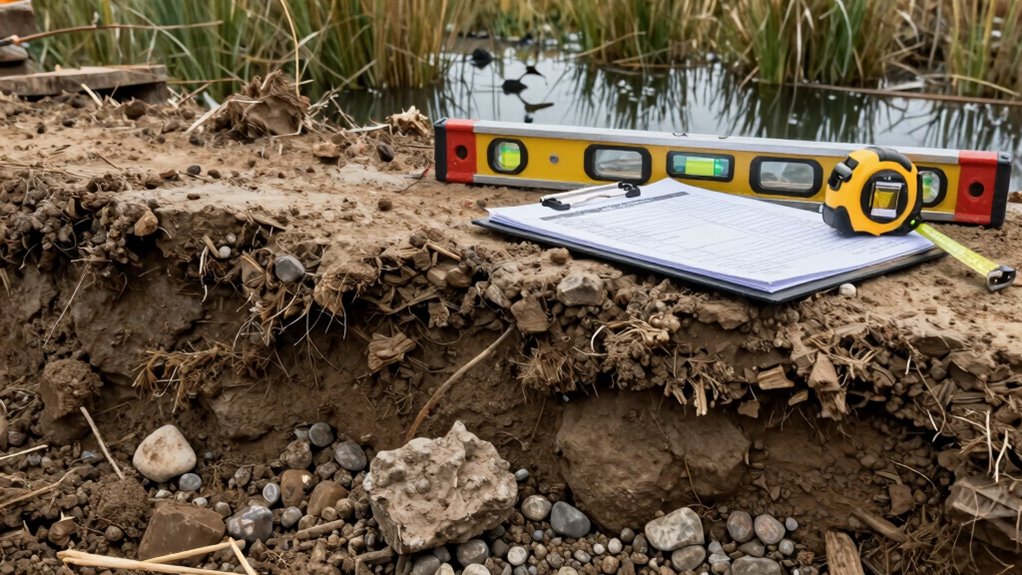
Managing environmental regulations and obtaining the necessary permits is a critical step before starting site work. Failing to comply can lead to project delays or fines. To guarantee you’re on track, consider these key points:
- Identify the environmental impact your project might have on local ecosystems and water quality.
- Research permit requirements specific to your location and project scope, including wetlands or protected habitats.
- Submit thorough applications that address potential environmental concerns to avoid rejection or additional scrutiny.
- Stay updated on changing regulations to maintain compliance throughout construction.
Understanding these details helps you navigate permit processes smoothly and minimizes environmental risks. By proactively addressing permit requirements and environmental impact, you protect your project from legal complications and promote responsible development.
Planning Site Access and Traffic Flow for Construction Logistics
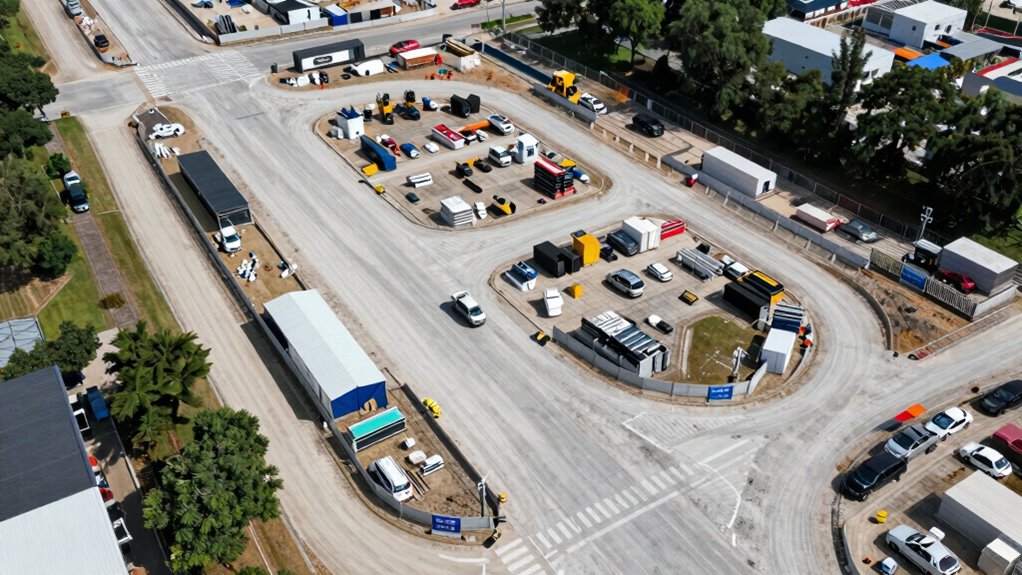
Effective planning of site access and traffic flow is essential to keep construction operations smooth and safe. You need clear site signage to direct workers, suppliers, and visitors efficiently, reducing confusion and delays. Design designated routes for construction vehicles to minimize disruptions and protect existing infrastructure. Prioritize pedestrian safety by creating safe walkways, barriers, and visible crossings, especially near active work zones. Communicate traffic plans early to all stakeholders, ensuring everyone understands entry and exit points. Consider the timing of deliveries to prevent congestion during peak hours. Properly managing site access not only streamlines logistics but also reduces accidents and liability. By paying close attention to traffic flow and safety protocols, you can keep your project on schedule and maintain a safe environment for everyone involved.
Frequently Asked Questions
What Are Common Signs of Poor Soil Stability?
Common signs of poor soil stability include noticeable soil compaction, which makes the ground hard and difficult to work with, and drainage issues, like water pooling or slow runoff after rain. You might also see uneven settling or cracks in the soil surface, indicating instability. These signs suggest the soil can’t support structures properly, so addressing these issues before building is essential to prevent future problems.
How Can Weather Impact Site Preparation Timelines?
Weather greatly influences site preparation timelines. Extreme weather, like heavy rain or snow, can cause delays, making it crucial to take climate considerations into account during planning. Seasonal planning helps you schedule work during favorable weather and avoid disruptions caused by unpredictable conditions. By monitoring forecasts and adjusting your timeline accordingly, you guarantee smoother progress and reduce the risk of project setbacks, saving you time and resources.
What Safety Protocols Are Essential During Site Prep?
Think of site safety as your shield against unseen dangers. You must enforce hazard prevention by providing proper personal protective equipment, clear signage, and safety training. Guarantee all workers follow protocols, like using helmets and harnesses, to minimize risk. Regular safety drills and inspections are essential, too. By prioritizing site safety, you create a fortress that guards everyone on-site, preventing accidents and fostering a culture of hazard prevention.
How Often Should Site Inspections Be Conducted?
You should conduct site inspections regularly, ideally at least once a week, to stay on top of construction timelines and guarantee safety protocols are followed. During each inspection, check for any hazards, verify that work aligns with plans, and document progress. Increased inspection frequency might be necessary during critical phases or if issues arise. Consistent inspections help prevent delays, maintain safety, and keep your project on track.
What Are the Costs Associated With Site Remediation?
The costs of site remediation vary depending on soil contamination severity and the scope of work needed. An environmental assessment helps identify contamination levels, guiding cleanup expenses. You might face costs for soil removal, treatment, or stabilization, which can add up quickly. Budget for professional evaluations, specialized equipment, and disposal fees. Proper planning and assessments guarantee you’re financially prepared and avoid surprises during remediation efforts.
Conclusion
Before breaking ground, check these seven site prep details—think of them as your foundation for success. Ignoring soil and drainage can lead to costly delays, just as overlooking utilities or environmental rules might halt your project entirely. Proper planning isn’t just about smooth operations; it’s about avoiding surprises that can turn a promising build into a nightmare. Remember, thorough prep is your best defense against costly mistakes and project setbacks. Don’t just build; build smart.