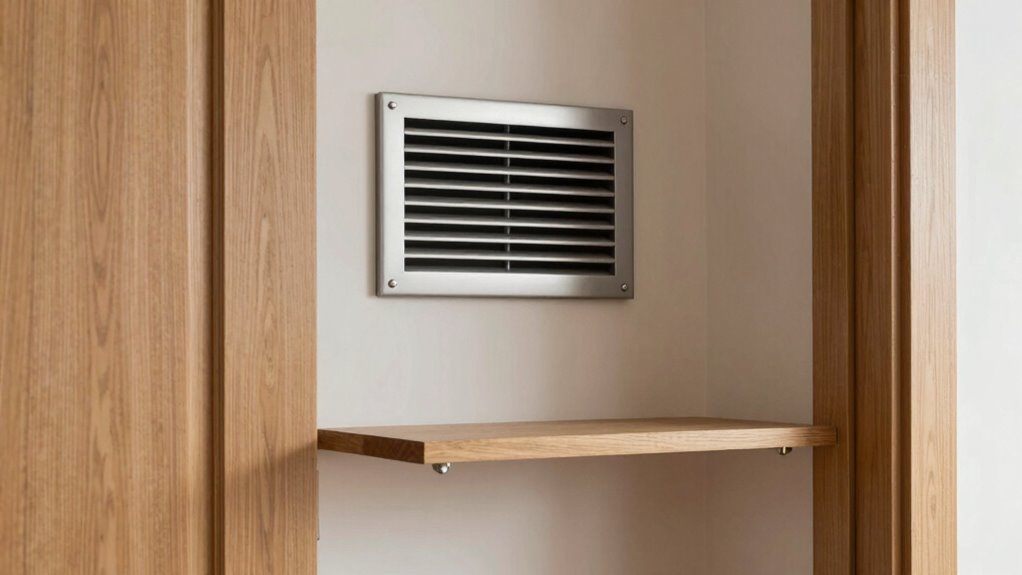
To improve airflow, position doors to open toward well-ventilated areas and avoid placing them directly opposite each other. Place vents near high-traffic zones for efficient air exchange and create cross-ventilation by positioning vents opposite doors or windows. Keep shelves and large furniture away from airflow paths to prevent turbulence and dead zones. Proper placement of these elements greatly enhances circulation, reduces stagnation, and boosts indoor air quality; explore further to discover more tips for planning your ideal airflow layout.
Key Takeaways
- Position doors to open toward well-ventilated areas and avoid direct opposition to promote natural airflow.
- Place vents near high-traffic zones and opposite windows for effective cross-ventilation.
- Arrange furniture to keep pathways and airflow routes open, avoiding blockage of vents, doors, or windows.
- Use adjustable louvered doors or vents to enhance air exchange and control airflow direction.
- Avoid common mistakes like blocking vents or covering air returns to maintain proper circulation and prevent stagnation.
Understanding How Doors, Vents, and Shelves Impact Airflow
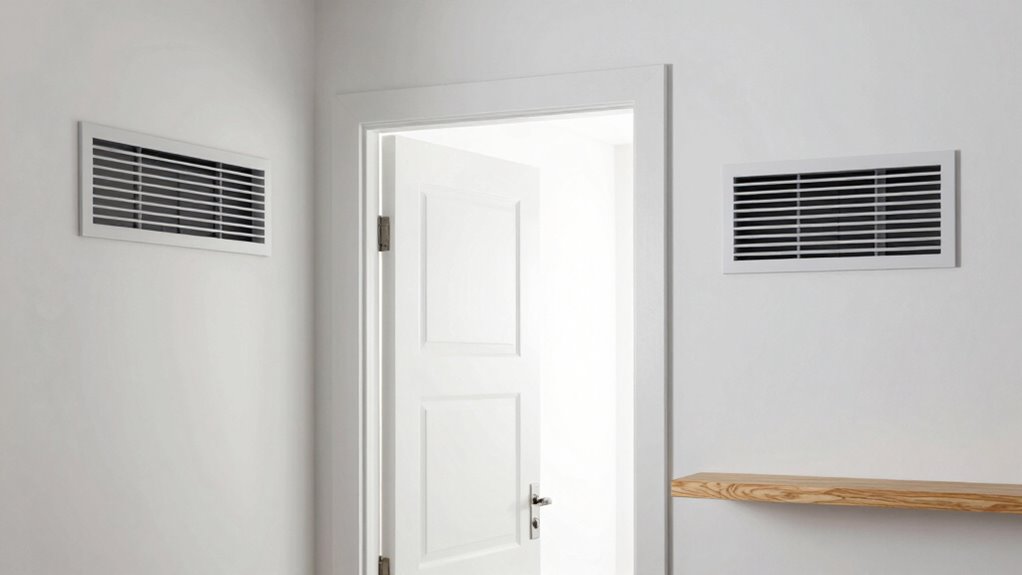
Doors, vents, and shelves play a crucial role in shaping airflow within a space. They influence air pressure and airflow dynamics, determining how air moves from one area to another. When a door is open, it creates a pathway that allows air to flow freely, balancing pressure differences. Vents control air exchange, directing airflow where it’s needed most, like cooling or heating zones. Shelves can block or redirect airflow, creating turbulence or dead zones. Understanding how these elements interact helps you manage air pressure, ensuring smooth circulation. Proper placement prevents stagnant air and uneven temperature distribution. By recognizing their impact on airflow dynamics, you can optimize your space for better ventilation, comfort, and air quality. Understanding airflow is essential for designing an effective ventilation system.
How to Position Doors for Better Air Circulation

Properly positioning doors can considerably improve airflow in a space. Start by considering door design, guaranteeing they open into or toward well-ventilated areas to promote circulation. Avoid placing doors directly opposite each other, as this can cause air to rush straight through, reducing efficiency. Instead, stagger door locations to create a natural flow of air, encouraging movement between rooms. Incorporate ventilation technology, like adjustable louvered doors or doors with vents, to enhance air exchange. Keep doors open when possible to maximize airflow and prevent stagnation. Also, consider the overall layout to ensure airflow isn’t blocked by furniture or other obstacles. Thoughtful door placement makes a significant difference in creating a balanced, well-ventilated environment. Additionally, understanding airflow patterns can help optimize the placement of doors and vents for better air circulation throughout the space, especially when considering airflow efficiency to achieve optimal results. Recognizing natural ventilation principles can further enhance the overall effectiveness of your airflow strategy. Incorporating airflow dynamics can provide deeper insights into how air moves within your space, leading to more effective ventilation solutions. For example, analyzing air movement can help identify areas prone to stagnation and improve overall circulation.
Strategic Vent Placement Tips for Improved Air Quality

Strategic placement of vents plays a crucial role in enhancing indoor air quality. Properly positioned vents influence ventilation patterns and define airflow zones, ensuring fresh air circulates effectively. To optimize this, consider these tips:
Strategic vent placement ensures effective airflow and improved indoor air quality.
- Place vents near high-traffic areas to promote consistent airflow throughout the space.
- Position vents to create clear airflow zones, avoiding dead spots where air stagnates.
- Install vents opposite doors or windows to facilitate cross-ventilation, improving air exchange. Additionally, incorporating natural ventilation techniques can further enhance airflow efficiency and reduce reliance on mechanical systems. Proper vent placement can help prevent the buildup of dust and microplastics, contributing to a healthier indoor environment. Employing strategic vent placement can also optimize Gold IRA markets, ensuring a safer and more balanced environment both inside and out. Implementing effective ventilation strategies is essential for maintaining optimal indoor air quality and reducing environmental pollutants.
Furniture Placement to Promote Airflow in Your Space
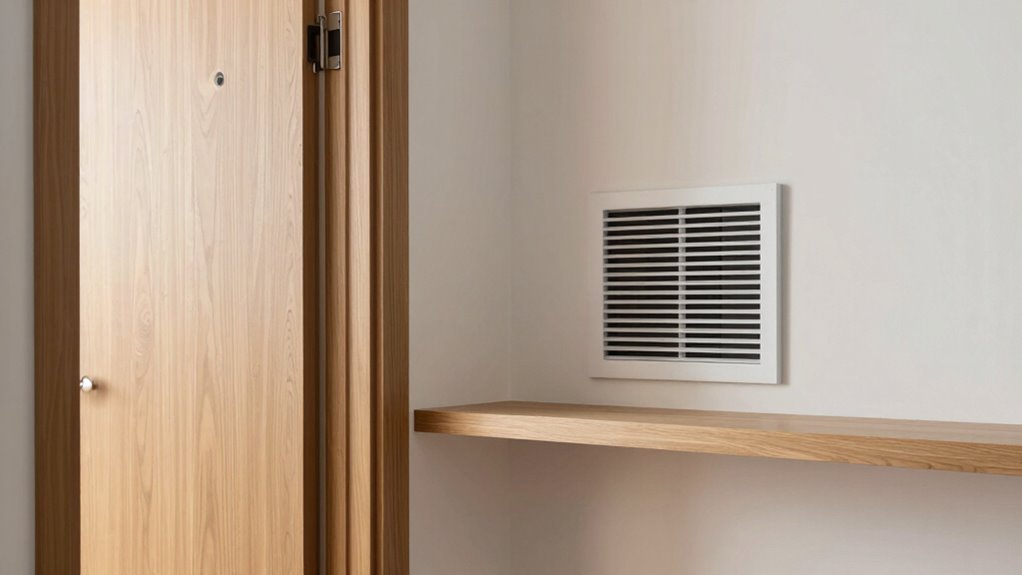
Arranging your furniture thoughtfully can considerably improve airflow in your space. Keep pathways open and avoid blocking vents, doors, or windows. Position larger furniture pieces away from each other to create a flow that encourages air circulation. Incorporate decorative accessories strategically to avoid clutter that impedes airflow. Consider wall color choices; lighter hues can make a room feel more spacious and less crowded, boosting ventilation. Use the table below for layout ideas:
| Space Area | Furniture Placement | Tips |
|---|---|---|
| Living Room | Sofa facing the window or vent | Keep furniture away from air vents |
| Bedroom | Bed position away from doors | Avoid obstructing airflow pathways |
| Dining Area | Buffet or shelves against walls | Use open shelving instead of bulky units |
This approach guarantees your space remains airy and comfortable. Additionally, utilizing DIY tools and safety tips can help ensure your airflow-enhancing projects are both effective and safe. Incorporating airflow optimization techniques can further enhance the circulation and overall comfort of your space. Proper space planning ensures that airflow is maximized and energy efficiency is maintained. Enhancing airflow not only improves comfort but can also positively impact indoor air quality, making your environment healthier. A well-designed layout also considers the sustainability of your choices, promoting energy efficiency and environmental friendliness.
Common Mistakes to Avoid When Planning Airflow
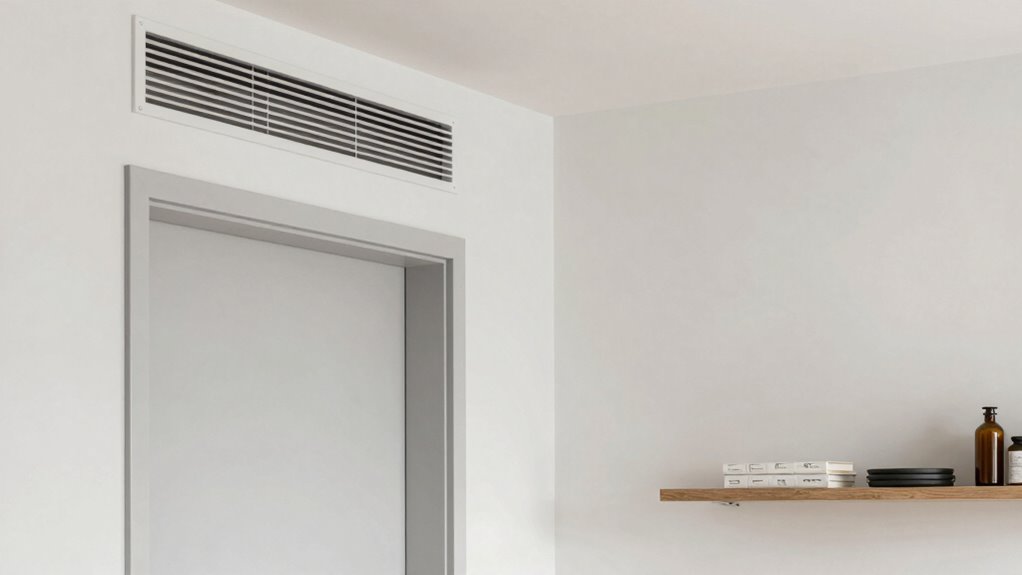
One of the biggest mistakes you can make when planning airflow is blocking vents, doors, or windows, which disrupts the natural circulation of air. Such blockages can lead to stale air buildup and inefficient ventilation. Avoid falling for common airflow myths, like believing closed doors improve airflow or that sealing all vents ensures better climate control. Here are three mistakes to watch out for:
- Covering or blocking vents and air returns, forcing air to stagnate.
- Overlooking the importance of door placement, creating dead zones.
- Relying on ventilation myths, such as leaving windows permanently open, which can cause drafts and energy waste. Additionally, understanding indoor air quality is crucial in designing effective airflow systems to maintain a healthy environment. Proper air circulation can significantly improve overall safety and comfort, especially in households with vulnerable individuals. Being aware of airflow principles helps prevent common mistakes and ensures optimal ventilation efficiency, which is essential for maintaining healthy indoor environments.
Frequently Asked Questions
How Does Ceiling Height Affect Airflow Efficiency?
Higher ceiling height improves airflow efficiency by allowing warm air to rise and cool air to settle, creating better circulation throughout the space. You’ll notice improved temperature distribution and less stagnant air in rooms with taller ceilings. However, if ceilings are too high without proper ventilation, airflow can become inefficient. Balancing ceiling height with vent placement ensures maximum airflow efficiency, making your space more comfortable and energy-efficient.
What Materials Best Facilitate Air Movement in Shelves?
You should choose shelves made from materials with high permeability, like wire or mesh, to enhance shelf ventilation. These materials allow air to circulate freely around stored items, preventing moisture buildup and mold. Avoid solid materials like wood or plastic, which hinder airflow. By selecting permeable materials, you improve overall air movement, keeping your space fresher and reducing potential damage caused by stagnant air.
Can Color Schemes Influence Airflow Patterns?
Color schemes can influence airflow patterns by affecting your perception of space and movement. Using color psychology, lighter shades create a sense of openness and encourage airflow, while darker tones may make a space feel more enclosed, potentially hindering movement. Achieving aesthetic harmony with your color choices helps promote better airflow, as visual balance supports a natural, unobstructed environment, making your space feel more comfortable and well-ventilated.
How Often Should Vents Be Cleaned for Optimal Performance?
Imagine your vents as the lungs of your space, breathing in and out to keep airflow smooth. You should clean vents every 6 to 12 months to prevent dust accumulation that hampers efficiency. Regular air filter maintenance complements this, ensuring dust doesn’t clog your system. By staying consistent, you keep airflow ideal, your space invigorating, and your system running smoothly—a gust of fresh air for your home.
Do Door Types Impact Overall Ventilation Effectiveness?
Yes, door types considerably impact overall ventilation effectiveness. Your choice of door design influences how air flows through a space, especially when combined with proper vent placement. For example, sliding or hollow-core doors may restrict airflow more than solid, well-sealed ones. Strategically placing vents near doors and choosing the right door type can enhance airflow, prevent stagnation, and make your ventilation system much more efficient.
Conclusion
By paying attention to door, vent, and shelf placement, you can open better airflow and improve your space’s comfort. Think of it as tuning an instrument—you need everything in harmony. Avoid common pitfalls, and don’t be afraid to experiment with different arrangements. Remember, a well-placed shelf or vent can make all the difference, so don’t leave it to chance. With a little planning, you’ll have your airflow flowing smoothly in no time.