TL;DR

Get garden gear delivered free — and shop member deals
- Fast, free delivery on millions of items
- Access to Prime Big Deal Days deals on October 6–7
- Prime Video, Amazon Music and more included
Country Living has published guidance on propagating seven garden plants from fall cuttings: rosemary, lavender, geraniums, fuchsia, basil, mint and coleus. The report describes soil propagation for woody or semi-woody stems and water propagation for soft-stemmed plants; success depends on plant care and growing conditions.
Country Living has published a guide to propagating seven garden plants from fall cuttings, offering gardeners a way to grow new plants from existing ones rather than buying them. The list includes rosemary, lavender, geraniums, fuchsia, basil, mint and coleus, with instructions that vary according to whether a plant is rooted in soil or water, including tips for rooting herb cuttings in water.
The guide attributes its advice to Master Gardener Rhonda Fleming Hayes, author of Garden for Life: Strategies for Easier, Greener, More Joyful Gardening as We Age and the Substack The Garden Buzz. Hayes says fall is a time to take cuttings even as gardens wind down. Propagation, the report explains, creates new plants from existing ones and can help gardeners keep favored varieties for the next growing season, much like dividing perennials to get free plants.
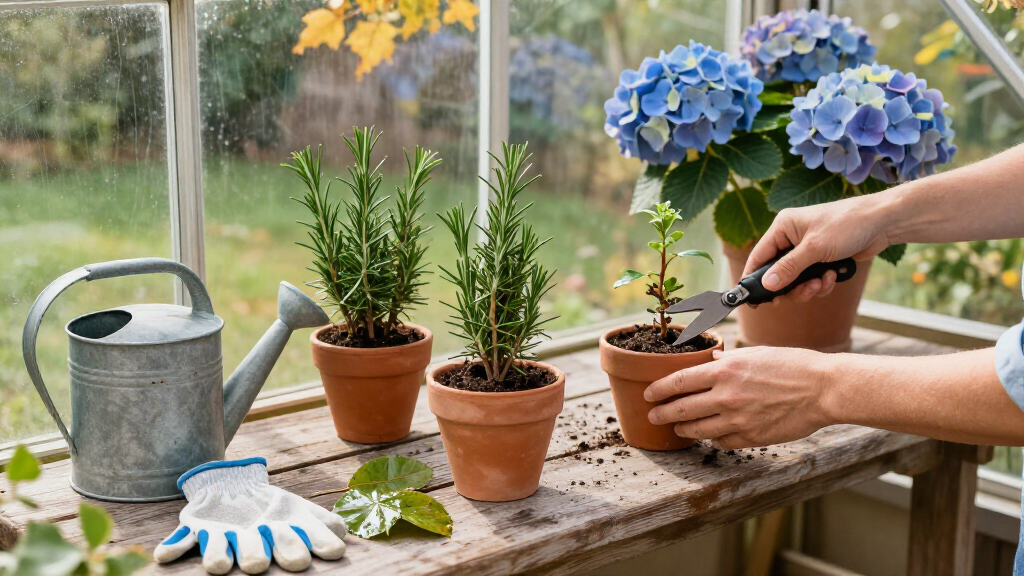
For woody and semi-woody plants, the report recommends taking 3- to 5-inch nonflowering stems, removing lower leaves and trimming back much of the top foliage. Gardeners place the cut end in rooting hormone and set the stem into a pot of sharply draining growing mix. The pots are watered and covered with a clear cover or plastic bag to hold moisture, helping gardeners grow more plants from what they already have—one approach to expanding a garden for free. After about a week, the cover can be removed; gentle resistance when a stem is tugged after a few weeks can indicate rooting.
Rosemary, lavender, geraniums and fuchsia are the plants the article names for soil propagation. For soft-stemmed basil, mint and coleus, the guide says to remove leaves that would sit underwater and put stems in a jar of water. Once roots have formed, transfer them to containers of potting mix, keep the soil moist, and place the pots near a bright window or in a sunroom.
A Low-Cost Way to Grow More Plants
Taking cuttings offers gardeners a way to increase the number of plants they have without purchasing new specimens, while carrying favored plants into another season. That may be useful for people trying to manage garden costs or preserve a particular plant they already grow. The method also gives gardeners a practical fall task: save suitable stems before seasonal trimming or clearing beds.
The instructions make clear that “free plants” does not mean no effort or guaranteed results. Cuttings need appropriate conditions, including moisture, light and protection from cold. Soil-rooted cuttings also require supplies such as pots, a suitable growing mix and rooting hormone, while water-rooted stems still need to be potted once roots develop.
gardening propagation kits for herbs
As an affiliate, we earn on qualifying purchases.
As an affiliate, we earn on qualifying purchases.
Two Methods for Fall Cuttings
The Country Living report separates the seven plants by stem type and recommended rooting method. For the woody or semi-woody group, it advises using a growing mix that drains quickly rather than dense potting soil. Hayes suggests a mix made with 80 percent perlite and 20 percent other materials, such as sand or compost. The article does not provide a single formula for every plant or growing environment.
For cuttings placed in soil, the guide recommends keeping the stems in a sheltered setting after rooting and bringing them indoors if temperatures fall below freezing. In colder climates, it advises growing them inside in bright, indirect light. For both methods, the guide says to plant cuttings outdoors in spring only after the threat of frost has passed. Its recommendations are general guidance, not a guarantee that every cutting will take root.
“The garden may be winding down, but now’s the time to think about taking cuttings.”
— Rhonda Fleming Hayes, Master Gardener
Rooting Results Depend on Conditions
The report does not say how many cuttings gardeners should expect to root successfully, or how results vary by cultivar, home conditions or regional climate. It also does not give a precise number of weeks for the water-rooted plants to develop roots. The timing can differ, so gardeners will need to watch the cuttings rather than rely on a fixed schedule.
The article’s advice is not a promise that all seven plants will thrive through winter or be ready for outdoor planting at the same time. It says to protect soil-rooted plants from freezing temperatures and to wait until frost risk has passed before planting outside. Local conditions and the health of the parent plant remain relevant.
Watch Roots and Spring Frost
Gardeners following the guide can take suitable stems in fall, then monitor them for root development and keep them in the recommended conditions. Soil cuttings should be checked for gentle resistance after a few weeks; water cuttings can be moved into potting mix once they have sufficient roots. The report gives no fixed calendar date for either step.
For plants being kept indoors, the next outdoor milestone is spring planting after the threat of frost has passed. Until then, the cuttings need consistent moisture and appropriate light, with extra protection from freezing conditions where relevant.
Key Questions
Which plants does the report recommend propagating from fall cuttings?
The seven named plants are rosemary, lavender, geraniums, fuchsia, basil, mint and coleus.
Which cuttings should be rooted in water?
The guide recommends water for the soft-stemmed plants basil, mint and coleus. Remove leaves that would sit below the water line, then pot the stems once they have sufficient roots.
How should rosemary, lavender, geranium and fuchsia cuttings be started?
The report recommends using 3- to 5-inch nonflowering stems, removing lower leaves, coating the cut end with rooting hormone and placing stems in a well-draining growing mix. Keep the mix moist and cover the pot temporarily to retain humidity.
When can the new plants go outdoors?
The guide says to plant them outside in spring after the threat of frost has passed. It recommends sheltering rooted cuttings and protecting them from freezing temperatures in the meantime.
Source: rss
Fall Picks
fall essentials
As an affiliate, we earn on qualifying purchases.